Leading people is a difficult task. Can I get a virtual ‘Amen?’ In the textbook Contemporary Management, Gareth Jones and Jennifer George argue that problems are inevitable for leaders: “Managers in all kinds of organizations, large and small, often face situations entailing conflict.” If a leader understands that he’s call for the purpose of leading others, I feel he or she is better able to address any issues that might arise. In my last post, I discussed workers finding their calling. Yet, at the heart of this personal discussion, comes the issue of an individual’s purpose in life. Inherently, this matter is too overtly personal and spiritual that most organizations annoy the discussion. Sadly, these organizations miss a very huge trend taking place across the globe. It is a search for a more spiritual existence.
Sometimes, an individual’s purpose may go beyond individual’s education and work experiences. During my doctoral studies at Regent University, I came across Dr. Chris Cunningham. He was married to one of classmates. Dr. Chris Cunningham, with morethan 24 years in the media business, sees his purpose divinely. He launched FireWorks International, a non-profit Christian media production company. Using his own money, he and his wife Dahlia began to implement their vision. This purpose led them to create the Redemptive Film Festival (www.redemptivefilms.com). As the new author of Worship 101, Dr. Cunningham is a symbol of how your purpose can drive an individual. Clearly, your purpose may not take this religious form. However, most people are driven to something special more purposeful than routine living. Is it enough to just exist? I say ‘no.’
Yet, emerging leaders need to take responsibility to make the best of their lives. There is something special about having a reason for existence. You got a purpose to keep going even if…you hate your job! One of the most insightful books on this subject is Viktor Frankl’s Man’s Search for Meaning, published in 1946. During his years as a prisoner in a Nazi death camp, Dr. Frankl developed a revolutionary approach to psychotherapy called logotheraphy.
At the core of logotheraphy is the belief that man’s primary motivational force is his search for meaning. Dr. Frankl, an author and psychiatrist, had first-hand experience on suffering. His wife, father, mother, and brother all died in camps or were sent to the gas ovens. Only Frankl and his sister survived. How could Frankl go on when everything seemed to turn against him—loss of family and possessions, loss of dignity, mental and physical torture, and the constant threat of death?
Great leaders are fueled by a sense of purpose. As we continue to suffer economy uncertainty, emerging leaders need to realize they are called to leadership for a purpose. Some bosses who perform only for the money may quit their job due to the stress to find securing employment. Yet, workers need leaders with courage. These beliefs start when people are children and continued to develop, as they become adults. Brian Tracy, goal-setting expert, says, “Whenever you have a high self-concept, you perform well.” Followers want leaders who have a direction. Organizations want to retain and develop leaders who can inspire the workforce despite incredible obstacles. Therefore, living a purpose-driven life is a key ingredient for the 21st century leader.
How can an individual’s purpose anchor him or her during chaos?
What would it be like if you worked in a job you truly enjoyed? If you feel under-utilized in your organization, you are not alone. On a routine basis, many employees force themselves to work without a clear purpose. Numerous people work to maintain their daily bread without ever doing what they love. Sadly, many managers are unable to inspire today’s workforce toward greater performance. Yet, emerging leaders need to know how to rekindle such emotions in the workplace. Through this blog, we will discuss how one’s calling can transform an individual’s life and perhaps improve organizational performance.
The Career Calling
Becoming more productive in life is a function of working in a career that is aligned with one’s abilities and skills. Many organizations fail to understand this simple principle. As a consequence, they have people in jobs that do not fit their abilities. Yes, the organization knows the individual’s education and career experience. However, managers are unable to understand the worker’s ability without input from that worker. There is a distinct difference between an occupation and a vocation. An occupation relates to the principal activity in an individual’s life that earns money for living.
Some people, due to their own financial situation, are forced to work in jobs they hate. Others must occupy jobs where they are overqualified; this speaks to the issue of underemployment in our nation. Yet, many folks are slaves to their jobs simply because of the income. This situation can lead to stress, depression, and unhappiness. In fact, some people take desperate measures. According to one study, more than 30,000 Americans take their lives annually (more than three suicides for every two murders).
A vocation is a natural alignment with one’s ability. Vocation relates to a career which a person is particularly suited or qualified to perform. Some individuals credit this special alignment to a divine provocation. In the medieval Christian period, it was believed that God called certain people and their work was a “calling.” This calling was usually reserved for the clergy and priest. In the secular sense, individuals who can fully use all of their talents in a way that liberates them can make great contributions in society.
However, it does invoke a different mental journey. Marsha Sinetar, author of Do What You Love, The Money Will Follow, argues that individuals rarely take the time for introspection: “Most of us think about our jobs or our careers as a means to fulfill responsibilities to families and creditors, to gain more material comforts, and to achieve status and recognition. But we pay a high price for this kind of thinking.” I have seen this mental awakening all around me. I have seen my co-workers in various occupations pursue other careers. Cavanaugh Mims was one of these co-workers. He was on the fast-track to a senior position at the Department of Energy. He was a great communicator and influencer.
Yet, Cavanaugh had an entrepreneurial spirit within him. One day, he simply packed his bags at his office to chase his vision. At the time, most people thought he was insane. His consulting business started as a gleam in Cavanaugh’s eye without any financial security blanket. Today, Visionary Solutions, LLC is a multi-million dollar business. Thus, some people are able to tap into their own calling. In fact, I am coming to this revelation about my own career aspirations.
Therefore, it is important that individuals take the time to learn what they enjoy and what they are good at. This reality will lead them to their special calling. In fact, one has a calling when he or she realizes what can be done with his or her God-given abilities. Once this career revelation is realized, an individual can then take the journey toward greater happiness and job performance.
Conclusion
As society pushes people to acquire more things in order to be happy, we become unhappy with life. It is important that individuals take a personal assessment of their own career objectives in conjunction with their own calling. High performance organizations know they must factor the human capital variable in their corporate strategies. Therefore, organizations that understand how to tap into an employee’s calling will have a competitive advantage because they will maximize the talents of their workforce. In the future, there will be a global war for talent. Businesses that understand this fact will continue to have sustainable growth. The ones that miss it will be at a competitive disadvantage.
How can organizations tap into innate calling to increase performance of their employees? While working in jobs that underutilize their abilities, how do employees develop and enhance their abilities?
To build a successful organization in the future, leaders will need to be deliberate in building great team chemistry. Many organizations consist of both formal and informal groups. In building a high performance organization, individuals within a team must learn how to work together. In this context, I use groups and teams interchangeable. In other words, employees and leaders need to respect each other and get along. According to leadership experts Michael Hackman and Johnson, the leader-member-exchange (LMX) Theory is another process that outlines the leader-follower development process for relationships.
Let’s explore this more closely. The basic concept is that leaders generally establish two different types of relationships with followers: “in-group” and “out-group.” The in-group is granted more responsibility and influence in decisions. This may remind you of high school. Were you part of the in-group at your school? Did it hurt to be part of the out-group? Leaders need wise individuals as personal advisors; however, a leader must be careful about possible organizational ramifications. Why should a leader care? The LMX Theory can create bad feelings in an organization. This could damage team chemistry and make an organization less effective. Organizational cohesiveness is critical for success.
Let’s apply this concept to a mystical journey to King Arthur’s Court and meet the Knights of the Round Table. King Arthur, the son of Uther, was made famous by withdrawing a sword (Excalibur) from a stone and made King of England. He was then given the Round Table as a dowry. Knights, such as Lancelot, were men of courage, valor, and noblity. They were to protect damsels, fight for kings, and undertake dangerous quests like the search for the Holy Grail. The Knight Order’s dominant ideas were the love of God, men, and noble deeds. The LMX Theory was in play.
Let’s dig deeper by exploring a dyadic relationship—marriage. The LMX Theory describes the role-making process for leader-followers. Gary Yukl, the author of Leadership in Organizations, maintains that a high-exchange relationship contains high mutual influence. Marriage involves shared experiences and common goals. What happens when things change? Follow my example. Body Boy achieves his fitness goal. Mr. Boy is transformed from a shapeless couch potato to a well-formed man. Everyone loves his transformation, except his wife. She is an inactive person. She witnesses ladies swarm around Mr. Body. She screams, “Body Boy!”
Sadly, misunderstandings can damage the chemistry in an organization. Have you seen it happen in your organization? Formal groups are more costly in this regard than voluntary groups because they are the creation of management, rather than arising by natural design. Good organizational chemistry keeps the informal efforts aligned with the formal ones.
Clearly, good chemistry is vital in achieving any level of organizational excellence. Leaders need to build relationships with followers in a constructive manner. Therefore, organizations can accomplish this task through training and building caring corporate culture. The results will help produce good team chemistry for today’s organizations and successful organizations in the future.
How does one create good chemistry in nontraditional structures such as matrix organizations or virtual organizations? Is it possible to infuse good chemistry into a badly run organization? If so, how?
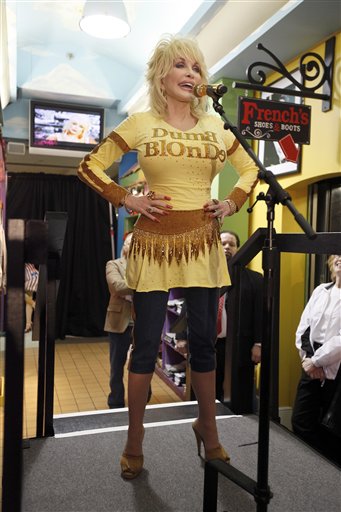
America has continued to learn how to deal with strong women during the great demographic shift in history. Media darlings such as Dolly Parton and Coach Pat Summitt highlight the power of women in their profession. According to Fortune Magazine, 15 Fortune 500 companies are run by women. Leading the charge are Secretary of State Hilliary Clinton and House Speaker Nancy Pelosi on the government front. In fact, there is a long list of successful women in all types of institutions (Oprah Winfrey, Sarah Palin, Faith Hill, etc.).
Yet, the road to success for women isn’t easy. Many women’s dreams of a successful career have come to reality. Strangely enough, some women have been trying to have it all. This marks the clash. There are women who focus on the primary care of their families while delaying their personal dreams. Others dedicate their lives to their careers while compromising the stability of their families. In the middle, there are millions of mothers who attempt to do it all out of necessity and attempt to chase the great American Dream. I am focusing this discussion on the issues facing professional women in contemporary society. In fact, I conducted my own mini-action research project. I interviewed several professional women in the Knoxville area. However, their real names are not disclosed, to protect them. I am sure you can relate to potential drama since these ladies work in small industries.
The Problem
According to the 2005 Census Report, there are 82.5 million mothers in the United States, and there are 10 million single mothers living with children under 18 years old. Working moms make up 55 percent of mothers with infants. Feminists celebrate the liberation of working women while traditionalists postulate the merits of home-bound mothers for institutional stability. In fact, some people blame the moral decay of the country on mothers abandoning their families for professional careers. Many women try to maintain a healthy balance of work and family life, but this balancing act leaves some of them “burnt out.” Therefore, there is a growing problem for women in particular and society in general in understanding consequences of women’s power in the near future.
The Trend
Women stand at the fore front of disruptive change in the political, social, economic, and technological sectors of most counties. Dr. James Canton’s The Extreme Future notes “Women will comprise a high percentage of new workers and leaders, forever changing the politics of boardrooms and markets.” According to a US Census report, nearly one-third of all married women in the US make more than their husbands. More than 25% of working wives earned more their husbands in 2007 (up from 20% in 1983). Furthermore, women are earning college degrees at a faster pace than men. Between 2000 and 2001, women earned 57% of all undergraduate degrees.
Woman power is also being flexed in the corporate world. In 1983, women held 34% of all US executive and managerial positions. However, women held more than 50% of these positions in 2003. Futurist John Cashmen predicts women will forever change the landscape of all institutions: “The number of women in the primary breadwinner role will likely grow in coming decades, driven by social change and the fact that women’s educational achievement is outpacing men’s in many parts of the world.” Therefore, executives must consider how the changing roles of women in organizations will impact their corporate strategies.
The Career Strategy
Progressive women need to develop critical career strategies in a holistic fashion. Balancing work and family is difficult. In general, some men are already taking this transition personally. Some men are opting for the domestic life while their wives become the principal breadwinners. Therefore, society watches gender role reversals and wonder how it will end…relational success or failure?
For working women, any results are often problematic anyway. Yenissee Alonso and Vickie Brint, authors of the article Women in the Workplace, argue that women still deal with institutional barriers that keep them from being successful. For example, women in general are making less than their counterparts doing the same job with the same experience.
Alonso and Brint note, “Since nearly half of the workforce is comprised of women, it stands to reason that woman should be enjoying the same success as their male counterparts in terms of advancement opportunities and earning capacity.” Princeton researchers in a 2003 study concluded that college-educated women who hold higher expectations for their potential mate may lower their chances for getting married. In fact, some men may be uncomfortable with having a woman who has more education and makes more than them, postulate some theorists.
Sue Means is a professional engineer in a highly competitive consulting industry. She sees challenges for professional women. She notes that men are treated differently. Means explains, “Some of my colleagues talk about how pretty I am. They comment on my clothes and make suggestions regarding what I should wear. That would not happen to a man.”
Liza Fuller is a government program manager with a decade of experience in handling difficult environmental issues. She exists in a mostly male dominated industry. Fuller notes, “Women are still expected to work harder than men to prove themselves and avoid criticism. Attractive women still get grief about being promoted for reasons other than their own merit and it’s not fair.”
Furthermore, Canton suggests that the most educated, skilled, and experienced employees will be in high demand. Therefore, professional women need better strategies. Means recommends prioritizing what’s important: “I let go what’s not important. Most women get overwhelmed with trying to manage all of the household and family responsibilities while working at the same time. You need to be realistic about what you can do. It’s a balancing act.” Some women feel that they can have it all without any drop off. Fuller disagrees: “There is always a sacrifice because you spend more time away from your family.” Although there will be an ever increasing number of opportunities for women in the workplace, women must analyze every career move in a holistic fashion if they want to keep that delicate balance.
Conclusion
The future is bright for working women as never before. In fact, women will drive most institutions toward major changes in the near term. However, this article demonstrated that the road to success for most professional women isn’t easy. They must deal with sexism to a certain degree. However, the demands of their professional life have not kept up with the heavy demands of a family and personal life. Therefore, women must develop career strategies in a holistic manner that maximizes their efforts. In turn, society must learn how to embrace women’s power in the future if America hopes to continue to compete.
Is it impossible for women in leadership to balance their professional and personal lives? If so, how? Can contemporary organizations change to fit the ever changing gender role reversals in society?
How do organizations inspire workers undergoing so much change and competition in their lives? Many organizations are good at providing extrinsic rewards such as cash, promotions, and titles. Yet, contemporary organizations miss the key ingredient of good leadership.
In fact, most organizations won’t be successful without it. Managers can purchase better equipment or introduce a new process. However, the situation won’t improve until there is good leadership. What is leadership? There are a variety of leadership definitions. For my blog, leadership is defined as the ability to influence people to support a specific goal.
Corporations desire them. Militaries thrive on them. Churches praise them. Sadly, many people don’t understand the concept of good leadership. I will make a distinction between a great leader and great manager. In fact, leadership is not about being the boss or manipulating people for personal gain. Barbara Kellerman, author of Bad Leadership, defines bad leadership as “being unwilling or unable to control personal desires such as power instead of seeking for the common good.”
She place bad leaders in two categories: ineffective and unethical. An ineffective leader achieves the desired objectives but falls short of their intentions. Kellerman explains that leaders are often judged ineffective because their efforts fail due to their methods and the end results. However, this situation is different in regards to ethics when leaders decide to act in unmoral ways before their followers.
I’ve seen passionate managers; however, they weren’t great leaders. These managers were zealots for getting the task completed and checking boxes. Their influence was directly related to their position in the organization, not their personal influence. Rick Joyner, author of Leadership Management, notes the qualities that make a good leader would make poor managers in general.
What is the critical reason for this distinction? A manager must be detail-oriented to achieve success while a good leader must be concept-oriented. There are a few exceptions, however. Joyner explains that large organizations are usually bureaucratic and make it difficult for great leaders to rise to the top. In my organization, it is difficult to implement innovative processes due to a bureaucratic structure. Managers are rewarded for handling tasks, not inspiring people.
Organizations that want to have sustainable success must find ways to infuse good leadership into their organizations. All managers are not leaders. Organizations that do not understand this simple fact will leave themselves vulnerable to disaster. Some leaders are forced to start new organizations (for example, Steve Jobs of Apple). Countless leaders, especially change agents, are energized by their passion. I would say it is a critical component for effective organizations. If a manager wants a more “charged” organization, give them good leadership that inspires followers.
Why are organizations reluctant to deal with the issue of good leadership? What can be done to infuse contemporary organizations with good leaders?
What’s going on? The world is filled with tension. People are cynical about their institutions. Our nation is engulfed in disruptive change. We cannot stand it! We trust no one, too. According to a Gallup survey (January 2010), people have a negative image of the federal government and big businesses. In fact, distrust abounds toward most organized institutions including corporations, organized labor, politic parties, and the media. Many people wonder what has happened to our country.
In 1971, Marvin Gaye released his thirteenth album What’s Going On. The album heavily captured the nation’s social consciousness such as the Vietnam War and the Civil Rights Movement.
Gaye sings, “Father, father, everybody thinks we’re wrong
Oh, but who are they to judge us
Simply because our hair is long
Oh, you know we’ve got to find a way
To bring some understanding here today
Oh….What’s going on?”
As Americans continue to fight for their jobs and their way of life, I also ask our nation, “What’s Going On?” The economic downturn continues to worsen for today’s workers. Therefore, individuals need to consider their own career strategies. Unfortunately, we are witnessing the last era of the full-time workforce. According to a USA Today analysis, part-time work is at a record high while overtime is at an all-time low. An average of just 33 hours was recorded for the average worker in May 2009; it was fewer hours than any time since the Bureau of Labor Statistics begun to track it in 1964. In fact, over 9 million people want to work full-time but can only find part-time employment.
According to the Federal Reserve Bank of Cleveland, the ranks of involuntary part-timers have increased by 4.9 million since 2008. Some managers reduce workers hours in a noble effort to avoid layoffs while other managers use it for corporate gain by reducing the number of workers with benefits. However, those economic indicators that reviewed underemployment may not have provided the whole picture. For example, underemployed workers and those individuals who have lost jobs or have given up the job search are statistics that are worth watching to determine the health of employment in the nation.
Consequently, few Americans are optimistic about their careers. With the continuing layoffs by American businesses, many employees and government officials are looking for social responsibility. Company after company has downsized its workforce as a way of continuing profits; these same companies expect the remaining employees to be productive and be happy “you’re still employed.” Some managers do not care about the personal welfare of their employees.
As more employees desire a more purposeful life, this management attitude provides a continual conflict in an organization trying to be profitable. Clearly, employees will not give 110% if they feel that management is using them. Employees will keep critical information to themselves, give management the minimum performance in order to keep their jobs, and provide no sense of loyalty to the organization that is not reciprocal. Therefore, effective leaders need to understand this uncertainty among workers and develop strategies to motivate them.
How do employees prepare themselves for a future of uncertainty in the marketplace? What can managers do to promote a high level of performance while suffering from the aftermath of massive downsizing and outsourcing?
Everyone knows I love sharing information. I learned about a great website called Elance.com for freelancers and entrepreneurs. The website allows individuals and organizations to bid out work for the best price. Initially, I was amazed at the different people bidding from across the country.
Conventional wisdom would say that a guy bidding for work in India at $5 per hour versus a guy in New York at $60 per hour would be a no brainer. However, I have purchased services from Elance.com where the price was not the prime consideration. I looked at the individual’s experience and identified what it was worth for me to get it done. In a nutshell, I was aiming for the most value. Likewise, organizations that want to compete must understand value creation in relationship to globalization.
Business cannot hide from the impacts of globalization. According to Dr. James Canton’s The Extreme Future: The Top Trends that will Shape the World in the Next 20 Years, there will be a global war for Smart Talent. In fact, it will be the key driver for competitive advantage. As the world will witness, the most educated, skilled, and experienced employees will be in high demand.
Global competition and the shortage of workers have made diversity a center-point for most organizations. Globalization has forced many organizations to rethink their approaches. Friedman (2008) noted the progression of globalization. Globalization 1.0 was driven by the dynamic force of global integration; it was about countries globalizing.
Globalization 2.0 (roughly 1800 to 2000) was driven by global integration but with an emphasis on multinational companies; it was about companies globalizing. In Globalization 3.0, the force is driven by the power of individuals to collaborate and compete globally. In fact, Globalization 1 and 2 were primarily driven by European and American individuals and businesses. Globalization 3.0 will be driven by more diverse constituents. Therefore, understanding how to create value across the global will be vital for sustaining business success.
Twenty-first century organizations can no longer implement value creation in a vacuum. Value creation can be defined as an organization’s ability to convey worth of its product or service to customers. Therefore, it goes to value, which focuses on the relationship between the customer’s expectations of a product/service quality to the actual amount paid for it.
Many organizations fail in these global markets due to a lack of understanding their customers as well as their own organizations. Dr. Lynda Falkenstein, niche market expert, explains, “Understanding your customer’s perceptions of the world is an absolute must for one major reason; that is, no one buys something just because you want to sell it.”
C.K. Prahalad and Vemkatram Ramaswamy, authors of The Future of Competition, further argue that there is an arrogant management structure in place that cares little for the opinion of others. However, organizations that deal with postmodern workers must foster a different corporate culture. In fact, Prahalad and Ramaswamy reason that 21st century organizations must change their value creation system. They noted the new system as an individual-centered co-creation of value between consumers and organizations. Few executives take the time to explain their values.
Sustaining effective organizations will require a focus on value creation if they hope to be successful in the global market. However, this appears to be a critical weakness in modern organizations. Many organizations exist with value misalignment. Values are the core beliefs of an individual. Different people have different values. Henry Mencken, author of Prejudices, explained, “The difference between a moral man and a man of honor is that the latter regrets a discreditable act, even when it has worked and he has not been caught.”
Global leadership expert Timothy Stagich maintains that the basic values for a high collaborative organization include mutual respect, appreciation of diverse contributions, reciprocal benefit, and a shared understanding of the underlining corporate values. Many leaders forget about the importance of values in an organization. Few institutions take responsibility for value alignment. That reality will hurt them as they fight to survive in Globalization 3.0 and later.
How do organizations adapt to the global market and create value at the same time?
In the 1999 blockbuster movie hit TheMatrix, a world beyond anyone’s imagination emerges. A computer hacker Thomas Anderson (Keanu Reeves) aka Neo escapes his daily grind in hopes of adventure. However, what Neo discovers is something that transforms his life.
He discovers that his whole world has been created by a cyber-intelligence. Neo refuses to accept it. His mentor Morpheus (Lawrence Fishborne) asks Neo a pointed question: “What is real?” Likewise, millions of Americans hope that the economic turmoil isn’t real and the threats of global competition are bad dreams.
American children sing “We are the world,” but the world does not listen. Children in Iran burn American flags. Children in Iraq throw stones at American soldiers. Children in China write hateful essays about the “evil” American ways. American politicians attempt to spin how third world countries embrace Western ways while a terrorist alert is heightened to acknowledge another international threat.
Global trends are impacting the political, social, economic, and technological outlooks of most counties. Sweeping changes make global competencies more critical. Management strategists view these cultural shifts like waves in an ocean. Some of these emerging trends include (a) shift in consciousness, (b) disenchantment with Scientism, (c) inner sources of authority and power, (d) respiritualization of society (e) decline of materialism (f) political and economic democratization, and (g) beyond nationality. These trends will forever change international relationships if they continue.
Additionally, the ever-changing demographics of the world are reshaping a new global perspective. According to one estimate, by 2025, the world population will be at 7.9 billion people. Between 1993 and 2025, around 95% of global population growth will come from developing countries. Clearly, today’s executives now understand that globalization is more than a big word for doing domestic work internationally. Global miscues can be fatal.
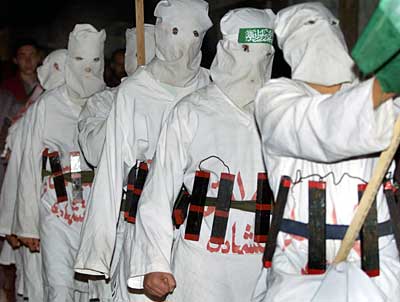
Currently, the miscommunication in understanding the Mideast culture has created major headaches for the Western world. Some assume that the Arab people only respond to military force. Therefore, diplomatic efforts get lost in the military battles. Cross-cultural mishaps can occur in the absence of communications. For example, many view the handling of the Israel-Palestinian conflict as an example of the lack of knowledge of culture. Former Secretary of State Colin Powell explained that extremist groups like Hamas must play a vital role in the solution to this crisis. Others disagree. Therefore, globalization forces organizational strategists to rethink their approach.
In order to compete in the future, special competencies are needed for global competition. In fact, there is something intriguing about global leadership. Global experts Stewart Black, Allen Morrison, and Hal Gregersen argue that every global leader has a set of global characteristics regardless of his or her country or industry. The four key areas include inquisitiveness, perspective, character, and savvy. Business savvy becomes the word of the day because one must be able to think globally and adjust activities on the local level as well as satisfying customers at all levels. For the most part, understanding cultures is viewed as a primary responsibility of government organizations associated with national defense or diplomatic functions. In fact, understanding trends requires a unique skill mix.
Finally, effective organizations that are positioning themselves strategically realize that globalization is not a dream, but a link to their distant future. Yet, dealing with cross cultural issues is not a simple task. Employees and managers need to develop these global competencies. Doing work globally requires two dimensions of complexity: business and cultural complexity.
What can be done to incorporate global leadership values in today’s organizations?
I sat in the office waiting for a debriefing on my job interview. I didn’t get a management position from this organization. The senior executive spoke to me cordially about me doing a good job. I pressed him for more specifics so that I could improve myself on the next job interview. He candidly mentioned that my outside interest (writing, talkshow appearances, TV interviews) was a distraction to this position. It was apparent that this older gentleman wasn’t ‘feeling my creativity.’ In fact, I felt he didn’t like it. I politely thanked him. I knew I was a marked men his mind due to showcasing my creativity. During this period and in this organization, creativity was not deemed a valuable asset to the organization.
Over the past eight months, 1.8 million people without jobs left the labor market. In fact, their pessimism was so great that they gave up looking for employment. Hidden beneath these numbers are the underemployed. Tennessee Congressman John Duncan Jr. notes, “Underemployment is probably even higher, with far too many having to work at low-paying jobs for which they are over-qualified.”
With the unemployment rate continuing to rise, individuals are perplexed as to what is the best decision to make for their careers. If more jobs are needed, it will take organizations that possess the ability of innovation. Given this premise, this discussion examines how managers can infuse their organizations with creativity, thereby surviving and defeating disruptive change. Organizations must develop their workforce to be a collection of innovators and creators. Gary Hamel, author of Leading the Revolution, notes “Industrial revolutionaries will exploit any protective urge, any hesitancy on the part of the oligarchy…In the nonlinear world, only nonlinear ideas will create new wealth.”
Unfortunately, many of today’s managers are not equip to think in nonlinear ways. Their extensive experiences become a liability during disruptive change. As American businesses battle their global competitors with the scientific management strategy, market shares continue to take a downward spiral. Everyday disruptive change breaks down traditional organization strategies. What worked yesterday will not work in this harsh environment. Therefore, organizations move cautiously into the future. Therefore, the nation stares at impending danger.
However, creativity may be one of the biggest weapons to fend off competitors. Creativity is the process of developing new, uncommon, or unique ideas. It involves a mental process involving the generation of new ideas or concepts, or new associations between existing ideas or concepts. Organizations do not understand how to infuse creativity.
Creative genius Michael Michalko argues that innovation does not happen by chance: “It [creativity] is not a result of some easily learned magic trick or secret, but a consequence of your intention to be creative and your determination to learn and use creative-thinking strategies.”
Companies need to determine how they will use innovation as a competitive advantage. In fact, creative people need to work in environments that stimulate, grow, and enhance their abilities. In taking this step, they need to create a culture that supports these gifted individuals by rewarding them and giving them opportunities to growth. When organizations get serious about maximizing their creativity, they will be laying the groundwork for a sustainable future.
The future is ripe for creators. Sadly, globalization has become a menacing threat to some businesses. Therefore, the major challenge for contemporary institutions is to produce workers who are intelligent, creative, and internationally savvy to handle the challenges of the 21st century. Trend expert Henrik Vejlgaard insists that creative people often set new trends. These create people include poets, authors, actors, architects, singers, and other gifted individuals. High performance organizations across the globe will seek these creative groups out if they want to sustain market advantages and sustain profitability.
American humorist Erma Bombeck said, “When I stand before God at the end of my life, I would not have a single bit of talent left, and could say, ‘I used everything you gave me.” Truly, creative individuals want to fully use their talents and feel appreciate. In contemporary organizations, innovation and creativity often falter as a major priority. Management strategist Stanley Gryskiewicz argues that turbulence associated with change can be a positive force for innovation. In fact, finding innovative ways to jumpstart tomorrow’s engineers is a great concern for businesses that want to remain relevant in the 21st century.
How do contemporary organizations take steps to infuse creativity in their organizations? What can creative employees submerged in bureaucracies do to sustain their creative juices?
In the movie Slumdog Millionaire, the life of 18-year old Jamal Malik is revealed. He is an orphan from the slums of Mumbia. Jamal has the opportunity to play India’s version of ‘Who Wants to Be a Millionaire’; he stands one question away from winning 20 million rupees.
The movie was dramatic and powerful. It demonstrated the impacts of globalization on diverse cultures in the world. Although Slumdog Millionaire won eight Academy Awards in 2009, it was a movie mostly invisible to the average American citizen.
As American businesses expand globally, organizational leaders need to evaluate what diversity will mean in the near future. Many organizations are struggling to understand the meaning of a culturally diverse organization. Some organizations are further along in implementing diversity strategies than others. Unfortunately, most managers miss what diversity is all about.
Strategic foresight provides a lens for understanding how to dissect this diverse future. Strategic foresight allows an organization to analyze what has happened or may happen in the environment. Nick Marsh, Mike Mcallum, and Dominique Purcell, authors of Strategic Leadership: The Power of Standing in the Future, explain that the strategic process used in the past is not adequate for today’s disruptive change. They argue that the traditional strategy was designed for the 20th Century Industrial Age.
However, the Knowledge Age requires a flexible and dynamic strategy. Today, organizations are not confined to fixed boundaries or sectors. They have unlimited resources due to the fact that the key resource is not tangible but intangibles (ideas, knowledge, etc.). In fact, futurist Richard Thieme maintains that the future is being constrained by technologies. In this New World Order, all organizations like all organisms can be defined as structures of information and energy.
A diversity strategy isn’t easy to master. Historically, diversity has been mandated though federal laws via equal employment opportunity and affirmative action. It was a forced change that resulted in negative resistance by both managers and employees. In spite of the government’s many operational flaws, it has attempted to broaden the makeup of workforce for several years.
Clearly, this is a shortsighted approach to organizational strategy when dealing with a multi-cultural marketplace. As recent studies demonstrate, employees want a more meaningful workplace. Diversity is only adding fuel to a fire that is already smoking. Today’s employees don’t want to be a component in a big machine. Employees want to be valued.
In some cases, technology may impede an objective perspective of different cultures. For example, social media is an increasing communication medium where individuals connect with each other. However, many times individuals’ personal social networks are not diverse along ethnic, gender, racial, or religious lines. Anne Tsui, and Barbara Gutek, demographic gurus, argue individuals within a social group may have a different experience than others from the majority culture in a similar experience.
Disruptive change can have a profound impact on society. For example, the Industrial Age marked the rise of factories, the increase of urban life, and the growth of unskilled labor for industrial work. Between 1840 and 1920, there was a massive influx of immigrants seeking work. This reality transformed American society. That is why organizations need to understand strategic foresight.
In 1987, the Hudson Institute published Workforce 2000, which outlined the impending demographic changes for the American workforce. A recent Department of Labor report, Futurework: Trends and Challenges for the Work in the 21st Century, outlined the following future trends:
By 2050, minority groups will make-up half of the population
Immigrants will account for almost two-thirds of the population
One-quarter of the population will be of Hispanic origin
Almost one in ten Americans will be of Asian or Pacific Islander decent
In summary, demographic changes will reshape the future of organizational culture. The old paradigm of “just fit in or get out” will soon become archaic. Let’s hope that America can adequately prepare for these shifts before it is too late.
Using a strategic foresight perspective for analyzing the year 2050, what may the future hold for American institutions? What will be the impacts on major sectors such as business, government, education, and other prominent organizations? What will globalization mean in the future?








 Nu Leadership Revolution Blog
