
In the 1999 blockbuster movie hit The Matrix, a world beyond anyone’s imagination emerges. A computer hacker Thomas Anderson (Keanu Reeves) aka Neo escapes his daily grind in hopes of adventure. However, what Neo discovers is something that transforms his life.
He discovers that his whole world has been created by a cyber-intelligence. Neo refuses to accept it. His mentor Morpheus (Lawrence Fishborne) asks Neo a pointed question: “What is real?” Likewise, millions of Americans hope that the economic turmoil isn’t real and the threats of global competition are bad dreams.
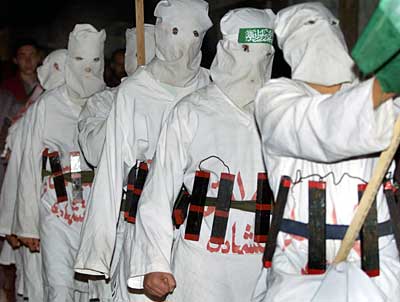
American children sing “We are the world,” but the world does not listen. Children in Iran burn American flags. Children in Iraq throw stones at American soldiers. Children in China write hateful essays about the “evil” American ways. American politicians attempt to spin how third world countries embrace Western ways while a terrorist alert is heightened to acknowledge another international threat.
Global trends are impacting the political, social, economic, and technological outlooks of most counties. Sweeping changes make global competencies more critical. Management strategists view these cultural shifts like waves in an ocean. Some of these emerging trends include (a) shift in consciousness, (b) disenchantment with Scientism, (c) inner sources of authority and power, (d) respiritualization of society (e) decline of materialism (f) political and economic democratization, and (g) beyond nationality. These trends will forever change international relationships if they continue.
Additionally, the ever-changing demographics of the world are reshaping a new global perspective. According to one estimate, by 2025, the world population will be at 7.9 billion people. Between 1993 and 2025, around 95% of global population growth will come from developing countries. Clearly, today’s executives now understand that globalization is more than a big word for doing domestic work internationally. Global miscues can be fatal.
Currently, the miscommunication in understanding the Mideast culture has created major headaches for the Western world. Some assume that the Arab people only respond to military force. Therefore, diplomatic efforts get lost in the military battles. Cross-cultural mishaps can occur in the absence of communications. For example, many view the handling of the Israel-Palestinian conflict as an example of the lack of knowledge of culture. Former Secretary of State Colin Powell explained that extremist groups like Hamas must play a vital role in the solution to this crisis. Others disagree. Therefore, globalization forces organizational strategists to rethink their approach.
In order to compete in the future, special competencies are needed for global competition. In fact, there is something intriguing about global leadership. Global experts Stewart Black, Allen Morrison, and Hal Gregersen argue that every global leader has a set of global characteristics regardless of his or her country or industry. The four key areas include inquisitiveness, perspective, character, and savvy. Business savvy becomes the word of the day because one must be able to think globally and adjust activities on the local level as well as satisfying customers at all levels. For the most part, understanding cultures is viewed as a primary responsibility of government organizations associated with national defense or diplomatic functions. In fact, understanding trends requires a unique skill mix.
Finally, effective organizations that are positioning themselves strategically realize that globalization is not a dream, but a link to their distant future. Yet, dealing with cross cultural issues is not a simple task. Employees and managers need to develop these global competencies. Doing work globally requires two dimensions of complexity: business and cultural complexity.
What can be done to incorporate global leadership values in today’s organizations?
© 2010 by Daryl D. Green


 Nu Leadership Revolution Blog
Leave a comment