Artificial intelligence is raising an urgent question for students, families, and experienced professionals: How do we prepare for opportunity as the workplace changes?
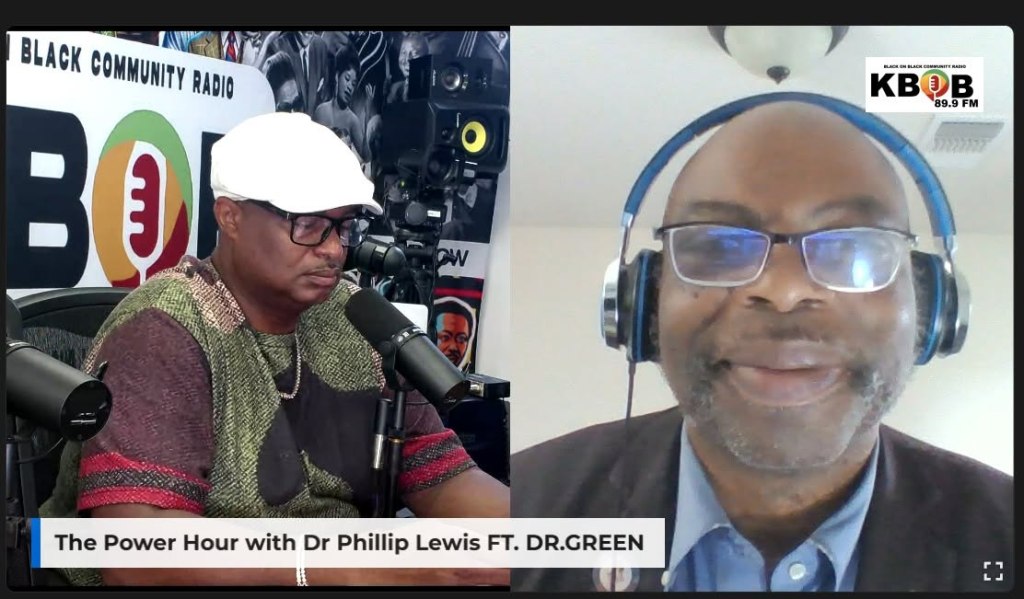
I joined Dr. Courtney Skipper and Dr. Smiley Elmore on KBOB 89.9 FM’s Money Matters to discuss AI, jobs, and career readiness. These issues reach beyond the workplace. They affect how families plan, how students prepare, and how communities help people move forward.
The phrase displayed during the interview, “The alarm is going off,” offers a useful starting point. Awareness matters, but preparation requires action.
Here are practical takeaways to consider:
Prepare before change becomes a crisis. Look at how technology is affecting your field. Identify one skill you can begin strengthening now.
Make your abilities visible. A degree or résumé tells part of your story. Projects, work samples, and examples of problems you have solved help demonstrate what you can contribute.
Pair experience with continued learning. Experienced workers bring judgment, relationships, and institutional knowledge. Learning new tools can help them apply those strengths in new ways.
Give young people opportunities to practice. Internships, mentoring, community projects, and meaningful work experiences help connect classroom learning with workplace expectations.
Strengthen human skills alongside technical skills. Communication, teamwork, ethical judgment, and leadership deserve attention as people learn to work with AI.
Make career preparation a community responsibility. Schools, employers, churches, and community organizations can create connections that help people find guidance and opportunity.
Turn concern into a next step. Take a course, update your portfolio, contact a mentor, or explore a tool relevant to your work. Start with an action you can sustain.
For me, the central question is how we help people prepare with confidence and purpose. Students need pathways into meaningful work. Experienced professionals need opportunities to keep contributing. Communities need to participate in both.
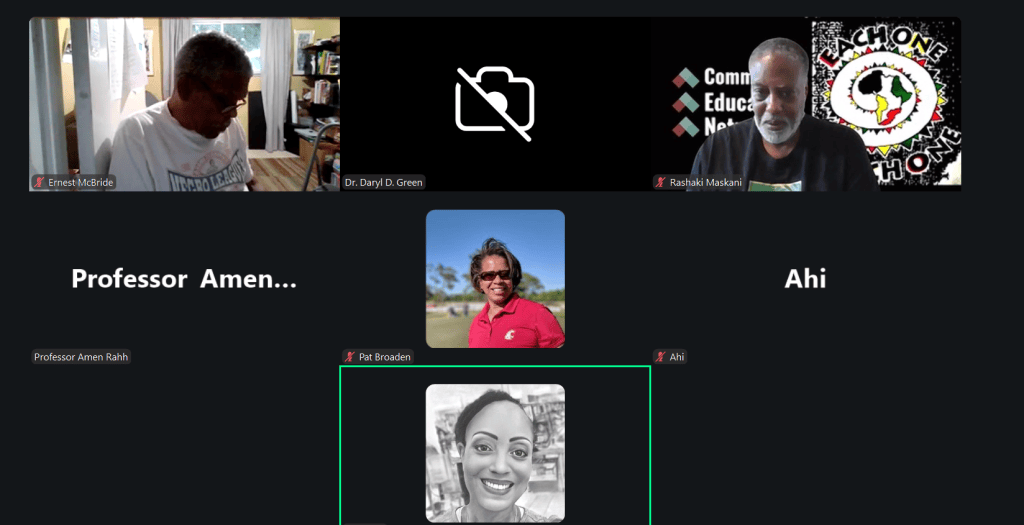
On September 23, 2026, I joined the Community Education Network’s CEN Show for a conversation about AI, jobs, education, skilled trades, and the contributions of younger and older workers. Thank you to the host, Rashaki Maskani, and the CEN family for welcoming me! I was very excited by the warm introduction.
The conversation raised a practical question: How can we help people prepare for opportunity as work changes? These are my takeaways and reflections, rather than a transcript of the program.
Takeaways from the CEN conversation:
Keep learning. Choose one useful AI tool and learn how it can support a task you already understand. Check its output. Your judgment remains part of the work.
Make your skills visible. A degree or work history tells part of your story. A completed project, work sample, or clear explanation of a problem you solved helps others understand what you can contribute.
Give young workers a place to start. Mentoring, practical assignments, and opportunities to demonstrate ability can help students connect classroom learning with workplace expectations.
Recognize the value of experienced workers. Years of judgment and problem solving deserve a place in conversations about new technology. Help experienced workers connect what they know with tools they are still learning.
Include skilled trades in the conversation. Career preparation should give people room to explore different pathways. Consider practical training and hands-on work alongside college and other learning options.
Build relationships across generations. Older and younger workers have knowledge to share. Schools, churches, employers, and community organizations can create opportunities for them to learn from one another.
Turn concern into a useful action. Reach out to a student. Share a resource with a colleague. Ask someone whose work is changing what support would help.
Stay flexible when technology fails. My camera failed during the interview, but the conversation continued. The people involved adapted and kept it going. Human connection helped us move forward.
People rebuild the future, not machines.
Watch the full interview
Continue the conversation through The Nehemiah Blueprint™ and read the free Nehemiah Leadership Brief, “Where Are the Jobs?” at https://nuleadership.substack.com/.
About the author
Dr. Daryl D. Green is an author, leadership strategist, and former dean of Langston University’s School of Business. He spent 27 years with the U.S. Department of Energy before entering academia. He founded The Nehemiah Blueprint in the Age of AI and developed the Nehemiah Doctrine of Disruptive Leadership™. For interviews and speaking inquiries, contact advice@darylgreen.org.
For 55 minutes, Dr. Daryl D. Green and Dr. Phillip Lewis moved beyond the headlines about artificial intelligence and focused on the people living through disruption.
Green joined Lewis on The Power Hour on KBOB 89.9 FM in Tulsa, Oklahoma, on September 10, 2026. Their extended conversation explored artificial intelligence, jobs, higher education, leadership, and The Nehemiah Blueprint™ in the Age of AI.
Artificial intelligence and automation are already changing the way people work. The question facing workers, students, educators, families, and organizational leaders is no longer whether disruption is coming. Disruption is already here.
Green argued that technology may change jobs, industries, and institutions, but people must still provide the judgment, relationships, courage, faith, and purpose needed to rebuild.
People rebuild the future, not machines.
Preparing People for Disruption
Green created The Nehemiah Blueprint™ to help people and organizations respond when unchosen change and loss disrupt their lives. At that moment, people face a choice: rebuild or remain captive to what happened.
The initiative draws upon current workforce research and Green’s practical experience as a former business school dean, educator, author, entrepreneur, and retired senior engineering manager.
The KBOB conversation raised an important question: How should people prepare for jobs that may change, disappear, or require entirely new skills?
Green’s advice was direct: “Don’t prepare for the job you had. Prepare for the problems somebody will pay you to solve.”
That preparation requires more than learning how to operate the newest technology. People must strengthen their ability to think, adapt, communicate, solve problems, build relationships, and lead during uncertainty.
The Conversation Continues
The interview aired on KBOB 89.9 FM and was shared on Facebook Live. Following the conversation, Dr. Lewis invited Green to return to The Power Hour on October 8, 2026.
The next appearance will continue the discussion about the human impact of artificial intelligence and what leaders, educators, families, and communities can do to prepare for the future.
Dr. Daryl D. Green is a business strategist, speaker, and author. A former dean of the business school at Langston University, Green created The Nehemiah Blueprint in the Age of AI… He also created the Nehemiah Doctrine of Disruptive Leadership™. Sixty percent of proceeds from The Dean’s Devotional support student-retention scholarships at Langston University.
Dr. Green’s Approach to Coaching Students Toward Employability
Sometimes traditional, long-tenured professors can get stuck in a rut, teaching students skills that are no longer needed or are relevant to conditions in the current fast-changing marketplace. Dr. Daryl D. Green provides his students with relevant, contemporary, career-ready skills that address the future of their work, as they prepare to begin their careers. Business simulations, based on real-time, current examples, provide students the skill-building that is important to their preparation. Dr. Green’s research on how to increase GEN Z learning outcomes serves as a basis for how he relates to his students as he imparts practical applications in the classroom. See research on this topic: https://merj.scholasticahq.com/article/22007-the-coronavirus-effect-how-to-engage-generation-z-for-greater-student-outcomes.
In order to better understand the ins and outs of business strategy, students in Dr. Green’s strategy class participated in a business highly regarded simulation project, the Capsim Capstone. Thirty-six students were divided into six teams, which competed against each other over a nine-week period. The rigorous simulation process included weekly briefings, submission of detailed operational reports, and formal presentations. Team Digby was declared the winner of the competition. Congratulations to team members Sayvon Milton, Brittni Proffitt, Noah Higgins, Matthew Neel, Andreja Peciuraite, and Justin Koone.
Caption: The winning Team Digby members pose proudly to celebrate their winning effort: [L-to-R: Sayvon Milton, Brittni Proffitt, Noah Higgins, Matthew Neel, Andreja Peciuraite, and Justin Koone]
Dr. Green, the management professor who taught the class, explains, “Our teams performed well in the business simulation projects in which they participated. In the new learning paradigm of faculty instruction, I see my role as academic coach or facilitator. In my business school, we require our students to take this simulation seriously. Congratulations to Team Digby! They set a great example of what hard work can do.”
Team Digby performed in the simulation at an historical level. It finished in the 99th scoring percentile. We are extremely proud of the result produced by the winners. The scores achieved by the team compared most favorably with similar teams from other schools who have competed in the same simulations. Some of these schools include Brigham Young University, California State University, Florida State University, and the University of Waterloo. You can view the winning team’s presentation at https://youtu.be/A3pX_aNq2L8.
Capsim Capstone® is a complex business simulation project designed to provide students with real-world applications of business strategy. The simulation teaches marketing, strategizing, business finance and accounting, cross-functional alignment, competitive analysis, teamwork, and the selection of tactics and strategies, all of which are necessary to build a successful, focused organization. For more information, please contact Dr. Daryl Green at drdarylgreen@gmail.com.
ABOUT DR. D. GREEN
Dr. Daryl D. Green is a business strategist, awarding speaker, and noted author. He is the Vice President of Marketing at AGSM Consulting LLC where he provides strategic planning, marketing, and product development to emerging and existing businesses. He provides consulting, guidance, and management training for today’s small businesses. He is a business professor operating a small business in Oklahoma. He has assisted over 100 organizations across the globe with marketing and management problems. If you would like more information about this article or business assistance, please contact Dr. Green at drdarylgreen@gmail.com or visit http://www.drdarylgreen.com.
A new research conducted by students at a private school’s business school in Oklahoma has delved into the features of what has been described as the new social media giant, TikTok. This study explores how the platform was able to carve a niche for itself in the digital space. Titled “The Rise Of TikTok: A Case Study Of The New Social Media Giant,” the work was done by Dr. Daryl D. Green, Dr. Xanshunta L Polk, Josh Arnold, Chloe Chester, and Jay Matthews.
Social media has undoubtedly changed the way people communicate across the globe as well as the mode of customer engagement across industries. The concept has created a platform for a seamless connection between millions of people, irrespective of gender, location, or age group. However, a new kid on the bloc seems to have other ideas, as substantiated by the unimaginable feat achieved by TikTok in recent times, as highlighted by a study done by these researchers. Dr. Green explains, “Our research team of faculty and students wanted to better understand the social media platform of TikTok so that we can see possible applications in the business community.”
Dr. Green and his team highlighted the following critical points about TikTok:
TikTok should use the power of influencers to their advantage through collaboration for better understanding of trends and culture.
The development of a new management team should include censorship specialists to effectively monitor and lobby varying regulations.
TikTok influencers can use disruptive marketing to advance from a micro-influencer to a macro-influencer while the platform requires them to create digital customer surveys for feedback.
The growth of TikTok has been astronomical, to say the least, from just about 55 million active users as at January 2018 to over 1 billion monthly users as of September 2021, according to a recent report published by Statista. The study is particularly unique, as it delves into the social media industry in a way that most people have failed to consider.
In closing, this case study was significant during Covid-19 because the research will assist future scholars and practitioners with social media platforms like TikTok in the digital economy.
Dr. Daryl Green provides consulting, guidance, and management training for today’s small businesses. He is a business professor operating a small business in Oklahoma. He has assisted over 100 organizations across the globe with marketing and management problems. If you would like more information about this article or business assistance, please contact Dr. Green at drdarylgreen@gmail.com or visit http://www.drdarylgreen.com.
Every time Pam heard a siren, she would freeze. Her children and husband were concerned about Pam’s mental state because of her hectic, non-stop schedule working in the emergency room of the local hospital. Twenty years of working in the ER was a tough enough job anyway. But the impact of the pandemic in the last two years had Pam rethinking her life. As she saw people dying from COVID who continued to believe it was not a real virus, Pam did not know what to believe. She had seen her own parents die from COVID, even though they were fully vaccinated and had taken all the recommended precautions. Now, her employer was telling her that she would lose her job if she didn’t get vaccinated within the next weeks. Additionally, because of a county mandate about meeting in large groups, she could not attend church in person. Pam wondered about her faith. All these things fed into Pam’s anxiety and fears. Given all of the stresses she was experiencing, Pam decided to turn in her resignation at the hospital. She had no clue what her future would bring. But she knew she had little job satisfaction.
Life, Pam thought, must be better doing something else.
In 2020, many businesses were forced to lay-off workers The pandemic has caused individuals to rethink their career aspirations and life purpose. Anthony Klutz, an organizational psychologist and professor at Texas A&M, coined this phenomenon The Great Resignation. This article examines how today’s leaders can improve employee job satisfaction for better employee retention and recruitment in the aftermath of the pandemic.
Workers are quitting their jobs at a record rate. According to the U.S. Bureau of Labor Statistics, nearly four million Americans left their jobs in July. Resignations peaked April. Resignation rates are highest among mid-career employees. Those between the ages of 30 and 45 have shown the greatest increase in resignation rates. Additionally, resignations are highest in the tech and health care industries. Perhaps the quitting of jobs is due to some combination of the burn-out of having to “do more with less,” COVID fatigue, and a desire for a more purposeful life. A shortage of workers has meant that employers are forced to pay more to attract workers. However, jobs are still going unfilled. Klutz explains about this The Great Resignation, “It’s not just about getting another job, or leaving the workforce. It’s about taking control of your work and personal life, and making a big decision – resigning – to accomplish that. This is a moment of empowerment for workers, one that will continue well into the new year.”
Why is job satisfaction important today? Some managers are not particularly concerned about the mental welfare of their employees. Employees are being paid to perform a task, these managers think. The relationship is viewed as transactional. Employees get the job done, and they get paid in return. Shouldn’t that be enough? If employees were machines, the answer would be ”yes.” However, employees are not machines. Employees are people. Job satisfaction is a major factor, especially in a period of worker shortage.
Job satisfaction can be defined as ‘the level of contentment employees feel with their job.’ It varies from individual to individual. There are several characteristics that can contribute to job satisfaction, such as (a) the challenging nature of work, which can motivate employees to new heights, (b) a matter of convenience (e.g., short commutes, ease of parking, access to the right digital tools, flexible hours), (c) regular expressions of appreciation by the immediate management and the organization as a whole, (d) competitive pay, which helps employees maintain a good quality of life, and (e) the promise of career progression in sync with employees’ personal growth targets.
According to one study, 52% of voluntarily exiting employees said that their manager or organization could have done something to prevent them from leaving their job. Losing good employees is a financial burden to most businesses. it costs an average of six to nine months of an employee’s salary to replace him or her according to the Society for Human Resource Management. For example, an employee making $60,000 per year, would require $30,000 – $45,000 in recruiting and training costs to replace him or her.
With COVID-19 continuing to impact businesses globally, today’s business leaders must consider new strategies to recruit and retain employees. Countless companies end up in a bidding war with other businesses in order to get the best workers in a shortage. According to research of more than 600 U.S. businesses with 50-500 employees, 63% of businesses said retaining employees is harder than hiring them. Contrary to popular belief, money is not the only motivator for employees. Also, money is not the only incentive that attracts prospective employees. Given this reality, businesses should consider the following strategies to promote employee job satisfaction among its existing work force:
Develop a human capital strategy that complements the emerging hiring trends.
Train managers to have high emotional intelligence in dealings with their employees.
Monitor and track employee job satisfaction periodically via survey tools. Identify any root causes of dissatisfaction and develop a plan.
Provide frequent feedback on initiatives to improve employee job satisfaction, such as an organization newsletter.
Build employee loyalty program incentives to keep good employees and help protect the most valuable asset — quality employees.
Connect with Generation Z employees by providing practical training, such as micro internships with local universities. Programs can be like those in place at Oklahoma Baptist University, which provide business students with practical experience, while also providing local businesses with marketing assistance.
Utilize flexibile employee hours and remote working options.
Incorporate a meaningful, frequent reward system.
Allow employees to create and innovate in their working environment.
In today’s changing landscape, leaders need to be at the forefront of creating a business culture that effectively retains good employees. Job satisfaction matters! According to a Harvard Business Review study, when employees are respected by their leaders, their job satisfaction goes up by as much as 63%. Additionally, the study showed that appreciated employees are 110% more likely to stay with their organization. Unfortunately, some companies fail to see the connection between employee job satisfaction and low employee retention. The pandemic proved that this misunderstanding of human capital is a competitive disadvantage for organizations. With the shortage of workers, some businesses find themselves in an increasingly competitive recruiting climate. This article demonstrated that today’s leaders can improve job satisfaction for better employees, given circumstances confronting employers in the aftermath of the pandemic. Pray that it is not too late.
About Dr. Daryl Green: Dr. Daryl D. Green is a business strategist, awarding speaker, and noted author. He is the Vice President of Marketing at AGSM Consulting LLC where he provides strategic planning, marketing, and product development to emerging and existing businesses. He provides consulting, guidance, and management training for today’s small businesses. He is a business professor operating a small business in Oklahoma. He has assisted over 100 organizations across the globe with marketing and management problems. If you would like more information about this article or business assistance, please contact Dr. Green at drdarylgreen@gmail.com or visit http://www.drdarylgreen.com.
1 “Who is driving the Great Resignation” by Ian Cook 2 “Professor who predicted ‘The Great Resignation’ shares the 3 trends that will dominate work in 2022” by Morgan Smith 3 “What Is Job Satisfaction? Definition, Factors, Importance, Statistics, and Examples” by Chiradeep BasuMallick
Farewell to the 2020 and 2021 years! If you think 2022 will get us back to normal, I bring you bad news. I’m sorry to tell you that you are in error! Today’s small businesses must take a ‘wait and see’ attitude for 2022, because it is riddled with uncertainty and unpredictability about the future. Most organizations have limited resources and must be cautious about their business growth. However, if small businesses were given a master list of areas to improve, based on market forces, these companies would be in a better position for the upcoming year. This article examines the eight critical market trends in this economy that small businesses should consider to better manage market disruption in their organization.
Let’s start with the elephant in the room…THE PANDEMIC! With the uncertainty across the globe including the lingering impacts of COVID, many organizations must rethink their business strategies. Over a year into the pandemic, its full impact on the U.S. economy is still not fully clear. Small businesses are no exception to the need to restrategize. According to a recent study, small businesses have been heavily damaged by the COVID-linked lockdowns of the past two years. The study reported that 43% of small businesses had temporarily closed, and nearly all of these closures were due to COVID. Why should small businesses evaluate emerging trends? Because they are more vulnerable than larger companies to the destructive nature of disruptions in the marketplace. Looking ahead to 2022, there are seven additional trends that small businesses must take into account. You’ll note that almost all of these are directly related to the impact of the pandemic.
Workers Search for Purposeful Living. The Great Resignation isn’t over. Employees are still quitting their jobs as they search for a more purposeful life. According to the U.S. Bureau of Labor Statistics, an average of more than 3.9 million workers quit their jobs each month in 2021, the highest average on record, topping the 2019 monthly average of 3.5 million.
AI and Automation – Artificial intelligence is a disruptive technology. Companies can avoid the high expense of labor through automation. With the rise of automation and new technologies driven by the pandemic, individuals with digital skills will have a competitive advantage. Small businesses can leverage these technology advances by empowering their employees to utilize AI where appropriate, so that that technology is not viewed as a negative.
Digitalization of Data – COVID ushered in the digital economy. If companies did not have a digital platform prior to and during the 2020 lockdowns, they suffered greatly and many closed up shop. Understanding how to collect and analyze critical data is a competitive advantage. According to a MicroStrategy analysis, 60% of companies around the world use data and analytics to drive process and cost-efficiency. Industries in the financial and health care sectors are already leveraging the power of data analysis. For example, Data Pine reports that 94% of U.S. hospitals have adopted Electronic Health Records (EHRs) to support the digital transformation of health data.
The Future of Work – 2020 brought a COVID-induced explosion of working from home. Employees already wanted to have more flexibility in their work lives. Companies responded by offering 70% of full-time workers the ability to work from home!
Supply Chain and Logistics– With the pandemic, there has been a global disruption in the supply of goods and services. According to a 2021 White House analysis, businesses were stuck with billions of dollars in unsold goods when the pandemic hit. Although the economy has mostly recovered and demand has increased, businesses have not been able to bring inventories fully back to pre-pandemic levels, causing a decline in inventory-to-sales ratios. Smart small business owners will need to be savvy about supply chain strategies in order to survive.
Freelancing – Freelancing is part of the gig economy. It goes much further than Airbnb and Uber, but they are prime examples. In the gig economy, businesses hire independent contractors to perform individual jobs, called “gigs.”The total income from freelancing is estimated to be almost $1 trillion. With the gig economy, small businesses can find the necessary talent without taking on the cost burdens of filling jobs with full-time employees.
Digital and Ecommerce –According to the Internet World Stats, there are currently more than 4.2 billion internet users. Small businesses cannot afford to miss the vast potential of catering to this almost universal customer base. The survival of small business now depends on its ability to join the continuing trend of marketing via digital platforms.
Continuous Learning – Keeping up with the latest trends and disruptions requires a learning culture within all organizations. Therefore, a trained employee pool is essential, especially in combatting disruptions. Small businesses need to embrace this trend toward continuous learning for all its employees and for all aspects of its business.
In summary, disruptive forces continue to reshape the global economy. If you are not actively monitoring trends, your company will be at a disadvantage in the market. Today’s small businesses and entrepreneurs must retool their thinking, given the potential impacts of COVID. They must apply their passion for the success of their business to developing the capacity to change outdated ways of thinking. Disruptions will continue in 2022 and beyond.
This article discussed the eight critical trends in the current economy that small businesses should consider to better manage market disruptions. While larger organizations may be able to survive the impacts of market disruptions, most small businesses cannot. By taking the necessary steps to understand these emerging market trends and to maximize the capture of unmet needs in the market, small businesses can make a positive investment in their future. Let’s pray that it is not too late.
Dr. Daryl D. Green is a business strategist, awarding speaker, and noted author. He is the Vice President of Marketing at AGSM Consulting LLC where he provides strategic planning, marketing, and product development to emerging and existing businesses. He provides consulting, guidance, and management training for today’s small businesses. He is a business professor operating a small business in Oklahoma. He has assisted over 100 organizations across the globe with marketing and management problems. If you would like more information about this article or business assistance, please contact Dr. Green at drdarylgreen@gmail.com or visit http://www.drdarylgreen.com.
Are you happy with how your business did this year? What are you going to do differently? How can you hire the right people to support your vision? Unfortunately, many small business owners do not spend enough time planning for the future. It’s quite understandable.
Owners must keep pace with the daily demands of their businesses, including payroll, taxes, product/service delivery, and managing customer expectations. In addition to all these usual demands for the entrepreneur’s attention, COVID-19 and its variants have wreaked havoc on the traditional thinking of operating a successful business.
Here we are at the end of the year, a perfect time for a comprehensive evaluation of your business. Albert Einstein once said, “The true sign of intelligence is not knowledge but imagination.” Small business must think differently in the throes of a pandemic. What about doing a business checkup? Most people can relate to the kind of checkup they have with their doctor, during which he or she will conduct a variety of tests, including blood, vision, heart, and hearing. This article examines the significance of conducting just as effective a checkup to improve your business’s situation in 2022.
Did the pandemic set your business back? Certainly things are not the same. According to Gartner survey of 129 executives, 22% of corporate leaders have delayed their office reopenings while 34% of these executives have made no decisions about reopenings in 2022 due to the Omicron virus. Additionally, nonresidential construction remains 20% below the pre-pandemic level, while consumer purchases of durable goods soared to almost 30% above the pre-pandemic level noted Deloitte Insight.
Furthermore, the Great Resignation of 2021 brought a worker shortage across almost the entire United States. Small businesses were not immune to labor shortages. According to the JOLTS report in the fall of 2021, the number of workers quitting their jobs remained high, about 4.2 million workers or 2.8% of the workforce. Small and medium-sized businesses accounted for 90% of these job openings.
Today’s small businesses need to retool and innovate products and/or processes so that they can become more efficient and effective. Staying one step ahead of the competition isn’t good enough in the kind of disruptive environment we have experienced over the past couple of years. Eventually customers grow weary of what they perceive as a lack of adaptability in your business, and they will look to find a competitor that meets their needs. Sadly, the shortage of workers doesn’t make your challenge any easier.
So it’s imperative that small businesses must be willing to evaluate their current operations and make the required changes. An end-of-the-year check-up may be the turning point of your business. What constitutes a business checkup or business evaluation? It is one that involves a comprehensive review of the critical elements in your operations, one of which is customer service. By this process, a business can identify its strengths and its opportunities for improvement that can lead it to build a competitive advantage in the market.
In our book, Small Business Marketing, Dr. McCann and I provide a roadmap and simple checklist small businesses can use to evaluate themselves. Businesses must have an effective means of evaluating the internal and external factors that are integral to their operations.
With the appropriate diagnosis, a business can develop more sustainable success. Thus, the right checkup is critical. Below are some critical questions to help you conduct your own self-checkup:
Do you have a clear vision for your business? What is it?
Do you know why your customers buy from you and why others do not?
What results are you getting from your marketing? Do you have an effective online presence on the internet?
Are you collecting the right kind of data about your customers and competitors?
Are you keeping pace with your industry trends? If so, what are the key trends?
How are you measuring results (i.e., key performance indicators like cash flow and revenue)?
What are your key competitors’ marketing strategies?
Have you evaluated your strengths and weaknesses (i.e., SWOT Analysis)?
Do you desire better outcomes for your business in 2022? If so, the better results won’t come by accident? Your actions must be deliberate. Thinking outside of the box in a pandemic environment is a neccessity, not merely something on a wishlist. Management guru Peter Drucker famously said, “If you want something new, you have to stop doing something old.”
Thus, small businesses that want to succeed in this uncertain environment must conduct a self-evaluation or checkup. This article demonstrated the significance of an effective checkup to improve your business’s situation in 2022. Don’t miss this opportunity. There are various organizations like the Small Business Administration and local universities that can assist in this process. Start the new year with a healthy business checkup. I pray that it isn’t too late.
Dr. Green assists small businesses across the globe.
Dr. Daryl Green provides consulting, guidance, and management training for today’s small businesses. He is a business professor and a small business owner. Viewers can tuned into his talk show, Small Business Marketing on his YouTube Channel. If you would like more information about this article or business assistance, please contact Dr. Green at drdarylgreen@gmail.com or visit www.drdarylgreen.com.
Business development consultant, Dr. Daryl D. Green, collaborates with South African ministry to feed the children of South Africa with a new photo book
Dr. Daryl D. Green, a renowned business development expert famous for providing strategic planning, marketing, and product development to emerging and existing businesses is teaming up with founders of nonprofits to feed South African children with the aid of a new book. During the Thanksgiving holidays, individuals in the United States celebrate and give thanks for all their blessings and Dr. Green is taking it a notch higher by reaching out to charities in South Africa.
You Feed Them is now available on Lulu.com! All proceeds support Revelation Ministry
A recent report revealed that over three million South African children experienced hunger in 2021, with more than 600,000 children experiencing hunger every day. The National Income Dynamics Study – Coronavirus Rapid Mobile Survey (NIDS-CRAM) in April/May 2021 showed that about six out of 10 South Africans (58%) say that the Covid-19 pandemic has had a negative impact on the income of their households. The pandemic and financial crises in South Africa has many more people on the streets without shelter or food, producing thousands of hungry children. However, Dr. Daryl D. Green seeks to alleviate the suffering of households, collaborating with well-meaning individuals like South African Pastor Ivan and Bronwynn Jones, who captured the needs of the South African children in a coffee table book, You Feed Me.
Pastor Ivan and Bronwynn Jones
Pastor Ivan and Bronwynn Jones are known for their generosity in the local community. Pastor Jones is the senior pastor at Revelation Ministry, based in the gang-infested and poverty-stricken neighborhood of Lavenderhill in the Western Cape in South African. Bronwyn is an ex-teacher while Pastor Jones has worked in the clothing industry for 16 years, as a manager/supervisor.
“I always knew that God is calling us into full-time ministry….Our goal for the ministry is to equip men and women for service in the kingdom of God. I do have a strong character and strong belief that all things are possible with God,” said Pastor Jones. He and his wife, Bronwynn through their “Rise Up Children’s Project” have fed over 850 children daily at four feeding stations. Pastor Jones sees the publication of his book as an opportunity to get the story out about starving children and better help their communities.
Dr. Daryl D. Green, a business professor in Oklahoma initiated the book project to stimulate more revenue for the couple’s ministry. In 2018, Dr. Green accompanied several students on a mission trip at his university, orchestrating a vacation bible school for Revelation Ministry. The encounter with Pastor Jones and his wife had a lasting impact on Dr. Green, inspiring him to do something for the ministry.
“Pastor Ivan and Bronwyn were wonderful hosts to us in Cape Town. I was really touched by their ministry to the children. I just knew if my heart that they needed multiple levels of revenue to sustain their ministry. I believe in economic empowerment. Let’s teach people how to fish instead of giving them a fish,” said Dr. Green.
Children get fed regardless of the status of their families.
Dr. Green proposed a coffee table book to showcase the work of the South African couple visually, leveraging his connection and experience providing consulting, guidance, and management training for small businesses and new project start-ups. Over the years, he has evaluated over 100 organizations including Westinghouse, and Lockheed Martin.
The business development expert launched the book project for the couple with the help of his brand development manager, Antoinette Kelley. “Kelley was the linchpin with her experience of publishing. I knew that we could be successful. The next phase is promoting the great work of Pastor Ivan and his wife to the world.”
You Feed Them is currently available on Lulu.com for persons who want to learn about the plight of starving children in South Africa while supporting the cause championed by the ministry.
To learn more about this fundraising initiative for South African children, please contact Dr. Green at drdarylgreen@gmail.com.
About Dr. Daryl D. Green
Dr. Daryl D. Green is the Vice President of Marketing at AGSM Consulting LLC where he provides strategic planning, marketing, and product development to emerging and existing businesses. In 2016, Dr. Green retired from the Department of Energy, where he worked in the Environmental Management Program for over 27 years. The speaker and award-winning writer with several textbooks and reference books, including Job Strategies for the 21st Century has a national digital marketing certification and is also a respected researcher in his field of study focusing on culture, decision-making, leadership, management, and marketing.
Dr. Green received a B.S. in Mechanical Engineering from Southern University, an MA in Organizational Management from Tusculum College, and a doctoral degree in Strategic Leadership from Regent University and is a respected university professor in Oklahoma, noted and quoted by USA Today, Ebony Magazine, and the Associated Press.
Everyone predicted the demise of Bass Bakery in Baker, Louisiana. Walmart came into the area and destroyed several small businesses. Bill Bass, the bakery’s longtime owner, knew he needed to do something different. He saw his friends who were in business ignored Walmart; his friends banked on loyalty from their past customers. They were disappointed. Bill called in his five sons to develop a plan.
Bobby, who was his youngest son and who had graduated with a marketing degree, talked to his father about implementing three different marketing strategies. One strategy was to sell 2-3 days-old baked goods to low-cost customers; a differentiation strategy was to sell premium-priced goods with home delivery to affluent customers; a niche strategy was to sell local berry products that Walmart could not offer. With no options left, Bill implemented his younger son’s plan. This combination of strategies worked so spectacularly that Bass Bakery became more profitable than ever before.
How are you going to stay in business if you do not make significant adjustments? Today’s small businesses need to retool their business strategies. Marketing plays a critical role. Yet, poor planning can hurt a business’ attempt to make a profit. Dr. Frank Rothaermel, the author of Strategy Management, writes: “A business strategy, therefore, is more likely to lead to a competitive advantage if it allows a firm to either perform similar activities or offer similar products or services at lower costs.” This article examines how small businesses should formulate a marketing strategy that is tailored to their intended customers.
The pandemic continues to wreak havoc on the U.S. economy. Small businesses are no exception. According to a 2020 survey of more than 5,800 small businesses, the pandemic has caused massive dislocation among this business sector. The survey found that 43% of businesses had temporarily closed, and nearly all of these closures were due to COVID-19. Thus, businesses that have not made sufficient adjustments in their planning and strategy are at a disadvantage. Sadly, some individuals start a business with lots of passion and knowledge, but without a plan. With good planning, many businesses can avoid the pitfalls that drive some businesses to failure.
Successful businesses implement a marketing strategy. Dr. Michael Porter outlined three types of generic strategies: low cost, differentiation, and niche-focused. The low-cost strategy allows a business to use low pricing to stimulate demand and gain market share. This strategy requires companies to maintain especially tight control of their costs. An example of the low-cost strategy in the fast-food industry is McDonald’s.
The differentiation strategy is an approach in which companies attempt to set their products or services apart from their competition. Businesses must find ways to distinguish their products from other similar products by developing uniqueness through product design, features, quality, or other noticeable factors that attract customers. For example, Burger King attempts to distinguish itself from McDonald’s and other competitors by offering flame-broiled burgers.
Finally, businesses can employ a niche strategy that targets a specific sub-group of customers or focus on serving a particular area. Most small businesses want to protect themselves from too much competition by targeting a specific group of buyers.5 Although large organizations may have more financial resources, their size makes it difficult for them to adjust to market forces. Therefore, being small and nimbler has its advantages.
To formulate the appropriate marketing strategy, small business owners must address the following questions:
What are the specific customer segments?
What markets do you currently own and what is the future outlook for those markets?
What are the customer needs, wishes, and desires that you can serve?
Why do you want to satisfy these customers?
What is the value of your product/service to customers?
How do you distinguish your products from those of your competition?
How do you plan to satisfy these customers?
In closing, the pandemic and the financial crisis have ruined many small businesses. Unfortunately, some business owners have not adjusted. Yet, changing customer expectations and stiff competition have put more pressure on small businesses. Successful small businesses want to stay ahead of their competitors. Nike Emeritus Chairman Phil Knight explains, “I may be over the top on this, but I just don’t want to be like my competitors. I want my people to believe that whenever our competitors succeed, we will be less able to do all the things we want to do.” This article discussed how and why today’s small businesses must go about crafting a marketing strategy that is tailored to their intended customers. An effective marketing strategy can be a game-changer for small business owners. Let’s pray that it is not too late.
Dr. Daryl Green provides consulting, guidance and management training for today’s small businesses. He holds the Dickinson Chair in the College of Business at Oklahoma Baptist University. He has assisted more than 100 organizations across the nation in the region with marketing and management expertise. If you would like more information about this article or business assistance, please contact Dr. Green at drdarylgreen@gmail.com or visit http://www.drdarylgreen.com.