The Confession of a Decision maker

I listen to chatter over the airwaves. Talkshow host Armstrong William leads a merry discussion on South Carolina’s Governor Mark Sanford.  Armstrong cannot contain himself: “How does Governor Sanford get rid of his Love Jones?” It was a question that was not easily answered. Listeners from South Carolina appeared irritated with this line of questioning.

Many felt the governor had abandoned his wife, children, and the people of South Carolina. On June 24th, Governor Sanford arranged a press conference where he confessed a year-long affair with an Argentine woman. He was missing for more than six days from his office.

At his press conference, political pundits argued Governor Sanford was attempting to save his job, not his family life. He was married and had four sons. Instead of a low-profile strategy, Governor Sanford actively engaged the media, describing his mistress as his “soul mate.”  Clearly, he had lost his mind! His wife Jenny stated, “I believe enduring love is primarily a commitment and an act of will, and for a marriage to be successful, that commitment must be reciprocal.”

Unfortunately, Sanford’s decision ruined his political career, strategic alliances, and the trust of the people of South Carolina. Yet, his personal loss was perhaps greater. He lost his marriage and the trust of his children. Therefore, some decision making carries long-term consequences for individuals and organizations.

Have you ever wondered why some people continue to make bad decisions? You see million-dollar celebrities doing it. You can see this action in government officials and business leaders. There are no discriminators. From the very rich to the poorest of the poor, we see people caught in a vicious cycle of bad decision making. Sadly, we can see it much closer than that. We witness relatives making bad decisions. Despite wise counsel, some people continue to make poor decisions.

The Decision Process

Decision making can make or break an organization. Joan Liebler and Charles McConnell, authors of Management Principles for Health Professionals, maintain that decision making is an essential element of management activities at all organizational levels. Gareth Jones and Jennifer George, authors of Contemporary Management, further argue that managers must respond to opportunities and threats. In fact, decision making is a process where individuals analyze and make determinations regarding a problem that is keeping with the organization’s goals and objectives.

Unfortunately, some people feel the decision making process is a solo operation. Some managers can be caught in this trap and disregard the expertise of their workers. Through series after series of bad decisions, the manager may continue on a merry ride of worsening consequences. Two things generally can stop this dead-end trap. The organization stops him or the organization tanks.

In going through a series of bad decisions, a wise person should gain insight. Unfortunately, some individuals who are in charge will learn nothing, thereby earning the label of a foolish manager. Every person, regardless of their background or social standing, can benefit from good decision-making techniques.

The Path Forward

Making the right decision is a difficult process. Like Governor Sanford, many managers don’t take enough time to evaluate short-term decisions for long-term consequences. No one will usually applaud your many good decisions; however, you will probably catch heat over the bad ones.

Les Brown, author of How to Become the Person You Always Wanted to Be-No Matter What the Obstacle, explains, “Your values are not set by government or church leaders. Your values give you consistency in the way you approach life…By holding to your beliefs, you can always stay on track toward your dreams.” Therefore, making good decisions goes to the heart of being an effective manager.

How do managers overcome the barriers of making bad decisions during uncertainty? Is it possible for a manager to involve their workers in critical decisions without giving up any authority?

  © 2010 by Daryl D. Green

Change Disrupts Us


Last week, I sat down and watched one of my all time classic flicks, Signs.  This 2002 sci-fi thriller revolved around aliens invading Earth. Producer Frank Marshall explained, “It’s really about human emotions set in motion by a supernatural event.” For me, it was the perfect symbol of how people deal with unexpected change.

In Bucks County, Pennsylvania, the plot begins. Local priest Reverend Graham Hess (Mel Gibson) grieves over the horrific death of his wife. After the death, Hess denounces his faith and vocation. He lives with his two children and his brother Merrill, a former minor league baseball player.  Hess finds a crop circle in his corn fields.

In fact, the crop circles appear all over the world. As the story progresses, the family realizes the crop circles are part of other signs that extraterrestrials are here on Earth.  The plot continues to introduce change at a rapid and unpredictable pace. As you would expect, Hess and his family are overwhelmed with so many changes. Today, organizations are no less perplexed by today’s changes in the market. Change is imminent but how we deal with the shift is an uncertainty. Renowned management guru Dr. Tom Peters argues, “Nothing is predictable…The fact is that no firm can take anything in its market for granted.”  All the money in the world cannot stop the forces of change.

Oil giant BP attempts to correct a major accident that government officials are calling the largest oil spill in history involving over 19,000 barrels of crude oil. The political ramifications are large as President Obama tries not to let this incident become his Katrina. Yet, rapid change can make even Superpowers look foolish. Corporations are no exception. BP executives are probably worried about their reputation (which is really about the $$$$$). Will the company become another Exxon?

Furthermore, change exists in a fluid state from easy to impossible to solve for managers. It happens in a series of irregular waves. In fact, change is a wild variable that can totally disrupt the order of things in organizations. There are two major types of change for our discussion, incremental and discontinuous. Incremental change occurs in small increments over time where organizations can prepare for it. You can forecast the future with some confidence.


 Discontinuous change is unpredictable and sudden. It threatens traditional power structure because it drastically alters the way things are currently done or have been done for years. This discontinuous change can be described as turbulence like on an ocean. It becomes unsettling. Donald Sull, author of The Upside of Turbulence, notes “Turbulence, for many, equals risk, and risk equals bad news.” Joan Liebler and Charles McConnell, authors of Management Principles for Health Professionals, further warned about the issues of change: “Change is inevitable, but change can also be chaotic and painful.”

When markets shift take place, many managers rely on their corporate experience to navigate the uncertainty.  Yet, their vast knowledge becomes a liability during discontinuous change due to the lack of any clear patterns in the market. Therefore, disruptive change interferes with conventional thinking of organizations?

How can contemporary organizations deal with disruptive change in ways that they can seize opportunities and stay ahead of their competitors? 

© 2010 by Daryl D. Green


Maximizing Team Chemistry

To build a successful organization in the future, leaders will need to be deliberate in building great team chemistry.  Many organizations consist of both formal and informal groups. In building a high performance organization, individuals within a team must learn how to work together.  In this context, I use groups and teams interchangeable. In other words, employees and leaders need to respect each other and get along. According to leadership experts Michael Hackman and Johnson, the leader-member-exchange (LMX) Theory is another process that outlines the leader-follower development process for relationships.

Let’s explore this more closely. The basic concept is that leaders generally establish two different types of relationships with followers: “in-group” and “out-group.” The in-group is granted more responsibility and influence in decisions. This may remind you of high school. Were you part of the in-group at your school?  Did it hurt to be part of the out-group?  Leaders need wise individuals as personal advisors; however, a leader must be careful about possible organizational ramifications. Why should a leader care? The LMX Theory can create bad feelings in an organization. This could damage team chemistry and make an organization less effective. Organizational cohesiveness is critical for success.

Let’s apply this concept to a mystical journey to King Arthur’s Court and meet the Knights of the Round Table. King Arthur, the son of Uther, was made famous by withdrawing a sword (Excalibur) from a stone and made King of England. He was then given the Round Table as a dowry. Knights, such as Lancelot, were men of courage, valor, and noblity. They were to protect damsels, fight for kings, and undertake dangerous quests like the search for the Holy Grail. The Knight Order’s dominant ideas were the love of God, men, and noble deeds. The LMX Theory was in play.

Let’s dig deeper by exploring a dyadic relationship—marriage. The LMX Theory describes the role-making process for leader-followers. Gary Yukl, the author of Leadership in Organizations, maintains that a high-exchange relationship contains high mutual influence. Marriage involves shared experiences and common goals. What happens when things change?  Follow my example. Body Boy achieves his fitness goal. Mr. Boy is transformed from a shapeless couch potato to a well-formed man. Everyone loves his transformation, except his wife. She is an inactive person. She witnesses ladies swarm around Mr. Body. She screams, “Body Boy!” 

Sadly, misunderstandings can damage the chemistry in an organization. Have you seen it happen in your organization?  Formal groups are more costly in this regard than voluntary groups because they are the creation of management, rather than arising by natural design. Good organizational chemistry keeps the informal efforts aligned with the formal ones.

Clearly, good chemistry is vital in achieving any level of organizational excellence. Leaders need to build relationships with followers in a constructive manner. Therefore, organizations can accomplish this task through training and building caring corporate culture. The results will help produce good team chemistry for today’s organizations and successful organizations in the future.

How does one create good chemistry in nontraditional structures such as matrix organizations or virtual organizations?  Is it possible to infuse good chemistry into a badly run organization? If so, how?

 © 2010 by Daryl D. Green

Leading Today’s Organizations into the Future


How do organizations inspire workers undergoing so much change and competition in their lives? Many organizations are good at providing extrinsic rewards such as cash, promotions, and titles. Yet, contemporary organizations miss the key ingredient of good leadership. 

In fact, most organizations won’t be successful without it. Managers can purchase better equipment or introduce a new process. However, the situation won’t improve until there is good leadership. What is leadership? There are a variety of leadership definitions. For my blog, leadership is defined as the ability to influence people to support a specific goal.

Corporations desire them. Militaries thrive on them. Churches praise them.  Sadly, many people don’t understand the concept of good leadership. I will make a distinction between a great leader and great manager. In fact, leadership is not about being the boss or manipulating people for personal gain. Barbara Kellerman, author of Bad Leadership, defines bad leadership as “being unwilling or unable to control personal desires such as power instead of seeking for the common good.”  

She place bad leaders in two categories: ineffective and unethical. An ineffective leader achieves the desired objectives but falls short of their  intentions. Kellerman explains  that leaders are often judged ineffective because their efforts fail due to their methods and the end results. However, this situation is different in regards to ethics when leaders decide to act in unmoral ways before their followers.

I’ve seen passionate managers; however, they weren’t great leaders. These managers were zealots for getting the task completed and checking boxes. Their influence was directly related to their position in the organization, not their personal influence. Rick Joyner, author of Leadership Management, notes the qualities that make a good leader would make poor managers in general.

What is the critical reason for this distinction? A manager must be detail-oriented to achieve success while a good leader must be concept-oriented. There are a few exceptions, however.  Joyner explains that large organizations are usually bureaucratic and make it difficult for great leaders to rise to the top. In my organization, it is difficult to implement innovative processes due to a bureaucratic structure. Managers are rewarded for handling tasks, not inspiring people.

Organizations that want to have sustainable success must find ways to infuse good leadership into their organizations.  All managers are not leaders. Organizations that do not understand this simple fact will leave themselves vulnerable to disaster. Some leaders are forced to start new organizations (for example, Steve Jobs of Apple).  Countless leaders, especially change agents, are energized by their passion. I would say it is a critical component for effective organizations.  If a manager wants a more “charged” organization, give them good leadership that inspires followers.

Why are organizations reluctant to deal with the issue of good leadership? What can be done to infuse contemporary organizations with good leaders?

 © 2010 by Daryl D. Green

Global Leadership Values for This Era

In the 1999 blockbuster movie hit The Matrix, a world beyond anyone’s imagination emerges. A computer hacker Thomas Anderson (Keanu Reeves) aka Neo escapes his daily grind in hopes of adventure. However, what Neo discovers is something that transforms his life.

He discovers that his whole world has been created by a cyber-intelligence. Neo refuses to accept it. His mentor Morpheus (Lawrence Fishborne) asks Neo a pointed question: “What is real?”  Likewise, millions of Americans hope that the economic turmoil isn’t real and the threats of global competition are bad dreams. 

American children sing “We are the world,” but the world does not listen. Children in Iran burn American flags. Children in Iraq throw stones at American soldiers. Children in China write hateful essays about the “evil” American ways. American politicians attempt to spin how third world countries embrace Western ways while a terrorist alert is heightened to acknowledge another international threat.

Global trends are impacting the political, social, economic, and technological outlooks of most counties. Sweeping changes make global competencies more critical. Management strategists view these cultural shifts like waves in an ocean. Some of these emerging trends include (a) shift in consciousness, (b) disenchantment with Scientism, (c) inner sources of authority and power, (d) respiritualization of society (e) decline of materialism (f) political and economic democratization, and (g) beyond nationality. These trends will forever change international relationships if they continue.

Additionally, the ever-changing demographics of the world are reshaping a new global perspective. According to one estimate, by 2025, the world population will be at 7.9 billion people. Between 1993 and 2025, around 95% of global population growth will come from developing countries. Clearly, today’s executives now understand that globalization is more than a big word for doing domestic work internationally. Global miscues can be fatal.

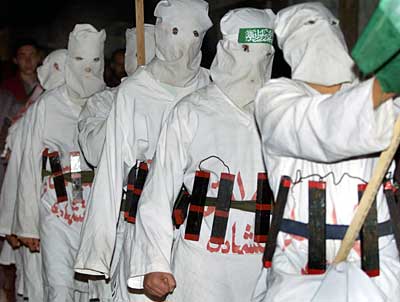
Currently, the miscommunication in understanding the Mideast culture has created major headaches for the Western world. Some assume that the Arab people only respond to military force. Therefore, diplomatic efforts get lost in the military battles. Cross-cultural mishaps can occur in the absence of communications. For example, many view the handling of the Israel-Palestinian conflict as an example of the lack of knowledge of culture. Former Secretary of State Colin Powell explained that extremist groups like Hamas must play a vital role in the solution to this crisis.  Others disagree. Therefore, globalization forces organizational strategists to rethink their approach.

In order to compete in the future, special competencies are needed for global competition. In fact, there is something intriguing about global leadership. Global experts Stewart Black, Allen Morrison, and Hal Gregersen argue that every global leader has a set of global characteristics regardless of his or her country or industry. The four key areas include inquisitiveness, perspective, character, and savvy. Business savvy becomes the word of the day because one must be able to think globally and adjust activities on the local level as well as satisfying customers at all levels. For the most part, understanding cultures is viewed as a primary responsibility of government organizations associated with national defense or diplomatic functions.  In fact, understanding trends requires a unique skill mix.

Finally, effective organizations that are positioning themselves strategically realize that globalization is not a dream, but a link to their distant future. Yet, dealing with cross cultural issues is not a simple task. Employees and managers need to develop these global competencies. Doing work globally requires two dimensions of complexity: business and cultural complexity.

 What can be done to incorporate global leadership values in today’s organizations?

 © 2010 by Daryl D. Green

The Future of Diverse Organizations in America

In the movie Slumdog Millionaire, the life of 18-year old Jamal Malik is revealed. He is an orphan from the slums of Mumbia. Jamal has the opportunity to play India’s version of ‘Who Wants to Be a Millionaire’; he stands one question away from winning 20 million rupees.

The movie was dramatic and powerful. It demonstrated the impacts of globalization on diverse cultures in the world.  Although Slumdog Millionaire won eight Academy Awards in 2009, it was a movie mostly invisible to the average American citizen.

As American businesses expand globally, organizational leaders need to evaluate what diversity will mean in the near future. Many organizations are struggling to understand the meaning of a culturally diverse organization.  Some organizations are further along in implementing diversity strategies than others. Unfortunately, most managers miss what diversity is all about.

Strategic foresight provides a lens for understanding how to dissect this diverse future. Strategic foresight allows an organization to analyze what has happened or may happen in the environment. Nick Marsh, Mike Mcallum, and Dominique Purcell, authors of Strategic Leadership: The Power of Standing in the Future, explain that the strategic process used in the past is not adequate for today’s disruptive change. They argue that the traditional strategy was designed for the 20th Century Industrial Age.

However, the Knowledge Age requires a flexible and dynamic strategy. Today, organizations are not confined to fixed boundaries or sectors. They have unlimited resources due to the fact that the key resource is not tangible but intangibles (ideas, knowledge, etc.).  In fact, futurist Richard Thieme maintains that the future is being constrained by technologies. In this New World Order, all organizations like all organisms can be defined as structures of information and energy.

A diversity strategy isn’t easy to master. Historically, diversity has been mandated though federal laws via equal employment opportunity and affirmative action. It was a forced change that resulted in negative resistance by both managers and employees. In spite of the government’s many operational flaws, it has attempted to broaden the makeup of workforce for several years.

Clearly, this is a shortsighted approach to organizational strategy when dealing with a multi-cultural marketplace. As recent studies demonstrate, employees want a more meaningful workplace. Diversity is only adding fuel to a fire that is already smoking. Today’s employees don’t want to be a component in a big machine. Employees want to be valued.

In some cases, technology may impede an objective perspective of different cultures. For example, social media is an increasing communication medium where individuals connect with each other. However, many times individuals’ personal social networks are not diverse along ethnic, gender, racial, or religious lines. Anne Tsui, and Barbara Gutek, demographic gurus, argue individuals within a social group may have a different experience than others from the majority culture in a similar experience.

Disruptive change can have a profound impact on society. For example, the Industrial Age marked the rise of factories, the increase of urban life, and the growth of unskilled labor for industrial work. Between 1840 and 1920, there was a massive influx of immigrants seeking work. This reality transformed American society. That is why organizations need to understand strategic foresight.

In 1987, the Hudson Institute published Workforce 2000, which outlined the impending demographic changes for the American workforce. A recent Department of Labor report, Futurework: Trends and Challenges for the Work in the 21st Century, outlined the following future trends:

  • By 2050, minority groups will make-up half of the population
  • Immigrants will account for almost two-thirds of the population
  • One-quarter of the population will be of Hispanic origin
  • Almost one in ten Americans will be of Asian or Pacific Islander decent

In summary, demographic changes will reshape the future of organizational culture. The old paradigm of “just fit in or get out” will soon become archaic. Let’s hope that America can adequately prepare for these shifts before it is too late.

Using a strategic foresight perspective for analyzing the year 2050, what may the future hold for American institutions?  What will be the impacts on major sectors such as business, government, education, and other prominent organizations?  What will globalization mean in the future?

 © 2010 by Daryl D. Green

Strategy, Change on the Horizon

In a world of hypercompetitive environments, organizations fight to survive in severe economic conditions. Shareholders replace CEOs like they change defective light bulbs. It is frequent and unpredictable.  In hopes of salvaging the latest struggling organization, executives usually implement quick solutions by cutting costs (which translates to mean people) and attempting to stop the hemorrhaging through technology. Yet, can today’s managers continue to do the same things and expect different results? 

No! Today’s challenges are calling for a different methodology. Strategic thinking represents a different solution for contemporary managers. Strategic thinking is more than careful planning of the organization’s work. Strategic thinking consists of two components, which are knowledge about the present and foresight about the future. Let’s go deeper.  

 Some managers foolishly rely solely on their experience to read market changes. Yet, the current market isn’t like the past! In many situations, managers are equipped to deal with the predictable.  Change that is either planned or incremental is addressed with a risk management approach. However, disruptive change is the hallmark of today’s markets.

Disruptive change is sudden and unpredictable. Therefore, experience becomes a liability, not an asset. Organizations, using the old mode of operations, find themselves vulnerable. Established institutions fail. Unknown companies emerge to dominate new sectors. Clayton Christensen, author of Innovative Dilemma, attributes this phenomenon to disruptive innovation.  Therefore, survival depends on understanding the current markets and future trends.

Strategic leaders are needed in today’s organizations. Charles Handy, author of The Age of Unreason, argues “Discontinuous change requires discontinuous thinking. If the new way of doing things is going to be different from the old, not just an improvement on it, then we shall need to look at everything in a new way.” 

 Watt Wacker, Jim Taylor, and Howard Means, leadership gurus, suggest a visionary leader with the capacity of ‘living in the present’ while ‘living in the future.” Therefore, duality becomes a critical attribute of exemplary organizations.

Clearly, strategic thinking is different than routine planning of an organization. Unfortunately, some managers are unaware how this process can assist them in being competitive. Strategic thinking can be characterized in the following ways: (a) focusing on important issues, (b) selecting relevant information, (c) recognizing systematic properties (linkages, patterns, etc.), (d) distinguishing causes from effect, (e) maintaining a long-term view, (f) appreciating consequences, (g) generating alternatives, (h) integrating logical with creative, divergent thinking, (i) remaining flexible, and (j) acting during crises.  

Since contemporary organizations can no longer use outdated methods and cookie cutter solutions in this disruptive environment, managers must reexamine their operations. In fact, leaders must be flexible to sudden market changes. Therefore, effective organizations go beyond detailed planning to strategic thinking.

At what levels of management would strategic thinking be best utilized? Do you feel that workers should be equipped with some type of training to detect disruptive change in the market?  How can you influence your organization to think strategically?

© 2010 by Daryl D. Green