Leading Today’s Organizations into the Future


How do organizations inspire workers undergoing so much change and competition in their lives? Many organizations are good at providing extrinsic rewards such as cash, promotions, and titles. Yet, contemporary organizations miss the key ingredient of good leadership. 

In fact, most organizations won’t be successful without it. Managers can purchase better equipment or introduce a new process. However, the situation won’t improve until there is good leadership. What is leadership? There are a variety of leadership definitions. For my blog, leadership is defined as the ability to influence people to support a specific goal.

Corporations desire them. Militaries thrive on them. Churches praise them.  Sadly, many people don’t understand the concept of good leadership. I will make a distinction between a great leader and great manager. In fact, leadership is not about being the boss or manipulating people for personal gain. Barbara Kellerman, author of Bad Leadership, defines bad leadership as “being unwilling or unable to control personal desires such as power instead of seeking for the common good.”  

She place bad leaders in two categories: ineffective and unethical. An ineffective leader achieves the desired objectives but falls short of their  intentions. Kellerman explains  that leaders are often judged ineffective because their efforts fail due to their methods and the end results. However, this situation is different in regards to ethics when leaders decide to act in unmoral ways before their followers.

I’ve seen passionate managers; however, they weren’t great leaders. These managers were zealots for getting the task completed and checking boxes. Their influence was directly related to their position in the organization, not their personal influence. Rick Joyner, author of Leadership Management, notes the qualities that make a good leader would make poor managers in general.

What is the critical reason for this distinction? A manager must be detail-oriented to achieve success while a good leader must be concept-oriented. There are a few exceptions, however.  Joyner explains that large organizations are usually bureaucratic and make it difficult for great leaders to rise to the top. In my organization, it is difficult to implement innovative processes due to a bureaucratic structure. Managers are rewarded for handling tasks, not inspiring people.

Organizations that want to have sustainable success must find ways to infuse good leadership into their organizations.  All managers are not leaders. Organizations that do not understand this simple fact will leave themselves vulnerable to disaster. Some leaders are forced to start new organizations (for example, Steve Jobs of Apple).  Countless leaders, especially change agents, are energized by their passion. I would say it is a critical component for effective organizations.  If a manager wants a more “charged” organization, give them good leadership that inspires followers.

Why are organizations reluctant to deal with the issue of good leadership? What can be done to infuse contemporary organizations with good leaders?

 © 2010 by Daryl D. Green

The Value Creation Shift


Everyone knows I love sharing information. I learned about a great website called Elance.com for freelancers and entrepreneurs. The website allows individuals and organizations to bid out work for the best price. Initially, I was amazed at the different people bidding from across the country.

Conventional wisdom would say that a guy bidding for work in India at $5 per hour versus a guy in New York at $60 per hour would be a no brainer. However, I have purchased services from Elance.com where the price was not the prime consideration.  I looked at the individual’s experience and identified what it was worth for me to get it done.  In a nutshell, I was aiming for the most value. Likewise, organizations that want to compete must understand value creation in relationship to globalization.

Business cannot hide from the impacts of globalization.  According to Dr. James Canton’s The Extreme Future: The Top Trends that will Shape the World in the Next 20 Years, there will be a global war for Smart Talent. In fact, it will be the key driver for competitive advantage. As the world will witness, the most educated, skilled, and experienced employees will be in high demand. 

 Global competition and the shortage of workers have made diversity a center-point for most organizations. Globalization has forced many organizations to rethink their approaches. Friedman (2008) noted the progression of globalization. Globalization 1.0 was driven by the dynamic force of global integration; it was about countries globalizing.

Globalization 2.0 (roughly 1800 to 2000) was driven by global integration but with an emphasis on multinational companies; it was about companies globalizing.  In Globalization 3.0, the force is driven by the power of individuals to collaborate and compete globally.  In fact, Globalization 1 and 2 were primarily driven by European and American individuals and businesses. Globalization 3.0 will be driven by more diverse constituents. Therefore, understanding how to create value across the global will be vital for sustaining business success.

Twenty-first century organizations can no longer implement value creation in a vacuum. Value creation can be defined as an organization’s ability to convey worth of its product or service to customers. Therefore, it goes to value, which focuses on the relationship between the customer’s expectations of a product/service quality to the actual amount paid for it. 

Many organizations fail in these global markets due to a lack of understanding their customers as well as their own organizations.  Dr. Lynda Falkenstein, niche market expert, explains, “Understanding your customer’s perceptions of the world is an absolute must for one major reason; that is, no one buys something just because you want to sell it.”

C.K. Prahalad and Vemkatram Ramaswamy, authors of The Future of Competition, further argue that there is an arrogant management structure in place that cares little for the opinion of others.  However, organizations that deal with postmodern workers must foster a different corporate culture. In fact, Prahalad and Ramaswamy reason that 21st century organizations must change their value creation system. They noted the new system as an individual-centered co-creation of value between consumers and organizations. Few executives take the time to explain their values.

Sustaining effective organizations will require a focus on value creation if they hope to be successful in the global market. However, this appears to be a critical weakness in modern organizations. Many organizations exist with value misalignment. Values are the core beliefs of an individual. Different people have different values. Henry Mencken, author of Prejudices, explained, “The difference between a moral man and a man of honor is that the latter regrets a discreditable act, even when it has worked and he has not been caught.”

Global leadership expert Timothy Stagich maintains that the basic values for a high collaborative organization include mutual respect, appreciation of diverse contributions, reciprocal benefit, and a shared understanding of the underlining corporate values. Many leaders forget about the importance of values in an organization. Few institutions take responsibility for value alignment. That reality will hurt them as they fight to survive in Globalization 3.0 and later.

How do organizations adapt to the global market and create value at the same time?

Global Leadership Values for This Era

In the 1999 blockbuster movie hit The Matrix, a world beyond anyone’s imagination emerges. A computer hacker Thomas Anderson (Keanu Reeves) aka Neo escapes his daily grind in hopes of adventure. However, what Neo discovers is something that transforms his life.

He discovers that his whole world has been created by a cyber-intelligence. Neo refuses to accept it. His mentor Morpheus (Lawrence Fishborne) asks Neo a pointed question: “What is real?”  Likewise, millions of Americans hope that the economic turmoil isn’t real and the threats of global competition are bad dreams. 

American children sing “We are the world,” but the world does not listen. Children in Iran burn American flags. Children in Iraq throw stones at American soldiers. Children in China write hateful essays about the “evil” American ways. American politicians attempt to spin how third world countries embrace Western ways while a terrorist alert is heightened to acknowledge another international threat.

Global trends are impacting the political, social, economic, and technological outlooks of most counties. Sweeping changes make global competencies more critical. Management strategists view these cultural shifts like waves in an ocean. Some of these emerging trends include (a) shift in consciousness, (b) disenchantment with Scientism, (c) inner sources of authority and power, (d) respiritualization of society (e) decline of materialism (f) political and economic democratization, and (g) beyond nationality. These trends will forever change international relationships if they continue.

Additionally, the ever-changing demographics of the world are reshaping a new global perspective. According to one estimate, by 2025, the world population will be at 7.9 billion people. Between 1993 and 2025, around 95% of global population growth will come from developing countries. Clearly, today’s executives now understand that globalization is more than a big word for doing domestic work internationally. Global miscues can be fatal.

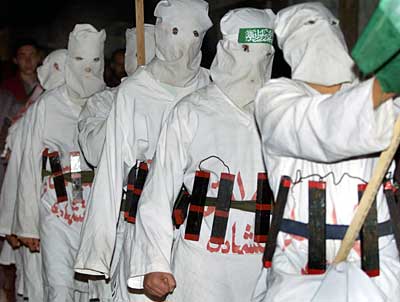
Currently, the miscommunication in understanding the Mideast culture has created major headaches for the Western world. Some assume that the Arab people only respond to military force. Therefore, diplomatic efforts get lost in the military battles. Cross-cultural mishaps can occur in the absence of communications. For example, many view the handling of the Israel-Palestinian conflict as an example of the lack of knowledge of culture. Former Secretary of State Colin Powell explained that extremist groups like Hamas must play a vital role in the solution to this crisis.  Others disagree. Therefore, globalization forces organizational strategists to rethink their approach.

In order to compete in the future, special competencies are needed for global competition. In fact, there is something intriguing about global leadership. Global experts Stewart Black, Allen Morrison, and Hal Gregersen argue that every global leader has a set of global characteristics regardless of his or her country or industry. The four key areas include inquisitiveness, perspective, character, and savvy. Business savvy becomes the word of the day because one must be able to think globally and adjust activities on the local level as well as satisfying customers at all levels. For the most part, understanding cultures is viewed as a primary responsibility of government organizations associated with national defense or diplomatic functions.  In fact, understanding trends requires a unique skill mix.

Finally, effective organizations that are positioning themselves strategically realize that globalization is not a dream, but a link to their distant future. Yet, dealing with cross cultural issues is not a simple task. Employees and managers need to develop these global competencies. Doing work globally requires two dimensions of complexity: business and cultural complexity.

 What can be done to incorporate global leadership values in today’s organizations?

 © 2010 by Daryl D. Green

A Return to Agrarian Leadership

In order to improve leaders’ value systems, we need to regain the values of agrarian society. Leadership expert Vana Prewitt argues that the current leadership theories are based on modernist assumptions and are out of date with leading today’s postmodern organizations. Given this dilemma, I advocate for a different kind of 21st leadership. 

 Agrarian leadership is defined as a contextual influence that has an impact on subordinates’ attitudes and performance by leaders who are both value and results driven. Agrarian leaders view their followers as critical parts of the socio-technical system. Therefore, technology does not drive the value system of society.

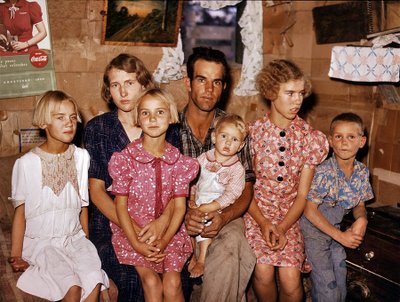
Before the Industrial Revolution, life was centered on land and labor. Life was simple for the leader in agrarian society. Rural living revolved around the land; owning it was equivalent to self-sufficiency and liberty. Although Americans lived in a tribal structure prior to the Agrarian Era (1650-1849), farming communities operated in a decentralized economy.

Agrarians exercised a strong spirituality and a deep respect for the environment. There was a genuine concern for neighbors and co-workers. Being a leader was a major responsibility. In fact, farmers were like heroes because of their hard work, contributions to society, independence, and moral standards. A man’s word meant something. With the transition from an agrarian to industrial society, untainted leadership was lost.

The Industry Revolution meant major changes to the American way of life. Before that period, over 90% of Americans lived rurally. Farmers influenced society. Between 1870 and1900, rural areas doubled and urban areas tripled. Farmers were cautious about these societal changes.

Industrial managers faced challenges such as generating new efficiencies while expanding operations. Chaos theory was in effect because those managers couldn’t control these organizational changes (both inside and outside). Factory managers lacked a process to motivate the unskilled (former agrarian) workforce. This era created new advances and new problems.

The Industrial Revolution forever changed agrarian society, primarily due to market economy and technology. Farmers were less self-sufficient and became “economic market” slaves. This created conflict because farmers and industrial society had different values. Farming became more productive, but fewer farmers were needed.

As a result of these advances, farmers lost their independence, family focus, and societal influence on moral conduct.  For example, some managers found factory workers breaking equipment. Consequently, managers tried to institute positive and negative rewards; these managers used conventional wisdom: “the hungriest man makes the best worker.”  Once again, mankind was moving away from his calling—the land.   

Therefore, advances in technology do not always equate to a better society. Many techno advocates would argue that technology has provided superior virtues. I beg to differ. First, technology doesn’t automatically improve society. In over 50 years, America has gone from rural to city and from national to international markets. Richard Critchfield, author of Trees, Why Do You Wait: America’s Changing Rural Culture, argues that these advancements have weakened our core values such as family tradition and work ethic.

Secondly, the disintegration of the agrarian code has destroyed our moral stability. Osha Davidson, author of Broken Heartlands, suggests that technology and the economic prestige of the agricultural system brought a host of social ills such as poverty, depopulation, and soil erosion.

Finally, we may consider agrarian lifestyle primitive. However, agrarian values shouldn’t be forgotten as good leadership attributes. We continue to advance technology by leaps and bounds while the values of society continue to disintegrate with each innovation.  In society, many leaders exhibit unethical conduct, pursuing wealth. Throughout American history, we see the consequences.

Do you feel that agrarian leadership is a term that will fit in the Green Economy? Can today’s leaders acquire, develop, or revitalize agrarian values in their leaders in the 21st century? If so, how?

 © 2010 by Daryl D. Green

Uncertain World Needs Good Leadership

Welcome to the Nu Leadership Revolution! This blog explores the changing workforce and social environment as it relates to emerging leaders.  The status quo will not do! “Nu” represents a change from the old ways of doing things at least for emerging leaders.   

Our lives continue to unravel as things we believe in disintegrate before our eyes.  Institutions are failing. Personal conduct is at an all time low. Wall Street continues to prosper as Main Street bears the financial hardship for our country.  

Everyone is impacted–from the executive to the factory worker.  According to the Conference Board research group, only 45% of Americans are satisfied with their work.  This was the lowest level ever recorded by this group over 22 years of researching this area. One major reason cited was that workers do not find their jobs interesting.  In order to be more competitive, organizations need to retool and inspire workers to new levels of performance. Clearly, organizations need good leadership.

What is needed, however, is a different kind of leader during these times of uncertainty. How can you become a stronger, more effective leader? I feel this revolution will start with a fresh, positive outlook from a new kind of engaging leader. Kevin Kelly, who helped launched Wired Magazine, noted,

“Wealth in the new regime flows directly from innovation, not optimization; that is, wealth is not gained by perfecting the known, but by imperfectly seizing the unknown.”

For over 20 years, I have tried to guide and inspire thousands through my lectures, seminars, and columns. As I speak to the issues facing organizations and emerging leaders, I solicit your input and insight.  Therefore, I ask that you join me on a journey towards improved leadership and personal empowerment.

 © 2010 by Daryl D. Green