HBCU News Features Dr. Daryl D. Green and Langston Educators on Career Readiness
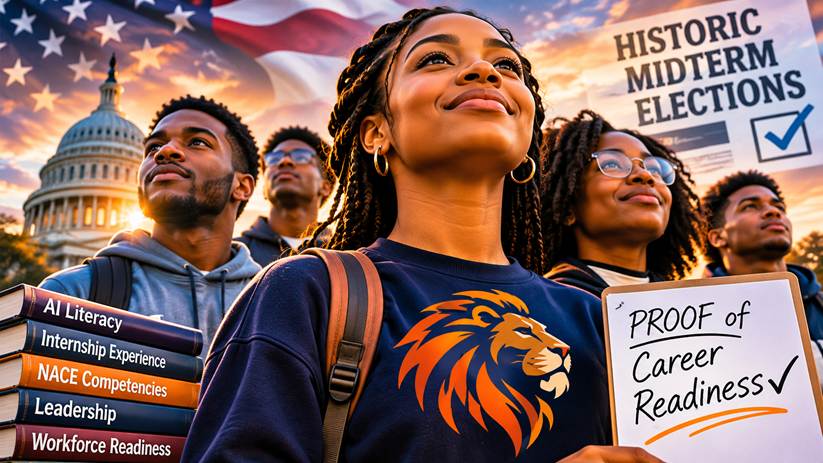
HBCU News published “After Midterms, AGSM’s Dr. Daryl D. Green and HBCU Educators Call for Proof of Career Readiness,” credited to Shaun White and categorized as Opinion. The November 13 publication carries the independently issued AGSM Consulting LLC announcement about Dr. Green’s November 10 Workforce Readiness Conference presentation with Dr. Heidi O’Donnell and Professor Malayna Hasmanis.
The announcement focuses on measurable career-readiness competencies, the redesigned business internship experience, and the achievement of seven business-degree graduates at Dick Conner Correctional Center. This is a republication of the announcement, not an independently reported interview.
Proof Under Pressure: HBCU Educators Share Career Readiness Lessons at National Workforce Readiness Conference
A former HBCU business dean and two Langston University educators presented a practical approach to making career readiness visible through student work, competency assessments and real-world opportunity.
How does a college know its graduates are truly ready for work, and not simply more experienced? That question framed “Proof Under Pressure: Measuring Career Readiness at an HBCU,” presented November 10 at the 2026 Workforce Readiness Conference.
Dr. Daryl D. Green, former dean of the Langston University School of Business, presented alongside Dr. Heidi O’Donnell and Professor Malayna Hasmanis. Together, they shared a redesigned internship course, competency data behind it, and the story of a graduation inside a state prison that illustrates what access to education can mean.
Conference Session at a Glance
• What: “Proof Under Pressure: Measuring Career Readiness at an HBCU”
• When: Tuesday, November 10, 2026, 10:45–11:30 a.m. Central
• Where: 2026 Workforce Readiness Conference, a national virtual event from The Teaching Professor (Magna Publications)
• Audience: Faculty, career services professionals, internship coordinators, academic leaders and workforce partners
Why Career Readiness Needs Proof
The November 10th session followed the November 3 midterm elections and National First-Generation College Celebration Day on November 8. FirstGen Forward estimates that first-generation students make up 54% of U.S. undergraduates, approximately 8.2 million students. For many families, the pressing question is whether college prepares graduates for meaningful work.
“Elections change who holds office. They don’t decide whether a first-generation student walks into her first job ready to lead,” Green said. “That work belongs to educators, employers, and communities, no matter who won. Our students don’t need another promise. They need proof.”
Inside the Redesigned Internship Course
Every business student at Langston University, Oklahoma’s only public HBCU, must complete an internship to graduate. That requirement made the internship course, BA 4993, the natural place to test whether students were growing. Green and O’Donnell rebuilt it from a largely self-guided handbook into a structured experience that now includes:
• A pre- and post-assessment based on the eight NACE career readiness competencies
• Coaching sessions and professional portfolios, including an “All-Star” LinkedIn profile
• Mock interviews and résumé and cover-letter development
• AI literacy assignments that compare AI-assisted writing with students’ own work
• A professional business certification and an AI certification
• Internship supervisor evaluations at three points in the semester
“I have been in academia for over 20 years. Many institutions are well-intentioned but do not focus enough on the end product,” Green said. “We have to prepare students who are battle-tested and ready for a world of disruption. That is why I introduced innovation into the Langston University School of Business curriculum.”
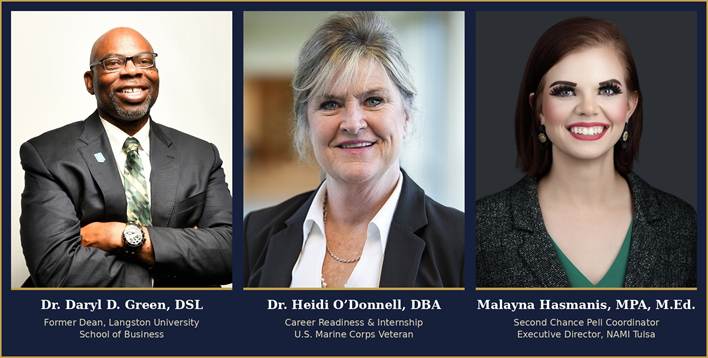
Presenters (left to right): Dr. Daryl D. Green, DSL; Dr. Heidi O’Donnell, DBA; and Professor Malayna Hasmanis, MPA, M.Ed.
What the Spring 2026 NACE Data Show
The National Association of Colleges and Employers (NACE) defines eight competencies employers value: career and self-development, communication, critical thinking, equity and inclusion, leadership, professionalism, teamwork and technology. In spring 2026, students’ matched self-assessments rose in all eight. Technology climbed from 3.19 to 3.65 on a four-point scale, leadership from 3.20 to 3.64, and professionalism reached 3.79, the highest score recorded.
The presenters are careful about what those numbers mean. They reflect how students rate their own growth, not independently verified hiring or employment outcomes. “An internship can teach students things that are difficult to fully understand in a classroom,” O’Donnell said. “They learn how to build skills and competencies, communicate with people and cultures they don’t already know, manage responsibilities, ask questions, and respond when a situation doesn’t go as expected.”
Seven Graduates at Dick Conner Correctional Center
In August 2026, seven students earned business degrees through Langston University at Oklahoma’s Dick Conner Correctional Center, where Hasmanis served as lead faculty.
“Seeing seven students earn their business degrees at Dick Conner Correctional Center reinforced my belief that education has the power to transform lives and systems,” Hasmanis said. “It challenges barriers, expands opportunity, restores possibility, and reminds us that potential is never defined by circumstance.”
As Langston’s Second Chance Pell Program Coordinator, Hasmanis addressed how competency-based career preparation could be adapted for justice-impacted learners. That application remains in development and has not yet been evaluated.
A Turnaround Made Teachable
The course redesign took place within a broader turnaround Green led at the School of Business. For a general audience, Green reports 54% enrollment growth during the turnaround period. In 2025, seniors scored in the top 1% nationally on the Peregrine Business Exam; one-year retention rose from 40% to 56%; and business graduates nearly doubled, from 19 to 36. These are institutional context, not outcomes attributed to a single course.
Five Practices Any Campus Can Adopt
1. Define the career competencies the program intends to develop.
2. Assess students before and after the learning experience.
3. Build work samples students can show employers.
4. Ask internship supervisors for actionable feedback.
5. Refine at least one practice each semester.
“First-generation students carry their families’ hopes into every classroom,” Green said. “When we can show them, and show employers, what they are able to do, we honor that hope.”
Meet the Presenters
Dr. Daryl D. Green, DSL, is a scholar-practitioner, institutional transformation expert, workforce disruption researcher, and author of more than 50 books. He served as dean of the Langston University School of Business from January 2024 to June 2026, leading an 18-month turnaround. Previously, he spent 27 years with the U.S. Department of Energy as a senior engineering manager overseeing more than $100 million in projects. He is the creator of The Nehemiah Blueprint in the Age of AI and publishes the Nehemiah Leadership Brief.
Dr. Heidi O’Donnell, DBA, is a professor and U.S. Marine Corps veteran who teaches the Career Readiness and Internship for Business course at Langston University. She has led education and workforce development programs for universities, federal agencies, and national research institutions, supporting undergraduate, graduate, and postdoctoral participants nationwide.
Professor Malayna Hasmanis, MPA, M.Ed., a doctoral candidate, is Second Chance Pell Program Coordinator and Adjunct Instructor at Langston University and lead faculty at Dick Conner Correctional Center. She is also Executive Director of NAMI Tulsa and assistant producer of Langston Vibes on KBOB 89.9 FM.
Media Interviews
Dr. Green and the other presenters are available for interviews on career readiness, HBCU innovation, workforce disruption, and higher education for incarcerated learners. This announcement is issued independently by AGSM Consulting LLC and is not an official Langston University news release.
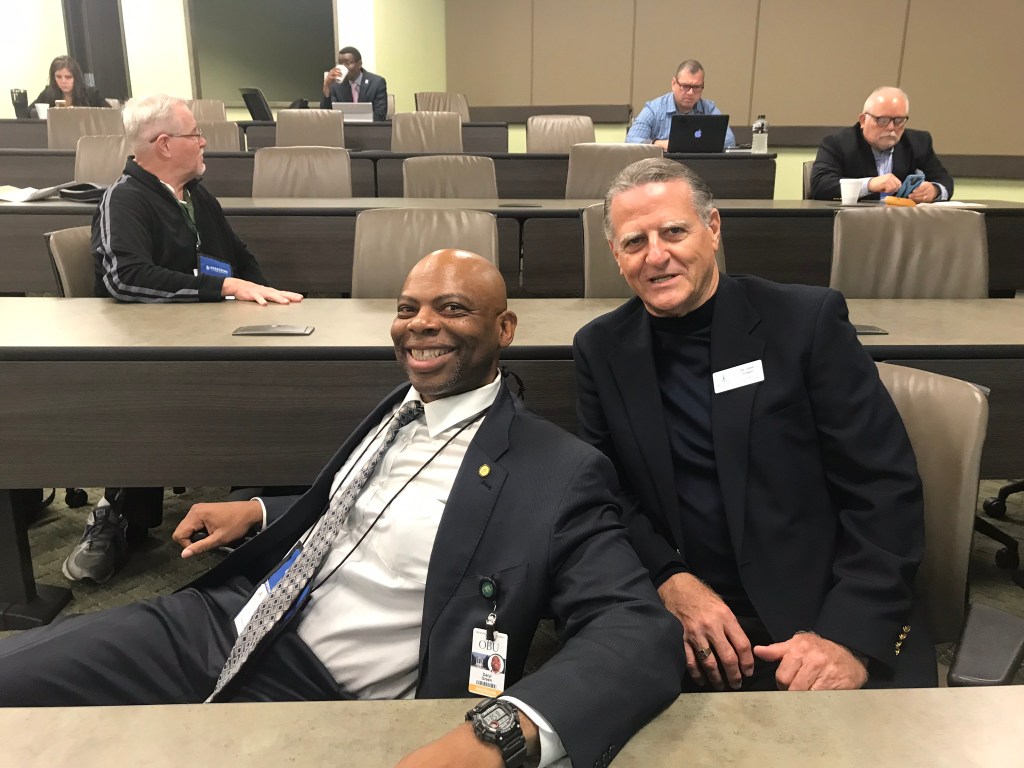
Researchers, Dr. Daryl Green and Dr. George Taylor, share their insight at the 2019 Institute of Global Business Research Conference.
How do today’s universities and colleges survive with rising educational cost, declining employments, and growing dissatisfaction among the US citizens? Dr. Daryl D. Green and Dr. George Taylor III shared their solutions at the 2020 Institute for Global Business Research Conference in Las Vegas, Nevada. The Institute for Global Business Research (IGBR) is a non-profit organization, originated from many years of professional, academic teaching and research expertise of accomplished business professors from around the globe.
Due to numerous problems in higher education, universities are struggling for sustainable answers. Higher education is undergoing tremendous changes. Universities and colleges are being bombarded with disruptive change which has become fatal. Enrollment in accredited colleges and universities have shrunk consistently since 2010 since the rising of online learning. According to Moody (2015), closure rate – out of 2,300 institutions – would triple by 2017, and the merger rate would double. Dr. Clayton Christensen, renowned Harvard University professor, proclaimed “In 15 years from now half of US universities may be in bankruptcy.” Without making the necessary corrections, most academic institutions will not be able to survive. Dr. Green, conference presenter explains, “Small liberal arts colleges are the most susceptible to market forces. Disruptive change has a dangerous consequence to traditional institutions. The results of disruptive change for organizations produces unpredictability and uncertainty of outcomes in the environments.” Dr. Green, Dr. Taylor, and Mrs. Violet Ford (John Hopkins University doctoral student) are developing a theoretical article, “Cultivating the Entrepreneurial Mindset in Today’s Small Liberal colleges & Universities” to discuss their initial findings with other scholars. Dr. Green and Dr. Taylor presented at the IGBR Conference. Dr. Green is the Dickinson Chair and an Associate professor in the College of Business at Oklahoma Baptist University. He is a former US Department of Energy program manager with over 25 years of professional management experience. He is a nationally syndicated columnist, where he writes in the areas of leadership, decision-making, and culture. Dr. Green has a doctoral degree in Strategic Leadership from Regent University.
Dr. Taylor notes, “Traditional liberal arts colleges possess formal structure with identified roles and responsibilities. Yet, the structure of many universities vary depending on their history, mission, and institutional type….Overall, there is a reliance on bureaucratic organizational structures; academic institutions, whether public or private, incorporate key authority structures, including a governing board, a president or chancellor, a cohort of administrative leaders, and an academic senate.” Dr. Taylor is an Assistant Professor in the School of Business at Tulsa Community College. Previously, he served as a naval officer specializing in HR, and has over 25 years of leadership and management experience. His writings are in the areas of knowledge management, workplace spirituality, and employee engagement. Dr. Taylor has a doctoral degree in Organizational Leadership from the University of Phoenix and is 2019 EdD cohort learner attending Oklahoma University.
In analyzing the current crises in higher education, their presentation describes a set of strategic implications that will aid universities planning to create sustainability education programs. In preparing today’s liberal arts university, administrators and senior executives of these institutions need to infuse an entrepreneurial mind-set in their faculty. Here are their suggestions: (a)Leaders need to model the way in entrepreneurial mindset; (b)Be adaptable to changing market conditions; and (c) Universities must create entrepreneurial climates. Dr. Green adds, “Cultivating an entrepreneurial mindset will infuse innovative thinking toward difficult problems and provide new revenue streams to universities that utilize student tuition as the principle income for these academic institutions.”
To learn more about this research or to schedule media interviews with these researchers, please contact Dr. Green at drdarylgreen@gmail.com or 865-719-7239.
About AGSM LLC
AG Strategic Management Consulting (AGSM) is a start-up consulting firm focused on serving emerging and existing businesses in the areas of strategic planning, marketing, project management, and other administrative services. With a core staff of seasoned and nationally renowned professionals and a team approach to consulting projects, AGSM will offer exemplary services that meet the needs of its clients.
AGSM Consulting is also an intellectual property-based strategic consultancy which research and develops products includes books, e-books, articles, whitepapers, videos, podcasts, and other content medium to create new knowledge, training, and professional advisement
Dr. Daryl D. Green is an internationally acknowledged author and researcher. He is the Vice President of AGSM LLC. He is also the Dickinson Chair at the Oklahoma Baptist University. Dr. Green writes a syndicated online column and blog. Moreover, he has been quoted in major media outlets, including USA Today, Associated Press, Ebony, and BET. In 2016, he retired from the federal government as a senior program manager. Dr. Green has spent more than 20 years helping organizations and thousands of individuals make good decisions through his lectures, seminars, and columns.
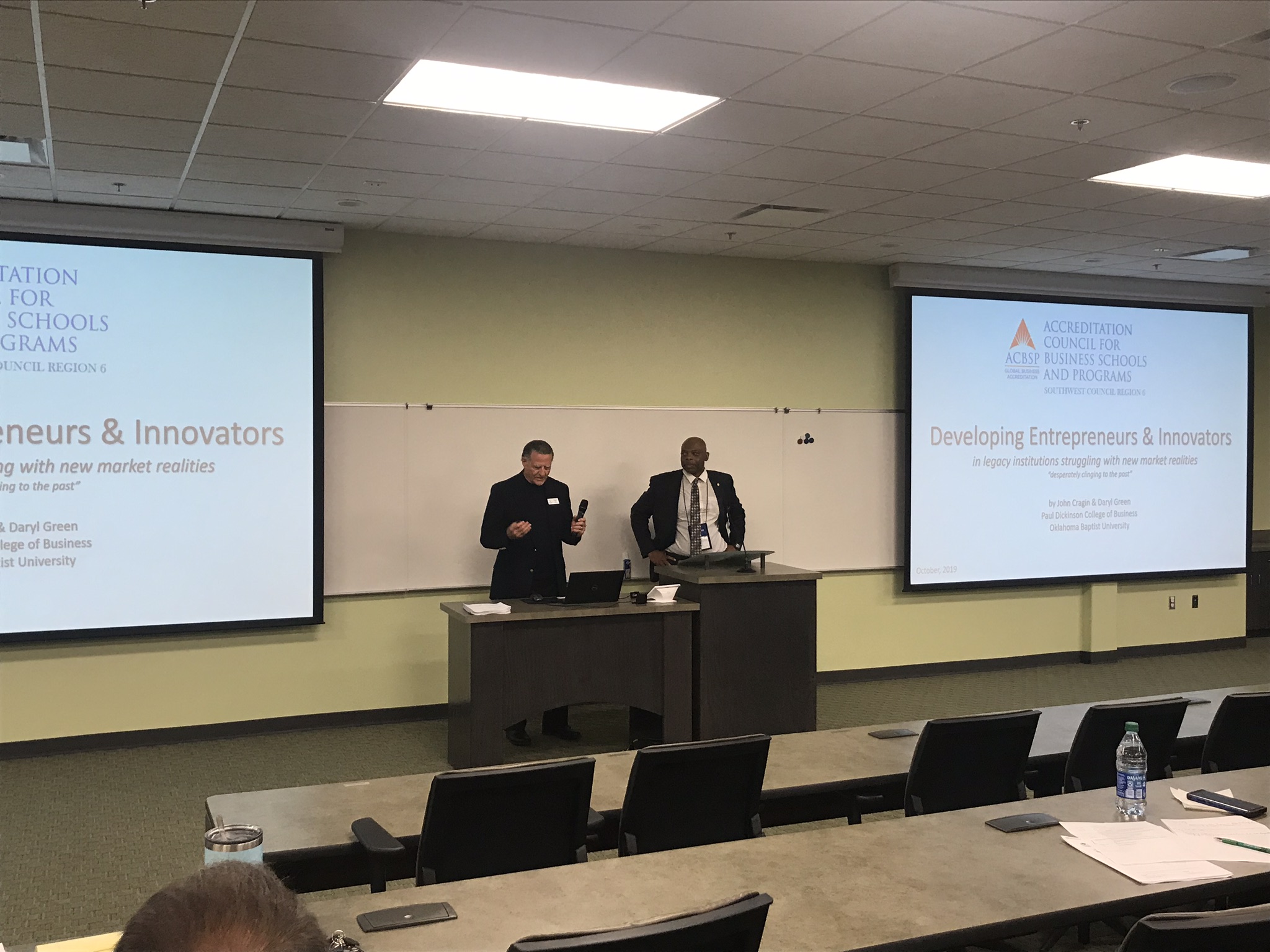
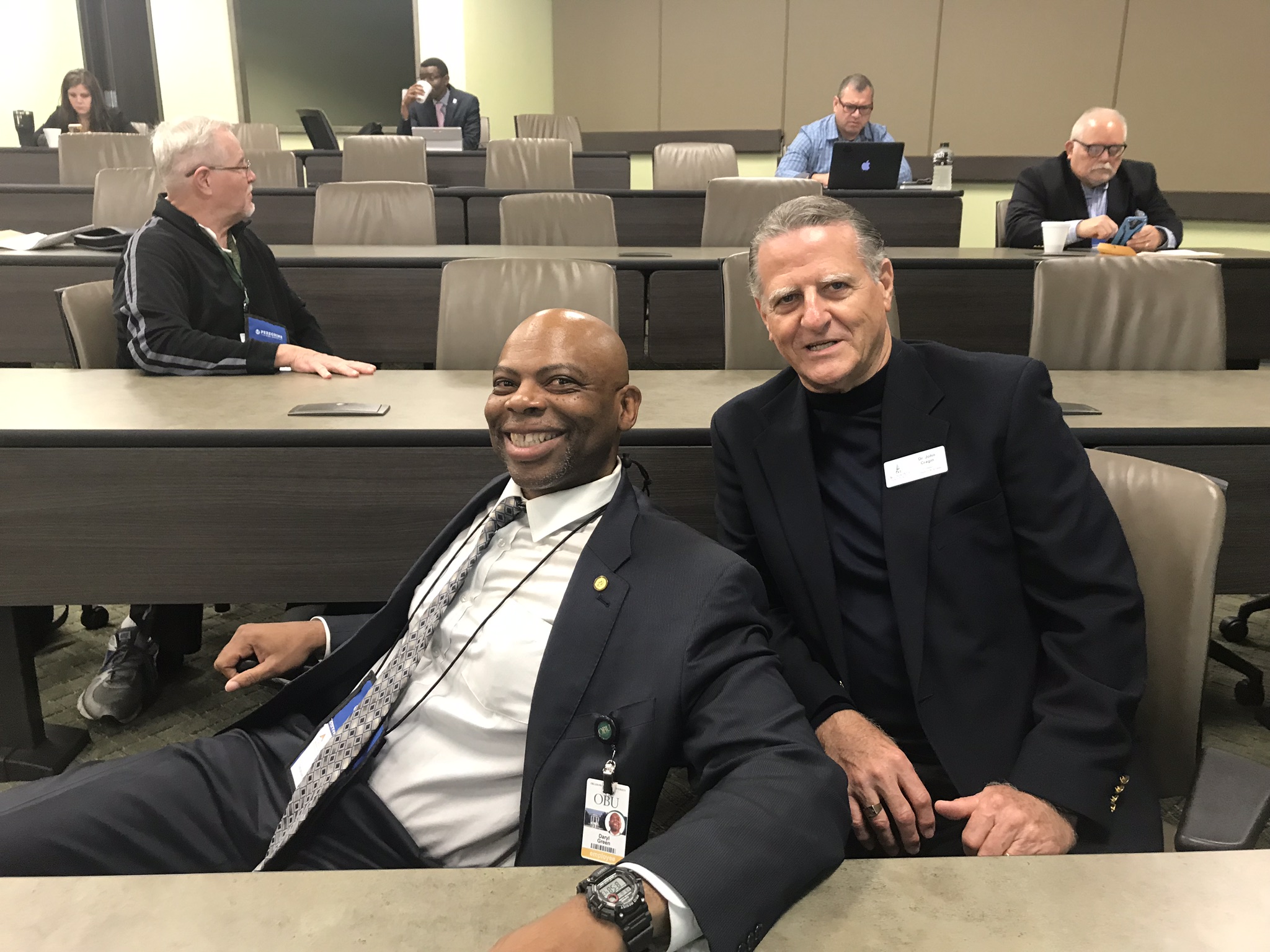
On October 4th, Dr. John Cragin and Dr. Daryl Green shared their presentation, “Developing Entrepreneurs & Innovators in legacy institutions struggling with new market realities desperately clinging to the past” at the 2019 ACBSP Region #6 Conference at Oklahoma Baptist University, Shawnee, Oklahoma. Dr. Cragin is a Professor of Social Entrepreneurship & International Business with extensive global experience. Dr. Green, Dickinson Chair and Associate Professor, is a nationally recognized author and speaker.
Ben was stuck in his dead-end job as a waiter at the local restaurant in town. By day, he was known as the nicest, more courteous server in the area. By night, Ben attended a local college with the ambition of starting his own social media serves. Ben understood stereotypes and bias. People had the tenacity to put individuals in pigeon holes with their biases. Therefore, Ben started building his online personality with writing insightful articles about social media and running a video blog. He wrote an e-book about social media that received Internet acclaim.
He quietly started a radio talk show. With his persistence, Ben started seeing his effort pay. The restaurant was packed with a bus of college students headed to a convention. Ben was helping out the servers with the big crowd. Suddenly, there was a big commotion in the crowd that involved Ben. Another server came to get the owner about this situation. The owner was afraid that Ben had done something wrong. He didn’t. These college students from out of town were overwhelmed with excitement in meeting the online celebrity “Ben the eWriter.” His online presence had repositioned his personal brand.
With the impact of the Internet and social media platforms, like Facebook, working professionals can reenergize or rebrand themselves in a matter of minutes. In fact, individuals can actually reposition themselves into new careers with the right strategies. In today’s job market, people need to understand the concepts of personal branding and how to develop their own personal strategy for employment. In this discussion, we will examine the concept of personal branding. Individuals will learn how to reenergize yourself and make gain more influence in the process.
My wife and I wanted to get a motion detector in our backyard. We had a backlight on the house already. The house was a new construction. The motion detector would be additional security. We estimated the price to be under $200.
When the electrician arrived, he talked with us about our needs and did a thorough inspection of the home. He came back with an estimate of over $600. He rationalized this price due to the configuration of our home and the difficulty of wiring this fixture.
My wife and I both wanted this motion detector. However, we were unwilling to pay the price for this addition. Thus, we needed to redefined the problem. We wanted this motion detector as extra security for the home. We asked the electrician what it would cost to change out the light fixture. He mentioned less than $80. The motion detector was about $50. By redefining or refocusing the problem, we were able to carryout a better solution.
In search of more lucrative markets, today’s companies are looking for more opportunities across the globe. The United States is a land where dreams come true. Individuals from across the globe come to this country for possible opportunities. Yet, companies fail every day in the marketplace.
According to one study, the failure rate for new startups is about 46%. Botch understanding of your business competencies and market opportunities may put to be fatal. On the contrary, businesses that provide value to customers by solving their pressing problems are rewarded.
By solving someone’s challenging problems, individuals are compensated very well. Thus, solving ‘wicked problems’ could yield greater rewards. In this session, we will discuss the concepts of wicked problems and introduces how organizations can solve them with effective leaders who provide a burst of innovative thinking.
As I contemplated my next career move, I knew it was important to know my worth in the market. In a sense, the concept was foreign to me since I had worked 27 years in engineering for the public sector. In securing that job, the only thing that was negotiated was the time of employment.
My desire to have a second career outside of engineering into academia drove me to get meaningful experience as an adjunct professor. Of course, I felt my core competencies were strong as a professor. I had about ten years in academics working part-time. Yet, I also knew that obtaining a full-time tenure track would be highly competitive due to the limited amount of these treasured positions and the number of applicants.
I personally knew of qualified business professors who could not obtain a full-time faculty position. To increase my marketability, I continued to secure new skill sets and to follow market trends. One of the biggest trends working for me was that many institutions were looking for new faculty who had demonstrated working experience.
Yet, in order to determine my worth, I had to actively apply for academic positions and go through the interview process. With every interview, each prospective employer provided me with a missing piece of my market worth. However, I got this insight by being assertive by asking meaningful questions like “what part of my application package attracted you to me as a candidate.”
This transparency was contagious. One dean even told me my prospective rank (i.e. salary) in his organization. All of these pieces were critical in helping me negotiate my final position as a full-time faculty because I understood my worth in the marketplace.
In today’s competitive environment, working professionals need to know their worth so that they can be compensated appropriately and they can market themselves toward better jobs. In fact, professionals need to know how to market themselves and promote their personal brand in order to maintain their market worth. Downsizing and layoffs are a way of life for most U.S. businesses.
With fierce competition for limited jobs, many college students wonder if they will be able to land a good job. Sadly, the economic situation feels like a bad dream. With a weak job growth, many U.S. jobs will continue to be outsourced globally or automated through technology. Yet, there are opportunities for those students who are prepared for the future.
According to the U.S. Bureau of Labor Statistics, total employment in 2024 will reach 160.3 million, an increase from 2014 of almost 9.8 million jobs. The health care and social assistance sector will account for over a third of the nation’s projected job growth from 2014 to 2024. This article focuses on how building the right competencies will help individuals brand their personal brand and increase their opportunities for job opportunities.
As a result, today’s unemployed workers are unsure about their future. Many students struggle to pursue the right major in college. Others follow the latest trend on reality TV for selecting their ideal major. Finding the ideal job is a combination of personal interest/passion, values, and skills/abilities.
Today’s college students face a landscape of great opportunities as employers look to this Millennium generation to infuse bright ideas and energy into their organizations. In recruiting young engineers and scientists at the Department of Energy, I soon discussed a major disconnect between what employers desire from potential employees (i.e. college students), and today’s job seekers’ expectations of employers.
I often spoke on this matter and wrote these discoveries in several formats including articles, books, and lectures. With that said, I believe marketing these concepts are also vital on Bison Hill too. In this discussion, we will examine how an effective LinkedIn.com profile can be utilized to showcase students’ potentials to future employers and increase their personal brand.
Having an online presence is vital for today’s employment opportunities. According to Business2community.com, 427,000 resumes are posted each week on Monster.com, an online job board; 8 million job applicants said they found their job on Twitter.com. Eighty-nine percent of employment recruiters have hired through LinkedIn.com.
We just had to go on Beale Street in Memphis, Tennessee, the place was known for great blues music. We stopped at one of the famous blues hotspots on this strip. We were directed to our seats; the house was packed with people. The band was playing with great passion. My wife and I walked in the room to celebrate with others the love of good music. The music was carried across the room slowly as blues music permeated the atmosphere like smoke covers a house on fire. Everyone was excited. People were all over the dance floor. These folks were no amateurs to blues. Interesting enough, my wife and I were the only black couple in this crowded location. Blacks created the blues. Yet, many blacks have either abandoned this genre or have forgotten the roots of this music. I hope that dance in America will not falter like this.
As my wife and I have danced ballroom in various states and different dance studios, we have not seen many black people doing ballroom dancing. African-Americans have made significant contributions in all walks of life, dance is no exception. Black History Month gives us a time to remember the pioneers of dance, including Josephine Baker and the Dance Theatre of Harlem and glance at the future. When you start talking about ballroom dancing, everyone thinks about the ABC’s hit show, Dancing With the Stars, that pairs up celebrities with professional dance partners in an intense ballroom competition. There are a few African Americans involved with ballroom dancing in the nation. In this session, we will examine how dance studios can better target African American communities by reaching an untapped market.