Mapping out the Green Economy

Most businesses are promoting ‘Going Green’ while politicians peddle the concept as a way to grow jobs.  Many people have been disappointed with the perceived ‘hype.’  My question, with this concept, was who was going to lead this green economy? 

LMU’s Dean Jack McCann and I published an article entitled “Benchmarking a Leadership Model for the Green Economy” to address this subject.  This paper examined benchmarking leadership theories in order to build a new leadership model for the green economy.  This academic journey opened my eyes on the green economy.

Let’s explore this green economy. Many hope that the green economy will provide new prosperity for America’s future. The current economy is fueled exclusively by oil, natural gas, and coal. As these resources continue to become scarce, the cost increases.

On the contrary, the green economy is environment friendly and provides an opportunity for more innovation. Many experts support the green economy concept. Thomas Friedman, author of The World is Flat, suggests that the stage is set for a green economy with billions of people from China, India, and the former Soviet Union demanding their share of the energy treasure chest.

There will be more energy demands to feed the world’s microwaves, vehicles, and other power hungry technology.  Friedman argues that this global demand would create an environmental disaster. This reality could infuse a new desire for renewable energies and environmental sustainable systems.

For example, Michigan has created more than 11,000 renewable energy jobs in four years; these jobs are compensated with sustaining a fair and equitable wage. Critics argue that some jobs will be lost as more rigorous energy regulations are in place and companies are forced to make energy transitions.

Jerome Ringo, the former president of the Apollo Alliance which has a coalition that promotes clean energy and green jobs, further maintains that these setbacks could be overcome by taking the proper steps. Therefore, the green economy could become a positive driving force in the future.

Ringo argues that green jobs could revive the U.S. economy while resolving some of the worst environmental problems facing the world. He points to this fact based on several states implementing the green economy.  However, other individuals have their doubts about any financial success from the green economy.

What do you foresee as leadership challenges for launching the green economy?  Please share your personal or professional experience on this subject.


© 2012 by Daryl D. Green                                    
 

Job Strategies for 21st Century

“Where much is given, much is required” is a theme that I have embraced since I’ve gotten some many opportunities.  Last weekend, I gave a lecture at Payne Avenue Missionary Baptist Church on job strategies for the 2st century.  I felt it was time to better educate the community about the current employment landscape.

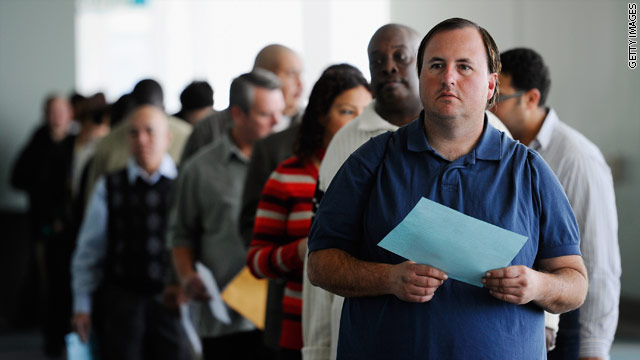
Where are the jobs? How can individuals land one? As we left 2011, many individual’s job opportunities faded away. There are over 15 million unemployed in our country.  Our community is no exception. What worked in the past for job prospects will not work during this economic crisis.

As the economic downturn continues to worsen for today’s workers, individuals need to refocus their strategies as they witness the last era of the full-time workforce. Sadly, things will never be the same for most employees. Companies chase emerging markets abroad.

According to government estimates, an additional 1.2 million manufacturing jobs will disappear in America by 2018.  According to a USA Today analysis, part-time work is at a record high while overtime is at an all-time low.

An average of just 33 hours was recorded for the average worker in May 2009; it was fewer hours than any time since the Bureau of Labor Statistics begun to track it in 1964. In fact, over 9 million people want to work full-time but can only find part-time employment. 

Most job seekers do not understand that the employment rules have changed. In a survey of 1,729 human resource professionals conducted by the Society for Human Resource Management in partnership with AON Consulting, 60 percent of the survey participants said that the skill levels of today’s job applicants do not meet job demands. Forty-three percent said that current employees do not have skills levels to meet job requirements.

At the church, I attempted to share some of the emerging job strategies to apply during this financial crisis. These strategies were identified in my book, Job Strategies for the 21st Century. With an academic mindset and community concern, I feel we can assist the community with the current unemployment problems in our area.  Knowledge is key! Below are some of these recommendations to consider:  


  • Personal Branding.  Individuals should set themselves apart with a personal brand.  Your personal brand should define, promote, and protect your image online and off-line. Develop a unique skill or talent that is very valuable in your discipline.
  • Core Competencies. Those individuals with the right skills and abilities will never lose out on potential opportunities. Employers are looking for workers with the right skill set. 
  • Good Communications.  Individuals need to be able to articulate their thoughts (oral and written). In the future, mastering a foreign language will be a trademark for progressive and successful Americans.
  • Critical Thinking. A person can increase his longevity in the workforce by looking critically at problems. Today’s employers are looking for innovators and creators, not just employees.
  • Strategic Alliances & Networking.  Individuals should move beyond networking to strategic alliances. A strategic alliance is agreement for cooperation among two or more people to work together toward common objectives.  Therefore, strategic alliance is not a self-serving function.
  • Flexibility.  Being a person who is mobile and adaptable will be an asset during these uncertainty times.


Although many people feel very pessimistic about future career opportunities, hope is not lost if people are prepared for the future. Bestselling Scifi author H.G. Wells explained, “’We were making the future,’ he said, and hardly any of us troubled to think what future we were making. And here it is’.”

By taking control of one’s career strategy, individuals are taking a positive step in navigating these difficult economic times and landing their future jobs.


State your experience with this topic.  What additional job strategies would you suggest for unemployed individuals?


© 2012 by Daryl D. Green                                    


The Power of Creating Sustainable Content

The buzz rang across the world. The word was finally out, “Whitney Houston was dead.”  On February 12, 2012, Whitney died at the age of 48 years old. It was hard to believe she was gone.

Through the public eyes, the six-time Grammy winner was a beacon of God given talent. Whitney sold more than 170 million albums and singles over her career and received millions from her movies.

Sadly, many experts argue that Whitney will be worth more dead than alive. Forbes writer Zack O’Malley Greenburg said Houston could be looking at as much as $10 million this year in digital sales.  Many people attempt to company Michael Jackson and Whitney Houston due to their stardom and international acclaim. Yet, their financial firepower was not the same. 

Michael was a musical genius who created lasting content.  He sold over 8 million albums in the United States within six months of his death and over 20 million worldwide. On the contrary, Whitney received a much smaller share with artist royalties from her albums.

For example, Whitney’s music has sold over 1 million albums and singles since her death. Additionally, her catalog sales surged with nearly 900,000 individual tracks sold. One of Whitney’s most celebrated songs, “I Will Always Love You,” has also heated up the record charts since her death. 

Yet, Dolly Parton, who wrote this song, will receive the greatest benefit from the publishing revenues from the radio play and licensing to commercials and films.


In both situations, the major difference is that Michael wrote many of his songs and obtained publishing royalties as a writer. Therefore, Whitney’s estate won’t be able to soar like other entertainment moguls like Michael Jackson and Elvis Presley. 

Consequently, good content has lasting value. This content is called intellectual property.  It refers to creations of the mind: inventions, literary and artistic works, and symbols, names, images, and designs used in commerce. This content is managed with legal documents such as patents, trademarks, and copyrights.  


Henrik Vejlgaard, author of Anatomy of a Trend, argues the power of creators to set trends.  He explains, “The prime movers in any trend process will often go by different names, for instance, inventors, innovators, pioneers, or entrepreneurs. They create new products or invent new styles or begin doing something in a completely new way.” Therefore, intellectual fire power can pay more over time.


State your experience with content creation or intellectual firepower. What do you think about the future of content creation in the future?


 © 2012 by Daryl D. Green                                    


Beating the Global Competition with Value Creation

I do struggle a little with my conscious.  Yes, I’ve been called a pretty hard nose professor who pushes his students.  I tell my students I have a low rating on empathy and mercy when it relates to missing my deadlines. 

However, even the meanest Scrooge would have to have compassion for over 15 million unemployed in America.  But—it becomes personal as you hear about your neighbors, co-workers, and family members who have been laid off. 

Financial institutions and other businesses hold on to their record profits for the ultimate use of their money.  Politicians call them job creators which is ironic since businesses primary motives are to make a profit, not give someone a job.

Companies chase emerging markets abroad. According to government estimates, an additional 1.2 million manufacturing jobs will disappear from America by 2018. If in the process a job is made, those are secondary considerations.

Only when business subscript to a business strategy that involves value creation can they hope to sustain profitability. In this paradigm workers are viewed as assets not liabilities.

Yet, many companies build their profitability on this simple equation. Companies seek to reduce their inputs (outsourcing labor, better technologies) to obtain ‘more profits.’ Yet, it’s pretty self-serving with little regard to  customers and employees.

The definition of value depends on the individual. For this discussion, value is defined as the net bundle of benefits the customer derives from a product of service.  Value is defined as the net bundle of benefits the customer derives from a product of service.  Most companies compete on low cost or differentiation strategy to create this value.

In emerging countries where wages are low, it is very difficult for America businesses to compete.  That is why many companies have opted to outsource some of their core functions abroad.  Yet, America’s strength has always been its innovation and creativity.  These attributes are key ingredients for an effective differentiation strategy.

John Gamble and Arthur Thompson, authors of Essentials of Strategic Management, further examined the concept of value as a strategic advantage: “The most appealing approaches to differentiation are those that are hard or expensive for rivals to duplicate.” Therefore, an effective value creation strategy can beat almost any competitor, globally and domestically. 

This reality is due to the fact that the organization is keenly attuned to the needs of their customers. If individuals keep the concepts of value creation in their mindset, they will be able to overcome many of the disruptive changes to come.

How does value creation relate to sustainability for today’s leaders? Discuss your professional experience with value creation. 

© 2012 by Daryl D. Green                                    


Launching Ahead toward an Unknown Future


When I was a Regent University doctorate student, I often wrote my assignments toward publication.  As I took my courses, I always tried to write on similar themes to reduce my research time and make me more efficient.  I would look at the environment thinking what topics would be growing issues. Yet, many of my peers were only looking at the near term (getting a passing grade to move on). 


 One article, “The Evolution of Leadership,” produced unintended consequences.  While in graduate school, I had this article published and forgot about it.  One day a tutor in the university’s writing center mentioned she recognized my name. The tutor stated that students were quoting me in their academic papers. Once we graduated, many of my classmates did not want to revisit past assignments for publication. 


I soon learned the consequences of looking ahead.  With over 6,000 views and picked up by more than 30 websites and publishers, my article, ‘The Evolution of Leadership, is now being used as a reference globally. That is the power of looking beyond the current situation.


With the economic crisis, many people have lost their courage and do not want to seek opportunities in emerging markets or new ventures.  Countries near and abroad are having financial problems.  Europe needs to double the size of its bailout to $1.3 trillion to shore up its banking system and stop the spread of its debt.  Americans watch their earnings decline as the cost of food and gas spirals upward. 


 Some people look to the government for help while other individuals leverage the goodwill of businesses to provide trickle down offerings from capitalism.  According to the Economic Policy Institute, 1.8 million of the United States 73 million hourly workers earned the financial wage in 2010; many workers are in the retail, restaurant, and hospital sectors.


Taking with a visionary stance to look beyond today’s pressing issues is a utilized by highly successful people.  Noted trend watcher Henrik Vejlgaard argues that it is possible for individuals to spot emerging trends and take advantage of them.

Vejlgaard explains, “Although the world is changing all the time and this flux may eventually affect the patterns behind the trend process, these patterns are deeply rooted in human behavior….By investigating the people who have started trends in the past, where trends frequently start, how trends emerge and grown, and why trends happen, we can define some rules for spotting trends.


Failure is always a possibility of leaping while others stay on the shore.  However, the biggest risk is doing nothing.  Charles Schwab, author of New Guide to Financial Independence, understands how to take risk in unchartered waters.  He started investing in 1957, and he became a pioneer in the discount brokerage business in 1974. 


He notes, “I’ve heard it said that people are motivated by hope of reward or fear of punishment….Truth be told, we’re all investors.  Each day we invest time and energy and intelligence in our children and our work. Investing for our future is just another aspect of it, but a critical one.” Therefore, any success should be couched with some common sense and calculated risks.


Discuss an emerging trend and how you or your organization can capitalize on this trend. 


© 2012 by Daryl D. Green                                    


Making a Special Connection with Followers


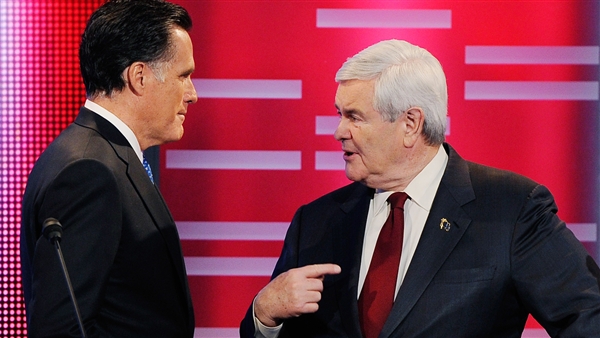
Immediately after the first 2012 Republican Presidential Debate in Florida, Former Governor Mitt Rommey released his 2010 tax statement. However, Rommey’s wealth did surprise most people.  Some individuals probably harbored class envy of him. Yet, I was also amazed at the other presidential candidates’ great fortunes in comparison to most Americans. Let’s go deeper. 

 How can leaders build a connection with their followers who are well below them economically?  For example, GOP presidential contender Mitt Romney isn’t just in the top 1% of America’s highest income earners; he is at least at the top .0006% based on his 2010 tax returns.  According to AP reporter Connie Cass, adding up the wealth of the last eight presidents from Richard Nixon to Barack Obama wouldn’t  equal Rommey’s wealth.  It’s also about perspective.  Among the ultra-wealthy in the world, Rommey is not among the rich elite.  Yet, this discussion is very interesting since the U.S. President is seen as a representative of all citizens.

Here’s a look at some of the 2012 Republican Presidential Candidates’ worth: Mitt Rommey’s worth $85-264 million, Jon Huntsman’s $16-72 million; Newt Gingrich’s $7-31 million; Ron Paul’s $2.4 – 5.4 million, Rick Santorum’s $1-3 million, and Rick Perry’s $1-2.5 million.  Even President Barack Obama, a member of the Democratic Party, is not far behind with a net worth of $2.8-11.8 million.  One of the greatest assets of effective leaders is making a connection with followers. 

Great wealth may be problematic to many people who want to show they understand the common man.  However, this isn’t always the case.  For example, some former U.S. Presidents with great wealth made a connection with followers such as Theodore Roosevelt and John F. Kennedy.  Leaders want to have good followers championing their cause.  Presidential candidates are no exceptions.  Rommey, like most wealth people, may have some connection problems.   Many people undermine the importance of followership. They shouldn’t.

Followership is underrated. Yet, effective leaders can’t afford to not have stellar followership.  Followership can be defined as ‘the ability to effectively follow the directives and support the efforts of a leader to maximize a structured organization.’  Kent Bjugstad, Comcast Spotlight, Elizabeth Thach, Karen Thompson, and Alan Morris, followership experts, outlined the problems associated with followership: “The assumption that good followership is simply doing what one is told, and that effective task accomplishment is the result of good leadership, doesn’t amplify the merits of the follower role.”  Therefore, leaders cannot afford to underestimate this concept.

Connecting with followers is vital.  Rommey, like other leaders, must bridge this gap.  According to the U.S. Census Bureau, the typical household worth is approximately $120,300.  That means Rommey is 1,000 times richer than most American citizens. Fred Fiedler, a leadership researcher, noted that a leader’s personality can determine how he or she will be an effective leader.

Gareth Jones and Jennifer George, authors of Contemporary Management, further noted the critical needs for effective leader-follower relationships: “Situations are more favorable for leading when leader-member relations are good.”   Therefore, connecting with followers is an important goal for most leaders.

Discuss how leaders effectively connect with their followers.

© 2012 by Daryl D. Green                                    


Leading in a Volatile Society


The question of effective leadership continues to plaque modern society.  This month, the captain of a cruise ship that capsized off the coast of Italy has received public scrutiny.  The cruise ship, Costa Concordia, had more than 4,200 people aboard when it hit a reef off the Tuscan island of Giglio.

Panic filled the ship; cruise workers appeared unprepared for the emergency. Yet, the biggest casualty was leadership.  Captain Francesco Schettino is accused of manslaughter, causing a shipwreck, and abandoning his vessel during its ground. 

Tapes were released of a conversation between the cruise captain and a coast guard officer who demanded the captain return to the ship: “What are you doing? Are you abandoning the rescue…Get back on board now (expletive) sake!”  What has been abandoned globally is the lack of effective leadership in a volatile society.

Today’s workers exist in a volatile world. According to the Forrester Research, approximately 3.3 million jobs and $136 billion in wages could be moved overseas to countries like India or China by 2015. In fact, many developing countries are projected to continue to grow strongly over the next decade.

Furthermore, these countries steadily shift to consumer-led growth instead of export-led growth.  The dollar spiral downward and foreign currency goes upward.  China and India have added millions to their labor force creating products as well as outsourcing their services abroad at a fraction of what American workers can provide. 

These upstart countries are positioning themselves to become the next Super Power.  The middle class hold their breath as the threat of more job cuts become a reality, thereby further eroding their quality of life. Yet, business executives express little moral remorse as they keep American workers at bay.   

There needs to be a different type of leadership in a volatile world. Today’s hypercompetitive environment needs high performance organizations to sustain market success. Yet, many organizations operate from the same business structure from the Industrial Revolution.

In this setting, managers oversee workers to control their performance due to the fact that managers believe workers are inferior and have no passion to work. Yet, most workers are willing to work if they are placed in a position to be successful and there are shared rewards.

Yet, I have heard too many complaints about bad bosses and uncaring organizations. There are too many managers and organizations that do not value the importance of their employees.

These same managers are great at distributing tasks but are unsuccessful at motivating their own workers.  Therefore, future leaders will need to be able to navigate global markets while inspiring their workers.

What characteristics are needed for today’s leaders in a volatile environment?

 © 2012 by Daryl D. Green

2012 and the Brink of Destruction: Answering the Sustainability Question for America

 While on vacation on the Gulf of Mexico, I decided to take an early morning swim alone. I marveled at the white sand and the tranquility of my surroundings. However, I did not see the danger.  Several days earlier I had walked out to a sand bar several yards away from the shore.  That day I found myself being adventurous by going further out.  I swam to the side of the sand bar and found myself in danger.  Luckily, an experienced swimmer saved me that day. Likewise, America is in danger…but some don’t know it.

Global trends make sustainability a difficult objective for most organizations. The year 2011 was a vintage time for massive protesters, from the awakening of the Arab world to the defeat of evil tyrants. Europe struggled to maintain financial stability while country after country faltered.  Japan suffered its biggest nuclear catastrophe. 

Even a Super Power like America has not been exempted from this financial crisis. The United States economy struggles along with its 15 trillion dollar national debt and a 9% unemployment rate choking the country.  With political gridlock happening on a regular basis, members of Congress, President Obama, media outlets, and frustrated constituents worry about the plight about the country.  Standard & Poor’s downgrading of America’s AAA rating for the first time in history was a quick wake up call to everyone. 

 Last year, big financial institutions such as Bank of America and JP Morgan Chase & Company announced that approximately 75,000 employees would be laid off.  Political groups, like the Tea Party Movement, attempted to challenge the political establishment with a return to fiscal responsibility of America’s debt.  Occupy Wall Street protesters attacked corporate greed and corruption as the catalysis for income inequity and employment opportunities.

Sustainability is important but often difficult to define. The U.S. Environmental Protection Agency defines the term as “everything that we need for our survival and well-being depends, either directly or indirectly, on our natural environment.”  One simple definition is the ability to use resources continuously without any long-term depletion.  There aren’t many things that are possible to be sustained without proper planning.

Discuss the ramifications of any negative consequences. 

© 2012 by Daryl D. Green


Practicing Philanthropy

In most cases, individuals are not hurt by giving to others.  My co-author, Noriko Chapman, emailed me last week about royalties on our book, Second Chance, and how the funds would go to charity.  While I looked at this book as an opportunity to provide assistance for nonprofit organizations, it was her idea to leverage our written work over the long-term. 

Noriko, who is a DENSO production manager, selected the Tennessee Rehabilitation Center (Maryville) as part of her MBA project.  We pledged 30 percent of the book proceeds to this organization.  Noriko’s giving attitude helped the Center’s financial needs.

However, it provided unintended consequences by bringing more media attention to this cause and the public in general. In fact, it landed the Center’s director an expense paid visit to DENSO in Japan.  Therefore, philanthropy can start from small beginnings.

Individuals can build a philanthropist mindset when giving to organizations or people. Social responsibility is a buzzword in a society demanding more accountability from its corporate citizens.  Social responsibility speaks to a company’s stance on the way its managers and employees view their duty or obligation to make decisions that protect, enhance, and promote the well-being of stakeholders and society as a whole.

Gareth Jones and Jennifer George, authors of Contemporary Management, argue about the importance of social responsibility: “The way a company announces business problems or admits its mistakes provides strong clues about its stance on social responsibility.”

With the economic crisis, there are many institutions in trouble.  According to Merriman-Webster.com, philanthropy is defined as an act or gift done or made for humanitarian purposes. Most people associate philanthropy with the wealthy. 

However, philanthropy must start with a mindset and attitude for giving, regardless of where a person stands on the economic ladder.  Marc Benioff, Chairman & CEO of salesforce.com, built his organization with a philanthropy-focus.  Salesforce.com is a cloud computing company with a mission of ‘The End of Software.” 

Benioff has had a history of successful business ventures, including Oracle Corporation and Macintosh Division.  However, he noted for the achievement of designing a new philanthropy model.  The Salesforce.com Foundation aims to inspire companies across the globe to give 1% of their resources to support charities and social causes. Other companies like Google have embraced this model. 

This 1%; 1%; 1% philanthropy model includes one percent of company’s time, one percent of its equity, and one percent of its products donated to charity.  For Salesforce.com, this model means giving employees 6 paid days of volunteer time to use over the course of the year.  To date, Salesforce.com employees have donated over 178,000 hours.

The Salesforce.com Foundation has supported giving of products to 8,000 nonprofits in 70 countries.  On the equity front, one percent of founding stock is used to offer grants focused on technology innovation in nonprofits and youth development programs.  The company has given over $20 million in grants to qualified nonprofit organizations. 

Therefore, a philanthropist mindset can carry great rewards in sustaining meaningful programs in society.  It is not exclusive to the most wealthy people.  

Discuss your personal experiences on this topic.

© 2011 by Daryl D. Green

An Educated Society

On Thanksgiving morning, I ran to Kroger to pick up some grocery items.  I went to the cashier and talked to him during my purchased.  I wished him a happy holiday season and stated at least he was making double overtime and leaving early.  The cashier pointed out that he was not making anything extra.  It was just a normal day for the store.  I thought this was sad for him. 

Many employees live paycheck to paycheck.  Some employees in low paying jobs like retail are college and high school students attempting to put some money into their pocket as they move on to something else.  However, there are many people for the next several years these jobs are their endpoint due to the lack of advanced education.    

The economic crisis has wreaked havoc on America’s prosperity and its future. According to a 2010 Pew Research survey, one in four adults between the ages of 18 and 24 moved back in with their parents during the recession.  Furthermore, the cost of a college degree keeps rising like gasoline for my car. 

From 1999-2000 academic year through 2009-2010, the price increase of a four year degree from a public institution was 42% with the average annual cost for four-year undergraduate tuition, room and board being $15,014 (private: $32,790).

For many students, an education is an investment. According to U.S. Census Bureau, there were over 19 million students enrolled in college in 2010 which represented an 11.5% increase from 2007.  In fact, graduate school enrollment jumped over 19% during this time.  Horace Mann, an American education reformer, noted “A human being is not attaining his full heights until he is educated.” Another education reformer John Dewey added, “Education is not preparation for life; education is life itself.”  

However, an education is not a silver bullet or the solution for an individual’s well-being.  In an economic crisis, even highly educated or seasoned professionals can be a casualty.  Yet, an education provides unique opportunities. 

Doors can open with the right preparation. With a bachelor’s degree, the median income for individuals in 2010 was $47,422 which was 80% higher than those individuals with only a high school diploma. 

For individuals with a graduate or professional degree, this figure jumped to a median income of $62,618.  Therefore, it becomes more important for students to be strategic in their education. 

There should be a component of selecting the appropriate college degree or technical training, obtaining  practical experience in the specific industry, and developing a robust professional network to seize on career opportunities.

Discuss your personal experiences on this topic.

 © 2011 by Daryl D. Green