Opting Out: How to Increase Worker Satisfaction

baby-boomers-finances-050212

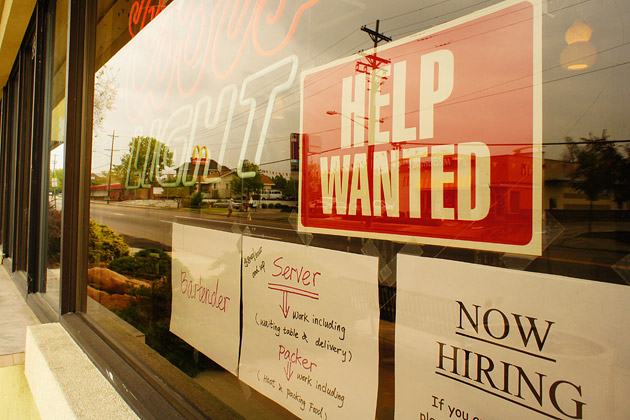
Many managers are clueless.  Some bosses think because employees have a job despite the  financial crisis, employees should be happy.  When the pressures of globalizations are upon American businesses, companies need workers to achieve high performance.

In my book, Breaking Organizational Ties: How to Have a More Fulfilled Life in Your Current Job, I researched and tracked the growing discontentment of some employees about their job situation. In fact, U.S. employee satisfaction is at a 20 year low.

Most employees do not trust their senior leadership to guide the  organization with their employees in mind.  Furthermore, cost cutting of  professional training and education and the lack of vertical advancement in organizations are creating a growing number of unhappy workers. Given these organizational constraints, employees seek to opt out by giving the organization the least amount of performance in order to keep their jobs.

Since the economic downturn, some employees are dissatisfied  with professional growth and career advancements in their jobs.  Gareth Jones and Jennifer George, authors of Contemporary Management, note that managers need to be mindful how they make decisions that affect employees.

Downsizing and outsourcing are a way of life for most organizations.  However, many times low morale in these organizations is  attributed to how employees are treated in this process.  Jones and George further suggest that managers should show compassion and empathy for layoff victims, by providing  employees with as much advance notice as possible about the layoff, and giving  clear information about severance benefits.

After the layoff, they can  also assist layoff victims in their job search efforts. These are a few of the ways in which managers can humanely manage a layoff. Richard Daft, author of Management, explains the importance of motivating employees:  “One secret for success in organizations is motivated and engaging employees. Most people begin a new job with energy and enthusiasm, but employees can lose their drive if managers fail their role as motivators.”

Therefore, managers need to inspire followers to minimize the number of individuals who ‘opt out’ in organizations.  Employees play a critical role in determining if they will ‘opt out.’ Marsha Sinetar, author of Do What You Love, The Money Will Follow, notes that the lingering consequences of employees who only work to obtain a paycheck: “Most of us think about our jobs or our careers as a means to fulfill responsibilities to families and creditors, to gain more material comforts, and to achieve status and recognition. But we pay a high price for this kind of thinking.”

Yet, if organizations are to be successful, they can’t afford their workers to be ‘opting out’ and providing less than superior performance against the backdrop of global forces. 

Discuss how managers can inspire employees toward greater job satisfaction.

© 2013 by Daryl D. Green

 

Solving the Sustainability Puzzle

sustainability-boy-world

Gridlock can often derail sturdy locomotives when all the leaders are driving it in different directions.  The Federal government is no exception.  Political in-fighting is the game of the day.  President Obama delivered his State of the Union Address this month which earned mixed reviews depending on their party affiliation. 

Yet, many politicians recognize that America’s massive financial debt isn’t sustainable.   The latest crisis involves sequestration which requires automatic cuts across the government, including defense and domestic programs based on a specific deadline.

 According to a recent George Mason University study, over 2.14 million American jobs would be lost if sequestration took place.  The original concept of sequestration was to create an artificial doomsday that would force both political parties to work together.  It didn’t work!

Senator Rand Paul of Kentucky made a plea for deep spending cuts and congressional term limits:  “The path we are on is not sustainable, but few in Congress or in this administration seem to recognize that their actions are endangering the prosperity of the nation.” 

If the federal government, with its massive resources, is  unable to deal with the issues of sustainability, what hope do other smaller organizations have then?  “Instead of negotiating, party leaders were busy issuing ultimatums and casting blame,” noted Washington Post columnist Lori Montgomery.

With the ever increasing chaos and complicity of business operations to achieve a profit, the concept of sustainability becomes more than an Ivy League Business School buzz word.  The speed of change and the constant bombardment of market problems continue to haunt business executives who hope to survive another crisis situation.

Organizations that do not understand this necessity soon find themselves looking at the behinds of other organizations that are in front of them. In order to survive, today’s business leaders need to understand the market environment, recognize their strengths, pursue market opportunities, and obtain continuing profitability while taking a long-view perspective of their operations to achieve sustainability.

More and more organizations recognize that sustainability is more than keeping the environment clean.  Yet, the concept of sustainability is often difficult to define. According to the U.S. Environmental Protection Agency, sustainability is defined as “everything that we need for our survival and well-being depends, either directly or indirectly, on our natural environment.” 

Consequently, one person may view sustainability simply as the ability to use resources continuously without any long-term depletion.  Andres Edwards, author of The Sustainability Revolution, breakdowns sustainability in several  key components which are  ecology/environment, economy/employment, equity/equality, and education.

Some businesses executives quietly argue that profitability supercedes many other priorities such as the environment.  Edwards disagrees: “Creating a healthy environment, free of pollution and toxic waste, and simultaneously providing the basic for a dynamic economy that will endure for an extended period are viewed as complementary rather than conflicting endeavors.”

 However, are there many things that are possible to be sustained without proper planning for them?  In order for businesses to avoid these conflicts of interest between capitalism and the sustainability model, visionary leaders must communicate their expectations to all members of their organizations and throughout their supply chain. 

Discuss the concepts of sustainability as it relates to your profession.

© 2013 by Daryl D. Green

Today’s Strategic Alliances

handshakes-business

If you want to survive on the international scene, you had better develop a well connected supply chain.  Yet, businesses need to properly align with organizations that have the same ethical system and create value in the relationship.  This reality speaks to the nature of strategic alliances. 

With the sudden emergence of countries like China, Brazil, and India, there is a new emerging demand from consumers across the globe.  These newer countries are strategically positioning themselves to change Western civilization and America’s Super Power status.  

Antoine van Agtmael, author of The Emerging Markets Century, argues that these emerging countries are not a fad but a wave of things to come in the near future:   “Instead of being peripheral, as they have been since the first Industrial Revolution, key economies of the former Third World will soon re-emerge as the dominant economies of the future.”  

In fact, he notes that these emerging countries’ economies are growing at a rate nearly twice as fast as developed countries such as the United States and its Western allies. 

Gareth Jones and Jennifer George, authors of Contemporary Management, explain about the positives and negatives of entering global markets:  “As we have discussed, a more competitive global environment has proved to be both an opportunity and a threat for organizations and managers.” 

Businesses must build relationships that minimize their risks in global markets.   According to some estimates, these emerging markets will be nearly twice as large as the current developed economies.  Antoine van Agtmael suggests a different business shift:  “A new breed of companies will play a critical role in producing this shift; a select number of which truly deserve to be regarded as world class.” 

https://www.youtube.com/watch?v=HgfwzPRyVvw 

Strategic alliance is defined ‘as an agreement in which managers pool or share their organization’s resources and know-how with a foreign company, and how organizations share the rewards and risks of starting a new venue.’  However, these relationships must make sense over the long-term in order to sustain any meaningful value. High performing organizations cannot afford to misfire with the wrong strategic alliances.  Consequently, good organizations need to be deliberate in forging the right relationships in a global market.

 Discuss the concepts of strategic alliances in a global market.

 © 2013 by Daryl D. Green

Leveraging Talent Advantages During Disrupted Change

talent-management-photo

In his book 32 Ways to Be a Champion in Business, Earvin “Magic” Johnson notes how he developed his entrepreneurial spirit, took advantage of business opportunities, and used his economic power as a force for social change.

As a megastar with the Los Angele Lakers in the 80’s, Magic soon established himself as one of the best to ever play in the NBA.  Unlike other super-athletes who failed to make the transition from superdom after their prime, Magic used his athletic platform to give him access to some of the most successful business leaders in the world.

Loaded with the internal business drive he inherited from his father, Magic began to use his athletic instincts to his advantage in the business world.  Magic found power in building on his core strengths, not being consumed with his weaknesses:  “Rarely can you turn a weakness into a strength. Greatness is achieved by building on strengths and managing your weaknesses so they do not matter.”

Sadly, many professionals are also succumbed by their weaknesses too.  Rev. Joe Tolbert, a dynamic motivational speaker, warns about how culture influences our personal perceptions:  “The world teaches us to focus on weaknesses rather than strengths.” Given the tremendous financial turbulence in the world, today’s leaders need to focus on their talent management if they are to survive.  In this blog, I will examine the concept of talent management.

Talent management is a critical asset for high-performing organizations in a global economy. In fact, finding the best talent and retaining the best people in a business will eventually overtake many other advantages such as technology and capital.  Talent power will rule the future economy.

Talent management is defined as the process through which employers anticipate and meet their needs of human capital.  Yet, employees cannot dismiss talent management as only an employer’s duty.

Since the post-World War II era, workers have enjoyed a lifetime employment model where workers were assured of financial stability.  That is not the case today where younger workers can expect to change jobs frequently.

https://www.youtube.com/watch?v=gRjNHIGlykk

Peter Cappelli, author of Talent on Demand, outlines the dangers of poor talent management. In the past, with a good economy, American businesses could afford to mismanage their talent pool.  Today’s businesses often are short-sided and do not want to develop internal talent; instead, they are depending on others for their talent.

Cappelli explains, “Relying on outside hiring seems to fly in the face of the imperative that organizations should be engaged in knowledge management practices that capture and organize what they know about their operations to improve performance.”  However, these failures in managing this talent pool are often negative.  For example, having too many employees leads to layoffs and restructuring, while having to too few talented people leads to talent shortages.

John Wiedmer, Robert Wiedemer, and Cindy Spitzer, authors of America’s Bubble Economy, wisely forecasted the bursting of America’s bubble in 2008 while other economists were predicting economic fortune for all.  In fact, the authors now predict that an even bigger financial cliff is ahead for the world.  However, they advocate the importance of talent management: “The fall of America’s Bubble Economy will shake up many industries, drive businesses into bankruptcy, derail countless careers, and force dramatic numbers of workers into temporary unemployment.  It will also create thousands of successful companies that don’t currently exist, lead all sorts of people to rethink their life’s work, and make many entrepreneurs and investors fabulously wealthy.”

Most firms would prefer to invest in technology and automation to reduce their labor cost or outsource their labor needs abroad to obtain cheaper resources.  In the case of talent management, these short-term gains can be fatal.  Cappelli further argues for strengthening talent management in organizations: “Growing competition in product markets further weakens the traditional talent management model by sharply increasing the uncertainty associated with planning.”  Therefore, talent management becomes a vital component of corporate strategies for businesses that desire sustainable growth.

Discuss the concepts of talent management for today’s businesses.

© 2013 by Daryl D. Green

Globalization’s Unintended Consequences for Americans

global-sourcing-man-strategy

Even in fun, you should see the obvious.  Last fall, my wife and I went on a cruise to the Caribbean.  During this seven day adventure, we visited several countries that catered to our whims as Americans. 

Yet, the impacts of globalization were obvious on the cruise ship.  Both the passengers and the cruise staff appeared to operate within their own cultural preferences when not having to succumb to the dominant culture.  

There were several occasions where there was multiple languages being spoken in the same area which provided a different backdrop to me as an American.  We were all interconnected but yet apart. 

Global forces continue to change business operations and society as a whole.  The results of globalization mean that countries, businesses, and people become interdependent.  Organizations typically pass through four stages to international commerce: The domestic stage, the international stage, the multi-national stage, and the global stage. In search of more profitability, companies send many of their business functions abroad in an attempt to obtain cheaper resources (i.e. labor) for products or services.  

Should globalization change our thinking as Americans too? In the 1960s, the United States was a megastar internationally, accounting for 66.3% of worldwide foreign direct investments. As globalization began to open barriers to the free flow of commerce, non-U.S. firms sought to increase production activities to establish a presence in major foreign markets.  

Given these changes, things started happening.  In 2009, non-U.S. firms accounted for 14.1% of the stock foreign investments with the majority of these firms based in Hong Kong, South Korea, Singapore, Taiwan, India, and China.  Charles Hill, author of International Business, notes:  “The world may be moving toward a more global economic system, but globalization is not inevitable. Countries may pull back from their recent commitment to liberal economic ideology if their experiences do not match their expectations.”


Of course, globalization is not all good. America was once the center of all important business transactions internationally.  However, now there is an emergence of other key global partners.  Brazil, Russia, India, and China are becoming dominate providers of products and services abroad. 

With the threat of outsourcings, many Americans are worried about job opportunities.   Richard Daft, author of Management, further argued about the impacts of globalization: “For today’s managers, the whole world is a source of business threats and opportunities.” Should U.S. parents worry about their children’s future given the declining role of the United States in the global environment? 

Today’s American students are not doing better than their parents as it relates to education.  According to the Organization for Economic Cooperation and Development (OECD), the U.S. ranks fourth worst among 29 developed countries for children obtaining a higher level of education than their parents.  

Only 21.6% of those 25 to 34 years old achieved a higher level of education than their parents in the United States. That compares to an OECD average of 36.8%.  Consequently, current and future U.S. workers will be vulnerable to the consequences of globalization.  Unfortunately, many politicians, executives, and media pundits do not have a long-term perspective about the opportunities and threats related to globalization.  They should! 

Discuss the opportunities and threats associated with globalizations and how emerging leaders can compete.

© 2013 by Daryl D. Green

New Value Creation Model

value-smart-shopping

I received an email from Dr. Marcus Blakemore about a very fascinating website called Fiverr.com. At first, I was very skeptical because freelancers like technical writers and web designers were offering their services for $5. In fact, these services were listed well below market prices.

Yet, the site also offers bizarre services like someone writing something on his or her lips to a person dressed in a clown suit willing to send greetings to anyone. Loaded with my conventional wisdom of ‘you get what you pay for,’ I gave the website a chance. Through this effort, I found some vendors were outstanding while others were mediocre.

Amazingly, the owners of Fiverr.com had created a niche for themselves with freelance websites, such as Elance.com or Guru.com. However, a new value proposition was also developed.

For experienced sellers, Fiverr.com provides a promotional venue where they can sell more expensive services down the product line, newbie sellers can turn their hobbies into financial gains, and value-seeking buyers can secure some quality services well below market value.

With the pressures of globalization all around, organizations are finding that creating value becomes a necessity. This article examines the concepts of value creation in today’s competitive environment. 

Twenty-first-century organizations can no longer implement value creation in a vacuum. Ken Favaro, author of Put Value Creation First, further suggests that placing a priority on value creation gives businesses two advantages over their competition: The first is capital and the second is talent. Favaro argues that successful value creators never suffer from capital shortage.  

Value focuses on the relationship between the customer’s expectations of a product or service and the amount paid for it. C.K. Prahalad and Vemkatram Ramaswamy, authors of The Future of Competition, further reasoned that twenty-first-century corporations must adapt their value creation system to fit the global scale.

They noted the new system is an individual-centered, co-creation of worth between consumers and organizations.  Few executives take the time to explain their values, but this will be increasingly important if companies hope to expand success in their global market. 

For many people, the concept of value creation is vague. An exact definition of value depends on the individual, but it could be defined as the net bundle of benefits the customer derives from a product or service.

According to Businessdictionary.com, value creation denotes ‘the performance of actions that increase the worth of goods, service or even a business.’  Consequently, value creation for customers encompasses developing products and services that customers find consistently useful.  

Mark Johnston and Greg Marshall, authors of Relationship Selling, argue that an individual must understand the customer to establish value.  Furthermore, Paul Peter and James Donnelly, authors of Marketing Management, argue that the starting point in the buying process is the consumer’s recognition of an unsatisfied need. The customer must remain the focus for any sustainable business success. 

Value creation must also be a strategic and deliberate concept for professionals. Mark Johnston and Greg Marshall maintain that perceived value is in the eyes of the customer. Therefore, perceived value will vary. A professional’s biggest challenge is in selling this value with consistency. Being strategic about these business relationships is not simple. Organizations must clearly understand the external motivation within their market in order to create lasting customer value. The external environment is considered anything outside of the organization’s control. External environment factors include economic stability, legal-political shifts, technological growth, social-cultural norms, and natural changes.

With businesses losing market sharing to companies abroad, organizations must establish clear value propositions to their customers. Paul O’ Malley, the principal of Paul O’Malley Associates (Newton, MA), argues the crucial need of value creation for companies: “The most successful organizations understand that the purpose of any business is to create value for customers, employees, and investors, and that the interests of these three groups are inextricably linked. Therefore, sustainable value cannot be created for one group unless it is created for all of them.”

Furthermore, today’s professionals always need to provide value for their employers and customers. In tough times, organizations want to keep their best people. In order to sustain lasting success, value creation must be an important ingredient of corporate business strategies during economic turbulence.

Describe an opportunity or problem in an industry where a new product or service would be benefical to customers because it would provide new value for them.

© 2013 by Daryl D. Green

Guest Blogger – Jalene Nemec

We face unprecedented economic times in a globalized marketplace where purchasing from places as far away as China are just a click away. As a direct result companies have had to review, refocus and revamp their business scope to compete and sustain their livelihood.

Some have opted to accomplish this by changing their product line, cutting costs, slashing prices, removing excess overhead and reducing pay. All these options can prove successful and have. But there is a better solution. Improve your customer service and earn loyal customers!

Customer service by definition is to provide assistance with courtesy those who patronize a business. [1] A company that provides great customer service over their competitors creates loyal customers who will patronize their business year over year.  

The direct result of this is increased profits. Customers become loyal when they know they can trust your company to take care of their needs, even their most frivolous complaints and to do it with kindnesses.

To illustrate this, John Goodman used a simple calculation for getting customers to complain and then satisfying them. The assumption in this example is that a customer is worth at least $30 in profit over a year’s time.

The cost of handling a complaint is about $5 and at least 75% of callers are satisfied. To quantify the payoff of soliciting and handling complaints, it’s critical to know the prevalence rate of non-complainants and their loyalty, as well as the loyalty of those who complain and are not satisfied. The calculation for moving a customer with a problem from non-complainant to satisfied complainant is provided.

Payoff due to improved loyalty – Typically, moving a customer with a problem from non-complainant to complainant to a satisfied caller raises loyalty by about 30%, meaning loyalty) x (.75 satisfied) x $30 value). After covering the $5 cost of handling the complaint, one is left with $1.75 in profit and/ or an ROI of 35% ($1.75/$5 cost to handle complaint).

Over time, marketing executives have awakened to the fact that between 20% and 70% of all new customers are won by personal referrals, positive word-of-mouth. Research has also consistently shown that personal service interactions have 20 times the positive impact as advertising in fostering word-of-mouth referrals.

Payoffs due to enhanced word-of-mouth referrals: if, conservatively, one out of ten satisfied customers produce a word-of-mouth referral and one new customer worth $30 is won for every 40 who hear good things, then satisfying 10 customers adds $30 in word-of-mouth benefits, or $3 for each customer satisfied. That adds an additional $3 payoff for each satisfied customer, raising the ROI to 95%. [2]

The concept of these figures is intriguing. However they cannot come to fruition by doing nothing. Companies must be actively engaged in the task of improving and providing superior customer service.

Through my research, I determined that there were five key characteristics that lead to great customer service and ultimately increased profits. Those characteristics include: Attitude, Awareness, Accountability, Action, and Affability. Together they are my “5A-Wheel.”

Change begins with the right attitude. Before a company can change their customer service, they must establish a mission to provide quality service. Furthermore, the company should be aware of the current state of the service they provide. Change cannot be made without understanding the situation at hand. A business may question, has there been a noticeable decline in sales? If so, could it be a result of the customer service? 

The best way to kick-start change is to hold employees and managers accountable. Without effectively maintaining accountability for everyone involved, people will not see a reason to change their behavior and the business will suffer.

Holding personnel accountable is the first part of taking action. Unless a company makes a conscious decision to actively improve, change will be temporary or non-existent.

The final characteristic is affability. It seems like a minor detail, but consider some of your past consumer experiences. There were probably a few instances where an employee helped you in an “I have to” way, and there were times where you were helped in an “I want to” way.

This is the difference between attitude and affability. An employee has the right attitude if he or she understands a need to help the customer, but wanting to help the customer provides the best possible experience for everyone. 

Using these five characteristics as a guideline will help companies succeed in their customer service department. As you begin your career or start up your own business, be better than your competition and provide the customer service of yesteryear that people value, a customer service that people are loyal to.

Please share your thoughts with this guest blogger.

ABOUT THE BLOGGER


Jalene Nemec, MBA,  is the author of the upcoming book, Great Customer Service. She is also one of the brightest business thinkers in the world, having both extensive customer service and leadership experience.  She is a former Lincoln Memorial University MBA graduate.

REFERENCES

Entrepreneur. http://www.entrepreneur.com/encyclopedia/printthis/82148.html. 2011. (accessed   16 March 2011).

Goodman, John. “Manage Complaints to Enhance Loyalty.” Quality Progress, (2006).


[1] Entrepreneur.com

[2] Manage Complaints to Enhance Loyalty by John Goodman

Job Creation Model for America

Things are getting tougher at home. I run into a former neighbor who stated he was looking for work. He was a corporate manager for a Fortune 500 company. Sadly, the company had made some bad business decisions that left it with the decision of laying off staff. My neighbor was one of these causalities of downsizing. 

He had been earning over $80K. He stated that he was getting many job offers because of his experience that were offering him about $40K. He could not understand his plight. I explained the employment research I had been doing over the years. It is a buyer’s market with companies being the buyers. 

Therefore, my neighbor was part of the blue plate special for businesses. These companies were searching for highly qualified workers at the fraction of the cost while staying away from recent college grads or inexperienced prospects. Unfortunately, this is the reality of employment in a financial crisis. 

Last week, the Labor Department reported job growth had slowed and thousands of Americans were giving up on their job search. Of course, these results received attentions on all political fronts in America because it is a presidential election year.  

On the campaign trail, President Barack Obama explains how the economy is improving but slowly. His opposition, Republican Presidential candidate Mitt Romney, attacks the Obama administration for failed policies on the economy. Both presidential candidates set an interesting discussion on the role of the federal government in the economy. However, the most underpinning issue is who is best suited for job creation to 23 million unemployed Americans. 

The global economy is struggling even in emerging markets like China. Why would America be different? According to the Labor Department, the economy added only 96,000 jobs in August, which was down from 141,000 jobs in July. Additionally, unemployment fell to 8.1%, from 8.3%. This is not a positive statistic. The unemployment rate fell largely because 368,000 people stopped looking for work.


In fact, 64% of the working–age population was either unemployed or actively seeking work which was a record 30 year high. According to some economists, at least 150,000 jobs are needed each month to simply keep pace with population growth.

Job creation is a difficult concept. According to the financial dictionary, job creation is a “process by which the number of jobs in an economy increases.” In this partisan political environment, job creation is a hot buzzword without much practical application.

Some people may argue that the government is a job creator. Yet, the federal government, being bureaucratic and having a host of mission-oriented functions, is not equipped to handle this responsibility alone.

Others folks taunt businesses as the ultimate job creators. However, businesses were never started to be job creators as its primary mission. Ricky Griffin and Michael Pustay, authors of International Business would argue that businesses were designed solely as job creators: “The fundamental reason for the existence of a business is to create value (usually in the form of profits) for its owners.”

Therefore, a multinational company’s business strategy may not be in tune with job creation in America. Outsourcing relates to pulling various tasks from within an organization and getting this particular service outside of the organization.  Outsourcing continues to be a major tool for businesses.

Thomas Friedman, author of The World is Flat, makes a distinction between outsourcing and offshoring: “Offshoring, by contrast, is when a company takes one of its factories that is operating in Canton, Ohio, and moves the whole factory offshore to Canton, China. 

Therefore, it produces the same product in the very same way, only with cheaper labor, lower taxes, and subsidized energy, and lower health-care costs.” Countries search the globe for cheaper labor without considering the long-term perspective of their business strategies. I think you need to give the definition of outsourcing here to complete the comparison. 

Consequently, shipping more jobs abroad has a rippling impact across the globe. Globalization creates a more equitable average wage across the world while reducing the earning power of developing countries and increasing the living wages for emerging countries.

According to the United Nations’ Millennium Development Report, more than1 billion people on the globe live on less than $1 a day.  Ironically, as most Americans have watched their wages decrease, most other workers across the globe sees a significant increase.

The world’s middle income class earns between $700 to $7,500 per family member. Therefore, job creation has a different meaning on a global level because it produces a variety of winners and losers. Consequently, Americans must understand that the jobs that are created may not be fully realized in their own country. 

How do you define job creation in a global environment? What team arrangement (if any) can U.S. government and U.S. businesses create to help the 23 million unemployed in our nation? 

© 2012 by Daryl D. Green

Emerging Markets

I remember listening to Kenny Rogers sing “The Gambler” growing up in my community.  As many of you know, Rogers is a country artist.  I was well aware that if my friends knew I listened to country music, I would have lost my ‘cool card’ among my rapped-crazed peers.  Today, the lyrics of “The Gambler” still guide my business strategy. 

“You got to know when to hold ’em, know when to fold ’em
Know when to walk away and know when to run
You never count your money when you’re sittin’ at the table
There’ll be time enough for countin’ when the dealing’s done
Every gambler knows that the secret to survivin’
Is knowin’ what to throw away and knowing what to keep” 
 

If most senior leaders would guide themselves with this simple lyric, their organizations would be better off.  For example, you find a good spot in the lake where there are an abundance of fish.  You keep this secret, but then start sharing it with a few friends. Sadly, the word gets out about your special spot.  

Finally, you find yourself squeezed out from your favorite spot.  It’s a hot spot now.  The fish are being topped out.  Yet, people continue to fish there despite obtaining less fish and requiring more time to get the same results.  Even though you love the spot and have a sentimental connection with this area, you abandon this location and move to another unknown location that shows plenty of potential.  You moved not because you wanted to move; you moved because you are a fisherman who loves catching fish. 

Likewise, today’s businesses are operating abroad in order to catch more fish and obtain more profitability.  U.S. multinational companies, like Coke Cola and McDonalds, realize that America’s market is pretty saturated and riddled with hypercompetitions.  

How many more burgers or cokes can Americans continue to consume?  Additionally, companies hope to lower their costs by searching for a lower cost labor force.  Charles Hill, author of International Business, suggests that outsourcing is systematic:  “By doing this, companies hope to lower their overall cost structure or improve the quality or functionality of their product offering, thereby allowing them to compete more effectively.”[1] Therefore, emerging markets become more attractive. 

The fragility of today’s world’s economies demands that businesses act more prudently and decisively about their market strategies. Emerging markets, which were once stigmatized with the name ‘Third World’ markets, will be a dominate player in the world’s future economy.


The top four emerging markets include China, Brazil, India, and Russia.  According to Goldman Sach’s projects, these countries will overtake the seven largest industrialized countries (United States, Japan, Germany, France, UK, Italy, and Canada) by 2040.  Antoine va Agtmael, author of The Emerging Markets Century, argues that the prominent role of emerging markets is in future commerce.   

He predicts revolutionary changes due to these emerging markets and equates these changes to the second industrial revolution.  Some of the key success factors for these emerging companies are the following: (1) an obsessive focus on quality and design, (2) brand building, (3) logistics, (4) being ahead of competitors in adapting to changing market trends, (5) acquisition savvy, (6) sustaining an edge on competition in information technology, (7) clever niche strategies, and (8) unconventional thinking.[2]  

Additionally, these companies have a hunger to compete since their success will improve their way of life. Sadly, many Americans do not understand the level of poverty that motivates these countries. Agtmael further notes: “A new breed of companies will play a critical role in producing this shift; a select number of which truly deserve to be regarded as world class. 

In the face of these firms’ vigorous emergence on the world stage, there will be a temptation to go into protective mode….”[3]  However, globalization makes retreating a passive signal of being defeated in a world market.  Therefore, U.S. companies like IBM and Google may see themselves fighting to keep their dominance from unrecognized firms from these emerging countries with a hunger to topple established U.S. businesses. 

Discuss how U.S. companies can effectively address the competition from firms located in emerging markets. 

© 2012 by Daryl D. Green


[1] International Business by Charles Hills

[2]The Emerging Markets by Antoine va Agtmael

[3]The Emerging Markets by Antoine va Agtmael

Bubble Watching

I knew something bad would eventually happen.  As a young boy in Shreveport, we would regularly ignite fireworks without adult supervision. Often these fireworks were loaded as if we were going to war. Being boys with unlimited courage (or foolishness), we would deviate from the prescribed manufacturer’s guidelines (there were none). 

Typically, we would get the most potent firecracker a/k/a Black Cats.  We would light the firecracker and release it at the last minute.  Of course, someone would attempt to be most courageous and wait even longer.  Yes, you may guess it.  Someone would eventually get hurt. However, we dared not to let an adult know.  

Likewise, our financial situation is in a crisis across the globe.  Yet, most business institutions continue to act in an unwise behavior which eventually will get them into trouble, a/k/a a bubble burst.   

A bubble can be defined as “whenever an asset’s perceived or psychological value exceeds its real economic value.”  It’s not rocket science in understanding bubbles. For example, people purchased overpriced homes that they could not continue to pay for.  The housing market’s bubble burst.  Millions of dollars came tumbling down with this bubble.  Therefore, bubbles can be toxic.    

Some bubbles are easier to see than others.  For example, Europe may be looking at a very rocky financial future.  In its book Beyond Austerity: A Path to Economic Growth and Renewal in Europe, the McKinsey Global Institute outlines the trouble that Europe faces: “The challenges Europe faces are serious-more so for some economies than others.”  

Europe’s political will is unable to change its social model.[1]  In 2009, EU-15’s productivity rates were 15% lower than the United States. In fact, Europeans work, on average, 5 weeks less than workers in the U.S. (U.S. workers are among the best in the world in productivity).  

Their seasoned citizens (ages 55-64 –years old) do not actively participate in work activities compared with the senior population in America. Many of their social services are provided by the government which puts a heavier burden on resources. Europeans are reluctant to change their current social model that is driving them into an economic ditch.  Consequently, a bubble will eventually burst. 

However, America cannot believe it’s immune to a bubble crisis like Europe.  John Wiedemer, Robert Wiedemer, and Cindy Spitzer, authors of America’s Bubble Economy, correctly predicted the 2008 economic crisis several years before it happened. 


Additionally, they predicted that America is headed for an even worse economic crisis, regardless of the political parties in charge.  They understand the power of understanding bubble trends:  “…the bursting of America’s bubble economy will create a temporary Bubblequake of shockwaves here and around the world, depressing stock and real estate values, driving up interest and inflation, and throwing the U.S. and other economies into temporary global recessions.”[2]  The following elements are what the authors saw as bubble busters for the American economy before the 2008 bubble burst:

  • Huge international trade deficits that just keep getting bigger.
  • An astronomical $8 trillion federal government debt, heavily financed by foreign capital.
  • Ever-expanding consumer debt with no equal rise in consumer income.
  • The lowest savings rates in America’s history.
  • A national housing market that has climbed 80% in the last several years while income rose only 2%.
  • An economy that is now heavily dependent on historically low interest rates and low inflation rates that require massive foreign capital to maintain.

 Clearly, those predictions were made for 2008.  However, has anything changed since then as it relates to these elements?  Consequently, those organizations that watch bubbling trends, analyze them, and act accordingly have the greatest opportunities for sustainable success. 

Discuss a potential bubble in your industry and how an organization or individual can leverage this problem into an opportunity? 

© 2012 by Daryl D. Green


[1] Beyond Austerity: A Path to Economic Growth and Renewal in Europe by the McKinsey Global Institute

[2] America’s Bubble Economy by John Wiedemer, Robert Wiedemer, and Cindy Spitzer