
Sustaining Employability

When my job as human resource manager was eliminated in September of 2010, I felt a sense of gloom and doom for exactly two days. It happened on a Tuesday, one day after my six-year anniversary.

(At least they allowed me the mandatory six-year vesting period for my 401k.) By Thursday I was reminded of six years of morning prayers to be free of the job that caused me heart palpitations and migraines.

The entire management team was eliminated between July and the end of the year.  When I look back at what transpired, I realize the basic principles I was taught in business school were overlooked. Human capital was not an asset, thus, how could the business sustain?

The general manager used to say if we didn’t have to work or deal with customers, our jobs would be easy. The same rings true with human capital.  Looking back, a common thread my company seemed to have was they disposed of their assets too quickly.

If an employee needed help in a certain area, the answer was to terminate their employee. I always challenged the managers to invest in the employees.

After all, the employees were to provide a service for the company, right? Likewise, the company should provide a service to the employee by investing time into making them a more valuable asset.

Sharing is essential in business—big business. It is hard to assume not sharing what’s going on with business will foster a sense of well-being among employees. It is true you can’t share everything, however, keeping employees involved and in the loop on things, aid in the overall pulse of the organization.

Employees who know what’s going on are empowered, tend to work smarter, more efficiently and want to do a good job over all. In my case, morale was always low, thus making my job difficult.

As a result, before us managers met our ultimate demise, sales were dropping due to the failing US economy. Customer satisfaction ratings continually dropped during the last three years due to inconsistencies in product quality which I know were in part due to the incredibly high turnover rates we had.

# # #

What’s an HR Manager to do when she’s the one laid off? Thankfully, my husband has a job, and unlike many Americans who find themselves in the same situation, we are able to make it on one income.

I reinvented myself. My first love is writing and that’s what I aspired to do while working. I moonlighted as a novelist—touring, speaking and writing inspirational novels while holding down my full time job. Once I cooled off after my position was “eliminated,” there’s a new HR Manager now, I dug deep and found some freelance writing gigs that helped to build my almost nonexistent writer’s resume.

I’m a novelist, not a journalist—although I have a college degree that would say otherwise. The last year has been interesting: I’m encouraged one day and discouraged the next.

How am I sustaining? I’m pushing through on the days when I’m discouraged. I search for writing jobs and have had a few that paid me a little. I reach back into my skill bag and offer resume writing services. I write articles on effective management policy, write company manuals, or whatever is trending.

During a time that seems tumultuous, the only thing to do is to stay encouraged. For me, it’s the right thing to do. If my position hadn’t been “eliminated,” I’d still be trying to help someone else achieve their dream—not my own.

Please share your comments with this blogger.
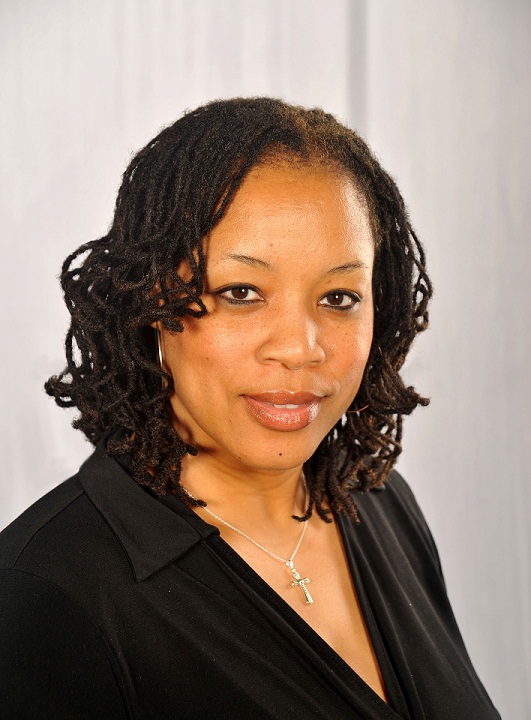
                                            About the Blogger                                               

Daphine Glenn Robinson

Daphine Glenn Robinson acquired a Bachelor’s Degree in Mass Communications with a minor is Sociology from Winthrop University in Rock Hill, SC. She worked in administrative positions at the Rock Hill Herald and the Charleston Post & Courier newspapers before going to graduate school to pursue a Master of Business Administration Degree.

Robinson worked as human resource manager for more than ten years where she was responsible for employee relations, safety, benefits, and worker’s compensation.

Sustainable Nonprofit Organizations

Any student can tell you I set high expectations for them, regardless of their backgrounds and college classifications.  Yet, any time you ask some people to go beyond their comfort zone and stretch themselves a bit mentally, a professor is going to get some backlash. 

Nevertheless, I designed a new final project called Real World Application based on one of the top tiered business schools.  The objective was to provide students in my Operations Management course some practical applications from the course and assist  local organizations with their problems.   This is when I fully understood the challenges that many nonprofit organizations faced in this economic climate.

Most students selected private businesses while a few opted for nonprofit organizations.  Noriko Chapman, the past guest blogger, got me involved more with her project since she complained she needed to do well in my course.  Her project entailed assisting the Tennessee Vocational Rehabilitation Center (TRC’s), located in Maryville, to be more efficient and effective. TRC’s mission is to provide services that help lead individuals who have a physical and/or mental disability to employment and are designed to meet individual needs.  

Her employer, DENSO, had been working to assist this nonprofit organization with a contract that allowed disabled workers to earn income.  Her research helped TRC become more efficient.  Noriko’s final project was the main inspiration for her new book, Second Chance: An In-depth Case Study on Nonprofit Organization’s Resource Allocation and Operational Maximization.

During the economic crisis this year, the organization nearly lost $72K from government funding.  It was clear to me that nonprofits needed to get their act together and create more value to the sponsors and customers or face extinction.

With shrinking funds for programs and a more competitive environment, nonprofit organizations will need to rethink their corporate strategies for future success. In 2005, there will be approximately 1.4 million nonprofit organizations registered to the IRS.

The majority of nonprofits depend on volunteers at various levels.  In fact, 74% of all public charities and 83% of all foundations are small; they have less than $500,000 in expenses and limited staff. 

Nonprofit organizations are different from traditional organizations and require special considerations in their operations. Operations management (OM) has been a vital instrument in the pursuit of greater productivity in the business sector.

OM includes planning, coordinating, and executing all activities that create goods and services. Robert Jacobs, Richard Chase, and Nicholas Aquilano, authors of Operations & Supply Management, suggest that implementing OM assists organizations to be more competitive: “Compared with most of the other ways managers try to stimulate growth – technology investments, acquisitions, and major market campaigns, for example – innovations in operations are relatively reliable and low cost.” Today’s businesses have built elaborate systems for better efficiency and effectiveness. Yet, most nonprofits are forced to rely upon low-end technologies and outdated practices.

Demanding contributors and the public in general are demanding more accountable and efficiency after several high profile scandals.  Nonprofit organizations are often influenced by their stakeholders that include clients, board of directors, committees, government officials, community leaders, staff, and volunteers.  

However, most nonprofit organizations haven’t completely embraced this rigor due to various reasons (i.e. limited resources and the lack of knowledge).  Yet, nonprofit organizations have a greater need for increased effectiveness in their processes during this economic crisis.   

Describe your professional experiences with nonprofit sustainability issues.

© 2011 by Daryl D. Green                                    


Sustaining Ethical Behavior

Americans are increasingly worried and cynical of today’s leaders. Traditional institutions are losing favor, leaving citizens unable to trust their neighbors, churches, and government.

Additionally, America has a history of unethical behavior by leaders. The private sector has been riddled with tons of examples (i.e. Enron, Exxon, etc.) of unethical behavior on Wall Street. Furthermore, political parties market family values and personal integrity like they are selling used automobiles.

In the quest for power and their own personal ambition, many government officials have been drawn to deadly vices that have led to their personal self-destruction. Graham Tomblin, The Seven Deadly Sins, notes this natural selfish behavior has destroyed families, friendships, happiness, and peace of mind.

These moral break downs can seep into other factions of the political landscape. For example, in 1998, the media reported the sexual exploits of Democratic President Bill Clinton with Monica Lewinsky. However, political scandals are nothing new for the federal government. During the months of May to August of 2007, Republican President Ronald Reagan’s administration was suspected of trading weapons for hostages in the Iran-Contra hearings.

This topic explores the American political environment and how amoral behavior associated with ‘seven-deadly sins’ impact contemporary organizational culture.   For this discussion, we evaluate Congressman Mark Foley’s scandal. Foley was a Florida congressman, who was reported to have sent sexually explicit emails to male pages who were high school students.

He abruptly resigned on September 29, 2006, which set-off a political landmine. House Republicans had to do damage control, whileDemocrats went on the attack. Some Democrats claimed that some House leaders knew for months of Foley’s inappropriate behavior. House SpeakerDennis Hastert found himself on the political hot seat. Hastert declared he knew nothing about Foley’s actions, but others disagreed with his proclamation. Hastert continued his claim of innocence as he asked the JusticeDepartment to investigate this matter.

Because of Foley’s resignation, he couldn’t be punished by his peers. Foley also apologized publicly, sought treatment for his alcoholic addicted, and pointed to a childhood abuse experience by a priest as a cause of his problem. Once again, Americans were asked to address another ethical issue among government officials.

In many cases, unethical decisions made by individuals who allow their ethical principles to influence their decision-making, led to laws being broken or the compromise of organizational values.  Moral principles, values, or beliefs about what is “right” or “wrong” are known as ethics.

Consequently, individuals who make decisions outside of the organization’s values sustain their moral principles internally. Ethics and organizational culture can impact the success of an organization. In fact, ethical behavior is directly related to culture.  

In the long-term, unethical behavior impacts an organizations ability to function effectively.  Employees watch what leaders do more than what they say.  Therefore, organizations that want to sustain future success must pay attention to their ethical behavior, at all levels.

Describe your professional experiences with ethical behavior by executives as well as others in the organization. Discuss what can be done to instill good ethical behavior throughout the organization

© 2011 by Daryl D. Green

The Designful Leader

Last night I was reviewing the Design School Boot Camp Bootleg, an interesting document put out by the Hasso Plattner Institute of Design at Stanford. In the opening of the 36-page PDF is the “Design Mindset” or “D. Mindset” (supposedly because everything looks cooler when you shorten a word to one letter and add a period). As I read them again, I started to wonder if they couldn’t also apply to leaders. The D. Mindsets are as follows, with my leadership commentary below:

Show, don’t tell

We all know how frustrating it is to receive “orders” from a leader who is solely focused don telling, especially if what we need is to see the action, behavior of value from the leader first before engaging in it ourselves.

Create Clarity from Complexity

Much of the role of leadership is sense-making, reducing the complex system they view to a tangible action or behavior that followers need to understand. Leaders make sense.

Be Mindful of Process

While making sense of complexity for followers, leaders also have to juggle their attention on the overall process of their objective. In addition, leaders need to know that their development and the development of their followers is a process.

Collaborate across boundaries

In most organizations, the leaders who get things done are often those who step outside the lines of hierarchy to do so. Collaboration is becoming increasingly more vital…and that doesn’t even consider the effects of globalization.

Take Bias toward actions

In the end, leaders influence others toward action. Leaders who can get to that action the quickest (with sufficient background knowledge) are of distinct advantage.

Get experimental, and experiential

As the literature on innovation grows, our understanding of the need to experiment grows with it. Leaders need to let followers experiment, and experiment themselves. In addition, leaders ought to consider the experience of what it is like to work on their team and build a positive experience.

Focus on human values

I’d love to think this one is obvious, but many “tactical” or “transactional” leaders are focused on accomplishing the objective first and appealing to human values second. While this may work in the short-term, it is not sustainable.

Seven mindsets billed as required for engaging in proper design. Still, I can’t help but wonder if they ought to be re-billed as the “L. Mindsets.

Please provide comments or feedback to our guest blogger.

David Burkus is the editor of LeaderLab, a community of resources dedicated to promoting the practice of leadership theory. He is a consultant, a speaker and an adjunct professor of business at several universities. David focuses on developing leaders putting leadership and organizational theory into practice.

David is a graduate of Oral Roberts University and holds a Master of Arts in Organizational Dynamics from the University of Oklahoma. David is currently pursuing a Doctorate of Strategic Leadership from Regent University. He can be reached at david@davidburkus.com.

Entrepreneurial Sustainability: Building New Markets

Ervin “Magic” Johnson was perhaps one of the greatest NBA players from my generation.  Watching the Lakers battle the Celtics became an American obsession.  Johnson, who was the floor general for the L.A. Lakers (aka “Showtime”), always performed well in big games.  His list of athletic accomplishments could fill a phone book. 

Yet, it’s Johnson’s off-the-court behavior that is a benchmark for individuals who search for sustainability in business.  Being a visionary and a doer, Johnson found opportunities in underserved areas where most traditional businesses would not pursue. 

Johnson explains, “I am grateful for my experience as an athlete. Yet the rewards of my entrepreneurial endeavors have been even more fulfilling. I’ve learned that creating jobs and providing goods and services to urban communities beats even five NBA championships.” In fact, he has used his economic power to leverage economic development in urban depressed areas. Therefore, he has become a social change agent.

In his book, 32 Ways to Be a Champion in Business, Johnson explains how he developed his entrepreneurial mindset. The book provides practical advice on starting, financing, marketing, growing a business, and capitalizing on market opportunities.  Clearly, Johnson went against the grain and showed that lucrative markets are not all abroad. Like Johnson, today’s businesses will need to explore more market opportunities. Entrepreneurs inject creativity and innovation for greater profitability. In fact, they seize market problems and turn them into opportunities.

Robert Hisrich, Michael Peters, and Dean Shepherd, authors of Entrepreneurship, argue that while business owners take risks on new markets, entrepreneurs understand how to exploit these risks to their advantage.  They note, “Though many individuals have creative new ideas, few can bring their ideas to the market and create new venture. Yet entrepreneurship and the actual entrepreneurial decisions have resulted in several million new businesses being started throughout the world.”

Social media platforms such as Youtube.com may be the next frontier for entrepreneurs.  For example, Facebook now seeks to capture more of the small business market.  With 750 million users, Facebook COO Sheryl Sandberg notes that 9 million of the nation’s 30 million small businesses are using Facebook to communicate with their customers.  Sandberg explains, “I think every small business should…be using Facebook. We’re not going to stop until all of them are using it to grow their businesses.”

Currently, small businesses use free Facebook pages to communicate with their customers. However, Sandberg argues that Facebook services can offer more to small businesses: “Facebook takes word-of-mouth marketing and makes it work at scale.” 

Facebook will launch a plan to attract more small business advertisement by offering a free $50 advertising credit to approximately 200,000 small businesses.  Like Magic Johnson and Facebook, today’s managers need to embrace the entrepreneurial spirit and search for new market opportunities.

Describe a potential entrepreneurial opportunity for you over the next five years.  How will you be able to sustain any success given market forces (i.e. Porter’s Five Competitor Forces)? 

 © 2011 by Daryl D. Green                                    


[1] “Facebook wants to be big among small businesses” by Jefferson Graham

Increased Profitability through Value Creation

As I listened to the radio, I couldn’t believe the amount of grid lock in the Washington, D.C. area.  Would both parties be so petty as to bring the nation to the brink of credit default? 

There were many people depending on government official to survive.  I turned the radio station to catch Dave Ramsey, national radio personality, go into a passionate appeal for Americans to take responsibility for their own lives and quit depending on the government. It sparked my attention.  Yet, what Dave Ramsey suggested was no easy matter.  How does an individual turn their ideas into a profitable venue?

Making money isn’t easy! People look for magical equations such as productivity equals outputs divided by inputs.  Decrease your inputs and you can expand your outputs.  Many businesses build their profitability on this simple equation.

Companies seek to reduce their inputs (outsourcing labor, better technologies) to obtain ‘more get.’ Yet, it’s pretty self-serving with little regard to the customer (places less value on employees too). Over the years, I have seen experts suggest that making millions is really easy if you have the right method. 

Loral Langemeier, author of the Millionaire Maker, has created her own version of a Wealth Cycle Process. She notes, “You can make the decision to make a lot of money at any age and in any stage of your life….No matter who and where you are, wealth building is well within your grasp. You just need to step up to the plate.”   Some of these processes may work. Yet, most are only ‘get-rich-quick’ schemes that leave people broken-hearted and empty pocketed!

Chris Anderson on the Long Tail Theory of Selling

Today’s profitability must be built on solving customer’s problems that have a financial value to them. What’s value?  It depends on the individual. Value is defined as the net bundle of benefits the customer derives from a product or service.  Value creation can be defined as an organization’s ability to convey the worth of its product or service to customers. Therefore, it goes to value, which focuses on the relationship between the customer’s expectations of the quality of a product/service quality to the actual amount paid for it. 

Mark Johnston and Greg Marshall, authors of Relationship Selling, argue that understanding customer needs should be the primary objective for profitable businesses.  Therefore, understanding the customer is the center point for creating value.

What has been your experience in turning ideas and concepts into profitable ventures?

 © 2011 by Daryl D. Green

Guest Blogger: “Is Real World Application for Real?”

Some MBA students find there is no relevancy in what they learn in class and the practical world. Yes, I was one of these doubters until I was engaged by one of my professors in an operations management course at Lincoln Memorial University.  The end results was assisting a local nonprofit organizations, writing my first book, and being thrust on the expert stage.

Operations management (OM) should be important to nonprofit organizations too. With shrinking funds for programs and a more competitive environment, nonprofit organizations will need to rethink their corporate strategies for future success.

This reality means managing their operations more efficiently and shifting their traditional thinking to a more entrepreneurial approach. Unlike businesses that are driven primarily by profit, nonprofits use any monies earned to be put back into the organization to cover their own expenses, operations, and programs. In 2005, there will be approximately 1.4 million nonprofit organizations registered to the IRS according to “Non-profit market” by Closerware.com.

My OM project called a “Real World Application” project was on the Tennessee Vocational Rehabilitation based in Maryville, Tennessee; it is one of these nonprofit organizations looking for more operational effectiveness in the future.

Tennessee Vocational Rehabilitation is a federal and state-funded program run by the Tennessee Department of Human Services Division of Rehabilitation Services to assist individuals of work age with physical and/or mental disabilities to compete successfully with others in earning a livelihood.

Based on the research data from the 2007 American Community Survey, approximately 12.8% of Americans between the ages of 21 and 64 have a disability.  In Fiscal Year 2009, the Division of Rehabilitation Services provided services to 30,289 individuals in Tennessee and 27,932 individuals met the eligibility criteria of the program. 

It is projected that 30,000 individuals will receive services and that 27,000 individuals will meet the eligibility criteria of the program and receive services during Fiscal Year 2011. Tennessee Vocational Rehabilitation in Maryville supplies automotive parts to Denso where I work. 

 The work usually requires a packaging or simple sub-assembly task while is a training tool for clients to learn work skills and experience. The average training length is 4 months.  However, I found all the staff being occupied with the daily routine and the primary mission of serving the clients. The  staff didn’t have enough time to observe and evaluate its capacity and capability. 

Also, the Center manager was afraid of committing to additional work and contracts due to the unique labor population and the number of clients being fluctuated.  My recommendations were to provide a tool to analyze the capacity frequently and to establish the fine balance of time-sensitive and non time-sensitive jobs to absorb the fluctuations. For instance, the center can prioritize and focus on the time-sensitive jobs for the Just-in-time customer due to high absenteeism.

Working with Dr. Green,  I published my results. My new book, Second Chance, provides nonprofit organizations with information about how to use
operations management tools to make them more efficient and better equipped to assist their clients and constituents in meeting their needs.

Nonprofit organizations like for profit organizations must find innovative ways to compete with others. This includes competing on several dimensions which are (a) cost or price, (b) quality, (c) speed, (d) delivery reliability, and (e) coping with change.   The concepts, theories, tools, technology or reading materials learned in the classroom are not to keep in a closet. 

They are to practice in a real world for an advanced career or a way to help organizations who need the knowledge and expertise. The support can be a time study, data analysis, plotting graphs for visual control, standardized work, material flows, and finally mock interviews for clients who were ready for job placement.

I just had to ask the very last question to a client during a mock interview at the center.  “How did you know about this center?  How did the experience at the center help you prepare for a job?” He answered without any hesitation, “It’s the best thing ever happened to me.  I get up every morning and cannot wait to come here. The experience gave me skills and confidence to find a real job. ”  He also appreciated his mother for finding out the program and encouraging him to pursue.

There are many other individuals with disabilities who can benefit from the service like the client who I interviewed.  How can we optimize the capacity to accommodate more clients without increasing the operation costs? I learned that I can make a difference, using my operational experience.

As a surprising result, I found a practical side of my MBA learning by helping others in the community. If we spend approx. 40 hours per week for a career
job, 2~3 hours a week of investment outside of the work seems to be very little.  However, you will be amazed by the positive impact you can make for the people who need help. 

Don’t underestimate your talent!  It can be fully utilized and appreciated outside of the classroom.  Pursuing a degree is an accomplishment, but we can even capitalize the talent and skills even further by reaching out.  It’s a genuine accomplishment.

© 2011 by Noriko Chapman

Please comment on Ms. Chapman’s points.


Noriko Chapman helps social causes as an industry expert.

Noriko Chapman is the mother of two children. She lives in Maryville, Tennessee.  She is a Production Control supervisor in the Instrument Cluster Division of DENSO Manufacturing Tennessee, Inc. She worked at DENSO specializing in production planning, new products start up, service parts operations, supply chain and warehouse operations for 16 years and for 2 years as a full- or part-time translator at the beginning before the first Tennessee DENSO plant was built. Given the fact that she was raised in Japan, she wrote a chapter “Japanese Practices in an Autoparts Plant” for the book, Effects of Japanese Investment In a Small American Community by Scott Brunger and Young-Bae Kim.  Her Maryville College undergraduate research paper, “A Dramaturgical Analysis of Japanese Organization Behavior” won an undergraduate award by North Central Sociological Association.  She is currently attending Lincoln Memorial University MBA program and now serves on the board of directors for the Tennessee Department of Human Services, Division of Rehabilitation Services.

Building a High Performing Team


West 4 x 400 Relay Champion

I sit in the bleachers anticipating what will happen next. I’m at the Tennessee State Championship, watching my son’s high school team compete.  It’s the girl’s day to challenge for a title.   I thought it was a highly unlikely event since the girl team had only seven girls competing (two freshmen, two  sophomores, one junior, and two seniors); they were completing against larger schools with more athletes.  It was the classic matchup of Goliath and David.

At the final event of the night (4 x 400 relay), Brentwood was leading by two points. The West Relay team (which included two freshmen, one sophomore, and one senior) finished fifth in the preliminaries.  Things were different in the finals. The girls ran like they were on fire. West’s Tamara Hundley noted, “Coach Crocket told us we needed to win this event to win State. We were not going to be denied.” In an electric finish, senior runner Maddie Treasure ran the anchor leg, came from behind and winning
the event in 3:56.82. It was their best time of the season and provided the team with another successful year. Knoxville West had won its second consecutive Class AAA team title by edging out superpower Brentwood High (62.5 points to 54 points) with the guttiest performance of the night.  Winning only one individual event, the team systematically scored in each event.  The
determination paid off.

The Magnificent Seven (Maddie Treasure, Riley Campbell, Maya Barreso, Kayla Newsby, Shantyra Delaney, Kaylah Whaley, and
Tamara Hundley) had found another way to win its fourth state championship. Celebrating that night, I ran into a rival coach from another area; the coach had won a state track title before, edging out West High to win.  He was disgusted that a girl’s track team
could score just 60 points and win a state championship.  Of course, it was easy for me to figure. I had watched the coaches over several years.  Will Jay and Mike Crocket had developed a masterful strategy of maximizing their team’s potential (this year they participated in 11 of 19 events) and creating a high-performing team.

Coach Crocket stated, “This is about the guttiest bunch I’ve ever had….We lost 50 points from last year’s team and had a
lot of injuries. These girls laid it all on the line.”  With collegiate All-American hurdler Jackie Coward of University of Central Florida graduated from the program, many people figured the West track would fade into the wilderness like so many other
programs.  The effort of this track program demonstrates the importance of developing a high-performing
organization to sustain success in the future.

High-performing organizations offer a distinct competitive advantage. A high-performing organization is one that is “intentionally designed to bring out the best in people and thereby produces organization capacity that delivers sustainable leadership business results.”  Most organizations want to boast about their superior performance in relationships to their competitors. Yet, when a litmus test is used, many come far short of this declaration to their customers.

When individuals work together, organizations often perform better. Therefore, working toward a shared vision and belief system are critical steps.  Gareth Jones and Jennifer George, authors of Contemporary Management, note the importance of good group dynamics: “People working in a group are able to produce more or higher-quality outputs than would have been produced if each
person had worked separately and all their individual efforts were later combined.”

The authors further suggest a competitive advantage for organizations working in groups and teams; the organization should aim to:(a) enhance its performance; (b) increase its responsiveness to customers; (c) increase innovation;  and (d) increase employees’ motivation and satisfaction. Yet, building a high-performing organization is no easy task.  Many organizations have faltered
in thinking that simply optimizing their resources with “good management” and utilizing good technology are enough to stimulate high performance.

In today’s hyper-competitive environment, it’s not only about good processes; it’s about putting a good team together.  Gary
Lewis, President of Resource Development Systems, LLC, argues that creating high-performing organizations is about managing people: “What differentiates the high-performing organization is not how well they have dealt with their process issues, but how well they have dealt with their people issues.”  Lewis notes some key elements for high-performing organization, such as people, vision, leadership, core competencies, innovation, trust, and personal responsibility.

 As organizations retool for the future, organizational performance will be a key topic for senior executives. The article demonstrated the importance of high-performing organizations for future sustainability. Every organization wants to attain
high performance; sadly, many organizations are simply clueless about how to do so.

Like the Knoxville West girls’ track team, organizations must find ways to overcome challenges so that they can become successful. People are a critical element to this organizational performance puzzle. Therefore, leveraging people is as important as managing resources in order to sustain high performance in organizations over the long term.

 © 2011 by Daryl D. Green

Attention Please – Worker Fatigue

Sometimes I wonder why organizations couldn’t be more positive. Yes, I know we have so many problems with unemployment and global threats on our standard of living.  Yet, I wonder if managers really understand how they set the tone for their workers’ behavior.  Many times managers treat workers like mechanical parts rather than human capital assets.  They  assume that giving employees new technology is enough to keep them happy. It isn’t.

Workers are experiencing more physical setbacks due to the lack of effective leadership in some organizations. As a matter of fact, uncertainty and workforce stress become a staple of the current workforce as employees devote more time to their jobs out of necessity. In many organizations, conflict is a big factor for burnout.

The reality is that most workers are emotionally drained. As a matter of fact, 68% of workers report feeling burned out at the office, according to a CareerBuilder.com survey. Some of this job stress can be attributed to poor management and lack of clear vision.

Many short-term political appointees launch brand-new reforms with the turn of another political election; however, they are failing to pick up the pieces when they fail. US businesses cannot point to the lack of employee performance on a global front for mismanagement errors.

Japan, a long-time benchmark for American companies, is being defeated by American employees; today, the average USworker puts in 36 more hours than Japanese workers (1,825 vs. 1,789).  Over the last two decades, balancing work and home life has been difficult, since Americans have added 200 hours to their annual work schedule.

Employees want to be valued. Felix Harris, a financial director with over 8 years in the banking industry, acknowledges the importance of people in a socio-technical system. He states, “When employees are appreciated, they work harder. A machine is only as good as its operator.”

Jeffery Pfeffer, author of The Human Equation, acknowledges that organizational success is directly related to implementation, and this capacity comes from the workers, how they are treated, their skills, and their effort as it relates to the organization.  Therefore, organizations need to be aware of worker fatigue.

What can organizations do to deal with worker fatigue?

© 2011 by Daryl D. Green


[1]

Operation Chaos

To be honest, I do like a little chaos to shake up the status quo.  Some might call me another ‘Dennis the Menace!’  Most organizations are reluctant to change…even for the good.  Yet, I love the idea of locating opportunities in the midst of a crisis most intriguing.  One of my co-workers has a very profound saying, “Chaos equals cash flow!” Let’s explore operation chaos in today’s organizations.

Our world is in a constant state of change and chaos. In the streets of Libya, government soldiers battle for control as Moammar Gadhafi acts like a puppet master. Syrian security forces fire on helpless mourners during a funeral. In the Netherlands, a man shoots in a crowded shopping mall. 

Over a quarter-million protesters in Egypt demanded that President Hosni Mubarak step down from his presidency. Egypt is the world’s largest Arab nation and is very important to U.S. foreign policy, especially in the Israeli-Palestinian peace process. If these global issues go unresolved, it could further destabilize the region and endanger US interest.

America, the home of the free, is not immune from chaos either.  In April, Congress worked with President Barack Obama to overt a government shutdown due to ideological differences; protesters outside of the Washington buildings screamed “Shut it down!”  

President Obama came into office with dreams of political change. Now, he finds himself mired in budget negotiations, ideological differences among his own party, a financial crisis highlighted by the increasing national debt, and a growing unstable global front. The next fight is just beyond the horizon.

Chaos Theory dominates the current landscape.  For the novice, chaos is defined as ‘a state of utter confusion or disorder; a total lack of organization or order.’ Many organizations operate in crisis mode. A crisis can be defined as any event or activity with the potential to negatively affect the reputation or credibility of a business; it could lead to an out of control situation (aka chaos).  

Jeffrey Caponigro, author of The Crisis Counselor, explains the danger of allowing a crisis to get out of control: “Many businesses have been unable to recover from bungled crises. Plenty of high-level executives were forced to make unwanted career changes after being labeled as the one who ‘caused the crisis’ or couldn’t manage the problem.’”

No senior manager wants to admit that he or she is unprepared for change that creates this chaos. Davidson Frame, author of the New Project Management, argues that change contributes to chaos. Frame notes, “Complexity is a fact of life we cannot escape. It overwhelms us in our personal lives. It is also an aspect of the workplace.” 

Daryl Conner, author of Leading at the Edge of Chaos, further highlights the current dangers for leaders: “The world is inundated with disruptions: unforeseen dangers, unanticipated opportunities, unmet expectations, alarming new statistics, startling twists of fate, shocking innovations, unheralded improvements, unrealistic requirements, overwhelming demands, contradictory directives, staggering liabilities, astonishing results, sudden strokes of luck, and more.”  When these things happen while leaders are unexpected, chaos can occur.

Innovators take note of disruptive change as positive turbulence in the market.  Organizations, which do not understand the importance of making sustainable growth by being more efficient, will not be successful over the long-term.  Kate Ludeman and Eddie Erlandson, authors of Radical Change, Radical Results, argues that the market rewards innovators: “The market values companies by their brain trusts, not their inventories, because a top engineer and a few peers can outperform hundreds of average engineers.”

The authors provide seven actions to transform organizations which are (1) curiosity- drop personal defenses and listen to all feedback, (2) awareness- tap into the multidimensional intelligence to make decisions, (3) authenticity-drop the roles that limit organizations and staff, (4) accountability- take responsibility for personal actions [100% Responsibility + Solid Agreements = Accountability], (5) candor- tell the truth, (6) genius- allowing individuals and organizations to fully utilize their abilities, and (7) appreciation- express gratitude. Organizations without strategic leaders and the wherewithal for survival will lose their grip on reality.  They perceive the market doing one thing when in reality the market is doing something different.

Please discuss how chaos has impacted organizations in your area.

© 2011 by Daryl D. Green