Relationship Selling Toward Greater Profitability in the Future

Is America in trouble?  On a daily basis we are being required to answer that question both subconsciously and openly by today’s media pundits.  Recent economic reports have shown vulnerabilities in the United States economic engine including everything from manufacturing to consumer spending. 

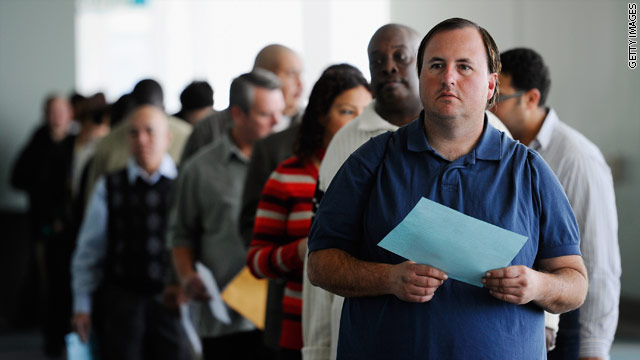
Even the latest positive economic news brings another sequence of gloom. For example, the job rate ticked down in July, 2011; however, American businesses are not creating enough jobs. With unemployment still hovering over 9%, most people do not feel there  is much to be happy about related to the job outlook.    

One of the smartest ways to retool the economy is by selling more products and services to domestic and international markets.  Therefore, the art of selling becomes a critical competitive advantage to organizations that want to sustain profitability over the long-term. Selling is a common denominator for every business. No matter what business you are in, you must sell your product or services to customers. 

Yet, the concept of selling is related to creating value for customers.  When a bakery gives an extra donut in a dozen, the company is adding value and fosters better relationships with customers.  Given these realities, selling is a people-oriented business that addresses the customer value proposition. 

Relationship skills can make or break important connections.  Dr. Dave Hinkes, co-author of Selling by Objectives: The Handbook for More Profitability in the 21st Century, often advises his Fortune 500 clients to stay connected with their customers.  Dr. Hinkes and I worked hard on this project.


We further prescribe a relationship selling model based on several key elements which include branding, quality, flexibility, reliability, creativity, simplicity, efficiency, and price. Dr. Hinkes adds: “If you can practice or role play your responses to these objectives originating from any source, then you will find that you will be closing more deals, building more wealth, and saving time and effort in the process.” 

For businesses, it is important to understand human behavior in order to building lasting relationships. Therefore, relationship selling and sales management are interconnected. Mark Johnston and Greg Marshall, authors of Relationship Selling, note the importance of these connections: “The managers in the sales organization have taken time to think through the most efficient and effective way to manage the customer side of the business”.  

With competitors on each global corner, today’s businesses cannot afford to lose customers or markets.  Staying connected with customers is critical for sustainability.  Relationship selling is a good method for organizations to use.

Like any relationship, there is a degree of tension involved in selling due to the need for solutions. The tension may be positive or negative depending on how much exists or how it is handled.  Businesses that can balance these conflicting interests will have an advantage over their competitors and an opportunity for greater profitability.

Please discuss your professional experience with this topic. 

© 2012 by Daryl D. Green


[1] “Double-dip odds on the rise” by Scott Patterson

Guest Blogger – Burnout: An Unseen Blaze

In this brief piece, I want to begin an exploration of burnout. Some believe burnout is self imposed by workers who can’t take the pressure. Others find that in the current economic and organizational climates, burnout is imposed by business that do not recognize or accept that workers need periods in their work days to decompress.  

During the Vietnam era, American military members often recited a refrain for which I do not have a clear attribution; although one source attributes it to Mother Teresa.  

“We, the unwilling, led by the unknowing, are doing the impossible for the ungrateful. We have done so much, for so long, with so little, we are now qualified to do anything with nothing.”  

Many of the service members who recited this also suffered from the stresses of war, constantly being shelled by the enemy, constantly being on patrol in jungles where the enemy hid, constantly being exposed to team members injuries, wounds, and death.

Movie watchers saw this portrayed with some degree of realism in Band of Brothers. These military men and women were constantly in a state of high arousal with few or no opportunities to decompress. 

Is there a parallel to that refrain in the current economy, the current organizational climate? One source explains the parallel by citing that in the current climate (economic or organizational) there are often mismatches between job expectations and expectations of the person performing the job.

Often, organizations place economic consequences ahead of human values. This confusion of values against economic needs of the employee to survive in an unstable work climate may result in lost productivity brought on by stress. 

Question, who are the unwilling and why did they become unwilling? It their book, The Truth About Burnout, Maslach and Leiter found several reasons why people become unwilling. They find overwork and lack of control over their jobs as part of the problem.  

Another question, who are the unknowing? The comic Dilbert provides an example of the unknowing in the depiction of the pointy-haired boss who reaps all the rewards for himself sharing none with workers.  

Why has working become doing the impossible? Although the work may not be impossible to complete, workers feel a loss of community in the workplace. Political intrigue and rumors often force workers to withdraw from those around them.  

An example of the ungrateful comes from the movie Office Space. The unit manager who strolled the isles of cube dwellers showed his lack of gratitude in his interpersonal interactions. Today, workers feel that they are not treated fairly and have to deal with values conflict.  

Citing Maslach and Leiter again, they write, burnout is a result of “erosion in values, dignity, spirit, and will — an erosion of the human soul” (pg. 17). This is a strong provocative statement meaningfully explaining “doing so much, with so little, for so long.” The human spirit can become willing again if organizations take steps.  

The modern military tries to relieve effects of stress and the resulting PTSD in the field and before and after a deployment. What are organizations doing to combat stress and burnout? The first step organizations must consider is the truth of burnout.

Since the bottom line is the bottom line in contemporary business, one truth is that burnout takes an economic toll. Another truth is the emotional toll zapping the strength of workers both mentally and physically.  

Organizations cannot afford to have unwilling and ungrateful elements if it wants to survive. Relieving the economic and emotional toll of burnout can take the “un” out leaving willing and grateful. People do not exist because of an organization; an organization exists because of people.

Please comment on this topic from your personal or professional experience.

About the Guest Blogger

Dr. Paul Hoffman holds a Doctor of Strategic Leadership from Regent University, a Master of Arts in Leadership and Bachelor of Science in Organizational Communication from Bellevue University.

Doctor Hoffman is an adjunct professor at Bellevue University and Metropolitan Community College in Communications Arts, English, and Communication and Humanities. Before his teaching role, Dr. Hoffman was a graduate enrollment counselor at Bellevue University and enrollment representative to the University’s Quality Council.  

Dr. Hoffman came to the academic arena after ten years in retail management. During this period he managed in speciality mall stores, and multimillion dollar warehouse style stores. Dr. Hoffman owned a small business and was an insurance agent for a fraternal insurance provider.  

Dr. Hoffman was a U.S. Air Force active duty noncommissioned officer retiring in 1990 as a Master Sergeant. During over 21 years of active duty, Dr. Hoffman was a Security Police sentry assigned to guard aircraft, missiles, and nuclear weapons on alert and in storage.

For three years, he held the speciality of Military Training Instructor while supervising an installation correctional custody facility. In the concluding seven-plus years, Dr. Hoffman worked as an installation human relations and equal opportunity treatment NCO and finally as Superintendent of Social Actions overseeing both human relations and substance abuse prevention activities for an installation. 

Military assignments saw Dr. Hoffman stationed at major Air Force Bases of the Strategic Air Command, U.S. Air Force Europe, and Pacific Air Force. During the Vietnam era, Dr. Hoffman had one assignment in support of major air operations over Vietnam. 

Dr. Hoffman is married to Su Yun and they have two adult children. Son, Leslie Donald, is the oldest formerly a Captain in the U.S. Marine Corps. Les has two combat tours in Iraq.

Daughter, Theresa Ann, was a member of the U.S. Peace Corps serving on the island of Carricaou, the Grenades; her Peace Corps specialty was Community Health focusing on AIDS awareness and prevention and presently studying to become a physical therapy assistant.

Nonprofit Sustainability

Nonprofit organizations provide very valuable assistance to society. With shrinking funds for programs and a more competitive environment, nonprofit organizations will need to rethink their corporate strategies for future success.

In 2005, there will be approximately 1.4 million nonprofit organizations registered to the IRS. The majority of nonprofits depend on volunteers at various levels. In fact, 74% of all public charities and 83% of all foundations are small; they have less than $500,000 in expenses and limited staff.  

Negative market trends signal trouble for many nonprofit organizations. According to the Nonprofit Research Collaborative in 2011, 59% of nonprofits reported their donation income was flat or lower than 2010.  Although 41% of nonprofits saw an increase in their donations during this timeframe, smaller charities with less than $3 million in total spending saw donations drop. 

In fact, food pantries and homeless shelters across the nation reported more usage which increased the cost of operations. Furthermore, 8% of charities noted they were in danger of closing according to the Center on Philanthropy at Indiana University.                                              

Demanding contributors and the public in general are demanding more accountable and efficiency after several high profile scandals.  Nonprofit organizations are often influenced by their stakeholders that include clients, board of directors, committees, government officials, community leaders, staff, and volunteers.

However, most nonprofit organizations haven’t completely embraced this rigor due to various reasons (i.e. limited resources and the lack of knowledge). Yet, nonprofit organizations have a greater need for increased effectiveness in their processes during this economic crisis.   

Describe your professional experiences with nonprofit sustainability issues.

 © 2012 by Daryl D. Green                                                       


Social Mobility in America

Economic turbulence has overtaken the American way of life.  In Europe and Asia, investors stand uncertain of their next moves.  Even America is part of an economic casualty. 

Yet, these problems are very personal to the average citizen. Higher gas prices and costs of living; the housing bust; and the financial crisis cause most people to worry about their future. With a weak job growth, many U.S. jobs continue to be shipped abroad. 

Global competition continues to cause Fortune 500 companies to search for cheap labor to increase profitability.  This reality often places developed countries like the United States at a clear disadvantage.  Consequently, there has been an increasing gap between the wealthiest people and the poorest people in this country.  The reality has become the shrinking or disintegrating of the middle class.

America is a shining symbol for social mobility across the world.  Social mobility can be defined as “the passage of individuals from one social class to another.” Most people feel that if they work hard, they can achieve a better life, regardless of their social standing. 

In some countries, a person is stuck in an economic class with no hope of further advancement.  If your parents are uneducated and work a low paying occupation, the children will grow up in this same status.

Marketing expert Michael Solomon argues the natural progression of social mobility: “People do improve their positions over time, but these increases are not usually dramatic to catapult them from one social class to another.”  The current economic picture makes social mobility more difficult.

Michael Snyder, editor of theeconomiccollapseblog.com, argues the systematic destruction of the middle class: “The rich are getting richer and the poor are getting poorer at a staggering rate. Once upon a time, the United States had the largest and most prosperous middle class in the history of the world, but now that is changing at a blinding pace.” 

Snyder supported his claims with 22 statistical facts.  Below is a sample of his analysis:

  • Eighty three percent of all U.S. stocks are in the hands of one percent of the people.
  • American workers now must compete against situations like China where a garment worker makes approximately 86 cents an hour and in Cambodia a garment worker makes approximately 22 cents an hour.
  •  Sixty one percent of Americans “always or usually” live paycheck to paycheck, which was up from 49% in 2008 and 43% in 2007.
  • Average Wall Street bonuses for 2009 were up 17% when compared with 2008.
  • More than 40% of Americans who actually are employed are now working in service jobs, which are often very low paying.
  • Sixty six percent of the income growth between 2001 and 2007 went to the top one percent of all Americans.
  • Only the top 5% of U.S. households have earned enough additional income to match the rise in housing costs since 1975.
  • In 1950, the ratio of the average executive’s paycheck to the average worker’s paycheck was about 30 to 1. Since the year 2000, that ratio has exploded to between 300-500 to 1.
  • As of 2007, the bottom 80% of American households held about 7% of the liquid financial assets.
  • The bottom 50% of income earners in the United States now collectively own less than 1% of the nation’s wealth.

Many people hold that a political change will rescue the middle class.  As we have witnessed in the 2012 Presidential Election, petty politics are more important than solving the economic crisis.  Therefore, all families are held hostages. Any rescue will not be soon. 

Snyder doubts there is any hopeful solution for the stale social mobility occurring today: “The reality is that no matter how smart, how strong, how educated or how hard working American workers are, they just cannot compete with people who are desperate to put in 10 to 12 hour days at less than a dollar an hour on the other side of the world.”  Many people hope that America can compete in the future without sacrificing her core values related to social mobility.  Others have given up this hope.

 Do you feel social mobility is unsustainable in the U.S. , given global competition?

 © 2012 by Daryl D. Green

Mapping out the Green Economy

Most businesses are promoting ‘Going Green’ while politicians peddle the concept as a way to grow jobs.  Many people have been disappointed with the perceived ‘hype.’  My question, with this concept, was who was going to lead this green economy? 

LMU’s Dean Jack McCann and I published an article entitled “Benchmarking a Leadership Model for the Green Economy” to address this subject.  This paper examined benchmarking leadership theories in order to build a new leadership model for the green economy.  This academic journey opened my eyes on the green economy.

Let’s explore this green economy. Many hope that the green economy will provide new prosperity for America’s future. The current economy is fueled exclusively by oil, natural gas, and coal. As these resources continue to become scarce, the cost increases.

On the contrary, the green economy is environment friendly and provides an opportunity for more innovation. Many experts support the green economy concept. Thomas Friedman, author of The World is Flat, suggests that the stage is set for a green economy with billions of people from China, India, and the former Soviet Union demanding their share of the energy treasure chest.

There will be more energy demands to feed the world’s microwaves, vehicles, and other power hungry technology.  Friedman argues that this global demand would create an environmental disaster. This reality could infuse a new desire for renewable energies and environmental sustainable systems.

For example, Michigan has created more than 11,000 renewable energy jobs in four years; these jobs are compensated with sustaining a fair and equitable wage. Critics argue that some jobs will be lost as more rigorous energy regulations are in place and companies are forced to make energy transitions.

Jerome Ringo, the former president of the Apollo Alliance which has a coalition that promotes clean energy and green jobs, further maintains that these setbacks could be overcome by taking the proper steps. Therefore, the green economy could become a positive driving force in the future.

Ringo argues that green jobs could revive the U.S. economy while resolving some of the worst environmental problems facing the world. He points to this fact based on several states implementing the green economy.  However, other individuals have their doubts about any financial success from the green economy.

What do you foresee as leadership challenges for launching the green economy?  Please share your personal or professional experience on this subject.


© 2012 by Daryl D. Green                                    


Guest Blogger – Serendipity


Horace Walpole coined the word serendipity in 1754 after reading the Three Princes of Serendip. The princes “were always making discoveries, by accident and sagacity, of things they were not in quest of.” Today, we have tools at our disposal that allow us to manage serendipity or, at least, place ourselves strategically so that serendipity is possible.


What is serendipity? The traditionally accepted definition of serendipity is “the occurrence and development of events by chance in a happy or beneficial way.” Well then, if events are by chance, how is it possible to place ourselves in a position in which serendipity is likely?


In their book, The Power of Pull: How Small Moves, Smartly Made, Can Set Big Things in Motion, Hagel, Brown, and Davison relate the value of social networking. They specifically mention Facebook, LinkedIn, and Twitter as points of connection to friends and friends of friends. Through these connections we discover others’ have and can share tacit knowledge that we may benefit from.

Through the same connection, others can grow from connecting with us gaining our tacit knowledge. It not a contest to see how many friends we have in our network, rather it is about how we manage our network of friends.


Imagine a chance reading of friends’ Facebook wall posts that result in an opportunity to connect with another with whom we share an interest. In this situation, we’ve experienced a “chance event in a happy and beneficial way.” What is the likelihood of this event happening had we not had a Facebook profile, not been linked to our friend, and not been able to read that wall post?


Serendipity allows chance meetings for planting seeds of learning and growing if we manage opportunities for chance meetings. Wisdom of the East tells the story of a man, “I have nothing to teach and so much to learn.” In reply, “Oh dear! Haven’t we all something to teach and something to learn?”


We are not Princes of Serendip making discoveries by accident. We can create opportunities for serendipitous events to evolve. Do not wait for opportunities to come, seek them, manage them, and benefit from them. Grow in learning; grow in teaching.

Please share your comments on this topic.  

ABOUT THE BLOGGER


Dr. Paul Hoffman holds a Doctor of Strategic Leadership from Regent University, a Master of Arts in Leadership and Bachelor of Science in Organizational Communication from Bellevue University. Doctor Hoffman is an adjunct professor at Bellevue University and Metropolitan Community College in Communications Arts, English, and Communication and Humanities.

Before his teaching role, Dr. Hoffman was a graduate enrollment counselor at Bellevue University and enrollment representative to the University’s Quality Council. Dr. Hoffman came to the academic arena after ten years in retail management. During this period he managed in speciality mall stores, and multimillion dollar warehouse style stores. Dr. Hoffman owned a small business and was an insurance agent for a fraternal insurance provider.


Dr. Hoffman was a U.S. Air Force active duty noncommissioned officer retiring in 1990 as a Master Sergeant. During over 21 years of active duty, Dr. Hoffman was a Security Police sentry assigned to guard aircraft, missiles, and nuclear weapons on alert and in storage. For three years he held the speciality of Military Training Instructor while supervising an installation correctional custody facility. In the concluding seven-plus years, Dr. Hoffman worked as an installation human relations and equal opportunity treatment NCO and finally as Superintendent of Social Actions overseeing both human relations and substance abuse prevention activities for an installation.


Military assignments saw Dr. Hoffman stationed at major Air Force Bases of the Strategic Air Command, U.S. Air Force Europe, and Pacific Air Force. During the Vietnam era, Dr. Hoffman had one assignment in support of major air operations over Vietnam. Dr. Hoffman is married to Su Yun and they have two adult children. Son, Leslie Donald, is the oldest formerly a Captain in the U.S. Marine Corps. Les has two combat tours in Iraq. Daughter, Theresa Ann, was a member of the U.S. Peace Corps serving on the island of Carricaou, the Grenades; her Peace Corps specialty was Community Health focusing on AIDS awareness and prevention and presently studying to become a physical therapy assistant.


Job Strategies for 21st Century

“Where much is given, much is required” is a theme that I have embraced since I’ve gotten some many opportunities.  Last weekend, I gave a lecture at Payne Avenue Missionary Baptist Church on job strategies for the 2st century.  I felt it was time to better educate the community about the current employment landscape.

Where are the jobs? How can individuals land one? As we left 2011, many individual’s job opportunities faded away. There are over 15 million unemployed in our country.  Our community is no exception. What worked in the past for job prospects will not work during this economic crisis.

As the economic downturn continues to worsen for today’s workers, individuals need to refocus their strategies as they witness the last era of the full-time workforce. Sadly, things will never be the same for most employees. Companies chase emerging markets abroad.

According to government estimates, an additional 1.2 million manufacturing jobs will disappear in America by 2018.  According to a USA Today analysis, part-time work is at a record high while overtime is at an all-time low.

An average of just 33 hours was recorded for the average worker in May 2009; it was fewer hours than any time since the Bureau of Labor Statistics begun to track it in 1964. In fact, over 9 million people want to work full-time but can only find part-time employment. 

Most job seekers do not understand that the employment rules have changed. In a survey of 1,729 human resource professionals conducted by the Society for Human Resource Management in partnership with AON Consulting, 60 percent of the survey participants said that the skill levels of today’s job applicants do not meet job demands. Forty-three percent said that current employees do not have skills levels to meet job requirements.

At the church, I attempted to share some of the emerging job strategies to apply during this financial crisis. These strategies were identified in my book, Job Strategies for the 21st Century. With an academic mindset and community concern, I feel we can assist the community with the current unemployment problems in our area.  Knowledge is key! Below are some of these recommendations to consider:  


  • Personal Branding.  Individuals should set themselves apart with a personal brand.  Your personal brand should define, promote, and protect your image online and off-line. Develop a unique skill or talent that is very valuable in your discipline.
  • Core Competencies. Those individuals with the right skills and abilities will never lose out on potential opportunities. Employers are looking for workers with the right skill set. 
  • Good Communications.  Individuals need to be able to articulate their thoughts (oral and written). In the future, mastering a foreign language will be a trademark for progressive and successful Americans.
  • Critical Thinking. A person can increase his longevity in the workforce by looking critically at problems. Today’s employers are looking for innovators and creators, not just employees.
  • Strategic Alliances & Networking.  Individuals should move beyond networking to strategic alliances. A strategic alliance is agreement for cooperation among two or more people to work together toward common objectives.  Therefore, strategic alliance is not a self-serving function.
  • Flexibility.  Being a person who is mobile and adaptable will be an asset during these uncertainty times.


Although many people feel very pessimistic about future career opportunities, hope is not lost if people are prepared for the future. Bestselling Scifi author H.G. Wells explained, “’We were making the future,’ he said, and hardly any of us troubled to think what future we were making. And here it is’.”

By taking control of one’s career strategy, individuals are taking a positive step in navigating these difficult economic times and landing their future jobs.


State your experience with this topic.  What additional job strategies would you suggest for unemployed individuals?


© 2012 by Daryl D. Green                                    


The Power of Creating Sustainable Content

The buzz rang across the world. The word was finally out, “Whitney Houston was dead.”  On February 12, 2012, Whitney died at the age of 48 years old. It was hard to believe she was gone.

Through the public eyes, the six-time Grammy winner was a beacon of God given talent. Whitney sold more than 170 million albums and singles over her career and received millions from her movies.

Sadly, many experts argue that Whitney will be worth more dead than alive. Forbes writer Zack O’Malley Greenburg said Houston could be looking at as much as $10 million this year in digital sales.  Many people attempt to company Michael Jackson and Whitney Houston due to their stardom and international acclaim. Yet, their financial firepower was not the same. 

Michael was a musical genius who created lasting content.  He sold over 8 million albums in the United States within six months of his death and over 20 million worldwide. On the contrary, Whitney received a much smaller share with artist royalties from her albums.

For example, Whitney’s music has sold over 1 million albums and singles since her death. Additionally, her catalog sales surged with nearly 900,000 individual tracks sold. One of Whitney’s most celebrated songs, “I Will Always Love You,” has also heated up the record charts since her death. 

Yet, Dolly Parton, who wrote this song, will receive the greatest benefit from the publishing revenues from the radio play and licensing to commercials and films.


In both situations, the major difference is that Michael wrote many of his songs and obtained publishing royalties as a writer. Therefore, Whitney’s estate won’t be able to soar like other entertainment moguls like Michael Jackson and Elvis Presley. 

Consequently, good content has lasting value. This content is called intellectual property.  It refers to creations of the mind: inventions, literary and artistic works, and symbols, names, images, and designs used in commerce. This content is managed with legal documents such as patents, trademarks, and copyrights.  


Henrik Vejlgaard, author of Anatomy of a Trend, argues the power of creators to set trends.  He explains, “The prime movers in any trend process will often go by different names, for instance, inventors, innovators, pioneers, or entrepreneurs. They create new products or invent new styles or begin doing something in a completely new way.” Therefore, intellectual fire power can pay more over time.


State your experience with content creation or intellectual firepower. What do you think about the future of content creation in the future?


 © 2012 by Daryl D. Green                                    


Practicing Philanthropy

In most cases, individuals are not hurt by giving to others.  My co-author, Noriko Chapman, emailed me last week about royalties on our book, Second Chance, and how the funds would go to charity.  While I looked at this book as an opportunity to provide assistance for nonprofit organizations, it was her idea to leverage our written work over the long-term. 

Noriko, who is a DENSO production manager, selected the Tennessee Rehabilitation Center (Maryville) as part of her MBA project.  We pledged 30 percent of the book proceeds to this organization.  Noriko’s giving attitude helped the Center’s financial needs.

However, it provided unintended consequences by bringing more media attention to this cause and the public in general. In fact, it landed the Center’s director an expense paid visit to DENSO in Japan.  Therefore, philanthropy can start from small beginnings.

Individuals can build a philanthropist mindset when giving to organizations or people. Social responsibility is a buzzword in a society demanding more accountability from its corporate citizens.  Social responsibility speaks to a company’s stance on the way its managers and employees view their duty or obligation to make decisions that protect, enhance, and promote the well-being of stakeholders and society as a whole.

Gareth Jones and Jennifer George, authors of Contemporary Management, argue about the importance of social responsibility: “The way a company announces business problems or admits its mistakes provides strong clues about its stance on social responsibility.”

With the economic crisis, there are many institutions in trouble.  According to Merriman-Webster.com, philanthropy is defined as an act or gift done or made for humanitarian purposes. Most people associate philanthropy with the wealthy. 

However, philanthropy must start with a mindset and attitude for giving, regardless of where a person stands on the economic ladder.  Marc Benioff, Chairman & CEO of salesforce.com, built his organization with a philanthropy-focus.  Salesforce.com is a cloud computing company with a mission of ‘The End of Software.” 

Benioff has had a history of successful business ventures, including Oracle Corporation and Macintosh Division.  However, he noted for the achievement of designing a new philanthropy model.  The Salesforce.com Foundation aims to inspire companies across the globe to give 1% of their resources to support charities and social causes. Other companies like Google have embraced this model. 

This 1%; 1%; 1% philanthropy model includes one percent of company’s time, one percent of its equity, and one percent of its products donated to charity.  For Salesforce.com, this model means giving employees 6 paid days of volunteer time to use over the course of the year.  To date, Salesforce.com employees have donated over 178,000 hours.

The Salesforce.com Foundation has supported giving of products to 8,000 nonprofits in 70 countries.  On the equity front, one percent of founding stock is used to offer grants focused on technology innovation in nonprofits and youth development programs.  The company has given over $20 million in grants to qualified nonprofit organizations. 

Therefore, a philanthropist mindset can carry great rewards in sustaining meaningful programs in society.  It is not exclusive to the most wealthy people.  

Discuss your personal experiences on this topic.

© 2011 by Daryl D. Green

Sustaining Gratitude in Society

Sadly, many folks are too busy running the rat race to say, “Thank you.”  I remember sitting in a Sunday School class of young students during my college experience at Southern University.

I remember one student saying how ungrateful he had been toward his parents.  I also felt guilty.  My parents bought me my first car while I was in high school; most students did not have cars. 

I had envisioned receiving a brand new car.  Well, I didn’t. I got an old 1973 Dodge Charger.  I was disappointed.  But, I fell in love with that old car which I later called “The New Wave Cruise mobile.”  My car was far more dependable than most automobiles. 

I remember never having said “thank you” for my car – I had also taken my parents for granted.  Our society doesn’t teach us that being appreciative is a virtue.  This article examines the importance developing a spirit of gratitude as a competitive advantage toward employability.

Organizations should incorporate gratitude into their corporate culture.  Managers and workers would operate differently.  This attribute is all about character. Gratitude can be defined as the quality of being thankful; it is a readiness to show appreciation for and to return kindness.  In the fast pace of industrial living, people aren’t saying “thank you” to anyone. Most people feel they deserve any kind act done for them.  

In fact, a selfish society creates a generation of ungrateful children.  Consequently, our children grow up with this huge expectation of social pampering. 

Why else would a) waiters expect tips without good service, b) students expect good grades without the effort, and c) couples want great relationships without any communication.  All of these unrealistic expectations make “thank you” less important. 

As the economy continues to spiral downward, organizations attempt to differentiate themselves from the competition. It starts with the greatest asset…people! High performing organizations understand this critical point! Badly run organizations don’t!

When you show someone some gratitude after they assist you, that individual will likely continue to help or do more for you. However, if you are ungrateful, many times people will not do any more for you. Businesses are no exception.  Showcasing a spirit of gratitude can be very rewarding and can assist in transforming an organization’s competitive advantage.

Discuss your personal experiences on this topic.

© 2011 by Daryl D. Green