Sustaining Employability

When my job as human resource manager was eliminated in September of 2010, I felt a sense of gloom and doom for exactly two days. It happened on a Tuesday, one day after my six-year anniversary.

(At least they allowed me the mandatory six-year vesting period for my 401k.) By Thursday I was reminded of six years of morning prayers to be free of the job that caused me heart palpitations and migraines.

The entire management team was eliminated between July and the end of the year.  When I look back at what transpired, I realize the basic principles I was taught in business school were overlooked. Human capital was not an asset, thus, how could the business sustain?

The general manager used to say if we didn’t have to work or deal with customers, our jobs would be easy. The same rings true with human capital.  Looking back, a common thread my company seemed to have was they disposed of their assets too quickly.

If an employee needed help in a certain area, the answer was to terminate their employee. I always challenged the managers to invest in the employees.

After all, the employees were to provide a service for the company, right? Likewise, the company should provide a service to the employee by investing time into making them a more valuable asset.

Sharing is essential in business—big business. It is hard to assume not sharing what’s going on with business will foster a sense of well-being among employees. It is true you can’t share everything, however, keeping employees involved and in the loop on things, aid in the overall pulse of the organization.

Employees who know what’s going on are empowered, tend to work smarter, more efficiently and want to do a good job over all. In my case, morale was always low, thus making my job difficult.

As a result, before us managers met our ultimate demise, sales were dropping due to the failing US economy. Customer satisfaction ratings continually dropped during the last three years due to inconsistencies in product quality which I know were in part due to the incredibly high turnover rates we had.

# # #

What’s an HR Manager to do when she’s the one laid off? Thankfully, my husband has a job, and unlike many Americans who find themselves in the same situation, we are able to make it on one income.

I reinvented myself. My first love is writing and that’s what I aspired to do while working. I moonlighted as a novelist—touring, speaking and writing inspirational novels while holding down my full time job. Once I cooled off after my position was “eliminated,” there’s a new HR Manager now, I dug deep and found some freelance writing gigs that helped to build my almost nonexistent writer’s resume.

I’m a novelist, not a journalist—although I have a college degree that would say otherwise. The last year has been interesting: I’m encouraged one day and discouraged the next.

How am I sustaining? I’m pushing through on the days when I’m discouraged. I search for writing jobs and have had a few that paid me a little. I reach back into my skill bag and offer resume writing services. I write articles on effective management policy, write company manuals, or whatever is trending.

During a time that seems tumultuous, the only thing to do is to stay encouraged. For me, it’s the right thing to do. If my position hadn’t been “eliminated,” I’d still be trying to help someone else achieve their dream—not my own.

Please share your comments with this blogger.

                                            About the Blogger                                               

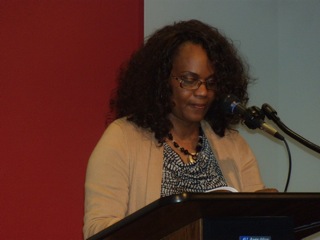
Daphine Glenn Robinson

Daphine Glenn Robinson acquired a Bachelor’s Degree in Mass Communications with a minor is Sociology from Winthrop University in Rock Hill, SC. She worked in administrative positions at the Rock Hill Herald and the Charleston Post & Courier newspapers before going to graduate school to pursue a Master of Business Administration Degree.

Robinson worked as human resource manager for more than ten years where she was responsible for employee relations, safety, benefits, and worker’s compensation.

The Designful Leader

Last night I was reviewing the Design School Boot Camp Bootleg, an interesting document put out by the Hasso Plattner Institute of Design at Stanford. In the opening of the 36-page PDF is the “Design Mindset” or “D. Mindset” (supposedly because everything looks cooler when you shorten a word to one letter and add a period). As I read them again, I started to wonder if they couldn’t also apply to leaders. The D. Mindsets are as follows, with my leadership commentary below:

Show, don’t tell

We all know how frustrating it is to receive “orders” from a leader who is solely focused don telling, especially if what we need is to see the action, behavior of value from the leader first before engaging in it ourselves.

Create Clarity from Complexity

Much of the role of leadership is sense-making, reducing the complex system they view to a tangible action or behavior that followers need to understand. Leaders make sense.

Be Mindful of Process

While making sense of complexity for followers, leaders also have to juggle their attention on the overall process of their objective. In addition, leaders need to know that their development and the development of their followers is a process.

Collaborate across boundaries

In most organizations, the leaders who get things done are often those who step outside the lines of hierarchy to do so. Collaboration is becoming increasingly more vital…and that doesn’t even consider the effects of globalization.

Take Bias toward actions

In the end, leaders influence others toward action. Leaders who can get to that action the quickest (with sufficient background knowledge) are of distinct advantage.

Get experimental, and experiential

As the literature on innovation grows, our understanding of the need to experiment grows with it. Leaders need to let followers experiment, and experiment themselves. In addition, leaders ought to consider the experience of what it is like to work on their team and build a positive experience.

Focus on human values

I’d love to think this one is obvious, but many “tactical” or “transactional” leaders are focused on accomplishing the objective first and appealing to human values second. While this may work in the short-term, it is not sustainable.

Seven mindsets billed as required for engaging in proper design. Still, I can’t help but wonder if they ought to be re-billed as the “L. Mindsets.

Please provide comments or feedback to our guest blogger.

David Burkus is the editor of LeaderLab, a community of resources dedicated to promoting the practice of leadership theory. He is a consultant, a speaker and an adjunct professor of business at several universities. David focuses on developing leaders putting leadership and organizational theory into practice.

David is a graduate of Oral Roberts University and holds a Master of Arts in Organizational Dynamics from the University of Oklahoma. David is currently pursuing a Doctorate of Strategic Leadership from Regent University. He can be reached at david@davidburkus.com.

Entrepreneurial Sustainability: Building New Markets

Ervin “Magic” Johnson was perhaps one of the greatest NBA players from my generation.  Watching the Lakers battle the Celtics became an American obsession.  Johnson, who was the floor general for the L.A. Lakers (aka “Showtime”), always performed well in big games.  His list of athletic accomplishments could fill a phone book. 

Yet, it’s Johnson’s off-the-court behavior that is a benchmark for individuals who search for sustainability in business.  Being a visionary and a doer, Johnson found opportunities in underserved areas where most traditional businesses would not pursue. 

Johnson explains, “I am grateful for my experience as an athlete. Yet the rewards of my entrepreneurial endeavors have been even more fulfilling. I’ve learned that creating jobs and providing goods and services to urban communities beats even five NBA championships.” In fact, he has used his economic power to leverage economic development in urban depressed areas. Therefore, he has become a social change agent.

In his book, 32 Ways to Be a Champion in Business, Johnson explains how he developed his entrepreneurial mindset. The book provides practical advice on starting, financing, marketing, growing a business, and capitalizing on market opportunities.  Clearly, Johnson went against the grain and showed that lucrative markets are not all abroad. Like Johnson, today’s businesses will need to explore more market opportunities. Entrepreneurs inject creativity and innovation for greater profitability. In fact, they seize market problems and turn them into opportunities.

Robert Hisrich, Michael Peters, and Dean Shepherd, authors of Entrepreneurship, argue that while business owners take risks on new markets, entrepreneurs understand how to exploit these risks to their advantage.  They note, “Though many individuals have creative new ideas, few can bring their ideas to the market and create new venture. Yet entrepreneurship and the actual entrepreneurial decisions have resulted in several million new businesses being started throughout the world.”

Social media platforms such as Youtube.com may be the next frontier for entrepreneurs.  For example, Facebook now seeks to capture more of the small business market.  With 750 million users, Facebook COO Sheryl Sandberg notes that 9 million of the nation’s 30 million small businesses are using Facebook to communicate with their customers.  Sandberg explains, “I think every small business should…be using Facebook. We’re not going to stop until all of them are using it to grow their businesses.”

Currently, small businesses use free Facebook pages to communicate with their customers. However, Sandberg argues that Facebook services can offer more to small businesses: “Facebook takes word-of-mouth marketing and makes it work at scale.” 

Facebook will launch a plan to attract more small business advertisement by offering a free $50 advertising credit to approximately 200,000 small businesses.  Like Magic Johnson and Facebook, today’s managers need to embrace the entrepreneurial spirit and search for new market opportunities.

Describe a potential entrepreneurial opportunity for you over the next five years.  How will you be able to sustain any success given market forces (i.e. Porter’s Five Competitor Forces)? 

 © 2011 by Daryl D. Green                                    


[1] “Facebook wants to be big among small businesses” by Jefferson Graham

Bridging the Emotional Divide

As we look at the number of underemployed Gen Yers in our nation, it’s easy to understand how they might be discouraged about their future employment.  How do today’s leaders inspire the next generation of employees? I don’t think it will be solved with the status quo.

In fact, employees are looking to follow a special type of leader in the future. In the 21st century, leaders who have the capacity for caring become an inspirational magnet to employees. Most managers don’t care about the personal welfare of their workers.

Furthermore, many managers do not understand how to care and love their employees. I’m not talking about sexual harassment or inappropriate conduct.  I’m talking about a leader with a genuine concern about the growth and well being of his or her employees.  Therefore, this relationship goes beyond this manager’s own self interest.  Contemporary organizations simply do not have sincere affection for their employees.

Unfortunately, some managers view their employees like any other business commodity (like a computer, fax, or cell phone). Jeffrey Pfeffer, author of the Human Equation, notes that today’s conventional wisdom holds that the way to economic success is to cut costs. This simply means cutting people. A company may be concerned on a very superficial level as in “how are you doing today,” but don’t feel a sense of caring for its employees.

If organizations hope to sustain any success in the future with the next generation of employees, managers will need to make a giant paradigm shift. Dr. Bruce Winston, my former dean and a leadership guru, advocates the need for more caring leaders.

Leadership is about giving, not taking. It’s more than just being the boss. John Hoyle, author of Leadership and Futuring, suggests three characteristics of this new leadership model. These characteristics include the following: (a) ability to communicate with followers, especially the organizational vision; (b) a capacity for caring and concern; and (c) a persistent attitude. Many leaders operate under a very authoritarian mode.

Sadly, the lack of concern for people is a growing issue for effective organizations. It also creates an unproductive work environment for employee development. What America needs is more people-focused leaders. If leaders are truly concerned about their employees, then the workforce will be transformed into a 21st century organization, thereby changing the world. However, it must start with a different leadership model.

Describe your professional and personal experiences with this new leadership model (concerned & involved leadership).


Sustainable Job Creation

Several weeks ago, I was exercising at the YMCA downtown.  I was starting my workout at the bench press and noticed a young man lifting a lot of weight (not typical for this recreational area).  He asked me to spot him with this heavy weight. I learned that he was a new professor at Lincoln Memorial University Duncan School of Law. 

I mentioned I was serving as an adjunct professor for the same school in the School of Business. We talked about various issues—as we both tried to complete our workout at the same time.  As I walked him through my strategy of giving MBA candidates practical application for studies, he asked me a question that stopped me in my tracks. He asked me what would I advise President Obama about the current financial crisis.  I didn’t have an immediate answer. I have always tried to deal with this economic crisis at the local level.  Yet, I knew what worked locally might not have the same results nationally.  Therefore, the answer was very complicated, especially regarding job creation.

We are in troubling times. In August of 2011, our nation posted no job gains.  This economic slump is historical since it’s the first time since World War II that the economy has had precisely net zero for job creation for a month. Retail, manufacturing, information services, and construction all lost jobs.

Furthermore, government employment fell by 17,000 as state government begun their budget exercises which included downsizing government employees including teachers and policemen.  According to some financial experts, the economy must add 13.7 million jobs over the next three years (381,000 each month) to bring unemployment from a current rate of 9% to 6%.

 With over 15 million people unemployed in our nation, worried U.S. citizens look to their government and/or business leaders for job creation. Is this faith misplaced?   The concept of job creation is a hot buzz word among politicians and media pundits.  Last week (September 8, 2011), President Barack Obama announced a ‘job creation jumpstart’ plan before a Joint Session of Congress.  A $447 billion American Act proposal, consisting of infrastructural upgrades, was proposed.  Yet, partisan politics make this job creation initiative an uphill struggle. Furthermore, many people doubt that the government can create any sustainable jobs. 


Other individuals look to businesses to create millions of jobs because they are considered commensurate with job creation.  They argue that giving businesses major tax breaks and other financial incentives will encourage them to create millions of jobs. However, anyone taking a basic course from the School of Hard-knocks understands that businesses primary mission is making profit for their investors.  

Financial experts applaud major outsourcing initiatives and layoffs by corporations because they feel it will lead to greater profitability for shareholders.  However, John Gamble and Arthur Thompson, authors of Essentials of Strategic Management, suggest that a low cost strategy can backfire on a business. 

They note, “Perhaps, the biggest pitfall of a low-cost provider strategy is getting carried away with overly aggressive price cutting and ending up with lower, rather than higher, profitability.”  Despite an economic crisis, many U.S. corporate profits hit all-time highs at the close of 2010.

According to the Federal Bureau of Economic Analysis, corporations reported an annualized $1.68 trillion in profit in the fourth quarter. The previous record (without being adjusted for inflation) was $1.65 trillion in the third quarter of 2006.  For example, General Electric posted worldwide profits of $14.2 billion, while JPMorgan Chase’s profits went up 47%.  The financial firms were some of the biggest winners.

While the federal government provided aid during the economic downturn to save many of these ‘too big to fail’ institutions, these firms did not return the favor.

They found little incentive to provide loans to struggling U.S. businesses to assist in job creation. Their investors applauded their actions since it moved toward greater profitability. Yet, the public frowned on their self-servicing actions which were interpreted as market driven.

Given this financial crisis in America, there are two concepts at odds with each other.  They are economic viability and one’s quality of life.  Economic viability relates to creating jobs that are necessary for a business.  One’s quality of life involves an unwritten standard of living for a citizen to live reasonably comfortable given his or her work effort.   

This reality for many organizations has meant outsourcing high-cost activities such as manufacturing, to countries abroad like India, China, and more underdeveloped countries. 

If it costs $20 an hour for customer service in the U.S., would a business give up sending that work abroad for $1 per hour?  Therefore, companies that have a focus on a low cost strategy will continue to search for the newest lowest labor market to be competitive. 

Yet, this reality drives down the wages for US workers and the quality of life for U.S. citizens.  Therefore, the concept of job creation as it relates to sustainability is a difficult problem for any nation to solve.

As U.S. businesses deal with globalization and hypercompetition, is it possible to achieve economic viability and a good quality of life at the same time for U.S. citizens? If so, how?

© 2011 by Daryl D. Green

Visionary Sustainability

Steve Jobs, Apple’s Founder and Legendary Innovator, announced he would resign from his CEO post several weeks ago.  Jobs co-founded Apple in 1976.  Many people would consider Jobs a visionary leader. Tim Cook, who had been Apple’s chief operating officer, was named acting CEO.

Cook is quite familiar with this position. Since January, Cook has been acting CEO due to Jobs’ medical leave.  Jobs’ absence for the company could mean more financial trouble for Apple.  To shareholders and investors, it’s déjà all over again.  Jobs has been battling a series of illnesses (i.e. battling cancer, a liver transplant, etc.) that have forced him to take medical leave three times in seven years. 

A good vision, clearly communicated, can propel an organization into high performance. In fact, a well constructed vision has several advantages, including (a) it captures senior executives own views about the long-term direction of the organization, (b) it reduces the risk of careless decision making by managers at all levels, (c) it builds support from employees at all levels and help convey a shared vision, and (d) it helps an organization prepare for the future. 

John Gamble and Arthur Thompson, authors of Essentials of Strategic Management, argue the staying power of a good vision: “An engaging and convincing strategic vision has enormous motivational value – for the same reason that a stone mason is inspired by building a great cathedral for the ages.”

Who will be the next master mason for Apple?  Jobs had to come out of retirement in 1997 (a 12 year hiatus) before to rescue the struggling company. With Jobs at the helm, Apple began making its creative presences heard with iPhones, iPads, and iPads.  

In fact, what separated Jobs from the rest of the CEO pact was his keen strategic mind and vision. Columnist Margaret Heffernan noted the shear persona of  visionary leadership: “It was because, at the beginning of the century, Jobs had put in place a product plan aimed at one great external future event: the moment that broadband penetration in the U.S. exceeded 50%. Once that occurred, digital entertainment became technically and commercially feasible.”  Many will predict the demise of Apple once Jobs is finally gone. 

Why? Steve Jobs is Apple.  Cross Research analyst Shannon Cross observed about Jobs’ impact on Apple, “Steve Jobs put in place at Apple a culture of innovation.”  Yet, many organizations will find themselves in a similar situation when their visionary founder is no longer a part of the organization.

How does an organization sustain a solid vision when the founding or inspirational figure is no longer communicating that vision to the organization?

© 2011 by Daryl D. Green                                    


Guest Blogger – Career Opportunities in Operations Management

Prof. Green had asked me if I could write something for the upcoming MBA graduates. I am happy to oblige because, in my opinion, a career in operations management is very exciting and full of opportunities.

There are a few important things to keep in mind as you start searching for a job in the field of operations management. Don’t be hasty Aim to find a job that will give you most responsibility. While the position will come with a learning curve, it will also make you a more valuable employee in the long run.

Let’s examine the following charts from Career Builder to give you a further look into the career of operations management:

Please take a look at the charts, before you read any further. Try to absorb the meaning behind the numbers.

Ask yourself the following questions:

Does education plays a large role in compensation? 

Does experience plays a large role in salary?

What is notable about the industry and compensation graph? 

Take a few minutes to think about these questions and see what hidden information those numbers hold. The ability to read between the lines is one of the most important things that an operations manager can do. This is something you will need to do on a daily basis.

Now that you’ve done the exercise. Let’s delve into it.

First, let’s notice how education gives you a large edge in salary compared to experience in this field. If you are getting MBA or Masters in operations management, you can pat yourself on the back. It would take you 20 years of experience to get a slightly lower salary just by working. This is of course a rough, aggregated date, but what it really says is: education will get you a higher position that will give you a higher salary compared to just getting experience in the field.

Under the ‘Compensation based on Industry’ chart, you can see that between the #1 industry (Health care) and the #6 industry (Aerospace and Defense), the salary gap is $30,000 a year (or  approximately 36% less), just based on one factor: field. All fields are not equal. Making a proper selection of what you want to do in the ops career and focusing your job search on one or two specific fields, is not only smart thing to do, but mandatory.  

I have good news for all of the aspiring operations managers. There’s a very high demand for your services. It is one major in business schools that a lot of people and even students don’t think about or even know about and yet almost every business has a need for it.

 This results in a high demand for operations managers. Unlike finance majors who continue struggling after the crash, demand for operations managers is still growing due to the increasing complexities of supply chain, online logistics, international trade and a number of other factors. The higher the complexity, the more there is a need for a person to make sure that everything runs smoothly.

According to Career Builder’s current statistics, for every 87 job seekers, there are 100 openings in operations management field.  This is a huge discrepancy in supply and demand; especially in the economy we are in, where in some fields there are hundreds of candidates for one position.

As operations managers entering the workforce, you have one of the best job opportunities available to you. This is why you should focus on the field that can get you further, give you the most experience, and will give you the most room to grow. Be aware of what’s happening in the job market.

Follow where the new trends are moving, keep your fingers on a pulse and you will not be disappointed with a payoff in terms of great job and bright career path.

Please comment on this topic and provide the guest blogger with meaningful feedback. 


Artyom Malkov is the author of “Interviews with Masters of Operations Management.” He is one of the founders and the current CEO of OperationsManager.com.

 Artyom has an MBA in Operations Management from New York’s Zicklin School of Business.  When he is not handling the day-to-day business at OperationsManager.com, he consults companies on the best practices and trends in operations management.

Building a High Performing Team


West 4 x 400 Relay Champion

I sit in the bleachers anticipating what will happen next. I’m at the Tennessee State Championship, watching my son’s high school team compete.  It’s the girl’s day to challenge for a title.   I thought it was a highly unlikely event since the girl team had only seven girls competing (two freshmen, two  sophomores, one junior, and two seniors); they were completing against larger schools with more athletes.  It was the classic matchup of Goliath and David.

At the final event of the night (4 x 400 relay), Brentwood was leading by two points. The West Relay team (which included two freshmen, one sophomore, and one senior) finished fifth in the preliminaries.  Things were different in the finals. The girls ran like they were on fire. West’s Tamara Hundley noted, “Coach Crocket told us we needed to win this event to win State. We were not going to be denied.” In an electric finish, senior runner Maddie Treasure ran the anchor leg, came from behind and winning
the event in 3:56.82. It was their best time of the season and provided the team with another successful year. Knoxville West had won its second consecutive Class AAA team title by edging out superpower Brentwood High (62.5 points to 54 points) with the guttiest performance of the night.  Winning only one individual event, the team systematically scored in each event.  The
determination paid off.

The Magnificent Seven (Maddie Treasure, Riley Campbell, Maya Barreso, Kayla Newsby, Shantyra Delaney, Kaylah Whaley, and
Tamara Hundley) had found another way to win its fourth state championship. Celebrating that night, I ran into a rival coach from another area; the coach had won a state track title before, edging out West High to win.  He was disgusted that a girl’s track team
could score just 60 points and win a state championship.  Of course, it was easy for me to figure. I had watched the coaches over several years.  Will Jay and Mike Crocket had developed a masterful strategy of maximizing their team’s potential (this year they participated in 11 of 19 events) and creating a high-performing team.

Coach Crocket stated, “This is about the guttiest bunch I’ve ever had….We lost 50 points from last year’s team and had a
lot of injuries. These girls laid it all on the line.”  With collegiate All-American hurdler Jackie Coward of University of Central Florida graduated from the program, many people figured the West track would fade into the wilderness like so many other
programs.  The effort of this track program demonstrates the importance of developing a high-performing
organization to sustain success in the future.

High-performing organizations offer a distinct competitive advantage. A high-performing organization is one that is “intentionally designed to bring out the best in people and thereby produces organization capacity that delivers sustainable leadership business results.”  Most organizations want to boast about their superior performance in relationships to their competitors. Yet, when a litmus test is used, many come far short of this declaration to their customers.

When individuals work together, organizations often perform better. Therefore, working toward a shared vision and belief system are critical steps.  Gareth Jones and Jennifer George, authors of Contemporary Management, note the importance of good group dynamics: “People working in a group are able to produce more or higher-quality outputs than would have been produced if each
person had worked separately and all their individual efforts were later combined.”

The authors further suggest a competitive advantage for organizations working in groups and teams; the organization should aim to:(a) enhance its performance; (b) increase its responsiveness to customers; (c) increase innovation;  and (d) increase employees’ motivation and satisfaction. Yet, building a high-performing organization is no easy task.  Many organizations have faltered
in thinking that simply optimizing their resources with “good management” and utilizing good technology are enough to stimulate high performance.

In today’s hyper-competitive environment, it’s not only about good processes; it’s about putting a good team together.  Gary
Lewis, President of Resource Development Systems, LLC, argues that creating high-performing organizations is about managing people: “What differentiates the high-performing organization is not how well they have dealt with their process issues, but how well they have dealt with their people issues.”  Lewis notes some key elements for high-performing organization, such as people, vision, leadership, core competencies, innovation, trust, and personal responsibility.

 As organizations retool for the future, organizational performance will be a key topic for senior executives. The article demonstrated the importance of high-performing organizations for future sustainability. Every organization wants to attain
high performance; sadly, many organizations are simply clueless about how to do so.

Like the Knoxville West girls’ track team, organizations must find ways to overcome challenges so that they can become successful. People are a critical element to this organizational performance puzzle. Therefore, leveraging people is as important as managing resources in order to sustain high performance in organizations over the long term.

 © 2011 by Daryl D. Green

Guest Blogger: Seven (7) Guiding “E” Principles to Purposeful Management

Purposeful Management may be a phrase you are not familiar with, however, when you think about it, purpose matters in everything we do.  Management involves not only administrative responsibilities, but often includes overseeing and supervising others.

What does it take to be a purposeful manager? Why is it important to the bottom line? 

Hopefully, these two critical questions will be answered in the following Seven (7) Guiding  “E” Principles to Purposeful Management:

 1.      Establish Ethical Boundaries

You know about the downfall of those who have chosen to disregard ethical codes of honor and the negative outcomes of those choices.  Many of these unethical behaviors were influenced by the desire for greater power, wealth, material gain or selfish pride and greed. 

Managers who find themselves lured by these temptations are vulnerable to ethical transgressions. Today’s most successful businesses operate from a values perspective, choosing to uphold moral standards with integrity.  By establishing ethical boundaries, one can protect their honor and avoid the traps of greed.

2.      Encourage and Endorse Diversity

One of the first steps to encouraging and endorsing diversity is to first examine one’s own personal values and beliefs.  Ask the hard questions of yourself about how you view those outside of your own ethnic group or class. 

Are you aware of your own hidden biases that can unconsciously direct your behavior toward others with whom you interact with on a frequent basis?  Diversity means “different”.  Different means “no two exactly alike”. 

To respect and appreciate differences within your organization in regards to socioeconomic status, class, gender, age, culture, and various other determinants that often cause discrimination and stereotyping is a positive way to encourage and endorse diversity. 

3.      Elevate and Educate Others

Recognizing the strengths, talents and abilities of those whom you manage and providing the necessary supports and resources to further their development is to the organization’s advantage and to yours.  The cost to hire new employees is much greater than to retain current employees. 

To retain quality workers is a desire for most organizations.  When employees are rewarded with advancement opportunities and training venues based upon merit and capabilities, statistics reveal that those employees are most likely to be loyal to the company and to give their very best efforts.  Elevating and educating current employees through mentorship and promotion serves as a positive reflection upon you and the organization, especially when good employees are recognized, rewarded and retained.

4.      Strive for Excellence

Excellence does not mean the same thing to everybody.  Some people think that “excellence” means “perfection”.  Others think “excellence” is “doing or being the very best”.  Since no one is perfect, I concur that excellence is best described as “doing and being one’s very best.”

With that as the mark, striving for excellence is to aim to be and do the very best that you can.  Mediocrity is unacceptable.  Having a mindset or mentality that the mark of excellence is what you are aiming for and desiring to achieve sets the tone for those you are leading.  Excellence begets excellence.

5.      Be the Example

A friend of mine told me about an organization that she was unexpectedly fired from by a new manager who came on board.  He was referred to as a “micro manager” who abused his power of leadership through intimidation and fear tactics of control. 

The environment became quite hostile and the production of the employees decreased significantly as did their morale. Fortunately, he was terminated after the first year, but it was too late for my friend and her colleagues who had already quit. 

The moral of this story is to exhibit the behavior you want to see.  Having a disposition of hardness and mean-spiritedness creates alienation, not unification. Micro management in this case did not result in positive outcomes.

The old saying that “you catch more flies with honey than with vinegar” certainly applies in this situation.  Most people respond positively to kindness, respectfulness and consideration of their needs.  Being the example requires not only talking the talk, but also walking the walk.

  6.      Be Equitable

The principle of equity is all about being fair, impartial and honest. Another friend shared an experience he had recently with his supervisor when he had asked to be off for a couple of days to attend his aunt’s funeral.  He never misses work and is considered one of the most productive workers in the company.

His supervisor told him he would not approve his leave request because too many people were already out.  However, my friend knew several of the other workers who had been approved for such things as the loss of a pet and personal business, and both workers had irregular attendance and only satisfactory work ratings. My friend had to threaten to file a grievance before the supervisor reluctantly granted him emergency funeral leave.  Was this equitable treatment? You decide.

7.      Embrace Humility

Shun egotism.  John Bright defined an egotist as, “A self-made man who worships his creator.” To embrace humility is a characteristic oftentimes lacking in management because it is incorrectly perceived as weakness. 

Quite the contrary. Humility is a strength that outranks pride every time.  It takes humility to admit mistakes. It takes humility to respond with calmness in chaotic situations.  To embrace humility is to emanate nobility.

Purposeful management matters, not only for the bottom line of the organization, but to the line of employees that make it happen.

Please provide comments and input on this article to this guest blogger.

~~~


About the Contributing Blogger:

Gloria Thomas Anderson, LMSW, is a licensed master’s level social worker, educator, and diversity facilitator.  Currently, she is a Clinical Instructor at the University of Missouri-Kansas City in the School of Social Work and is a frequently requested lecturer/presenter on issues of diversity, grief and loss and end-of-life care. To learn more about her services and products, visit her website: www.gloriathomasanderson.com or email her directly at gloria@hearttones.com .

Guest Blogger – Mirror or Window Leadership?

It seems that some leaders just think about themselves. Maybe you’ve experienced a leader who seemed to care very little about you; his or her behavior was inconvenient, annoying, unprofessional or even unethical. Think about this: Who was that leader serving? The person in the mirror, or someone else?

When you go through a typical day, is your personal leadership like looking in a mirror all day—constantly concerned with yourself, looking out for your best interest above others’? Or, are you looking out a “window” to focus on others? Does your personal leadership keep bringing you back to self-preservation and self-promotion? Or, does it help you think about ways to address others’ needs and concerns?    

I think you know where I’m going with this! The best leaders are “window” leaders. Their eyes are consistently looking outward to others, caring for them and serving them. As leadership expert Max de Pree said, “The first responsibility of a leader is to define reality. The last is to say thank you. In between, the leader is a servant.”

Be others-focused rather than self-focused, and you can experience the synergy of people working together well, united in purpose, and producing great results. Dean, professor, and professional leadership consultant Bruce Winston put it this way: “Employees and followers want leaders who are ‘others-centered’.” He goes on to explain that the paradox of this approach to leadership is that while the leader “…concentrates less on the organization and more on individuals, the organization gains more because the employees are working to uphold the organization’s needs.”

So you see, an others-focused practice of leadership can also yield greater return on investment for a business—it can reap monetary rewards. Simply put, when people are treated well they work more effectively. However, it must be intentional on the part of the leader. Remember the famous John Donne quote, “No man is an island”? This succinctly communicates our need for one another and especially the idea of connection to each other. “Window” leaders understand this vital connection. It is only by stepping away from our mirrors and turning to look outward to others that we begin to make connections to people around us and begin to reap the benefit of meaningful relationships.

Consider the profound urging of William Penn’s words: “I expect to pass through life but once.  If therefore, there be any kindness I can show, or any good thing I can do to any fellow being, let me do it now, and not defer or neglect it, as I shall not pass this way again.”  Turn from the mirror to take in the magnificent view outside. Be a “window” leader!

Please provide your insight on this topic.

Renée N. Hale, DSL is an Organizational Performance Catalyst, with over 25 years experience in guiding individuals and teams, leading seminars, workshops, individual mentoring, and on the job training experiences.  She is a former professional violinist, and also served for 15 years as an international representative for a non-profit organization in Africa. Renée works fluently in French, and facilitates cross-cultural leadership learning. Dr. Hale’s broad worldview offers distinctive insights, innovative applications, and the capacity to see, understand and apply significant conceptual connections.

Dr. Renée N. Hale is also founder and president of WellSpirit Consulting Group, Inc.—engaging organizations around the world to get well, stay well, and create positive futures. Visit www.wellspiritconsulting.com  today.  © 2011 Renée N. Hale