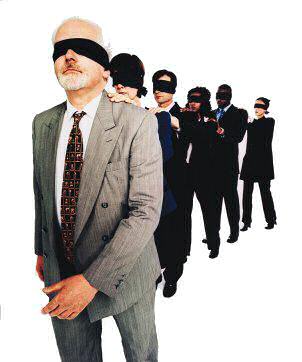
Social Mobility in America

Economic turbulence has overtaken the American way of life.  In Europe and Asia, investors stand uncertain of their next moves.  Even America is part of an economic casualty. 

Yet, these problems are very personal to the average citizen. Higher gas prices and costs of living; the housing bust; and the financial crisis cause most people to worry about their future. With a weak job growth, many U.S. jobs continue to be shipped abroad. 

Global competition continues to cause Fortune 500 companies to search for cheap labor to increase profitability.  This reality often places developed countries like the United States at a clear disadvantage.  Consequently, there has been an increasing gap between the wealthiest people and the poorest people in this country.  The reality has become the shrinking or disintegrating of the middle class.

America is a shining symbol for social mobility across the world.  Social mobility can be defined as “the passage of individuals from one social class to another.” Most people feel that if they work hard, they can achieve a better life, regardless of their social standing. 

In some countries, a person is stuck in an economic class with no hope of further advancement.  If your parents are uneducated and work a low paying occupation, the children will grow up in this same status.

Marketing expert Michael Solomon argues the natural progression of social mobility: “People do improve their positions over time, but these increases are not usually dramatic to catapult them from one social class to another.”  The current economic picture makes social mobility more difficult.

Michael Snyder, editor of theeconomiccollapseblog.com, argues the systematic destruction of the middle class: “The rich are getting richer and the poor are getting poorer at a staggering rate. Once upon a time, the United States had the largest and most prosperous middle class in the history of the world, but now that is changing at a blinding pace.” 

Snyder supported his claims with 22 statistical facts.  Below is a sample of his analysis:

  • Eighty three percent of all U.S. stocks are in the hands of one percent of the people.
  • American workers now must compete against situations like China where a garment worker makes approximately 86 cents an hour and in Cambodia a garment worker makes approximately 22 cents an hour.
  •  Sixty one percent of Americans “always or usually” live paycheck to paycheck, which was up from 49% in 2008 and 43% in 2007.
  • Average Wall Street bonuses for 2009 were up 17% when compared with 2008.
  • More than 40% of Americans who actually are employed are now working in service jobs, which are often very low paying.
  • Sixty six percent of the income growth between 2001 and 2007 went to the top one percent of all Americans.
  • Only the top 5% of U.S. households have earned enough additional income to match the rise in housing costs since 1975.
  • In 1950, the ratio of the average executive’s paycheck to the average worker’s paycheck was about 30 to 1. Since the year 2000, that ratio has exploded to between 300-500 to 1.
  • As of 2007, the bottom 80% of American households held about 7% of the liquid financial assets.
  • The bottom 50% of income earners in the United States now collectively own less than 1% of the nation’s wealth.

Many people hold that a political change will rescue the middle class.  As we have witnessed in the 2012 Presidential Election, petty politics are more important than solving the economic crisis.  Therefore, all families are held hostages. Any rescue will not be soon. 

Snyder doubts there is any hopeful solution for the stale social mobility occurring today: “The reality is that no matter how smart, how strong, how educated or how hard working American workers are, they just cannot compete with people who are desperate to put in 10 to 12 hour days at less than a dollar an hour on the other side of the world.”  Many people hope that America can compete in the future without sacrificing her core values related to social mobility.  Others have given up this hope.

 Do you feel social mobility is unsustainable in the U.S. , given global competition?

 © 2012 by Daryl D. Green

Noriko Connects With Japanese Workforce

Reiko Farr & Noriko Chapman pose for new Japanese book.

 There is nothing more flattering to a professor than a student taking his academic advice and being successful.  This situation played out for me with one of my own MBA students this year. However, this week she took it to a different level.  

 For Noriko Chapman, it has created an international collaboration between a local U.S. nonprofit organization and a global leader in the automobile industry which led to the empowerment and economic independence of disabled workers.   

Chapman, who is a DENSO production manager, had worked with the Tennessee Rehabilitation Center (TRC) in Maryville to help increase its operations efficiency as part of her MBA project. In 2009, the Maryville TRC was ranked at eighth in contract sales in Tennessee.

Its mission is to provide services that help lead individuals who have a physical and/or mental disability to employment and are designed to meet individual needs.

However, Chapman’s goodwill had many unintended consequences. She has had four versions of her first book published in one year, which is impressive for a beginning writer. She pledged 30 percent of the book proceeds to this organization. Chapman also helped to restore $75K of government funding to the Center. Chapman became connected to this organization.  She observed, “I was inspired by the staff and by individuals with disabilities who were trying very hard to learn work skills and seek permanent employment.” 

Through her first book, she was able to bring more attention by the media and the public in general to this disability cause. In fact, it landed the TRC’s director an expense-paid visit to DENSO in Japan.

DENSO Corporation, headquartered in Kariya, Aichi prefecture, Japan, is a leading global automotive supplier with customers that include all the world’s major carmakers. With more than 200 subsidiaries and affiliates in 35 countries and regions (including Japan), DENSO had worked to assist the nonprofit organization with a contract that allowed disabled workers to earn income.  In reality, DENSO was offering these workers a second chance. Chapman had made this relationship possible.

For the month of December (2011), Chapman is on an international book tour in Japan with her new Japanese version of her book. She hopes her new book and tour will help women in Japan too: “Japan is a male-dominated society.  Even though the culture is gradually adopting to accommodate female workforce, the career advancement for women in Japan is still limited. The changes are not quick enough to satisfy thousands of bright, hard-working Japanese women.”

Chapman hopes to other corporations and organizations follow in DENSO’s footsteps and help provide second chances to those who need it around the world.

 Please provide your insight on this topic.

 © 2011 by Daryl D. Green                                    


Sustaining Ethical Behavior

Americans are increasingly worried and cynical of today’s leaders. Traditional institutions are losing favor, leaving citizens unable to trust their neighbors, churches, and government.

Additionally, America has a history of unethical behavior by leaders. The private sector has been riddled with tons of examples (i.e. Enron, Exxon, etc.) of unethical behavior on Wall Street. Furthermore, political parties market family values and personal integrity like they are selling used automobiles.

In the quest for power and their own personal ambition, many government officials have been drawn to deadly vices that have led to their personal self-destruction. Graham Tomblin, The Seven Deadly Sins, notes this natural selfish behavior has destroyed families, friendships, happiness, and peace of mind.

These moral break downs can seep into other factions of the political landscape. For example, in 1998, the media reported the sexual exploits of Democratic President Bill Clinton with Monica Lewinsky. However, political scandals are nothing new for the federal government. During the months of May to August of 2007, Republican President Ronald Reagan’s administration was suspected of trading weapons for hostages in the Iran-Contra hearings.

This topic explores the American political environment and how amoral behavior associated with ‘seven-deadly sins’ impact contemporary organizational culture.   For this discussion, we evaluate Congressman Mark Foley’s scandal. Foley was a Florida congressman, who was reported to have sent sexually explicit emails to male pages who were high school students.

He abruptly resigned on September 29, 2006, which set-off a political landmine. House Republicans had to do damage control, whileDemocrats went on the attack. Some Democrats claimed that some House leaders knew for months of Foley’s inappropriate behavior. House SpeakerDennis Hastert found himself on the political hot seat. Hastert declared he knew nothing about Foley’s actions, but others disagreed with his proclamation. Hastert continued his claim of innocence as he asked the JusticeDepartment to investigate this matter.

Because of Foley’s resignation, he couldn’t be punished by his peers. Foley also apologized publicly, sought treatment for his alcoholic addicted, and pointed to a childhood abuse experience by a priest as a cause of his problem. Once again, Americans were asked to address another ethical issue among government officials.

In many cases, unethical decisions made by individuals who allow their ethical principles to influence their decision-making, led to laws being broken or the compromise of organizational values.  Moral principles, values, or beliefs about what is “right” or “wrong” are known as ethics.

Consequently, individuals who make decisions outside of the organization’s values sustain their moral principles internally. Ethics and organizational culture can impact the success of an organization. In fact, ethical behavior is directly related to culture.  

In the long-term, unethical behavior impacts an organizations ability to function effectively.  Employees watch what leaders do more than what they say.  Therefore, organizations that want to sustain future success must pay attention to their ethical behavior, at all levels.

Describe your professional experiences with ethical behavior by executives as well as others in the organization. Discuss what can be done to instill good ethical behavior throughout the organization

© 2011 by Daryl D. Green

Attention Please – Worker Fatigue

Sometimes I wonder why organizations couldn’t be more positive. Yes, I know we have so many problems with unemployment and global threats on our standard of living.  Yet, I wonder if managers really understand how they set the tone for their workers’ behavior.  Many times managers treat workers like mechanical parts rather than human capital assets.  They  assume that giving employees new technology is enough to keep them happy. It isn’t.

Workers are experiencing more physical setbacks due to the lack of effective leadership in some organizations. As a matter of fact, uncertainty and workforce stress become a staple of the current workforce as employees devote more time to their jobs out of necessity. In many organizations, conflict is a big factor for burnout.

The reality is that most workers are emotionally drained. As a matter of fact, 68% of workers report feeling burned out at the office, according to a CareerBuilder.com survey. Some of this job stress can be attributed to poor management and lack of clear vision.

Many short-term political appointees launch brand-new reforms with the turn of another political election; however, they are failing to pick up the pieces when they fail. US businesses cannot point to the lack of employee performance on a global front for mismanagement errors.

Japan, a long-time benchmark for American companies, is being defeated by American employees; today, the average USworker puts in 36 more hours than Japanese workers (1,825 vs. 1,789).  Over the last two decades, balancing work and home life has been difficult, since Americans have added 200 hours to their annual work schedule.

Employees want to be valued. Felix Harris, a financial director with over 8 years in the banking industry, acknowledges the importance of people in a socio-technical system. He states, “When employees are appreciated, they work harder. A machine is only as good as its operator.”

Jeffery Pfeffer, author of The Human Equation, acknowledges that organizational success is directly related to implementation, and this capacity comes from the workers, how they are treated, their skills, and their effort as it relates to the organization.  Therefore, organizations need to be aware of worker fatigue.

What can organizations do to deal with worker fatigue?

© 2011 by Daryl D. Green


[1]

The Power of Influence

Introduction

In the 1990’s movie “Goodfellas,” we witness how individuals can rapidly move up the power chain through influence. In fact, it is an all-time classic gangster movie. Goodfellas grossed over $46.8 million domestically and received many national awards and reviews.

Here’s the synopsis. Henry Hill (Ray Liotte) grew up with a vision of a Mafia lifestyle. It was a dream that would garnish him wealth, power, and influence. Henry aggressively worked toward this ambition. He would become successful. Once a small time gangster, Henry became a major player; he participated in a major robbery with Jimmy Conway (Robert De Nero) and Tommy De Vito (Joe Pesci). His two partners managed to kill off everyone else involved in the robbery and slowly advance the hierarchy of the Mob. Henry had finally gotten the power and influence he craved along with other intended consequences.

Today, many managers tend to operate like gorillas in power.  People in organizations tend to follow the person in power, not necessarily the best thinkers. This is called the Alpha Principle.  Harry Beckwith, marketing author, states that most organizations operate like apes. He notes, “The alphas dictate what the group does and thinks. 

But are alphas better at decision making?  Not necessarily. Alphas are just better at getting and keeping power.”  Poorly skilled managers cause a lot of unnecessary stress to families because they don’t understand how to treat people.  Employees then bring it home to their families, thereby creating more problems. In this discussion, we will examine how individual workers can gain more influence in their organizations.

Levels of Power

There are a variety of ways influences can obtain influence in contemporary organizations.  In fact, leadership is a combination of power and influence.  Leader can be defined as the ability to influence, guide, and direct others.  Leaders get people to do things they wouldn’t normally do alone.  Power is a key component of leadership.  Power is the ability of a person in an organization to influence others to accomplish a desired outcome.  In most organizations power often evolves into the domination of others. 

Given this dynamic of organizations, managers need to understand their organizations. James Gibson, John Ivancevich, James Donelly, Jr., and Robert Konopaske, author of Organizations, argue that individuals need to understand how organizations operate.  In many organizations, there is a power struggle.  Power relates to the ability to get others to do what one wants them to do.  Given this framework, five interpersonal bases of power can be summarized as legitimate power, reward, coercive, referent, and expert power. 

In legitimate power, a person’s ability to influence others is given by being in a position of power. In fact, the person’s influence is authorized by his title in the organization.  There is little an individual can do if they do not possess this legitimate in changing the way things are done.  Coercive and reward power are based on the same premise; it is a person’s ability to reward or punish the behavior of others.

In fact, these sources of power are often used to support the use of legitimate power. Therefore, if you are not in a position to apply coercive or reward power, gaining influence in a contemporary organization may prove to be too difficult.  The above items are considered organizational power.

When individuals do not have title in an organization, they should be strategic in gaining more influence in the organization. The two major factors are referent and expert power. Referent power is based on a person’s charisma due to the personality or style of behavior.

Gibson, Ivancevich, Donelly, and Konopaske maintain that the strength of a person’s charisma is an indication of a person’s referent power. This power can be effective in leading others to make better decisions. People will at least listen to you because they instinctively trust you as a leader. Unfortunately, not everyone has that type of a magnetic personality.

Expert power is the power to influence others based on special expertise.  Even when an individual may have low rank in an organization, expert power makes the individual invaluable. Expert power can relate to administrative, technical, or other personal attributes. It goes to the Law of Scarcity.  Therefore, the most difficult a person is to replace, the greater the individual’s power in the organization. Individuals can gain this power in several ways.

First, a person can learn about the organization’s needs or deficiencies and seek to fill this knowledge gap.  For example, a small consulting firm may lacks the skills to promote itself. An employee with this ability could provide this additional service to this organization. Thus, the employee gains power. Second, employees can take additional training and obtain special certifications which can assist the organization in achieving its mission.

Third, individuals can become an authority in an area and become a hot commodity.  In fact, a person who can train, teach, lecture, and write on a particular subject can gain influence in his or her organization as well as outside of the organization. Finally, gaining expert power may not propel you into the next manager level. However, it will give you great influence in your organization as well as the community. Therefore, your influence becomes mobile and makes you more competitive in the marketplace.


Conclusion

As businesses fight to stay alive in the changing marketplace, there is an increasing need for effective leaders. Gaining influence becomes a premium for emerging leaders. Dale Carnegie, author of How to Win Friends Influence and Influence People, argued the importance of influencing others:

“You can make more friends in two months by becoming interested in other people than you can in two years by trying to get other people interested in you.”

The article demonstrated that there are a variety of power types in most organizations.  Unfortunately, some manager’s fear their losing power and are unwilling to share decision-making. Yet, entrusting good employees to make good decisions is a catalysis for creating high performance teams. Learning how to influence others is critical. Individuals do not have to be the boss in order to possess power in the organization.

However, not everyone has leadership persona. Referent power is derived from personal characteristics that employees admire.  But—empowerment increases employee morale.  Some people don’t understand the merits of satisfied employees on the bottom line.  Sadly, many people cannot distinguish a manager from a leader. Yet, leadership is all about gaining influence, regardless of the organizational level.

How can individuals gain influence with social media and other new technologies? Are there any ways to garnish more influence?

 © 2011 by Daryl D. Green

The Baby Boomer Bow

The clock keeps on ticking as many Baby Boomers consider retirement.  If many retire, it will leave a huge void in leadership for most organizations. With the rocky rollercoaster ride of the stock market, Baby Boomers don’t enjoy life as much because of the decrease in their disposable income. Some individuals have the extra burden of caring for parents, children, and even grandparents.  

These realities of life keep Baby Boomers working well beyond their anticipated retirement. Andy Hines, the director of Customer Projects at the Social Technologies, predicts that Baby Boomers will refine the meaning of retirement and notes, “U.S. Baby Boomers are choosing post-work lifestyles that don’t resemble the stereotype of the quaint, restful senior citizen.” In fact, Baby Boomers are the top leaders of most organizations and will find it difficult to separate themselves from their positions of power and influence.

Other observers believe that Baby Boomers will leave graciously and pass the baton to the next generation of leaders. I have my own doubts about the outcome. Columnist Daniel Kadlec wrote a USA Today article, “‘Me Generation’” becomes ‘We Generation,’” about the virtue of this Baby Boomer transformation. A Department of Labor report, “Futurework: Trends and Challenges for the Work in the 21st Century,” reveals that this rapid demographic shift will impact the future dynamics of organizations.

 Yet, many seasoned experts, who are primarily Baby Boomers, downplay the impact of the younger generation. This observation goes to the heart of the “Me Generation.” Based on my past career experience, many of these individuals will struggle to relinquish power and influence over their organizations. Therefore, we must wait to see if this generation follows through on these claims.

Are Baby Boomers now transformed into “We Generation” leaders? Clearly, the storyline is incomplete because we do not understand how Baby Boomers will respond to these future changes. Unlike hard science, futurism provides a window of many possibilities. Some people paint a smooth transition of power for the Baby Boomer generation. Others don’t! What if Baby Boom managers refuse to relinquish their positions and neglect the development of future leaders?  Therefore,  many different scenarios will continue to play out in various settings and industries.


Will organizations be able to cope with a massive exodus of Baby Boomers? Can Baby Boomers leave authority and title behind since these things so easily defined many of them?

 © 2011 by Daryl D. Green

Overcoming Past Failures

Another holiday season has come. After the presents have been given and the year comes to a close, many people will reminisce about the past year. Sadly, some people’s lives will be filled with many defeats, broken relationships, and unfulfilled dreams. These may setbacks may be relatively minor in nature (Pastor Richard S. Brown of Knoxville notes, “For many people, the holidays season bring great pressure and stress…We stress that we can’t get everyone something for Christmas?”) or they may be much more serious. Every year I run across individuals who have lost hope.

Unemployment continues to rise while self-confidence of individuals continues to falter. In my book Breaking Organizational Ties, I provided strategies for individuals caught in jobs they despise and showed them how to possess a more fulfilled life. The holiday season can leave many individual depressed and bitter. This article examines how individuals can overcome past failures this year and retool their minds during the holiday season.

The economic crisis deflates the concept of perseverance. According to the U.S. Labor Department employers added only 39,000 jobs in November, which is a sharp decline from the 172,000 created in October. With a weak economy, the unemployment rate has soared to 9.8%. The current trend of above-9% unemployment rate has surpassed the previous record. Over 15 million people are unemployed. A further 17% are under-employed. And there were a record 1.3 million “discouraged” workers in November. Discouraged workers are individuals not currently looking for work because they believe no jobs are available to them.

Given these statistics, good cheer may be harder to come by this year, making those “holiday blues” even more of a potential problem. According to a Mayo Clinic study, optimistic individuals report a higher level of physical and mental functioning than pessimists. Your perception colors how you view life. Can healing begin with the right kind of attitude?

Depression can develop for anybody. Christian Maslach and Michael Leiter, authors of The Truth about Burn-out, note that stress can burn out individuals and impact their mental state. In fact, many people are succeeding in the corporate environment while failing miserably at their personal relationships. If you are human, you will experience some disappointments. It doesn’t take a genius to understand how someone can get depressed. Some call it a “Pity Party.”

 You become engulfed in your own self-pity—you figure you got it bad. Can anyone hurt as much as you? During the holidays, some people are left alone to face the realities of life. This period can bring much unhappiness. Some people, however, manage to snap out of depression while others get too consumed in it and take harsher actions such as suicide. Don’t let yourself down. Take action.

The following are a few strategies for beating the blues: (a) Put things in perspective. Everyone has experienced some setbacks in life. God is not singling you out; (b) Maintain a good attitude; (c) Establish a strong support network. A positive environment will help you get through; (d) Talk to a good listener. Get it off your chest; and (e) Find a purpose for your life. Ex-Dallas Cowboys player Larry Robinson explains, “The awesomeness of who we are, has nothing to do with where we work or what we do.” With this in mind, many people will need to implement a different strategy for next year.

Highly successful people know how to retool their minds despite life’s many set-backs. Last year, many people over-promised and underachieved on their goals during the economic crisis. Certainly, depression set in for some of the 15 million unemployed Americans, causing some women to grow weary and some men to grow angry. For millions of individuals, a pity party was a regular affair.

Historically speaking, self-pity is nothing new. Even the prophet Jeremiah complained to God about the unfairness of his situation. God spoke to his concern: “Jeremiah, if you get tired in a race against people, how can you possibly run against horses? If you fall in open fields, what will happen in the forest along the Jordan River?” Likewise, individuals must be persistent during the current economic crisis and a good outlook goes a long way. Your attitude will greatly impact how you retool your life so that you can be successful in the future. 

 © 2010 by Daryl D. Green

Sustainability for the Future

Do we really want to pry into the future? Some people do not want to consider it.  In the 1970s, Alvin Toffler, author of Future Shock, wrote, “Citizens of the world’s richest and most technological advanced nations, many of them will find it increasingly painful to keep up with the incessant demand for change that characterizes our time. For them, the future will have arrived too soon.”

Clearly, the future is a highway with varying lanes, but do humans have the capacity to accept unhappy endings? In general, it is my position that humans are incapable of accepting unhappy endings. In fact, futurist Edward Cornish argues that it is easier for people to sustain a long-term perspective when they have a clear vision.  In this discussion, we will look at how organizations can create sustainable existence in the future.

Futurists utilize many techniques to anticipate the future. For example, strategic foresight can provide an avenue where organizations can strategically analyze short, mid-range, and long-term planning. Thus, it’s a glance into the future. This concept is easily seen on the Big Screen.


Hollywood blockbusters are the chronology of happy endings. People want to believe that all stories have positive endings. This concept is derived from childlike innocence of Americans. Unfortunately, the future may include unpleasant outcomes. Life doesn’t always provide a nice story. For example, globalization can provide many job opportunities, but the outcome isn’t always positive. In fact, the future prediction for the full-time worker is bleak. It is evident that technology and outsourcing are now making the part-time worker a reality of today, not tomorrow.

In fact, Charles Handy theorized that unemployed or spare workers will create their own new work in the future. Therefore, individuals will control their own destiny and become entrepreneurs. However, this runs counter to our American culture. Grandma taught us “go work for a good company and get a good job with benefits.” 

In fact, Bruce Sterling, author of Tomorrow Now, further argues that simple, predictable, and solvable jobs will go to the poorly educated and unprepared or to intelligent machines. However, high-paying jobs will go to the highly prepared, teachable, and creative individuals. In the future, good jobs will be the apex of human difficulty. Technology and understanding of complex systems will require a well-grounded person. However, futurist James Canton argues that American youth, our future workers, will be unprepared in math/science and may be locked out of future opportunities.

Based on many observations, organizations and individuals don’t want to hear negative scenarios for future generations. This reality reaffirms that people don’t want to think negatively about their future. Therefore, they often operate in denial or ignore the future.

Clearly, organizational leaders need to develop a strategy to deal with negative consequences. Many people don’t have the patience to look beyond short-term gains. Therefore, effective leaders need to know how to deal with the possibilities of negative futures.

How do organizations effectively navigate their operations for sustainability in the future?

© 2010 by Daryl D. Green 

The Value Creation Machine

On Tuesday (November 4, 2010), political chatter was all the rage as Republicans gained control over the House, sending a clear message to President Obama that the political landscape had shifted.  The Democrats now occupy the US Presidency and Senate while the Republicans dominate the House of Republications. 

Most experts wonder if Congress will ever get anything done.  As a result of not passing a budget bill in 1995, the federal government was shutdown.  With President Bill Clinton and Speaker Newt Gingrich at the helm, the shutdown was fueled by political fighting.  Sadly, many people look to the government for all of the answers when their own ingenuity would work. 

Yes, the government has an important role to play. I don’t believe that market forces are always the answer to societal problems…the market is not driven by morals or ethics.  In fact, find a cheap labor force across the globe and some businesses will abandon their own creed of “America First.” 

Individuals need to take control of their lives by developing strategies to produce results.  If we are to equip people for the future as scholars, we need to make sure they understand that the future will belong to the aggressor, not the passive in the new economy. During this discussion, we will explore how companies develop value for their customers and how it contributes toward wealth building.

 In uncertain times, it’s virtually impossible to navigate the market without fully engaging customers.  Any operations that fail that economic maxim of the 21st century will fail. Management guru Brian Tracy argues that the duty of businesses is to create and keep customers: “The two most important words to keep in mind in developing a successful customer base are positioning and differentiation.”

Of course, it was possible several decades ago to create products and services without knowing the customer and later convince them to buy.  Many companies during the Industrial Revolution built their success due to scarcity of commodity, limited competition, and uneducated buyers. This is not the case today.

Today’s operations must be value conscious as it relates to the market. Alvin Toffler and Heidi Toffler, authors of Revolutionary Wealth,  research how tomorrow’s wealth will be created, and who will get it and the wealth method. Customer value is defined as the ‘difference between what a customer gets from a product, and what he or she has to give in order to get it.’  They argue, “Today’s wealth revolution will unlock countless opportunities and new life trajectories, not only for creative business entrepreneurs but for social, cultural and educational entrepreneurs as well.”

Daniel Spulber, author of Economics and Management of Competitive Strategy, further suggests that value creation is strategic:  “Managers must pay close attention to value creation because it is the source of the company’s potential profits. The company generates value by providing products to customers, which it produces both by purchasing inputs from suppliers and supplying some of its own.” 

Spulber further outlines a value-driven strategy in three ways:  (a) to attract customers away from competitors, the company must provide sufficient customer value as compared to rival companies, (b) to attract key suppliers away from competitors, the company must offer sufficient supplier value, and (c) to attract investment capital in competition with other market investment opportunities, the company must increase the value of the firm for its investors.

Therefore, effectively managing the attribute of value creation will provide businesses with a competitive advantage.

Briefly explain how value creation has shifted from the Industrial Revolution to the Knowledge Economy and what attributes will be associated with wealth creation in the distant future?

© 2010 by Daryl D. Green

Knowledge Worker Revolution


If I had a magical organizational wand, I would turn old toady CEOs into beautiful princes and princesses who champion the causes of their workers. Unfortunately, there’s not enough magic from Oz to convince most executives that today’s workers are more than mechanical parts to their profit machine. During this discussion, we will explore the concept of knowledge workers in organizations.

Some employees feel they are often undervalued and unappreciated by their managers. For example, my friend, Stan, is a very intelligent person in spite of not attending college. He accepted a new job as warehouse operator. Because of downsizing, he became the only person in that department. Stan created his own cataloging system without a computer. That was impressive.

When Stan was up for a raise, he asked for more money. His supervisor explained that it couldn’t be done. My friend countered that he had optimized their warehouse systems, and the operations depended on his knowledge. His supervisor knew it was true because when Stan wasn’t there, no one could find anything.

Stan got what he wanted. He had become a knowledge commodity. This represents the revolution of knowledge workers on the traditional organizational structure. Therefore, if today’s leaders don’t adequately manage the knowledge workforce, they will be at a competitive disadvantage.

Knowledge workers are a critical commodity. Gareth Morgan, author of Imagination, argues that contemporary use of organizational charts and diagrams are major tools for restructuring. However, this creates a false sense that a new organizational chart can solve all of the organization’s problems. Modern-day bosses feel that “top down” management is best. Clearly, they are mistaken.

Georg Krogh, Kazuo Ichijo, and Ikujiro Nonaka, authors of Enabling Knowledge Creation, maintain that knowledge management (KM) is not one person’s job; everyone in organizations can play a vital role in transferring  information. As a rule, an organization’s knowledge and capacity building depends primarily on its human and social capital. In most contemporary organizations, technology can be a critical tool in supporting the knowledge work.

Yet, knowledge workers create and capture information for the management of knowledge. In fact, KM is performed by individuals who belong to communities of interest where knowledge is shared and accumulated. Therefore, effective management of today’s operations depends on talented and gifted knowledge workers.

How do today’s organizations better engage knowledge workers due an era of sweeping layoffs and outsourcing? 

© 2010 by Daryl D. Green