Last week, I ran into an old friend at the Oak Ridge Post Office. He was a retired professional who I had played noon basketball with in my early years in Oak Ridge. He mentioned that most of the guys had retired from their jobs.
However, he also mentioned that one of the most seasoned professionals had been laid off from this prestigious firm after working for this organization more than 20 years. It was noted that the work had dried up. In fact, most of the local businesses are seeing the budget tightening in the government sector which is critical to the survival of most businesses in the area. Sadly, the financial crisis is not over.
Globalization will continue to drive down prices and force businesses to make hard decisions which impact the basic quality of living. Companies will look to operations management to gain greater efficiency and effectiveness in their systems.
The underpinning thread is how they understand value creation and what it means to customers. In this context, value can be defined as the perceived experience and worth gained from a product or service.[1] Creating value is not easy. Creating value across an international base is almost impossibility for most companies. Therefore, understanding operations management and supply management is a necessity.
Global markets continue to shift the direction of today’s businesses. Companies must be astute to the ever changing value perspectives of customers. According to KPMG 2013 Global Manufacture Outlook, companies should be optimistic. This international report surveyed 335 senior executives in five industries: Aerospace and Defense, Automotive, Conglomerates, Engineering and Industrial Products, and Metals.[2]
KPMG notes, “Global manufacturers’ ability to optimize performance and cost in their entire supply chain will be key to helping them become more competitive and resilient…Global manufacturers are building closer relationships with their customers, who in turn expect more due to advances in manufacturing technology.” These organizations are seeking a competitive advantage in several ways:
- Increasing transaction activity to take advantage of growth opportunities in global markets, while reassessing operations and product portfolios to control costs.
- Viewing their ‘channel partners’ as more of a network and building closer working relationships with their suppliers and other partners to maximize responsiveness to changes in the market. More effective and efficient collaboration enables them to optimize inventory, logistics, and other operational costs.
- Improving visibility in supply chain optimization provides a major opportunity for many companies to boost performance, agility, and resilience.
- Increasingly placing the supply chain at the center of their strategies to innovate, as they begin to look at suppliers not just as a source of production and logistics but also of ideas.
- Investing in breakthrough and incremental innovation to stay competitive. Nearly a third of respondents whose firms are stepping up R&D say their company will invest in breakthrough innovation.
Individuals as well as organization must understand the transformation properties of operations management. Transformation processes relate to utilizing resources to convert inputs to desired outputs.
For example, automobile manufacturers convert primary inputs (i.e. sheet metal, plastics, engine parts) into a desired output (i.e. high quality cars). Yet, products are not the only thing that has a transformation process. Services also follow this paradigm. In the hospital industry, primary inputs (i.e. patients) create a desired output too (i.e. healthy patients).
Robert Jacobs, Richard Chase, and Nicholas Aquilano, authors of Operations & Supply Management, argue the merits of well-constructed organizational systems, especially during global competition: “Transformation processes are used in all types of businesses…Operations and supply management is about learning how to design these transformation processes.” Companies that understand what customers want and the intrinsic value desired by them will need to effectively retool their transformation processes in a cost effective manner.
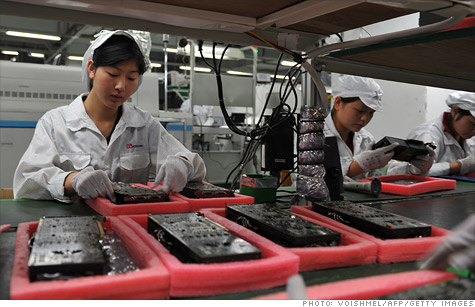
According to the Economic Policy Institute, there are roughly 5.1 fewer American manufacturing jobs than at the start of 2001.[3] In fact, organizations argue that American worker’s wages have tumbled due to China’s cheap labor (i.e. primary input in the transformation process).
Global competition demands that organizations focus on the ‘small stuff’ as well as the big picture and embrace the attractive properties of operations managements.
Discuss the concept of operations management for today’s organizations.
© 2013 by Daryl D. Green
 Nu Leadership Revolution Blog