Virtual Strategies for 21st Century Organizations

The latest business craze of the 21st century encompasses going global. Yet, these organizations often operate virtually. Communication, however, takes on a brand new meaning when there is no “face-to-face” interaction between team members to facilitate these nontraditional relationships; it is essential to understand how to unify these virtual relationships.

Furthermore, many companies have allowed workers to work from home to achieve huge company savings. Managers assume that an employee, equipped with a computer and fax machine, can stay connected to the organization. This outlook is simply a myth.

James Kouzes and Barry Posner, Authors of The Leadership Challenge, further explain, “…how do leaders create commitment in a virtual organization? Can there be such a thing as virtual commitment?” According to a USA Today poll, nearly half of those interviewed said that corporations can be trusted only a little, or not at all, when it involves looking out for the best interest of employees. Relationships are built on trust. This blog explores the characteristics of effective virtual teams in 21st century organizations.

Virtual organizations are becoming the mascot for globalization. A virtual team (VT) is geographically separated and has very little personal contact; it depends on computers and telecommunication technologies such as the internet and videoconferencing.  VTs provide the benefits of bringing talented people together, providing international perspectives, and saving millions in traveling costs. Yet, going virtual isn’t easy.

 VT organizations are creating a buzz in the academic community. There is a burgeoning literature on virtual teams. As more organizations allow employees to work from remote locations away from their headquarters, there is an increasing problem with office staffing and organizational effectiveness.

 Traditional organizations must shift their viewpoints on virtual organizations. To address human capital issues, an institution must understand the nature of virtual organizations. Effective virtual teams manifest a variety of characteristics including well-defined group sponsorship, goal consensus, effective selection practices, an appropriate skill mix, and specific performance measures linked to goal achievement. Virtual organizations challenge today’s personnel management system by their very existence as a rising number of employees are telecommuting.

 In the old paradigm, managers were required to be technical experts who defined the tasks for the employees. In the new virtual structure, managers are expected to provide technical direction. However, the manager allows employees to participate and listen to their suggestions.

Managers must weigh telecommuting’s benefits against its weaknesses, including reduced employee oversight and accountability, lower productivity, and less direct interpersonal contact thereby decreasing team building opportunities and isolating employees. In fact, VTs require a shift in leadership paradigms. Leaders in virtual organizations must provide an organizational structure for achieving their objectives that is flexible and organic.

 Going virtual will continue to challenge traditional thinking. Establishing trust within a virtual team environment is a prerequisite for an effective team.

 How can organizations build virtual structures that are effective and sustainable?   

 © 2010 by Daryl D. Green

Doing Me Right, Boomer

In Spike Lee’s 1989 acclaimed movie “Do the Right Thing,” he places the characters at the center of making difficult decisions. It’s a classic drama—and a perfect way to continue our generational discussions!

During the hottest day of the summer, life forever changes at Sal’s pizzeria in Brooklyn. Two customers demand that Sal change his “Wall of Fame.” The confrontation heats up to racial slurs and physical threats. Violence erupts! Da Mayor, a street bum, encourages the mob to make good decisions.

However, Mookie (Spike Lee) opts to follow his emotions; it changed the dynamics of the situation. The 1980’s movie classic highlights the racial tension between two ethic groups. In the movie, Da Mayor provides Mookie with some advice: “Doctor, always do the right things.”  Given another chance, Mookie might have changed his actions. Unfortunately, too many managers won’t.

Are today’s managers willing to make the best decision so that future managers are primed for success, not defeat? It’s an interesting thought when you consider the possible generational volcano that may erupt at any time.

Several years ago, I read Daniel Kadlec’s column about the Baby Boomer transformation from being a “Me Generation” to a “We Generation.” Although I applauded Kadlec’s insight, I was hesitant to make this great leap of faith in the Baby Boomers yet. Let me say that this belief should not be conceived as ‘hating.’ I am Gen X as you might not know. I have used environmental scanning to witness the significant demographic shifts in our nation. Are Baby Boomers now ready to relinquish their stronghold of leadership?

We can’t be certain due to that fact that the storyline is incomplete. Let’s wait until the economy settles. With the rocky rollercoaster ride of the stock market, Baby Boomers don’t enjoy life as much because of the decrease in their disposable income. Some individuals have the extra burden of caring for parents and children. These realities of life keep Baby Boomers working well beyond their desires for retirement.

In the past, Baby Boomers have been early trend setters. A study from the Center for Retirement Research at Boston College explains that the average retirement age in the U.S. is 63. Unfortunately, this retirement study reveals that many individuals will need to work longer so that they will have adequate retirement reserves.

Andy Hines, the director of Customer Projects at Social Technologies, predicts that Baby Boomers will refine the meaning of retirement and notes, “U.S. Baby Boomers are choosing post-work lifestyles that don’t resemble the stereotype of the quaint, restful senior citizen.” As you know, Baby Boomers are the top leaders of most organizations and will find it difficult to separate themselves from their positions of power and influence. Will they be willing to make the right decisions for their successors or themselves? 

Other observers believe that Baby Boomers will leave graciously and pass the baton to the next generation of leaders. I have my own doubts about the outcome.

If Baby Boomers extend their stay in organizations and maintain their leadership positions, what do you predict the response of leaders in waiting? How can organizations address this issue without inflaming Baby Boomer leadership and not losing future leaders who refuse to wait?

© 2010 by Daryl D. Green

Countering the Age of Narcissism

I try to pay attention to the game as the assistant coach. However, I am bombarded by begging from players on the bench: “Brother Green, can I get back into the game?” I try to ignore by pointing: “Ask the coach.” Every weekend was like déjà vu for me. A bunch of 8th graders were trying to tell us they were just as good as high school athletes.

These 8th graders were undersized and no match for more experienced ‘ballers.’ The basketball league was designed for high school students. I felt they should be graceful to be allowed to play with our high schoolers. Instead, it was a steady stream of complaints and ingratitude from some 8th graders. I wondered how I got stuck with Gen Next.

Today’s organizations face unprecedented competition from all fronts. Many institutions desperately need to infuse their organizations with fresh leadership and new ideas.  Yet, there is a hesitation for this transformation. Many baby boomers argue that the current generation is not ready.  These young workers are called many names such as Generation Y (Gen Y), Echo Boomers, or Millennials (born 1977 to 2002). Most experts predict the generation will be a major factor in society. There are more than 70 million of them.

However, they have been described in the workplace as lazy and self-absorbed with their own worth. Laura Clark, columnist, argues, “Today’s young workers, it appears, believe they deserve jobs with big salaries, status and plenty of leisure time – without having to put in the hours.” According to the Association of Graduate Recruiters study, there is a new breed of graduate ‘divas’ who expect everything to fall into their laps. These people believe they are a hot commodity in the job market. Yet, their managers describe them as ‘unrealistic,’ ‘self-centered,’ and ‘greedy.’

For the first time in American history, organizations have four different generations in their workforce. Sadly, it’s not without problems. Companies don’t understand this young generation. They desire to share in organizational decisions on day one of employment and be promoted instantaneously. With managers who had to ‘pay their dues.’ The Gen Y mentality is a hard pill to swallow.

Dr. Jean Twenge and Dr. Keith Campbell track this trend of self-absorption in their book, The Narcissism Epidemic: Living in the Age of Entitlement.  They explain, “Narcissism- a very positive and inflated view of the self is everywhere….Understanding the narcissism is important because its long-term consequences are destructive to society.”  In the 1960s, individuals led causes for the greater good. During the 1970s, there was a focus on self-admiration. By the 1980s, society had totally gone to ‘looking out for oneself.” 

Unfortunately, some managers distort the work value of this emerging generation by stereotyping them as selfish. Baby boomer managers complain about the difficulty of managing Gen Y employees. But, didn’t these baby boomers raise them to be narcissistic anyway? Therefore, it isn’t fair to label them totally as expecting entitlement.  

Twenge and Campbell note, “Parenting became more indulgent, celebrity worship grew, and reality TV became a showcase of narcissistic people.” One must wonder what Gen Y will pass along to their own children.

As more baby boomers retire, a new generation of leaders will replace them. These new leaders will cross age, gender, race, and geography. I certainly hope that Gen Y can overcome the negativism surrounding them and be prepared to accept future leadership roles.  I pray it’s not too late.

 Is the Age of Narcissism solely a characteristic of Gen Yers?  How can organizations infuse the right kind of team-oriented values, given cross generational conflicts?

 © 2010 by Daryl D. Green

The Confession of a Decision maker

I listen to chatter over the airwaves. Talkshow host Armstrong William leads a merry discussion on South Carolina’s Governor Mark Sanford.  Armstrong cannot contain himself: “How does Governor Sanford get rid of his Love Jones?” It was a question that was not easily answered. Listeners from South Carolina appeared irritated with this line of questioning.

Many felt the governor had abandoned his wife, children, and the people of South Carolina. On June 24th, Governor Sanford arranged a press conference where he confessed a year-long affair with an Argentine woman. He was missing for more than six days from his office.

At his press conference, political pundits argued Governor Sanford was attempting to save his job, not his family life. He was married and had four sons. Instead of a low-profile strategy, Governor Sanford actively engaged the media, describing his mistress as his “soul mate.”  Clearly, he had lost his mind! His wife Jenny stated, “I believe enduring love is primarily a commitment and an act of will, and for a marriage to be successful, that commitment must be reciprocal.”

Unfortunately, Sanford’s decision ruined his political career, strategic alliances, and the trust of the people of South Carolina. Yet, his personal loss was perhaps greater. He lost his marriage and the trust of his children. Therefore, some decision making carries long-term consequences for individuals and organizations.

Have you ever wondered why some people continue to make bad decisions? You see million-dollar celebrities doing it. You can see this action in government officials and business leaders. There are no discriminators. From the very rich to the poorest of the poor, we see people caught in a vicious cycle of bad decision making. Sadly, we can see it much closer than that. We witness relatives making bad decisions. Despite wise counsel, some people continue to make poor decisions.

The Decision Process

Decision making can make or break an organization. Joan Liebler and Charles McConnell, authors of Management Principles for Health Professionals, maintain that decision making is an essential element of management activities at all organizational levels. Gareth Jones and Jennifer George, authors of Contemporary Management, further argue that managers must respond to opportunities and threats. In fact, decision making is a process where individuals analyze and make determinations regarding a problem that is keeping with the organization’s goals and objectives.

Unfortunately, some people feel the decision making process is a solo operation. Some managers can be caught in this trap and disregard the expertise of their workers. Through series after series of bad decisions, the manager may continue on a merry ride of worsening consequences. Two things generally can stop this dead-end trap. The organization stops him or the organization tanks.

In going through a series of bad decisions, a wise person should gain insight. Unfortunately, some individuals who are in charge will learn nothing, thereby earning the label of a foolish manager. Every person, regardless of their background or social standing, can benefit from good decision-making techniques.

The Path Forward

Making the right decision is a difficult process. Like Governor Sanford, many managers don’t take enough time to evaluate short-term decisions for long-term consequences. No one will usually applaud your many good decisions; however, you will probably catch heat over the bad ones.

Les Brown, author of How to Become the Person You Always Wanted to Be-No Matter What the Obstacle, explains, “Your values are not set by government or church leaders. Your values give you consistency in the way you approach life…By holding to your beliefs, you can always stay on track toward your dreams.” Therefore, making good decisions goes to the heart of being an effective manager.

How do managers overcome the barriers of making bad decisions during uncertainty? Is it possible for a manager to involve their workers in critical decisions without giving up any authority?

  © 2010 by Daryl D. Green

Global Transformers


America has always been a distinction for individuals seeking prosperity. After the Civil War, America’s growing economy required more workers. This needed was filled by immigrants. Between 1866 and 1915, approximately 25 million immigrants arrived on its shores. These immigrants came from diverse backgrounds (such as England, Germany, Poland, Russia and Scandinavian countries). The additional labor force helped fuel the American economy.

Yet, this diversity was not without its own problems. Due to the culture differences and language barriers among ethnic groups, there were frequent conflicts to resolve. Furthermore, most of these workers were poor and uneducated; this created pressures on government and nonprofit services to fix or minimize these problems.

Today, we face similar problems. Globalization has connected us with the rest of the world. Cultural awareness bears down on us. Immigration is the hot topic. Federal and local governments struggle to deal with this politically sensitive issue. Many experts feel there are millions of illegal immigrants flooding our borders.

Some fear terrorist attacks while other people are just anxious. Many local governments, such as Arizona, try to fight back. For example, there are about 30 states with English-only laws. Yet, can anyone really stop demographic shifts? A recent Department of Labor report, Futurework: Trends and Challenges for the Work in the 21st Century, notes the following:

  • By 2050, minority groups will makeup half of the population
  • Immigrants will account for almost two-thirds of the population
  • One-quarter of the population will be of Hispanic origin
  • Almost one in ten Americans will be of Asian or Pacific Islander decent

As American businesses expand globally, today’s managers need to understand how diversity will impact their organizations. Given the winds of the future, leaders must forge their organizations into global transformers. Unfortunately, an individual’s biases, prejudices, and stereotypes can often cloud his or her decision-making. Anne Tsui and Barbara Gutek, authors of Demographic Differences in Organizations, further argue individuals within a particular category may have a different experience in a similar situation. These demographic changes will reshape organizational culture.

In fact, it speaks to disruptive change in society. Many critics of implementing diversity initiatives argue that the market should dictate who gets medical services, employment, and education. Therefore, effective leaders will need to integrate cultural and global awareness into their overall organizational strategies.

What impacts will these demographic changes outlined in Futurework produce? How do occupations such as physicians turn these demographical changes into opportunities?

© 2010 by Daryl D. Green

Change Disrupts Us


Last week, I sat down and watched one of my all time classic flicks, Signs.  This 2002 sci-fi thriller revolved around aliens invading Earth. Producer Frank Marshall explained, “It’s really about human emotions set in motion by a supernatural event.” For me, it was the perfect symbol of how people deal with unexpected change.

In Bucks County, Pennsylvania, the plot begins. Local priest Reverend Graham Hess (Mel Gibson) grieves over the horrific death of his wife. After the death, Hess denounces his faith and vocation. He lives with his two children and his brother Merrill, a former minor league baseball player.  Hess finds a crop circle in his corn fields.

In fact, the crop circles appear all over the world. As the story progresses, the family realizes the crop circles are part of other signs that extraterrestrials are here on Earth.  The plot continues to introduce change at a rapid and unpredictable pace. As you would expect, Hess and his family are overwhelmed with so many changes. Today, organizations are no less perplexed by today’s changes in the market. Change is imminent but how we deal with the shift is an uncertainty. Renowned management guru Dr. Tom Peters argues, “Nothing is predictable…The fact is that no firm can take anything in its market for granted.”  All the money in the world cannot stop the forces of change.

Oil giant BP attempts to correct a major accident that government officials are calling the largest oil spill in history involving over 19,000 barrels of crude oil. The political ramifications are large as President Obama tries not to let this incident become his Katrina. Yet, rapid change can make even Superpowers look foolish. Corporations are no exception. BP executives are probably worried about their reputation (which is really about the $$$$$). Will the company become another Exxon?

Furthermore, change exists in a fluid state from easy to impossible to solve for managers. It happens in a series of irregular waves. In fact, change is a wild variable that can totally disrupt the order of things in organizations. There are two major types of change for our discussion, incremental and discontinuous. Incremental change occurs in small increments over time where organizations can prepare for it. You can forecast the future with some confidence.


 Discontinuous change is unpredictable and sudden. It threatens traditional power structure because it drastically alters the way things are currently done or have been done for years. This discontinuous change can be described as turbulence like on an ocean. It becomes unsettling. Donald Sull, author of The Upside of Turbulence, notes “Turbulence, for many, equals risk, and risk equals bad news.” Joan Liebler and Charles McConnell, authors of Management Principles for Health Professionals, further warned about the issues of change: “Change is inevitable, but change can also be chaotic and painful.”

When markets shift take place, many managers rely on their corporate experience to navigate the uncertainty.  Yet, their vast knowledge becomes a liability during discontinuous change due to the lack of any clear patterns in the market. Therefore, disruptive change interferes with conventional thinking of organizations?

How can contemporary organizations deal with disruptive change in ways that they can seize opportunities and stay ahead of their competitors? 

© 2010 by Daryl D. Green


Does the Doctor Really ‘Feel’ Me

Glancing at the clock on the wall, I ponder why they make me show up early for my appointment. I could be at work doing my job. Instead, I am forced to wait. My appointment is now a half hour late. If this was college, I would have already left the class.

I would have left the professor a kind note (anonymously…of course) that he was late–we, students, needed to get to another class. Unfortunately, I am forced to grit my teeth and bear the circumstance since I’m caught in a healthcare monopoly. I wonder if my doctor really understands how to be customer-focused like the rest of the world. Why doesn’t he grasp the realities of the future?

Many people feel that Armageddon has descended on America with the passing of the US healthcare reform bill.  Health problems continue to climax. According to the Henry J. Kaiser Family Foundation, U.S. health care expenditures surpassed $2.3 trillion in 2008 which was over eight times the cost ($253 billion) in 2003. In fact, health care cost grew faster than inflation and the growth in nation income.

Government bureaucrats, insurance lobbyists, patient advocates, media pundits, and health experts fight battles of how to get the health care issues solved for the future.  In fact, President Obama has gambled his presidential legacy on healthcare reform.

The winds of disruptive change have wrecked havoc to the current medical industry as traditionalist fight to keep the status quo. Joan Liebler and Charles McConnell, authors of Management Principles for Health Professionals argue that the current trends are demanding changes in patient care and administrative support.

The market and cultural drivers are all around us. Government officials impose stricter laws. Insurance companies force hospitals and medical organizations to control and reduce costs. Sadly, physicians and medical experts face ethical dilemmas of who to serve first, corporate mandates or their patients.

Yet, smarter patients are demanding more from health professionals in ways that place the customer first. Unfortunately, many organizations struggle with how to address the health professional’s moral mandate to the patient during these periods of constant and forced change.

What is the difference between a health professional implementing a patient-oriented strategy versus a customer-oriented strategy? Is it possible to have both? If so, how.

© 2010 by Daryl D. Green

Sarah Palin’s Journey to Knoxville: Leading by Listening

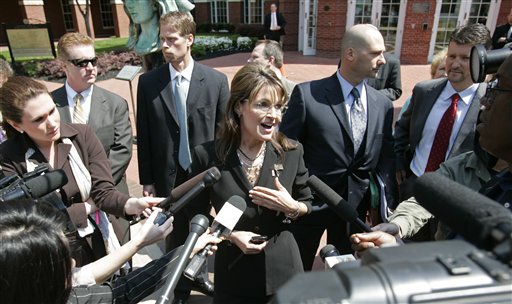
 Many managers do not appreciate the art of good listening. In fact, some people view listening to followers a weakness. However, not listening to wise counsel can be fatal to leaders. Former Alaska Governor and the 2008 Republican vice president candidate Sarah Palin happens to be the latest causality on this subject.

On April 21st, she found herself in U.S. District Court in Knoxville. Some managers have poor listening skills while others are just arrogant about listening to anybody. If organizations want to be successful, their managers need to understand the importance of good listening skills. Craig Hackman and Michael Johnson, authors of Leadership: A Communication Perspective, explain that the leader-follower connection has a direct impact on organizational effectiveness. This article examines the importance of leaders listening to their followers.

Many managers fail to see the unintended consequences of not listening to followers. Former Alaska Director of Boards and Commissioners Frank Bailey warned Palin about using a non-government email: “I was speaking to (Palin husband) Todd (Palin) and said, ‘You have got to get off Yahoo! It’s not secure.’” Sarah Palin failed to heed this warning from her staff. David Kernell, a University of Tennessee student at the time, gained accessed to Palin’s private email, thereby making her vulnerable. In court, it was later discovered that Palin used the Yahoo account to discuss state business.

Yet, Palin’s failure to listen is a common situation to some managers. James Kouzes and Barry Posner, authors of The Leadership Challenge, explain that the leader’s job is to keep followers focused on the vision. If managers do not listen to workers, workers will lose trust in them. Like Sarah Palin learned, leaders must be willing to listening to their workers. Leadership is about a journey. Effective leader understand that it’s important to get wise counsel. Listening to workers is just one critical component. Therefore, leaders need to act on this matter before it’s too late.

 © 2010 by Daryl D. Green

Lead with Your Passion

Anyone who knows me knows that I am a passionate person. If you are human, you probably have something that you are passionate about too. Yet, many managers lack the passion at work to inspire their workforce.

 How do you inspire your unmotivated staff? Have you tried cash? Rewards? Bribery? If what you are doing is not working, you need to try something different. Have you explored leading your organization with passion? In a nutshell, you will be playing the role of the passionate leader. This person has an internal drive because “he loves what he does.”  Are you internally inspired?

Let me make a distinction between a great leader and great manager. I’ve seen passionate managers; however, they weren’t great leaders.These managers were zealots for getting the tasks completed and checking the boxes. Their influence was directly related to their position in the organization, not their personal influence. Richard Joyner, author of Leadership Management, notes the qualities that make a good leader would make poor managers in general. What is the critical reason for this distinction? A manager must be detailed-oriented to achieve success while a good leader must be concept-oriented (seeing the big picture). There are a few exceptions, however.  Joyner explains that large organizations are usually bureaucratic and make it difficult for great leaders to rise to the top. In my organization, it is difficult to implement innovative processes due to a bureaucratic structure. Managers are rewarded for handling tasks, not inspiring people.

Some leaders are forced to start new organizations (for example, Steve Jobs of Apple).  In fact, some leaders disrupt the status quo with their passion. For example, Jesus Christ was not part of “the establishment” but his zeal transformed the world. Therefore, countless leaders (especially change agents) can be energized with their passion. Indeed, it is a critical component for any leader who wants to transform their organizations.  If you want a more charged organization, it starts at the top, leader!

 What is the reason for the lack of passion in many leaders in contemporary organizations?

 © 2010 by Daryl D. Green

Hell Raisers on Your Job


Introduction

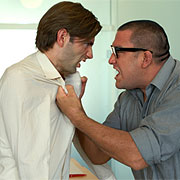
As the economic situation continues to decline, many workers are forced to live with difficult people. Of course, everyone knows it’s easy to manage ‘nice people.’ How do managers deal with difficult people? In fact, this reality happens in every organization. Calvin Miller, author of the Empowered Leader, explains that difficult people are those who stand between you and your objectives. Many managers seek to avoid these difficult people. Mill argues that there are generally congenitally belligerents in any key leadership role. Well, I call them “Hell-Raisers.” They love a good fight and rarely do they avoid one.  Yet, it is the organization that suffers when managers neglect to do their duty in dealing with troubled employees.

The Solution

Good managers understand how to communicate to a variety of individuals. Consequentially, a leader should try to be a peacemaker, if possible. From my personal experience, it’s hard being a peacemaker with Hell Raisers. Some people view an unwillingness to engage them in a fight as a character weakness. Likewise, Hell Raisers can be in every kind of organization. Some of the actions to consider: (a) define the problem, (b) list key participants, (c) talk to the difficult person and make him or her aware of the behavior, (d) seek to get to the root cause, and (e) obtain further actions if the behavior continues.

Dr. Bruce Winston, an author and professor, further maintains that an effective manager must be the person who builds and sustains harmony in the organization. Many people hate change. Some people are closed-minded. Yet, good managers understand the right communication tools to deal with difficult people.

 Conclusion

Unfortunately, difficult people will continue to present problems to organizations.  When corrosive situations come up, managers need to understand how to deal with these communication issues.  Dealing with these issues can make the workplace a war zone at times. No one plans to lead an organization with belligerents. Is it possible to effectively lead a merry band of congenitally belligerents? That’s a wicked thought.  Leaders need to take control of this situation or give the Hell Raisers the day off.

How can organizations assist employees who are faced with difficult co-workers?

© 2010 by Daryl D. Green