Indispensability for Professionals


Introduction

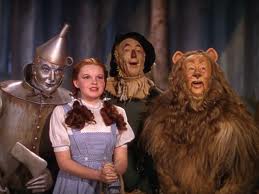
In the 1939 movie classic The Wizard of Oz, a cyclone sweeps Dorothy Gale and her little dog “Toto” to the magical land of Oz. Dorothy wonders through the land, meeting some strange characters.  There is the Scarecrow who desires a brain; the Tin Man who wants a heart; and the Cowardly Lion who hopes for courage. As Dorothy vows to help solve each of their individual problems, she gains power and influence that speaks to the concept of indispensability.

The future is filled with uncertainty. More and more jobs go abroad. Companies continue to shrink in size in hopes of being more competitive.  Business executives understand the power of technology and outsourcing to gain a business edge.

 However, many workers must rely on the good will of their employers to stay gainfully employed.  Sadly, many workers do not fully understand the merits of indispensability in their lives. Bloomberg Businessweek magazine editor Josh Tyrangiel called indispensability the new word of 2011. Tyrangiel notes, “How do we make people smarter and save them time?”

For my clients and students, I have emphasized the importance of building customer value in everything that they do. In fact, it is an attribute to one’s branding strategy to be unforgettable to others. However, many workers operate in the dark shadows of their organizations. Renowned preacher Richard S. Brown, Jr. proclaims to his audience, “Everyone wants to be outstanding but no one wants to stand out.” 

Yet, it is the “standing out” that catches everyone’s attention.  I’ve written several books on this new 21st-century theme, including Breaking Organizational Ties, Publishing for Professionals, and Job Strategies for the 21st Century. If you do the same things that you’ve always been doing, then you shouldn’t be surprised if you get the same results.

Gaining influence is therefore critical in achieving any substantial level of success in life. When an individual has a clear platform as an expert, people tend to listen.  In fact, a person can often gain more influence at work and in the community with a clear personal strategy. This article provides individuals with a proven method for becoming indispensable in their organizations in order to build sustainability in their professions.

The Current Market

With economic pressures, organizations look to streamline and drop processes and people that do not add value to their bottom-line. Some people sit back and hope that business will create more jobs. With a weak economic growth rate of 3%, these jobs will not rapidly appear anytime soon for the 15 million people still unemployed. This reality speaks to the record number (1.3 million) of “discouraged” workers as of last November. Discouraged workers are individuals not currently looking for work because they believe no jobs are available to them.

Coping Solutions

Indispensability means adding value to your customers and organization. In the classic sense, indispensability means being absolutely essential or necessary. Yet, it goes to the heart of being relevant. Kivi Miller, author of The Nonprofit Marketing Guide, argues it’s important to listener to your customers: “Every day presents an opportunity to learn more about the people you are trying to help and the people who are trying to help you.” Therefore, getting to know your target audience is critical.Are you indispensible to your organization or community? If not, why not? Being indispensable speaks the pressing needs of organizations to compete in a global environment.

The following are a few strategies for gaining indispensability in your organization: (a) Devote time to solving important problems for your customer; (b) Showcase your expertise on a variety of levels (blogs, media expert, etc.); (c) Be a great source of information by writing and speaking; (d) Champion a significant cause in a nonprofit organization such as United Way; (e) Become the linchpin that connects people with problems to people with solutions; and (f) Extend your network globally with social media platforms such as Linkedin.com. Emerging leaders and individuals on the fast track understand the benefit of being indispensable to advance their careers and gain a competitive advantage.

Conclusion

Everyone wants to feel needed. Yet, the concept of indispensability goes to the heart of gaining more influence in life. Legendary speaker Dale Carnegie understood the influential attributes of indispensability: “You can make more friends in two months by becoming interested in other people than you can in two years by trying to get other people interested in you.” Therefore, one must be willing to understand the needs of others if he or she hopes to gain this type of influence that will sustain his or her career in the future.  

With millions of people searching for full-time employment, it pays to distinguish yourself from others by building skills that speak to the concept of indispensability.  Individuals need to retool their thinking about indispensability before it is too late.

If the concept of indispensability is the solution for America’s professionals in the future, can today’s unemployed workers capitalize on this attribute?  If yes, how?  

© 2011 by Daryl D. Green

Overcoming Past Failures

Another holiday season has come. After the presents have been given and the year comes to a close, many people will reminisce about the past year. Sadly, some people’s lives will be filled with many defeats, broken relationships, and unfulfilled dreams. These may setbacks may be relatively minor in nature (Pastor Richard S. Brown of Knoxville notes, “For many people, the holidays season bring great pressure and stress…We stress that we can’t get everyone something for Christmas?”) or they may be much more serious. Every year I run across individuals who have lost hope.

Unemployment continues to rise while self-confidence of individuals continues to falter. In my book Breaking Organizational Ties, I provided strategies for individuals caught in jobs they despise and showed them how to possess a more fulfilled life. The holiday season can leave many individual depressed and bitter. This article examines how individuals can overcome past failures this year and retool their minds during the holiday season.

The economic crisis deflates the concept of perseverance. According to the U.S. Labor Department employers added only 39,000 jobs in November, which is a sharp decline from the 172,000 created in October. With a weak economy, the unemployment rate has soared to 9.8%. The current trend of above-9% unemployment rate has surpassed the previous record. Over 15 million people are unemployed. A further 17% are under-employed. And there were a record 1.3 million “discouraged” workers in November. Discouraged workers are individuals not currently looking for work because they believe no jobs are available to them.

Given these statistics, good cheer may be harder to come by this year, making those “holiday blues” even more of a potential problem. According to a Mayo Clinic study, optimistic individuals report a higher level of physical and mental functioning than pessimists. Your perception colors how you view life. Can healing begin with the right kind of attitude?

Depression can develop for anybody. Christian Maslach and Michael Leiter, authors of The Truth about Burn-out, note that stress can burn out individuals and impact their mental state. In fact, many people are succeeding in the corporate environment while failing miserably at their personal relationships. If you are human, you will experience some disappointments. It doesn’t take a genius to understand how someone can get depressed. Some call it a “Pity Party.”

 You become engulfed in your own self-pity—you figure you got it bad. Can anyone hurt as much as you? During the holidays, some people are left alone to face the realities of life. This period can bring much unhappiness. Some people, however, manage to snap out of depression while others get too consumed in it and take harsher actions such as suicide. Don’t let yourself down. Take action.

The following are a few strategies for beating the blues: (a) Put things in perspective. Everyone has experienced some setbacks in life. God is not singling you out; (b) Maintain a good attitude; (c) Establish a strong support network. A positive environment will help you get through; (d) Talk to a good listener. Get it off your chest; and (e) Find a purpose for your life. Ex-Dallas Cowboys player Larry Robinson explains, “The awesomeness of who we are, has nothing to do with where we work or what we do.” With this in mind, many people will need to implement a different strategy for next year.

Highly successful people know how to retool their minds despite life’s many set-backs. Last year, many people over-promised and underachieved on their goals during the economic crisis. Certainly, depression set in for some of the 15 million unemployed Americans, causing some women to grow weary and some men to grow angry. For millions of individuals, a pity party was a regular affair.

Historically speaking, self-pity is nothing new. Even the prophet Jeremiah complained to God about the unfairness of his situation. God spoke to his concern: “Jeremiah, if you get tired in a race against people, how can you possibly run against horses? If you fall in open fields, what will happen in the forest along the Jordan River?” Likewise, individuals must be persistent during the current economic crisis and a good outlook goes a long way. Your attitude will greatly impact how you retool your life so that you can be successful in the future. 

 © 2010 by Daryl D. Green

Sustainability for the Future

Do we really want to pry into the future? Some people do not want to consider it.  In the 1970s, Alvin Toffler, author of Future Shock, wrote, “Citizens of the world’s richest and most technological advanced nations, many of them will find it increasingly painful to keep up with the incessant demand for change that characterizes our time. For them, the future will have arrived too soon.”

Clearly, the future is a highway with varying lanes, but do humans have the capacity to accept unhappy endings? In general, it is my position that humans are incapable of accepting unhappy endings. In fact, futurist Edward Cornish argues that it is easier for people to sustain a long-term perspective when they have a clear vision.  In this discussion, we will look at how organizations can create sustainable existence in the future.

Futurists utilize many techniques to anticipate the future. For example, strategic foresight can provide an avenue where organizations can strategically analyze short, mid-range, and long-term planning. Thus, it’s a glance into the future. This concept is easily seen on the Big Screen.


Hollywood blockbusters are the chronology of happy endings. People want to believe that all stories have positive endings. This concept is derived from childlike innocence of Americans. Unfortunately, the future may include unpleasant outcomes. Life doesn’t always provide a nice story. For example, globalization can provide many job opportunities, but the outcome isn’t always positive. In fact, the future prediction for the full-time worker is bleak. It is evident that technology and outsourcing are now making the part-time worker a reality of today, not tomorrow.

In fact, Charles Handy theorized that unemployed or spare workers will create their own new work in the future. Therefore, individuals will control their own destiny and become entrepreneurs. However, this runs counter to our American culture. Grandma taught us “go work for a good company and get a good job with benefits.” 

In fact, Bruce Sterling, author of Tomorrow Now, further argues that simple, predictable, and solvable jobs will go to the poorly educated and unprepared or to intelligent machines. However, high-paying jobs will go to the highly prepared, teachable, and creative individuals. In the future, good jobs will be the apex of human difficulty. Technology and understanding of complex systems will require a well-grounded person. However, futurist James Canton argues that American youth, our future workers, will be unprepared in math/science and may be locked out of future opportunities.

Based on many observations, organizations and individuals don’t want to hear negative scenarios for future generations. This reality reaffirms that people don’t want to think negatively about their future. Therefore, they often operate in denial or ignore the future.

Clearly, organizational leaders need to develop a strategy to deal with negative consequences. Many people don’t have the patience to look beyond short-term gains. Therefore, effective leaders need to know how to deal with the possibilities of negative futures.

How do organizations effectively navigate their operations for sustainability in the future?

© 2010 by Daryl D. Green 

The Value Creation Machine

On Tuesday (November 4, 2010), political chatter was all the rage as Republicans gained control over the House, sending a clear message to President Obama that the political landscape had shifted.  The Democrats now occupy the US Presidency and Senate while the Republicans dominate the House of Republications. 

Most experts wonder if Congress will ever get anything done.  As a result of not passing a budget bill in 1995, the federal government was shutdown.  With President Bill Clinton and Speaker Newt Gingrich at the helm, the shutdown was fueled by political fighting.  Sadly, many people look to the government for all of the answers when their own ingenuity would work. 

Yes, the government has an important role to play. I don’t believe that market forces are always the answer to societal problems…the market is not driven by morals or ethics.  In fact, find a cheap labor force across the globe and some businesses will abandon their own creed of “America First.” 

Individuals need to take control of their lives by developing strategies to produce results.  If we are to equip people for the future as scholars, we need to make sure they understand that the future will belong to the aggressor, not the passive in the new economy. During this discussion, we will explore how companies develop value for their customers and how it contributes toward wealth building.

 In uncertain times, it’s virtually impossible to navigate the market without fully engaging customers.  Any operations that fail that economic maxim of the 21st century will fail. Management guru Brian Tracy argues that the duty of businesses is to create and keep customers: “The two most important words to keep in mind in developing a successful customer base are positioning and differentiation.”

Of course, it was possible several decades ago to create products and services without knowing the customer and later convince them to buy.  Many companies during the Industrial Revolution built their success due to scarcity of commodity, limited competition, and uneducated buyers. This is not the case today.

Today’s operations must be value conscious as it relates to the market. Alvin Toffler and Heidi Toffler, authors of Revolutionary Wealth,  research how tomorrow’s wealth will be created, and who will get it and the wealth method. Customer value is defined as the ‘difference between what a customer gets from a product, and what he or she has to give in order to get it.’  They argue, “Today’s wealth revolution will unlock countless opportunities and new life trajectories, not only for creative business entrepreneurs but for social, cultural and educational entrepreneurs as well.”

Daniel Spulber, author of Economics and Management of Competitive Strategy, further suggests that value creation is strategic:  “Managers must pay close attention to value creation because it is the source of the company’s potential profits. The company generates value by providing products to customers, which it produces both by purchasing inputs from suppliers and supplying some of its own.” 

Spulber further outlines a value-driven strategy in three ways:  (a) to attract customers away from competitors, the company must provide sufficient customer value as compared to rival companies, (b) to attract key suppliers away from competitors, the company must offer sufficient supplier value, and (c) to attract investment capital in competition with other market investment opportunities, the company must increase the value of the firm for its investors.

Therefore, effectively managing the attribute of value creation will provide businesses with a competitive advantage.

Briefly explain how value creation has shifted from the Industrial Revolution to the Knowledge Economy and what attributes will be associated with wealth creation in the distant future?

© 2010 by Daryl D. Green

Knowledge Worker Revolution


If I had a magical organizational wand, I would turn old toady CEOs into beautiful princes and princesses who champion the causes of their workers. Unfortunately, there’s not enough magic from Oz to convince most executives that today’s workers are more than mechanical parts to their profit machine. During this discussion, we will explore the concept of knowledge workers in organizations.

Some employees feel they are often undervalued and unappreciated by their managers. For example, my friend, Stan, is a very intelligent person in spite of not attending college. He accepted a new job as warehouse operator. Because of downsizing, he became the only person in that department. Stan created his own cataloging system without a computer. That was impressive.

When Stan was up for a raise, he asked for more money. His supervisor explained that it couldn’t be done. My friend countered that he had optimized their warehouse systems, and the operations depended on his knowledge. His supervisor knew it was true because when Stan wasn’t there, no one could find anything.

Stan got what he wanted. He had become a knowledge commodity. This represents the revolution of knowledge workers on the traditional organizational structure. Therefore, if today’s leaders don’t adequately manage the knowledge workforce, they will be at a competitive disadvantage.

Knowledge workers are a critical commodity. Gareth Morgan, author of Imagination, argues that contemporary use of organizational charts and diagrams are major tools for restructuring. However, this creates a false sense that a new organizational chart can solve all of the organization’s problems. Modern-day bosses feel that “top down” management is best. Clearly, they are mistaken.

Georg Krogh, Kazuo Ichijo, and Ikujiro Nonaka, authors of Enabling Knowledge Creation, maintain that knowledge management (KM) is not one person’s job; everyone in organizations can play a vital role in transferring  information. As a rule, an organization’s knowledge and capacity building depends primarily on its human and social capital. In most contemporary organizations, technology can be a critical tool in supporting the knowledge work.

Yet, knowledge workers create and capture information for the management of knowledge. In fact, KM is performed by individuals who belong to communities of interest where knowledge is shared and accumulated. Therefore, effective management of today’s operations depends on talented and gifted knowledge workers.

How do today’s organizations better engage knowledge workers due an era of sweeping layoffs and outsourcing? 

© 2010 by Daryl D. Green

Unleashing the Entrepreneurial Spirit

While on business travel, I was riding the Metro subway in Washington, DC and got off at the end of the line. The location was in a depressed area with little there for the commuter. As I waited for my ride, I saw two young boys carrying a huge box of M&Ms in hopes of selling to weary commuters. I found it amusing that these young men were catering to this market. I wondered how these inexperienced children could be so successful in business. Many individuals are not.

Our grandmothers told us to find a good government job with benefits, and we would then live happily ever after.  We found that wasn’t true.  In fact, companies are outsourcing functions like employees are disposal goods. In fact, Charles Handy, author of the Age of Paradox, predicts that we are witnessing the end of the full-time employee. In this discussion, we will focus on the freelance industry and how it contributes to the growing outsourcing market.

With a weak job growth, many U.S. jobs will continue to be outsourced globally or automated through technology. In fact, the government estimates that an additional 1.2 manufacturing jobs will disappear by 2018. In this economic downturn, many people are unleashing their ‘Entrepreneurial Spirit rather than depend of others.’  According to the Bureau of Labor Statistics (BLS) data, the number of self-employed Americans rose to 8.9 million in December 2009, up from 8.7 million a year earlier. 

Yet, this venture is not just for the young.  Individuals 55 to 64 represented the second-largest jump in their own businesses (just behind 35- to 44- years old) from 2008 to 2009, according to Ewing Marion Kauffman Foundation.  People with talent are finding they can find work anywhere, including abroad. Websites like Elance.com turn local artists to global competitors. However, columnist Nancy Cook notes, “These sites may transform freelancers into mini-nationals, but they certainly don’t offer the wages, benefits, or perks typically associated with global blue-chip companies.” The following list represents the leading freelance websites for employment:

(1)           Elance.com

(2)           oDesk.com

(3)           Guru.com

(4)           PeoplePerHour.com

(5)           Rent A Coder.com

(6)           Demand Studios.com

(7)           Donanza.com

(8)           Sologig.com

(9)           Freelancer.com

(10)        iFreelance.com

(11)       Guru.com

(12)      Gofreelance.com

(13)      Allfreelancework.com

(14)      Worldwideworkathome.com

 Most entrepreneurs are internally driven. According to BLS, the number of employees voluntarily quitting their jobs (February 2010) surpassed the number being fired or discharged for the first time since October 2008. Many people are unsatisfied with their work situations.  In a Right Management poll, 60% of workers planned to leave their jobs when the market got better. 

Gam’s Barbershop is more than a haircut establishment in Knoxville, Tennessee. It is an experience. Men debate. Fans might see a UT athlete or even Coach Pearl there. However, this successful vision came from one person. Despite growing up in a single parent home and fighting numerous youth temptations, Gary Gamble wanted more. Gam explains, “I always wanted to own my own business. I went to barbershop school with my friend. My friend later quit school. I kept on going. I wanted to do something with my life.” He did. In 1993, Gam’s Barbershop was opened. However, it wasn’t easy. Gam says, “I just try to be determined and never give up.”


Some people just stumble on a niche. Owners Charles and Gwen Chandlers took a hobby and grew it into a business. Chandler’s Deli, known for its Southern cooking and great service, is located in the heart of an urban area. While many restaurants have failed in the area, this restaurant still stands.

Charles notes, “I think we have been successful for three reasons. They are God, determination between my wife and me, and our personal assets. God just wanted us to have it [this deli].” Currently, the couple is working with the University of Tennessee Agricultural Department to locate a distributor for their new spices. 

With the economic crisis still ahead, organizations are outsourcing more of their routine functions. Additionally, today’s workers cannot depend on their current employer to take care of their indefinitely. Therefore, being a freelance worker can provide a great alternative.

Yet, entrepreneurship isn’t for everyone. Furthermore, there is a continual demand for better services at lower prices by organizations. Therefore, many workers will become independent contractors. Yet, our nation needs to continue its economic development campaign. 

How will freelancers contribute to the outsourcing market?  What operational systems will need to be infused into traditional organizations so that they can use them?

© 2010 by Daryl D. Green


[1] “More workers start to quit” by Joe Light

Knowledge Management Infusion

If managers want to gain more efficiency in operations, businesses need to better understand their knowledge management systems.  In handling short-term matters, many organizations have forgotten the long-term consequences of short changing their corporate knowledge. For today’s businesses,  corporate culture along with the massive retirement of Baby Boomers represents a serious concern as it relates to tacit knowledge. Researchers Xiaoming Cong and Kaushik Pandya argue that tacit knowledge, which is often unwritten and less concrete, has become a key asset.

Many employees from the private sector can point to the 80’s as a period of organizational change in terms of downsizing. For federal employees, this reality of potential job lost was not evident until the 90s. In September of 1993, President Clinton set a goal to reduce the Executive Branch civilian workforce. With budget reductions and in some cases base closures, it was apparent to many employees that downsizing was now a reality for federal workers.

New government initiatives, such as A-76, continued to frighten government employees as they saw their jobs outsourced to others. A-76 referred to OMB Circular A-76 (Performance of Commercial Activities) that requires government agencies to determine if its work functions could be done in the private sector cheaper and better.

Research on downsizing efforts in the public and private sectors has found numerous examples of negative impacts on employee productivity, morale, customer service, and product quality. Organizations are relying more on employee involvement to streamline their processes. If you are an employee, do you share information with others that will decrease your value and potentially place you at risks for layoffs?   

Employee cynicism of management will make this problematic. According to Maritz Poll, less than 15% of employees strongly agree that their managers show consistency between their words and actions. Additionally, only 7% of employees strongly trust their senior managers to look out for their best interest. Leadership blogger Dan McCarthy argues, “While workplace trust has been dwindling since the Enron, WorldCom, and Tyco scandals of the earlier part of the decade, threats of layoffs and downsizing have only exacerbated the problem.” In this blog, we will discuss knowledge management in operations.

In today’s hypercompetitive environment, knowledge management becomes a vital component for modern organizations. Knowledge management (KM) relates to an organization’s ability to systematically capture, organize, and store information. When dealing with KM issues, many people focus on intellectual capital or technology issues, rather than the human element.

Consequently, many organizations develop their own KM perspective. For example, Lotus Development Corporation defines KM by the following five technology pillars: business intelligence, collaboration, knowledge transfer, knowledge discovery and mapping, and the location of needed expertise.  As organizations continue to become more complex, engage in global competition, and operate under uncertainty, disseminating information becomes a valuable commodity. KM has been a core ingredient for most government agencies; it is difficult to separate strategic planning from KM.

Georg Krogh, Kazuo Ichijo, and Ikujiro Nonaka, authors of Enabling Knowledge Creation, maintain that knowledge creation must be supported by organizations in a number of ways if knowledge creation is to happen. In fact, they note the following enablers: (a) instill a knowledge vision, (b) manage conversations, (c) mobilize knowledge activists, (d) create the right context, and (e) globalize local knowledge.

Managing this KM system is not easy after the layoff craze of the 1980s. In fact, knowledge sharing without committed leadership and encouraging organizational culture will only be marginally successful. Researchers Alex Birman and John Risko maintain that an organization can improve competitiveness and adaptability and increase its chance of success with an effective KM process. However, Michael Tushman and Charles O’Reilly, authors of Winning Through Innovation, argue that an organization’s culture can prevent it from undergoing positive change because organizational renewal demands requires mastering both innovation and organizational change.

How do organizations ensure the effectiveness of their knowledge management systems? Can trust be rebuilt with today’s workers after  past management failures? If so, how?

  © 2010 by Daryl D. Green


Fueling Intellectual Assets

When I wrote my first book, My Cup Runneth Over: Setting Goals for Single Parents and Working Couples, it took me two months to write and less than a year to get published (it normally takes 18 months to three years to get published).  People were amazed at my publishing accomplishments.

My world was transformed, from being a little unknown engineer in Tennessee to being a respected expert and quoted by USA Today and Ebony Magazine.  It provided a great avenue for influencing others across the country and the world.  Additionally, it provided me with a more diverse portfolio of passive income and revenue.  In the greater scheme of thinking, I found out that my new platform was centered, not on the physical book—but on the creation of intellectual assets. 

As organizations contend with global competition, many businesses will need to rethink their strategies for sustainability in the knowledge and innovation economy.  Across the nation, companies are depending more on freelance workers.

According to the Bureau of Labor Statistics, the number of workers placed by temporary staffing agencies rose by 404,000 since September 2010. Furthermore, many gifted, laid-off workers are forced to become independent contractors and freelancers.  According to the Freelancer Union, 18% of its members were forced to give up health insurance in 2009 while 39% cut back coverage.  This trend is reshaping America’s workforce.

Yet, value creation will be the key to opening endless opportunities for today’s businesses.  We complain about the rate of manufacturing jobs going abroad and how this reality impacts the quality of living. Perhaps the future will be ruled not by the tangible but the intangible.  In fact, the knowledge economy will wreak havoc on traditional thinking. 


Thomas Davenport and Kevin Desouza, intellectual strategists, argue the importance of organizations understanding their intellectual assets: “In the industrial economy, a key component of mass production and productivity—and hence economic growth—was the reuse of physical assets: molds, templates, castings and so forth.  Although so much of the economy is now based on intellectual assets, we have yet to achieve a similar level of reuse and productivity improvement for that class of asset.”  In this discussion, we will look at how intellectual assets will fuel the future.

Henrik Vejlgaard, author of Anatomy of a Trend, argues that emerging trends are influenced by gifted people, including entrepreneurs, designers, and artists.  Vejlgaard notes that these people “create new products or invent new styles or begin doing something in a completely new way.”  In the old days, creative people were the butt of jokes pertaining to finding sustainable employment.  

Yet, the future will belong to just these people, as many organizations across the world will need this asset to enhance their survivability.  Fueling the knowledge economy will be knowledge creation (intellectual asset creation) and knowledge management (intellectual asset management).

An important ingredient for the knowledge economy is the creation, use, storage, and positioning of an organization’s intellectual assets.  Intellectual assets are valuable elements created by human ingenuity: written documents, software, musical compositions, and other intellectual spin-offs.  Intellectual assets can be divided into two categories, product assets and process assets.  Product assets are the specific outputs of knowledge work such as software programs or legal briefs.  

In contrast, process assets are codified knowledge about how to perform a task such as manufacturing steps for a new product.  Some countries have already realized the critical value of intellectual assets.  In May 2004, the Ministerial Council in France studied how intellectual assets impacted value creation, growth, and economic performance.  The study noted, “The continuous shift toward a knowledge-based and innovation-driven economy has brought to the forefront the issue of how knowledge is created, disseminated, retained and used to obtain economic returns.”

Intellectual assets will place individuals at the center stage of wealth creation across the globe.  Today, traditional publishers struggle to stay in business as the world has been overrun by knowledge creation.  Many experts will argue that the Big 6 (Random House, Inc., Penguin Putnam, HarperCollins, Holtzbrinck, Time Warner, and Simon & Schuster) dominate the publishing world.  Yet, the world is changing.  

According to a Para Publishing study, traditional publishers are in trouble.  In 2004, more than 1.8 million books were in print.  A new book is published every 30 seconds.  With challenges from the global economies, digital publishing models, and industry standard changes, major publishers are bombarded with changes that impact their bottom-line.  In 2002, major publishers decreased output by 5% yet titles published rose by 6%. 

What is driving the publishing industry now?  It is independent publishers and literary entrepreneurs emerging in this digital age.  In fact, 70% of the titles are now coming from small or self-publishers. In the digital age, individuals can transform one idea into multiple formats including paper back, hardcover, MP3 files, DvD, and other downloadable files.  Therefore, knowledge creators are building an empire of intellectual assets.  Websites like Createspace.com and Lulu.com give individuals the power to create wealth while building influence effortlessly.

What modifications will need to be made in the publishing model to incorporate intellectual assets created by entrepreneurs? How can organizations take advantage of these gifted creators in their organizations and still fully control their knowledge management processes?

 © 2010 by Daryl D. Green

Unintended Consequences


As companies after company fail in the same industry, I wonder why some organizations continue to follow the same deadly path. In most cases, it starts with managers who do not think about the consequences of short term decisions over the long haul. Sadly, hasty decisions can impact not only the individual but others around them. Several famous individuals have been impacted by this reality.

For example, Vanessa Williams was one of these fallen Hollywood icons. In 1983, Williams became the first African-American woman to be crowned Miss America. However, her immediate success was short-lived due to a scandal.

Consequently, Williams was forced to relinquish her title; she probably didn’t think her youthful deed would come back and wreck her dreams. Yet, the consequences not only damaged Williams but her family, friends, and millions of her fans. In this session, we will examine the impacts of unintended consequences.

Have you ever wondered why some people never consider the aftermath of their bad choices? Many people fail to understand the consequences of their decisions. Nobel Prize author Albert Camus once noted, “Life is the sum of all your choices.” Some people rationalize that an apology or a pitiful stare will erase all of the damages. 

I hear it all the time: “I’m sorry. I didn’t mean for that to happen.” Instead of just chalking it up to immaturity or youthful ignorance, I just cannot make that case because we are often talking about adults, not children. These adults should know better, but they act without realizing the effect of their actions. In spite of all wise counsel, some people live to make poor decisions.

Fortunately, these circumstances can be traced back to a root cause. The Law of Unintended Consequences relate to any purposeful action that will generate unintended consequences. This law can be categorized into several areas: (a) a positive unexpected benefit called serendipity, (b) a negative effect which is contrary to the original intention, and (c) a potential source of problems which is commonly referred to as Murphy’s Law. Additionally, the outcomes are not limited to the results that were originally intended.

Here are some examples of how this law works. A new bridge is built to give a secluded community access to a nearby shopping mall. However, this action results in increased crime in the secluded neighborhood and decreased sales for the mall stores. No one anticipated these unforeseen problems.

Another example is a caring parent who smokes cigarettes around his family. One child gets asthma and eventually becomes a chain smoker as an adult. Another child obtains a phobia related to smokers. In retrospect, the caring parent would have done something different if he had anticipated the long-term consequences.

Likewise, many managers may make alternative decisions if they understand the Law of Unintended Consequences. Furthermore, today’s leaders can be proactive in their decision making by considering the long term ramifications of most decisions.

Like Murphy’s Law, some decisions may appear to afflict some people as if their lives are cursed. Unfortunately, making the right decision is a difficult process. No one will applaud your many good decisions; however, you will probably catch heat over the bad ones. As a matter of fact, some individuals continue to ride a merry ride of worsening consequences.

Yet, it is often their own lack of foresight that haunts them. Eleanor Roosevelt said, “Somehow we learn who we really are and then live with that decision.” Every person, regardless of their background or social standing, can benefit from good decision-making techniques. In this life, most people make decisions to the best of their abilities. When various things happen, especially bad ones, individuals must be ready to deal with them. Therefore, understanding unintended consequences can assist in helping make better decisions for the future.   

 How do organizations anticipate the consequences of their decisions?  Can managers learn to make better decisions?

 © 2010 by Daryl D. Green

The Search of Global Talent

It is 2150. Science and technology rule the world. Artificial intelligence provides the life blood for the universe. Basic robotic beings conduct all manual labor. Therefore, humanity enjoys endless pleasures and high level thinking. Surprisingly, a rodent dashes through the power grid, bypassing a sophisticated security system and blacks out Earth. Living at the core of the planet, Earth inhabitants stand in darkness. There are no engineers, technicians, and scientists. Humanity has abandoned scientific pursuits in the quest for a better life. 

Why are American businesses excited about global outsourcing while their employees sound the alarm on the impending danger ahead? As I watch numerous companies outsource their corporate souls abroad, I wonder, what is the future of our workforce?  When global competition should bring out the best in humanity, perhaps it is bringing out the worst in us.

As American company after company relishes its stronghold on innovation and creativity to the rest of the world, global competition escalates.  When managers should be developing their employees so that they can get the best performance out of them, managers develop systems that do not inspire or empower workers but maintain the status quo.  Sadly, this is a tragic mistake as countries seek out the best talent in the future.

In a rapidly changing environment, organizations need to understand the rule that talented individuals will play in the future. Some organizations play with strategic planning for the predicted problems of the future, yet they neglect the unintended consequences of what is happening in the near term.

Watts Wacker, Jim Taylor, and Howard Means, authors of The Visionary’s Handbook, explain, “Fail to build your own future, and someone is going to build one for you.” 

Dr. James Canton, nationally recognized futurist, analyzes 10 critical emerging trends in his book, Extreme Future. Dr. Canton notes, “Everyone needs to think differently about the future, a future that is riddled with change, challenge, and risk.” He further provides the five factors that will shape the extreme future which are speed, complexity, risk, change, and surprise. Yet, what emerges from Dr. Canton’s prediction is an increasing need for more worldwide talent.

There is a growing battle developing as companies fight for positioning on the global market.  In fact, this war is waging across the globe.  Countries are searching for the brightest and smartest talent. The Global Talent Management and Rewards Survey involved a study of 1,176 companies across the world, including 314 from the United States.  The survey found that the vast majority of the companies were having difficulty attracting the critical-skill and talented employees to help them compete during this economic crisis. 

According to the study, 65% of the companies reported having problems obtaining the needed talent (52% of American businesses).  In fact, many businesses aren’t even able to retain their own employees.  American businesses were reporting losing 11% of their workforce while globally it’s over 20%.

Gaining the right kind of attributes will make workers more valuable. Ryan Johnson, WorldatWork Vice President, notes “This study is a good reminder that employers need to reassess their employee value proposition to key in on those factors, both tangible and intangible, that would make them attractive to recruits.”

According to the survey, the top talent management priorities were (a) Ensuring the readiness of talent in critical roles, (b) Increasing the investment in building an internal pipeline of talent, and (c) Creating more development opportunities within (rotations, etc.).  Therefore, the quest for worldwide talent will dominate most countries economic agenda as they seek to position themselves in the future.

What is the workforce aftermath if America cannot compete for future talent? What effect will global outsourcing have in the overall strategy of tomorrow’s organizations? 

 © 2010 by Daryl D. Green