If I had a magical organizational wand, I would turn old toady CEOs into beautiful princes and princesses who champion the causes of their workers. Unfortunately, there’s not enough magic from Oz to convince most executives that today’s workers are more than mechanical parts to their profit machine. During this discussion, we will explore the concept of knowledge workers in organizations.
Some employees feel they are often undervalued and unappreciated by their managers. For example, my friend, Stan, is a very intelligent person in spite of not attending college. He accepted a new job as warehouse operator. Because of downsizing, he became the only person in that department. Stan created his own cataloging system without a computer. That was impressive.
When Stan was up for a raise, he asked for more money. His supervisor explained that it couldn’t be done. My friend countered that he had optimized their warehouse systems, and the operations depended on his knowledge. His supervisor knew it was true because when Stan wasn’t there, no one could find anything.
Stan got what he wanted. He had become a knowledge commodity. This represents the revolution of knowledge workers on the traditional organizational structure. Therefore, if today’s leaders don’t adequately manage the knowledge workforce, they will be at a competitive disadvantage.
Knowledge workers are a critical commodity. Gareth Morgan, author of Imagination, argues that contemporary use of organizational charts and diagrams are major tools for restructuring. However, this creates a false sense that a new organizational chart can solve all of the organization’s problems. Modern-day bosses feel that “top down” management is best. Clearly, they are mistaken.
Georg Krogh, Kazuo Ichijo, and Ikujiro Nonaka, authors of Enabling Knowledge Creation, maintain that knowledge management (KM) is not one person’s job; everyone in organizations can play a vital role in transferring information. As a rule, an organization’s knowledge and capacity building depends primarily on its human and social capital. In most contemporary organizations, technology can be a critical tool in supporting the knowledge work.
Yet, knowledge workers create and capture information for the management of knowledge. In fact, KM is performed by individuals who belong to communities of interest where knowledge is shared and accumulated. Therefore, effective management of today’s operations depends on talented and gifted knowledge workers.
How do today’s organizations better engage knowledge workers due an era of sweeping layoffs and outsourcing?
If managers want to gain more efficiency in operations, businesses need to better understand their knowledge management systems. In handling short-term matters, many organizations have forgotten the long-term consequences of short changing their corporate knowledge. For today’s businesses, corporate culture along with the massive retirement of Baby Boomers represents a serious concern as it relates to tacit knowledge. Researchers Xiaoming Cong and Kaushik Pandya argue that tacit knowledge, which is often unwritten and less concrete, has become a key asset.
Many employees from the private sector can point to the 80’s as a period of organizational change in terms of downsizing. For federal employees, this reality of potential job lost was not evident until the 90s. In September of 1993, President Clinton set a goal to reduce the Executive Branch civilian workforce. With budget reductions and in some cases base closures, it was apparent to many employees that downsizing was now a reality for federal workers.
New government initiatives, such as A-76, continued to frighten government employees as they saw their jobs outsourced to others. A-76 referred to OMB Circular A-76 (Performance of Commercial Activities) that requires government agencies to determine if its work functions could be done in the private sector cheaper and better.
Research on downsizing efforts in the public and private sectors has found numerous examples of negative impacts on employee productivity, morale, customer service, and product quality. Organizations are relying more on employee involvement to streamline their processes. If you are an employee, do you share information with others that will decrease your value and potentially place you at risks for layoffs?
Employee cynicism of management will make this problematic. According to Maritz Poll, less than 15% of employees strongly agree that their managers show consistency between their words and actions. Additionally, only 7% of employees strongly trust their senior managers to look out for their best interest. Leadership blogger Dan McCarthy argues, “While workplace trust has been dwindling since the Enron, WorldCom, and Tyco scandals of the earlier part of the decade, threats of layoffs and downsizing have only exacerbated the problem.” In this blog, we will discuss knowledge management in operations.
In today’s hypercompetitive environment, knowledge management becomes a vital component for modern organizations. Knowledge management (KM) relates to an organization’s ability to systematically capture, organize, and store information. When dealing with KM issues, many people focus on intellectual capital or technology issues, rather than the human element.
Consequently, many organizations develop their own KM perspective. For example, Lotus Development Corporation defines KM by the following five technology pillars: business intelligence, collaboration, knowledge transfer, knowledge discovery and mapping, and the location of needed expertise. As organizations continue to become more complex, engage in global competition, and operate under uncertainty, disseminating information becomes a valuable commodity. KM has been a core ingredient for most government agencies; it is difficult to separate strategic planning from KM.
Georg Krogh, Kazuo Ichijo, and Ikujiro Nonaka, authors of Enabling Knowledge Creation, maintain that knowledge creation must be supported by organizations in a number of ways if knowledge creation is to happen. In fact, they note the following enablers: (a) instill a knowledge vision, (b) manage conversations, (c) mobilize knowledge activists, (d) create the right context, and (e) globalize local knowledge.
Managing this KM system is not easy after the layoff craze of the 1980s. In fact, knowledge sharing without committed leadership and encouraging organizational culture will only be marginally successful. Researchers Alex Birman and John Risko maintain that an organization can improve competitiveness and adaptability and increase its chance of success with an effective KM process. However, Michael Tushman and Charles O’Reilly, authors of Winning Through Innovation, argue that an organization’s culture can prevent it from undergoing positive change because organizational renewal demands requires mastering both innovation and organizational change.
How do organizations ensure the effectiveness of their knowledge management systems? Can trust be rebuilt with today’s workers after past management failures? If so, how?
When I wrote my first book, My Cup Runneth Over: Setting Goals for Single Parents and Working Couples, it took me two months to write and less than a year to get published (it normally takes 18 months to three years to get published). People were amazed at my publishing accomplishments.
My world was transformed, from being a little unknown engineer in Tennessee to being a respected expert and quoted by USA Today and Ebony Magazine. It provided a great avenue for influencing others across the country and the world. Additionally, it provided me with a more diverse portfolio of passive income and revenue. In the greater scheme of thinking, I found out that my new platform was centered, not on the physical book—but on the creation of intellectual assets.
As organizations contend with global competition, many businesses will need to rethink their strategies for sustainability in the knowledge and innovation economy. Across the nation, companies are depending more on freelance workers.
According to the Bureau of Labor Statistics, the number of workers placed by temporary staffing agencies rose by 404,000 since September 2010. Furthermore, many gifted, laid-off workers are forced to become independent contractors and freelancers. According to the Freelancer Union, 18% of its members were forced to give up health insurance in 2009 while 39% cut back coverage. This trend is reshaping America’s workforce.
Yet, value creation will be the key to opening endless opportunities for today’s businesses. We complain about the rate of manufacturing jobs going abroad and how this reality impacts the quality of living. Perhaps the future will be ruled not by the tangible but the intangible. In fact, the knowledge economy will wreak havoc on traditional thinking.
Thomas Davenport and Kevin Desouza, intellectual strategists, argue the importance of organizations understanding their intellectual assets: “In the industrial economy, a key component of mass production and productivity—and hence economic growth—was the reuse of physical assets: molds, templates, castings and so forth. Although so much of the economy is now based on intellectual assets, we have yet to achieve a similar level of reuse and productivity improvement for that class of asset.” In this discussion, we will look at how intellectual assets will fuel the future.
Henrik Vejlgaard, author of Anatomy of a Trend, argues that emerging trends are influenced by gifted people, including entrepreneurs, designers, and artists. Vejlgaard notes that these people “create new products or invent new styles or begin doing something in a completely new way.” In the old days, creative people were the butt of jokes pertaining to finding sustainable employment.
Yet, the future will belong to just these people, as many organizations across the world will need this asset to enhance their survivability. Fueling the knowledge economy will be knowledge creation (intellectual asset creation) and knowledge management (intellectual asset management).
An important ingredient for the knowledge economy is the creation, use, storage, and positioning of an organization’s intellectual assets. Intellectual assets are valuable elements created by human ingenuity: written documents, software, musical compositions, and other intellectual spin-offs. Intellectual assets can be divided into two categories, product assets and process assets. Product assets are the specific outputs of knowledge work such as software programs or legal briefs.
In contrast, process assets are codified knowledge about how to perform a task such as manufacturing steps for a new product. Some countries have already realized the critical value of intellectual assets. In May 2004, the Ministerial Council in France studied how intellectual assets impacted value creation, growth, and economic performance. The study noted, “The continuous shift toward a knowledge-based and innovation-driven economy has brought to the forefront the issue of how knowledge is created, disseminated, retained and used to obtain economic returns.”
Intellectual assets will place individuals at the center stage of wealth creation across the globe. Today, traditional publishers struggle to stay in business as the world has been overrun by knowledge creation. Many experts will argue that the Big 6 (Random House, Inc., Penguin Putnam, HarperCollins, Holtzbrinck, Time Warner, and Simon & Schuster) dominate the publishing world. Yet, the world is changing.
According to a Para Publishing study, traditional publishers are in trouble. In 2004, more than 1.8 million books were in print. A new book is published every 30 seconds. With challenges from the global economies, digital publishing models, and industry standard changes, major publishers are bombarded with changes that impact their bottom-line. In 2002, major publishers decreased output by 5% yet titles published rose by 6%.
What is driving the publishing industry now? It is independent publishers and literary entrepreneurs emerging in this digital age. In fact, 70% of the titles are now coming from small or self-publishers. In the digital age, individuals can transform one idea into multiple formats including paper back, hardcover, MP3 files, DvD, and other downloadable files. Therefore, knowledge creators are building an empire of intellectual assets. Websites like Createspace.com and Lulu.com give individuals the power to create wealth while building influence effortlessly.
What modifications will need to be made in the publishing model to incorporate intellectual assets created by entrepreneurs? How can organizations take advantage of these gifted creators in their organizations and still fully control their knowledge management processes?
As companies after company fail in the same industry, I wonder why some organizations continue to follow the same deadly path. In most cases, it starts with managers who do not think about the consequences of short term decisions over the long haul. Sadly, hasty decisions can impact not only the individual but others around them. Several famous individuals have been impacted by this reality.
For example, Vanessa Williams was one of these fallen Hollywood icons. In 1983, Williams became the first African-American woman to be crowned Miss America. However, her immediate success was short-lived due to a scandal.
Consequently, Williams was forced to relinquish her title; she probably didn’t think her youthful deed would come back and wreck her dreams. Yet, the consequences not only damaged Williams but her family, friends, and millions of her fans. In this session, we will examine the impacts of unintended consequences.
Have you ever wondered why some people never consider the aftermath of their bad choices? Many people fail to understand the consequences of their decisions. Nobel Prize author Albert Camus once noted, “Life is the sum of all your choices.” Some people rationalize that an apology or a pitiful stare will erase all of the damages.
I hear it all the time: “I’m sorry. I didn’t mean for that to happen.” Instead of just chalking it up to immaturity or youthful ignorance, I just cannot make that case because we are often talking about adults, not children. These adults should know better, but they act without realizing the effect of their actions. In spite of all wise counsel, some people live to make poor decisions.
Fortunately, these circumstances can be traced back to a root cause. TheLaw of Unintended Consequences relate to any purposeful action that will generate unintended consequences. This law can be categorized into several areas: (a) a positive unexpected benefit called serendipity, (b) a negative effect which is contrary to the original intention, and (c) a potential source of problems which is commonly referred to as Murphy’s Law. Additionally, the outcomes are not limited to the results that were originally intended.
Here are some examples of how this law works. A new bridge is built to give a secluded community access to a nearby shopping mall. However, this action results in increased crime in the secluded neighborhood and decreased sales for the mall stores. No one anticipated these unforeseen problems.
Another example is a caring parent who smokes cigarettes around his family. One child gets asthma and eventually becomes a chain smoker as an adult. Another child obtains a phobia related to smokers. In retrospect, the caring parent would have done something different if he had anticipated the long-term consequences.
Likewise, many managers may make alternative decisions if they understand the Law of Unintended Consequences. Furthermore, today’s leaders can be proactive in their decision making by considering the long term ramifications of most decisions.
Like Murphy’s Law, some decisions may appear to afflict some people as if their lives are cursed. Unfortunately, making the right decision is a difficult process. No one will applaud your many good decisions; however, you will probably catch heat over the bad ones. As a matter of fact, some individuals continue to ride a merry ride of worsening consequences.
Yet, it is often their own lack of foresight that haunts them. Eleanor Roosevelt said, “Somehow we learn who we really are and then live with that decision.” Every person, regardless of their background or social standing, can benefit from good decision-making techniques. In this life, most people make decisions to the best of their abilities. When various things happen, especially bad ones, individuals must be ready to deal with them. Therefore, understanding unintended consequences can assist in helping make better decisions for the future.
How do organizations anticipate the consequences of their decisions? Can managers learn to make better decisions?
For many people, the bad economic picture will not change soon enough. According to a USA Today/Gallup Poll, almost three-fourths of those surveyed don’t like what’s going on in the country. David Walker, the former chief of the Government Accountable Office, predicts a poorer America if the economic ship doesn’t change direction: “We’ve kicked the can down the road as far as we can. We are at the abyss.”
Market turbulence has overtaken our ability to realize the American Dream. This turbulence relates to the chaos that now plaques our financial institutions, wrecking havoc on our normalcy. With a weak job growth, many U.S. jobs will continue to be outsourced globally or automated through technology.
In fact, the government estimates that an additional 1.2 manufacturing jobs will disappear by 2018. In this economic downturn, many people are just happy to have ajob. Yet, the hectic work environment creates severe consequences to today’s workers as well. In our discussion, we will focus on market turbulence and how to leverage against it.
Market turbulence is transforming businesses across the globe. International markets have been shaken. It’s like riding first class on a cruise ship during a terrible hurricane. You have plenty of the creature comforts.
Yet, it doesn’t change your situation. You are in for a rough ride. Today, American businesses, like other nations, are on this rough ride. The hurricane is market turbulence. Stanley Gryskiewicz, author of Positive Turbulence, stresses the dangers of this rocky ride: “Turbulence is energic, forceful, catalytic, and unpredictable.”
Many organizations do not understand what to do or how to survive it. Stan Davis, author of Future Perfect, declares, “The external environment-technology, economy, society and so on—is changing so fast that businesses scurry to keep up. Organizations, however, simply cannot run that fast. So our organizations don’t change as fast as do the businesses that they are managing.”
Charles Handy, author of The Age of Unreason, argues “Discontinuous changes require discontinuous thinking. If the new way of doing things is going to be different from the old, not just an improvement on it, then we shall need to look at everything in a new way.” Many managers brag about their extensive experience.
Many managers brag about their extensive experience. However, in a market plagued by uncertainty, this experience works against traditionalists. Today change is rapid and unpredicted. Loaded with their vast experience, managers can lead organizations into business despair. Given the large degree of uncertainty and unknowns, some organizations continue on the same path…to nowhere!
Innovative managers can leverage market turbulence to their advantage. Everywhere we look we see this disruptive change breaking down traditional thinking. What worked yesterday, will fail today. The best companies know how to adapt to turbulence. While others downsize and contract their market efforts, great companies infuse their organizations with creativity and expand their operations, competing on their strengths.
Management strategist Stanley Gryskiewicz argues that turbulence associated with change can be a positive force for innovation. He recommendations four elements in taking advantage of turbulence, which are (a) difference (breaking out from the status quo, (b) multiple perspectives (inviting divergent viewpoints and nontraditional interpretations, (c) intensity (keeping the speed, volume, and force at an optimal level for change, and (d) receptivity (providing mechanisms for individuals to be able to thrive in turbulence.
Gary Hamel, author of Leading the Revolution, suggests “In the new industrial order, the battle lines don’t run between regions and countries…In a nonlinear world, only nonlinear ideas will create wealth.” Creative expert Michael Michalko argues that creativity: is the answer for surviving market turbulence: “It is not a result of some easily learned magic trick or secret but a consequence of your intention to be creative and your determination to learn and use creativity.” Yet, succeeding during market turbulence is no accident. In fact, organizations must be deliberate in creating sustainable performance during market turbulence.
How do organizations effectively implement nonlinear thinking to be successful during market turbulence?
Steve Proud gets his biggest promotion as the latest senior executive to run this troubled business. With lots of talent and experience, the organization struggles to meet performance goals. Being on the fast-track, Steve quickly makes significant changes to impress the corporate board. He fires the old managers and surrounds himself with the better talent. His team rolls out a comprehensive strategic plan.
The corporate board starts seeing positive results. However, things change within two years. Many employees view Steve as a ‘paper manager.’ Despite his ‘talk about empowering workers,’ his actions demonstrate he cares little about any worker’s opinions. Steve cannot understand why his strategy failed.
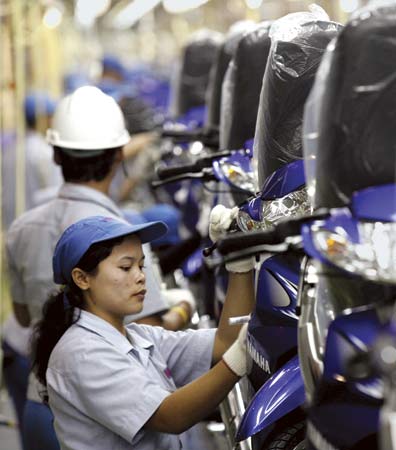
Most organizations move swiftly ahead reacting to market forces without truly empowering workers to make organizational decisions. Managers preach that employees are a critical asset to an organization’s bottom-line. However, few managers ever show it. Given that percept, we will discuss the final component of effective socio-technical systems. It is the human factor buy-in. Organizations must shift their paradigm to viewing workers as more than mechanical parts for their organizational objectives.
According to a USA Today poll, nearly half of those interviewed said that corporations can be trusted only a little, or not at all, when it involves looking out for the best interest of employees. Michael Hackman and Craig Johnson, authors of Leadership: A Communication Perspective, argue that a leader’s credibility is directly related to the quality of his relationship with followers.
Marios Katsioloudes, a researcher specializing in socio-technical analysis, explains that as profitability of mechanization increases, the importance of technology is implied while there is a devaluation of the workers. Clearly, U.S. businesses cannot point to the lack of employee performance for mismanagement errors.
Japan, a long-time benchmark for American companies, is being defeated by American employees. Today, the average U.S. worker puts in 36 more hours than Japanese workers (1,825 vs. 1,789). Over the last two decades, balancing work and home life have been difficult since Americans have added 200 hours to their annual work schedule.
Employees want to be valued. Felix Harris, a financial director with over 8 years in the banking industry, acknowledges the importance of people in a socio-technical system. He states, “When employees are appreciated, they work harder. A machine is only as good as its operator.” Jeffrey Pfeffer, author of The Human Equation, acknowledges that organizational success is directly related to implementation, and this capacity comes from the workers, how they are treated, their skills, and their efforts as it relates to the organization.
Managers should see followers as more than mechanical parts for their organizational objectives. Managers assume that giving employees new technology is enough to keep them happy. Likewise, leaders should view followers as vital components of the socio-technical system.
Today’s managers in technical organizations must understand the delicacy of balancing a socio-technical system. The recent mirage of culture changes such as outsourcing, scandals, and unethical dealings by both governmental and business senior managers have made American employees skeptical about the seriousness of organizations implementing corporate values into their workplace.
Furthermore, today’s executives are falling short in promoting the desired values to support socio-technical systems due to understanding the value of employee buy-in.
In fact, this insight would be valuable to any manager, trying to integrate the man – human interface mechanism. Understanding the uniqueness of the socio-technical system may increase leadership effectiveness and better management strategies for your organization.
How can organizations best gain employee buy-in when they possess less than a stellar track record of worker empowerment?
“The Cylons were created by man. They rebelled. They evolved. They look and feel human. Some are programmed to think they are human. There are many copies. And they have a plan.”
– Season 1 Opening Prologue
Battlestar Galatica, regardless of the series (1978 or 2003), provides a good platform for this technology discussion. In this scenario, the creation (Cylons) turns on the creator (mankind). The Cylons were created to make life easier for humanity. However, Cylons evolved into thinking beings and rebelled against their intended use. Clearly, the inventors had created something without understanding unintended consequences in the socio-technical system.
We now approach the 2nd critical element for effective socio-technical systems, which is technology relevancy. Organizations rush to accelerate their products quicker to their customers. Under this umbrella, industrial designers seek to optimize three elements: (a) tools – involves the material infrastructures, (b) training – relates to human capital matters, and (c) time- considers setting realistic expectations in the operations. Yet, organizations shouldn’t ignore the significance of any soci-technical system integrations. In their article “The Relevancy of Concurrent Engineering in Industrial Technology Programs,” Dr. Radha Balamuralikrishna, Dr. Ragu Athinarayanan, and Dr. Xueshu Song analyze how organizations attempt to maximize operational efficiencies: “It is safe to assume that a hurried implementation of concurrent engineering without careful planning and investment of time has a high probability of backfiring.”
Organizations must understand that technology needs to be relevant as it relates to benefiting the whole socio-technical system. As an engineer, we are taught how to use theory in order to build, design, and operate technical systems, whether mechanical, digital, or otherwise. Sometimes this creates a technical superiority over the other components of this socio-technical system. Vince Adams, a technical manager, agrees, “Engineers are more concerned about the technical aspects of a system. This is what we are taught. Engineers do not want to deal with the social aspects.”
Organizations should gain input from employees to ensure that the organization has not only the best technology for its operations but the right technology. This sharing of information can only come with mutual trust between leaders and follows.
Gary Yukl, author of Leadership in Organizations, notes, “Empowerment is more feasible when there is a high level of mutual trust…Leaders can affect the psychological employment of followers in many ways, and participative leadership and delegation are only two of the relevant behaviors [4].” There have been numerous cases which show that organizations have purchased new technology to solve a problem or to become more efficient when a simple conversation with impacted employees would have produced better results at a lower cost. Therefore, organization should invest their time in identifying relevant technologies for their socio-technical system in a participatory manner.
How do organizations ensure they are placing technologies in their operations that do not conflict or disrupt their processes? When technologies are forced to be used due to external forces (i.e. competitors, suppliers, etc.), what is the best process for introducing these changes to the workers?
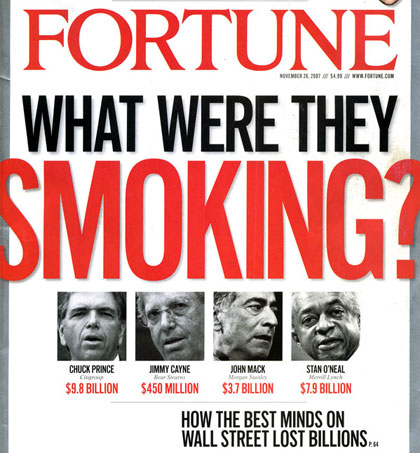
In the 1987 classic Movie Wallstreet, America witnessed a growing trend of the American Dream. Bud Fox (Charlie Sheen), a Wall Street stockbroker, wanted to get to the top at any cost. This short track path to riches led him to broker Gordon Gekko (Michael Douglas). Gekka was shrewd and dangerous; his philosophy was built on “Greed is Good.” Fox soon became engulfed in the glamorous life of the powerful. But—it was at a high moral cost.
Scandals may drive media ratings and turn the trivial into the most critical. However, moral decay does not help companies compete or make society a better place. We’ve discussed the socio-technical system as it relates to global markets. In building effective socio-technical systems, one needs to focus on (a) value modeling, (b) technology relevancy, and (c) human factor buy-in. With the continual ethical failures of government officials and business executives on Wall Street, many workers view ethical policies of today’s organizations with some cynicism. Do you?
A high performing organization must model its values to both first line supervisors and managers in a socio-technical system. Many organizations expect employees to understand its culture, values, and principles by attending new employee orientation or by reading a company brochure. This is simply not going to happen.
Vince Adams, who has over 19 years as senior environmental manager, understands the delicacy of balancing a socio-technical system. Adams has extensive experience with both government and private organizations that are find themselves neglecting to outline and demonstrate their value systems to employees. Adams states, “Companies must build values into their employees so that employees know what the expectations are for that organization.”
James Kouzes and Barry Posner, authors of The Leadership Challenge, have researched over several thousand businesses and government executives and they outline setting the example as a critical attribute of effective leadership. Kouzes and Posner argue, “Once people are clear about the leader’s value, about their own values, and about shared values, they know what’s expected of them and can better handle the conflicting demands of work and personal affairs.” Therefore, employees expect leaders in organizations to model the way in their organizations, and this is also true for socio-technical systems.
Is it possible for today’s managers to regain the confidence of workers on the ethical front? If so, how
Last week, my class startled me with questions that required my introspection. “Dr. Green, what motivates you to do the things that you do?” Of course, it wasn’t out of order since we were discussing how managers can motivate followers. It made me ponder for a moment. What does any high performing person want from a career?
Each person has their own motivation. Joan Liebler and Charles McConnell, authors of Management Principles for Health Professionals, argue that managers must motivate workers in order to get work done efficiently and effectively. The authors further insist it is critical for ‘adaptation to organizational demands.’ It is clearly most organizations cannot handle disruptive change.
Yet, the issue is…most managers don’t know how to accomplish motivating workers. In the book Contemporary Management, Gareth Jones and Jennifer George make the case that understanding motivation is important for managers because it ‘explains why people behave the way they do in organizations.’
I argue that individuals are motivated from within. At the heart of the matter, workers must see the need for an action in order to wholeheartedly accept it in organizations. Yes, yes, people love a handsome salary. However, is it enough to create extraordinary and sustainable performance over the long-term? I think not!
According to the Conference Board research group, only 45% of Americans are satisfied with their work. This situation fosters an environment of emotionally drained folks. With spirituality on the forefront, most high performers are motivated by more than extrinsic rewards.
Knowledge workers want more. In fact, this new attitude may result in more people taking control of their careers and becoming entrepreneurs in the future. Mari Alboher, author of One Person, Multiple Careers, maintains it is possible to work one’s daily routine while engaged in his or her dream job. She calls this process slashing. Slashing involves pursuing multiple vocations instead of just one.
Individuals, like Leonardo da Vinci excelled in a variety of areas without sacrificing anything. Alboher notes, “Pursuing multiple vocations is by no means new…What’s new is that huge swaths of the population are being swept up in ‘The Slash Effect’ – creating personalized careers that can only be described with the use of slashes.”
Pop culture promotes this hunger in the workplace. In the past, workers were content to have a good job. But today—what individual is motivated by an uninspiring boss and a boring job? Postmodernism speaks to this culture shift. While modernists place man at the center of reality through utilizing science, postmodernists, who place no one at the center of reality, has no core explanation of life. Some experts characterize by several attributes: (a) there is the denial of absolute truth, (b) all facts are not hard facts, (c) meanings are through the interpreter rather than the text, (d) climate of cynicism/pessimism, and (e) advocacy of understanding through a local community setting. Therefore, it is clear that postmodernism provides an opportunity for value conflicts in traditional organizations.
Unfortunately, many managers do not want to understand how to inspire their workforce unless it is a simple solution. Therefore, some workers who are unhappy with their situation try to conceal their discontent and provide mediocre performance.
What can managers do to inspire postmodern workers to greater performance?
What does the future hold? I can’t be certainty. However, I do know leaders must be courageous, adaptable, and communicators for their followers. Many people fear the future and change. With globalization connected to America’s future, leaders need to also consider a worldview. Stewart Black, Allen Morrison, and Hal Gregersen, authors of Global Explorers, maintain that exemplar global leaders possess a keen interest in global business.
Furthermore, business savvy becomes the word of the day because people must think globally and adjust activities on the local level as well as satisfying customers at all levels. Inquisitive person are also valuable on a global front because they are curious in the face of uncertainty.
Management strategists view these cultural shifts like movements of waves in an ocean. Each successive wave of technology brings with it a corresponding value shift. Sadly, new technologies can bring giant leaps in productivity while expanding the moral decay of mankind. For example, the Industrial Era ushered in a period of materialism, self-sufficiency, and the supremacy of man.
Currently, organizations are witnessing the explosion of information, advancement of communication technology, globalization, and the rising of knowledge workers. Globalization can even shift behavior. In the movie Slumdog Millionaire, 18-year old Jamal Malik is a slave to cultural trends. The movie demonstrated the impacts of globalization on diverse cultures in the world.
Herman Maynard and Susan Mehrtens, authors of The Fourth Wave: Business in the 21st century, suggestthe following emerging trends: (a) shift in consciousness, (b) disenchantment with science, (c) inner sources of power, (d) spiritualization of humanity (e) anti-materialism (f) political and economic democratization, and (g) global unification.
Furthermore, today’s existent represents an integration of all dimensions of life and responsibility for all individuals in globalization; it also promotes the unification of the human race. If today’s organizations want to be competitive in the international market, they must learn to active survey the world that is around them. Therefore, modern leaders cannot afford to miss interpret the trends in this global market.
What are some trends in your industry and how will it impact society?









 Nu Leadership Revolution Blog
