Countering the Age of Narcissism

I try to pay attention to the game as the assistant coach. However, I am bombarded by begging from players on the bench: “Brother Green, can I get back into the game?” I try to ignore by pointing: “Ask the coach.” Every weekend was like déjà vu for me. A bunch of 8th graders were trying to tell us they were just as good as high school athletes.

These 8th graders were undersized and no match for more experienced ‘ballers.’ The basketball league was designed for high school students. I felt they should be graceful to be allowed to play with our high schoolers. Instead, it was a steady stream of complaints and ingratitude from some 8th graders. I wondered how I got stuck with Gen Next.

Today’s organizations face unprecedented competition from all fronts. Many institutions desperately need to infuse their organizations with fresh leadership and new ideas.  Yet, there is a hesitation for this transformation. Many baby boomers argue that the current generation is not ready.  These young workers are called many names such as Generation Y (Gen Y), Echo Boomers, or Millennials (born 1977 to 2002). Most experts predict the generation will be a major factor in society. There are more than 70 million of them.

However, they have been described in the workplace as lazy and self-absorbed with their own worth. Laura Clark, columnist, argues, “Today’s young workers, it appears, believe they deserve jobs with big salaries, status and plenty of leisure time – without having to put in the hours.” According to the Association of Graduate Recruiters study, there is a new breed of graduate ‘divas’ who expect everything to fall into their laps. These people believe they are a hot commodity in the job market. Yet, their managers describe them as ‘unrealistic,’ ‘self-centered,’ and ‘greedy.’

For the first time in American history, organizations have four different generations in their workforce. Sadly, it’s not without problems. Companies don’t understand this young generation. They desire to share in organizational decisions on day one of employment and be promoted instantaneously. With managers who had to ‘pay their dues.’ The Gen Y mentality is a hard pill to swallow.

Dr. Jean Twenge and Dr. Keith Campbell track this trend of self-absorption in their book, The Narcissism Epidemic: Living in the Age of Entitlement.  They explain, “Narcissism- a very positive and inflated view of the self is everywhere….Understanding the narcissism is important because its long-term consequences are destructive to society.”  In the 1960s, individuals led causes for the greater good. During the 1970s, there was a focus on self-admiration. By the 1980s, society had totally gone to ‘looking out for oneself.” 

Unfortunately, some managers distort the work value of this emerging generation by stereotyping them as selfish. Baby boomer managers complain about the difficulty of managing Gen Y employees. But, didn’t these baby boomers raise them to be narcissistic anyway? Therefore, it isn’t fair to label them totally as expecting entitlement.  

Twenge and Campbell note, “Parenting became more indulgent, celebrity worship grew, and reality TV became a showcase of narcissistic people.” One must wonder what Gen Y will pass along to their own children.

As more baby boomers retire, a new generation of leaders will replace them. These new leaders will cross age, gender, race, and geography. I certainly hope that Gen Y can overcome the negativism surrounding them and be prepared to accept future leadership roles.  I pray it’s not too late.

 Is the Age of Narcissism solely a characteristic of Gen Yers?  How can organizations infuse the right kind of team-oriented values, given cross generational conflicts?

 © 2010 by Daryl D. Green

The Confession of a Decision maker

I listen to chatter over the airwaves. Talkshow host Armstrong William leads a merry discussion on South Carolina’s Governor Mark Sanford.  Armstrong cannot contain himself: “How does Governor Sanford get rid of his Love Jones?” It was a question that was not easily answered. Listeners from South Carolina appeared irritated with this line of questioning.

Many felt the governor had abandoned his wife, children, and the people of South Carolina. On June 24th, Governor Sanford arranged a press conference where he confessed a year-long affair with an Argentine woman. He was missing for more than six days from his office.

At his press conference, political pundits argued Governor Sanford was attempting to save his job, not his family life. He was married and had four sons. Instead of a low-profile strategy, Governor Sanford actively engaged the media, describing his mistress as his “soul mate.”  Clearly, he had lost his mind! His wife Jenny stated, “I believe enduring love is primarily a commitment and an act of will, and for a marriage to be successful, that commitment must be reciprocal.”

Unfortunately, Sanford’s decision ruined his political career, strategic alliances, and the trust of the people of South Carolina. Yet, his personal loss was perhaps greater. He lost his marriage and the trust of his children. Therefore, some decision making carries long-term consequences for individuals and organizations.

Have you ever wondered why some people continue to make bad decisions? You see million-dollar celebrities doing it. You can see this action in government officials and business leaders. There are no discriminators. From the very rich to the poorest of the poor, we see people caught in a vicious cycle of bad decision making. Sadly, we can see it much closer than that. We witness relatives making bad decisions. Despite wise counsel, some people continue to make poor decisions.

The Decision Process

Decision making can make or break an organization. Joan Liebler and Charles McConnell, authors of Management Principles for Health Professionals, maintain that decision making is an essential element of management activities at all organizational levels. Gareth Jones and Jennifer George, authors of Contemporary Management, further argue that managers must respond to opportunities and threats. In fact, decision making is a process where individuals analyze and make determinations regarding a problem that is keeping with the organization’s goals and objectives.

Unfortunately, some people feel the decision making process is a solo operation. Some managers can be caught in this trap and disregard the expertise of their workers. Through series after series of bad decisions, the manager may continue on a merry ride of worsening consequences. Two things generally can stop this dead-end trap. The organization stops him or the organization tanks.

In going through a series of bad decisions, a wise person should gain insight. Unfortunately, some individuals who are in charge will learn nothing, thereby earning the label of a foolish manager. Every person, regardless of their background or social standing, can benefit from good decision-making techniques.

The Path Forward

Making the right decision is a difficult process. Like Governor Sanford, many managers don’t take enough time to evaluate short-term decisions for long-term consequences. No one will usually applaud your many good decisions; however, you will probably catch heat over the bad ones.

Les Brown, author of How to Become the Person You Always Wanted to Be-No Matter What the Obstacle, explains, “Your values are not set by government or church leaders. Your values give you consistency in the way you approach life…By holding to your beliefs, you can always stay on track toward your dreams.” Therefore, making good decisions goes to the heart of being an effective manager.

How do managers overcome the barriers of making bad decisions during uncertainty? Is it possible for a manager to involve their workers in critical decisions without giving up any authority?

  © 2010 by Daryl D. Green

Global Transformers


America has always been a distinction for individuals seeking prosperity. After the Civil War, America’s growing economy required more workers. This needed was filled by immigrants. Between 1866 and 1915, approximately 25 million immigrants arrived on its shores. These immigrants came from diverse backgrounds (such as England, Germany, Poland, Russia and Scandinavian countries). The additional labor force helped fuel the American economy.

Yet, this diversity was not without its own problems. Due to the culture differences and language barriers among ethnic groups, there were frequent conflicts to resolve. Furthermore, most of these workers were poor and uneducated; this created pressures on government and nonprofit services to fix or minimize these problems.

Today, we face similar problems. Globalization has connected us with the rest of the world. Cultural awareness bears down on us. Immigration is the hot topic. Federal and local governments struggle to deal with this politically sensitive issue. Many experts feel there are millions of illegal immigrants flooding our borders.

Some fear terrorist attacks while other people are just anxious. Many local governments, such as Arizona, try to fight back. For example, there are about 30 states with English-only laws. Yet, can anyone really stop demographic shifts? A recent Department of Labor report, Futurework: Trends and Challenges for the Work in the 21st Century, notes the following:

  • By 2050, minority groups will makeup half of the population
  • Immigrants will account for almost two-thirds of the population
  • One-quarter of the population will be of Hispanic origin
  • Almost one in ten Americans will be of Asian or Pacific Islander decent

As American businesses expand globally, today’s managers need to understand how diversity will impact their organizations. Given the winds of the future, leaders must forge their organizations into global transformers. Unfortunately, an individual’s biases, prejudices, and stereotypes can often cloud his or her decision-making. Anne Tsui and Barbara Gutek, authors of Demographic Differences in Organizations, further argue individuals within a particular category may have a different experience in a similar situation. These demographic changes will reshape organizational culture.

In fact, it speaks to disruptive change in society. Many critics of implementing diversity initiatives argue that the market should dictate who gets medical services, employment, and education. Therefore, effective leaders will need to integrate cultural and global awareness into their overall organizational strategies.

What impacts will these demographic changes outlined in Futurework produce? How do occupations such as physicians turn these demographical changes into opportunities?

© 2010 by Daryl D. Green

Change Disrupts Us


Last week, I sat down and watched one of my all time classic flicks, Signs.  This 2002 sci-fi thriller revolved around aliens invading Earth. Producer Frank Marshall explained, “It’s really about human emotions set in motion by a supernatural event.” For me, it was the perfect symbol of how people deal with unexpected change.

In Bucks County, Pennsylvania, the plot begins. Local priest Reverend Graham Hess (Mel Gibson) grieves over the horrific death of his wife. After the death, Hess denounces his faith and vocation. He lives with his two children and his brother Merrill, a former minor league baseball player.  Hess finds a crop circle in his corn fields.

In fact, the crop circles appear all over the world. As the story progresses, the family realizes the crop circles are part of other signs that extraterrestrials are here on Earth.  The plot continues to introduce change at a rapid and unpredictable pace. As you would expect, Hess and his family are overwhelmed with so many changes. Today, organizations are no less perplexed by today’s changes in the market. Change is imminent but how we deal with the shift is an uncertainty. Renowned management guru Dr. Tom Peters argues, “Nothing is predictable…The fact is that no firm can take anything in its market for granted.”  All the money in the world cannot stop the forces of change.

Oil giant BP attempts to correct a major accident that government officials are calling the largest oil spill in history involving over 19,000 barrels of crude oil. The political ramifications are large as President Obama tries not to let this incident become his Katrina. Yet, rapid change can make even Superpowers look foolish. Corporations are no exception. BP executives are probably worried about their reputation (which is really about the $$$$$). Will the company become another Exxon?

Furthermore, change exists in a fluid state from easy to impossible to solve for managers. It happens in a series of irregular waves. In fact, change is a wild variable that can totally disrupt the order of things in organizations. There are two major types of change for our discussion, incremental and discontinuous. Incremental change occurs in small increments over time where organizations can prepare for it. You can forecast the future with some confidence.


 Discontinuous change is unpredictable and sudden. It threatens traditional power structure because it drastically alters the way things are currently done or have been done for years. This discontinuous change can be described as turbulence like on an ocean. It becomes unsettling. Donald Sull, author of The Upside of Turbulence, notes “Turbulence, for many, equals risk, and risk equals bad news.” Joan Liebler and Charles McConnell, authors of Management Principles for Health Professionals, further warned about the issues of change: “Change is inevitable, but change can also be chaotic and painful.”

When markets shift take place, many managers rely on their corporate experience to navigate the uncertainty.  Yet, their vast knowledge becomes a liability during discontinuous change due to the lack of any clear patterns in the market. Therefore, disruptive change interferes with conventional thinking of organizations?

How can contemporary organizations deal with disruptive change in ways that they can seize opportunities and stay ahead of their competitors? 

© 2010 by Daryl D. Green


The Clash of Women Power in Contemporary Society


Introduction

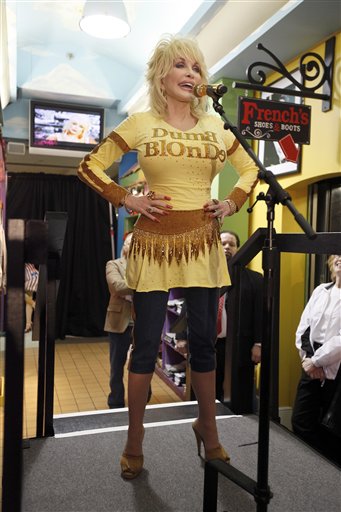
America has continued to learn how to deal with strong women during the great demographic shift in history. Media darlings such as Dolly Parton and Coach Pat Summitt highlight the power of women in their profession. According to Fortune Magazine, 15 Fortune 500 companies are run by women. Leading the charge are Secretary of State Hilliary Clinton and House Speaker Nancy Pelosi on the government front. In fact, there is a long list of successful women in all types of institutions (Oprah Winfrey, Sarah Palin, Faith Hill, etc.).

Yet, the road to success for women isn’t easy. Many women’s dreams of a successful career have come to reality. Strangely enough, some women have been trying to have it all. This marks the clash. There are women who focus on the primary care of their families while delaying their personal dreams. Others dedicate their lives to their careers while compromising the stability of their families. In the middle, there are millions of mothers who attempt to do it all out of necessity and attempt to chase the great American Dream. I am focusing this discussion on the issues facing professional women in contemporary society. In fact, I conducted my own mini-action research project. I interviewed several professional women in the Knoxville area. However, their real names are not disclosed, to protect them. I am sure you can relate to potential drama since these ladies work in small industries.

The Problem

According to the 2005 Census Report, there are 82.5 million mothers in the United States, and there are 10 million single mothers living with children under 18 years old. Working moms make up 55 percent of mothers with infants. Feminists celebrate the liberation of working women while traditionalists postulate the merits of home-bound mothers for institutional stability. In fact, some people blame the moral decay of the country on mothers abandoning their families for  professional careers. Many women try to maintain a healthy balance of work and family life, but this balancing act leaves some of them “burnt out.” Therefore, there is a growing problem for women in particular and society in general in understanding consequences of women’s power in the near future.

 The Trend

Women stand at the fore front of disruptive change in the political, social, economic, and technological sectors of most counties. Dr. James Canton’s The Extreme Future notes “Women will comprise a high percentage of new workers and leaders, forever changing the politics of boardrooms and markets.” According to a US Census report, nearly one-third of all married women in the US make more than their husbands. More than 25% of working wives earned more their husbands in 2007 (up from 20% in 1983). Furthermore, women are earning college degrees at a faster pace than men. Between 2000 and 2001, women earned 57% of all undergraduate degrees.

Woman power is also being flexed in the corporate world. In 1983, women held 34% of all US executive and managerial positions. However, women held more than 50% of these positions in 2003. Futurist John Cashmen predicts women will forever change the landscape of all institutions: “The number of women in the primary breadwinner role will likely grow in coming decades, driven by social change and the fact that women’s educational achievement is outpacing men’s in many parts of the world.” Therefore, executives must consider how the changing roles of women in organizations will impact their corporate strategies.

The Career Strategy

Progressive women need to develop critical career strategies in a holistic fashion. Balancing work and family is difficult. In general, some men are already taking this transition personally. Some men are opting for the domestic life while their wives become the principal breadwinners. Therefore, society watches gender role reversals and wonder how it will end…relational success or failure?

For working women, any results are often problematic anyway. Yenissee Alonso and Vickie Brint, authors of the article Women in the Workplace, argue that women still deal with institutional barriers that keep them from being successful. For example, women in general are making less than their counterparts doing the same job with the same experience.

Alonso and Brint note, “Since nearly half of the workforce is comprised of women, it stands to reason that woman should be enjoying the same success as their male counterparts in terms of advancement opportunities and earning capacity.” Princeton researchers in a 2003 study concluded that college-educated women who hold higher expectations for their potential mate may lower their chances for getting married. In fact, some men may be uncomfortable with having a woman who has more education and makes more than them, postulate some theorists.

Sue Means is a professional engineer in a highly competitive consulting industry. She sees challenges for professional women. She notes that men are treated differently. Means explains, “Some of my colleagues talk about how pretty I am. They comment on my clothes and make suggestions regarding what I should wear. That would not happen to a man.”

Liza Fuller is a government program manager with a decade of experience in handling difficult environmental issues. She exists in a mostly male dominated industry. Fuller notes, “Women are still expected to work harder than men to prove themselves and avoid criticism. Attractive women still get grief about being promoted for reasons other than their own merit and it’s not fair.”

Furthermore, Canton suggests that the most educated, skilled, and experienced employees will be in high demand. Therefore, professional women need better strategies. Means recommends prioritizing what’s important: “I let go what’s not important. Most women get overwhelmed with trying to manage all of the household and family responsibilities while working at the same time. You need to be realistic about what you can do. It’s a balancing act.” Some women feel that they can have it all without any drop off. Fuller disagrees: “There is always a sacrifice because you spend more time away from your family.” Although there will be an ever increasing number of opportunities for women in the workplace, women must analyze every career move in a holistic fashion if they want to keep that delicate balance.

Conclusion

The future is bright for working women as never before. In fact, women will drive most institutions toward major changes in the near term. However, this article demonstrated that the road to success for most professional women isn’t easy. They must deal with sexism to a certain degree. However, the demands of their professional life have not kept up with the heavy demands of a family and personal life. Therefore, women must develop career strategies in a holistic manner that maximizes their efforts. In turn, society must learn how to embrace women’s power in the future if America hopes to continue to compete.

 Is it impossible for women in leadership to balance their professional and personal lives? If so, how? Can contemporary organizations change to fit the ever changing gender role reversals in society?

 © 2010 by Daryl D. Green

The Value Creation Shift


Everyone knows I love sharing information. I learned about a great website called Elance.com for freelancers and entrepreneurs. The website allows individuals and organizations to bid out work for the best price. Initially, I was amazed at the different people bidding from across the country.

Conventional wisdom would say that a guy bidding for work in India at $5 per hour versus a guy in New York at $60 per hour would be a no brainer. However, I have purchased services from Elance.com where the price was not the prime consideration.  I looked at the individual’s experience and identified what it was worth for me to get it done.  In a nutshell, I was aiming for the most value. Likewise, organizations that want to compete must understand value creation in relationship to globalization.

Business cannot hide from the impacts of globalization.  According to Dr. James Canton’s The Extreme Future: The Top Trends that will Shape the World in the Next 20 Years, there will be a global war for Smart Talent. In fact, it will be the key driver for competitive advantage. As the world will witness, the most educated, skilled, and experienced employees will be in high demand. 

 Global competition and the shortage of workers have made diversity a center-point for most organizations. Globalization has forced many organizations to rethink their approaches. Friedman (2008) noted the progression of globalization. Globalization 1.0 was driven by the dynamic force of global integration; it was about countries globalizing.

Globalization 2.0 (roughly 1800 to 2000) was driven by global integration but with an emphasis on multinational companies; it was about companies globalizing.  In Globalization 3.0, the force is driven by the power of individuals to collaborate and compete globally.  In fact, Globalization 1 and 2 were primarily driven by European and American individuals and businesses. Globalization 3.0 will be driven by more diverse constituents. Therefore, understanding how to create value across the global will be vital for sustaining business success.

Twenty-first century organizations can no longer implement value creation in a vacuum. Value creation can be defined as an organization’s ability to convey worth of its product or service to customers. Therefore, it goes to value, which focuses on the relationship between the customer’s expectations of a product/service quality to the actual amount paid for it. 

Many organizations fail in these global markets due to a lack of understanding their customers as well as their own organizations.  Dr. Lynda Falkenstein, niche market expert, explains, “Understanding your customer’s perceptions of the world is an absolute must for one major reason; that is, no one buys something just because you want to sell it.”

C.K. Prahalad and Vemkatram Ramaswamy, authors of The Future of Competition, further argue that there is an arrogant management structure in place that cares little for the opinion of others.  However, organizations that deal with postmodern workers must foster a different corporate culture. In fact, Prahalad and Ramaswamy reason that 21st century organizations must change their value creation system. They noted the new system as an individual-centered co-creation of value between consumers and organizations. Few executives take the time to explain their values.

Sustaining effective organizations will require a focus on value creation if they hope to be successful in the global market. However, this appears to be a critical weakness in modern organizations. Many organizations exist with value misalignment. Values are the core beliefs of an individual. Different people have different values. Henry Mencken, author of Prejudices, explained, “The difference between a moral man and a man of honor is that the latter regrets a discreditable act, even when it has worked and he has not been caught.”

Global leadership expert Timothy Stagich maintains that the basic values for a high collaborative organization include mutual respect, appreciation of diverse contributions, reciprocal benefit, and a shared understanding of the underlining corporate values. Many leaders forget about the importance of values in an organization. Few institutions take responsibility for value alignment. That reality will hurt them as they fight to survive in Globalization 3.0 and later.

How do organizations adapt to the global market and create value at the same time?