Management Shift

With current changes in workforce demographics, operational managers need to build the right organizational culture to stimulate employee growth and performance. For decades, human resources experts have been proclaiming the massive exodus of retiring workers. This situation creates a huge human resource problem for most businesses.  

 Therefore, organizations need leaders who are attune to cultural changes in society that impact their processes as well as their employees. In this discussion, we will focus on the inherent leadership characteristics that managers need to posses in the new millennium.  Many managers do not follow culture shifts that impact their organizations. You can simply look at the Baby Boomers. Some individuals proudly note that the massive Baby Boomer departure, predicted by many experts, did not happen. Many managers have grown confident that their most experienced workers will not be leaving for a very long time.

 Of course, they hedge their bets that the economy will not rebound any time soon.  Yet, one thing is for certain. Baby Boomers will leave one way or another; every generation eventually must exit the workforce environment because man’s existence is finite.  Therefore, the Baby Boomer generation will be replaced.  Researcher Kerry Harding describes this new generation as the “Emergent Workforce,” which crosses age groups, gender, race, and geography. This generation is very concerned about their professional growth. With the advent of reengineering and outsourcing of jobs, many organizations have made it difficult for employees to consider their career development in any one organization.


In a hypercompetitive environment, some managers view their workers simply as a disposable workforce due to employees’ lack of organizational loyalty. However, in reality, what we are seeing are a new set of employee value systems taking place. In one workforce study, Emergent employees (88%) believed that loyalty is not related to employment length, while Traditional employees (94%) felt that loyalty was about the willingness to stay with an employer for the long term.

Therefore, managers must be able and willing to infuse organizational values into their workers. This process starts at the very beginning when prospective workers are in the initial hiring process. Usually, the selection of a new employee is both time consuming and labor intensive. Companies conduct a series of interviews to determine if a potential employee is the right fit.

Yet, managers must listen to what their employees are saying. Alan Murray, author of The Wallstreet Journal Essential Guide to Management, insist the bosses must think differently:  Managers will not be able to assume they know the answer-because more often than not, they won’t.” Murray argue, for the fully engagement of workers as well as other stakeholders.

In the 21st century, managers must consider adjusting to the changing culture. This process will help foster better management-labor relationships and stimulate employee personal growth. This starts in the hiring process, in the employee orientation process, and then in continual employee development. Organizations must be zealous in their approach of clearly stating their values and employees must clearly see that fact in the lives of their organizational leaders. If organizations continue to ignore these value issues, they may find themselves cleaning up their own business mess.

Furthermore, today’s employees want more than the status quo. In fact, individuals want help in discovering their career path and meaningful life. Labor intense workers are being replaced with knowledge workers and learning becomes part of an organization’s competitive advantage.

Gary Yukl, author of Leadership in Organizations, explains that the immediate supervisor has considerable influence over a person’s leadership development; however, many bosses fail to do the right things to facilitate growth in their employees. Therefore, today’s managers make shift their thinking if they want to increase workers’ performance.  

What are effective ways organizations get their managers to embrace the culture shift necessary to manage a 21st workforce?

  © 2010 by Daryl D. Green

Human Factor Buy-in


Steve Proud gets his biggest promotion as the latest senior executive to run this troubled business. With lots of talent and experience, the organization struggles to meet performance goals. Being on the fast-track, Steve quickly makes significant changes to impress the corporate board. He fires the old managers and surrounds himself with the better talent. His team rolls out a comprehensive strategic plan.

The corporate board starts seeing positive results.  However, things change within two years. Many employees view Steve as a ‘paper manager.’ Despite his ‘talk about empowering workers,’ his actions demonstrate he cares little about any worker’s opinions. Steve cannot understand why his strategy failed.                                                                                                                                                                                                                                                                                                                                                                                                                                                                                                                                                                                                                                                                                                                                                                                                                                                                                                                                                                                                                                   

Most organizations move swiftly ahead reacting to market forces without truly empowering workers to make organizational decisions. Managers preach that employees are a critical asset to an organization’s bottom-line. However, few managers ever show it. Given that percept, we will discuss the final component of effective socio-technical systems. It is the human factor buy-in. Organizations must shift their paradigm to viewing workers as more than mechanical parts for their organizational objectives.

According to a USA Today poll, nearly half of those interviewed said that corporations can be trusted only a little, or not at all, when it involves looking out for the best interest of employees. Michael Hackman and Craig Johnson, authors of Leadership: A Communication Perspective, argue that a leader’s credibility is directly related to the quality of his relationship with followers.

Marios Katsioloudes, a researcher specializing in socio-technical analysis, explains that as profitability of mechanization increases, the importance of technology is implied while there is a devaluation of the workers. Clearly, U.S. businesses cannot point to the lack of employee performance for mismanagement errors.

Japan, a long-time benchmark for American companies, is being defeated by American employees. Today, the average U.S. worker puts in 36 more hours than Japanese workers (1,825 vs. 1,789). Over the last two decades, balancing work and home life have been difficult since Americans have added 200 hours to their annual work schedule.

Employees want to be valued. Felix Harris, a financial director with over 8 years in the banking industry, acknowledges the importance of people in a socio-technical system. He states, “When employees are appreciated, they work harder.  A machine is only as good as its operator.”  Jeffrey Pfeffer, author of The Human Equation, acknowledges that organizational success is directly related to implementation, and this capacity comes from the workers, how they are treated, their skills, and their efforts as it relates to the organization.

Managers should see followers as more than mechanical parts for their organizational objectives. Managers assume that giving employees new technology is enough to keep them happy. Likewise, leaders should view followers as vital components of the socio-technical system.

Today’s managers in technical organizations must understand the delicacy of balancing a socio-technical system. The recent mirage of culture changes such as outsourcing, scandals, and unethical dealings by both governmental and business senior managers have made American employees skeptical about the seriousness of organizations implementing corporate values into their workplace.

Furthermore, today’s executives are falling short in promoting the desired values to support socio-technical systems due to understanding the value of employee buy-in.

In fact, this insight would be valuable to any manager, trying to integrate the man – human interface mechanism. Understanding the uniqueness of the socio-technical system may increase leadership effectiveness and better management strategies for your organization.

How can organizations best gain employee buy-in when they possess less than a stellar track record of worker empowerment?  

 © 2010 by Daryl D. Green

Socio-technical Systems in Global Markets


Another problem is presented. A worker gets injured on a subcontractor’s job. We gather around the table dish out the blame. Everyone wants to point fingers. The operations manager blames inadequate funding while the safety engineer cites an inadequate preplanning process. Nothing gets resolved. The issue rackets up for a senior management decision. There’s a meeting to discuss the matter.  Someone leads out and says what can be done to prevent this problem.

 Numerous technical recommendations are offered. Standing up, I state, “Why don’t we ask the workers about this problem? Let’s get them involved so that they can help find the solution.” The room gets quiet. Finally, one senior manager suggests that we should take money away from the subcontractor, buy new technology, and fire the worker’s supervisor. Everyone agrees. After dealing with this same problem every month, I was hoping for a different answer. I was disappointed again.

 Why do we see managers make the same mistakes over and over and never want the day-to-day workers involved in the process? Executives are then shocked when their employees don’t buy-in on their latest management initiative. One of the reasons organizations do not reach peak performance is because managers do not create socio-technical systems to support organizational values.  We will discuss the concept of building socio-technical systems in global markets.

With fierce global competition and a need for a market advantage, I found it surprising that managers move toward the quick fixes like downsizing for short-term gain without analyzing the organization over the long-term. I am not suggesting that this approach is easy; however, I am declaring that over the long haul an organization will be a stronger institution in the process.  First, the concept of a socio-technical system is defined by the interdependence of humans and machines that operate in harmonious fashion. Eric Trist (1909-1993), a renowned researcher, is considered the architect of socio-technical systems. Being of British origin, he was the leading authority in organizational development. His research engaged the workers as one of the critical components to successful operations in high performance organizations.

Researcher William Fox maintains that socio-technical systems effectively blend both the technical and social systems of an organization:These two aspects must be considered interdependently, because arrangements that are optimal for one may not be optimal for the other and trade-offs are often required. Thus, for effective organization design, there is need for both dual focus and joint optimization.”  Therefore, an environment is created where these working parts can co-exist in this industrial system. 

 Since the industrial age, researchers have recognized that both technical and social factors impact organizational performance. Daniel Wren, author of The Evolution of Management Thought, concludes that analyzing a social system gives management an avenue to measure conflict between the “logic of efficiency” demanded  by the formal organization and  the “logic by sentiments” by the informal organization. In profit hunting, many businesses lose focus of the importance of socio-technical systems. Given these precepts, the questions for most managers become how to use this scholarly perspective in the practitioner’s avenue where time is money and money is time.

For next few weeks, we will discuss three practical applications so that socio-technical systems within organizations can support organizational values. These critical supporting mechanisms include a) value modeling, b) technology relevancy, and c) human factor buy-in.  I pray that emerging leaders will understand the implications of this concept with America’s fight to compete in global markets.

How can today’s organizations implement the concept of socio-technical systems, thereby overcoming institutional barriers?

    © 2010 by Daryl D. Green

Virtual Strategies for 21st Century Organizations

The latest business craze of the 21st century encompasses going global. Yet, these organizations often operate virtually. Communication, however, takes on a brand new meaning when there is no “face-to-face” interaction between team members to facilitate these nontraditional relationships; it is essential to understand how to unify these virtual relationships.

Furthermore, many companies have allowed workers to work from home to achieve huge company savings. Managers assume that an employee, equipped with a computer and fax machine, can stay connected to the organization. This outlook is simply a myth.

James Kouzes and Barry Posner, Authors of The Leadership Challenge, further explain, “…how do leaders create commitment in a virtual organization? Can there be such a thing as virtual commitment?” According to a USA Today poll, nearly half of those interviewed said that corporations can be trusted only a little, or not at all, when it involves looking out for the best interest of employees. Relationships are built on trust. This blog explores the characteristics of effective virtual teams in 21st century organizations.

Virtual organizations are becoming the mascot for globalization. A virtual team (VT) is geographically separated and has very little personal contact; it depends on computers and telecommunication technologies such as the internet and videoconferencing.  VTs provide the benefits of bringing talented people together, providing international perspectives, and saving millions in traveling costs. Yet, going virtual isn’t easy.

 VT organizations are creating a buzz in the academic community. There is a burgeoning literature on virtual teams. As more organizations allow employees to work from remote locations away from their headquarters, there is an increasing problem with office staffing and organizational effectiveness.

 Traditional organizations must shift their viewpoints on virtual organizations. To address human capital issues, an institution must understand the nature of virtual organizations. Effective virtual teams manifest a variety of characteristics including well-defined group sponsorship, goal consensus, effective selection practices, an appropriate skill mix, and specific performance measures linked to goal achievement. Virtual organizations challenge today’s personnel management system by their very existence as a rising number of employees are telecommuting.

 In the old paradigm, managers were required to be technical experts who defined the tasks for the employees. In the new virtual structure, managers are expected to provide technical direction. However, the manager allows employees to participate and listen to their suggestions.

Managers must weigh telecommuting’s benefits against its weaknesses, including reduced employee oversight and accountability, lower productivity, and less direct interpersonal contact thereby decreasing team building opportunities and isolating employees. In fact, VTs require a shift in leadership paradigms. Leaders in virtual organizations must provide an organizational structure for achieving their objectives that is flexible and organic.

 Going virtual will continue to challenge traditional thinking. Establishing trust within a virtual team environment is a prerequisite for an effective team.

 How can organizations build virtual structures that are effective and sustainable?   

 © 2010 by Daryl D. Green

Countering the Age of Narcissism

I try to pay attention to the game as the assistant coach. However, I am bombarded by begging from players on the bench: “Brother Green, can I get back into the game?” I try to ignore by pointing: “Ask the coach.” Every weekend was like déjà vu for me. A bunch of 8th graders were trying to tell us they were just as good as high school athletes.

These 8th graders were undersized and no match for more experienced ‘ballers.’ The basketball league was designed for high school students. I felt they should be graceful to be allowed to play with our high schoolers. Instead, it was a steady stream of complaints and ingratitude from some 8th graders. I wondered how I got stuck with Gen Next.

Today’s organizations face unprecedented competition from all fronts. Many institutions desperately need to infuse their organizations with fresh leadership and new ideas.  Yet, there is a hesitation for this transformation. Many baby boomers argue that the current generation is not ready.  These young workers are called many names such as Generation Y (Gen Y), Echo Boomers, or Millennials (born 1977 to 2002). Most experts predict the generation will be a major factor in society. There are more than 70 million of them.

However, they have been described in the workplace as lazy and self-absorbed with their own worth. Laura Clark, columnist, argues, “Today’s young workers, it appears, believe they deserve jobs with big salaries, status and plenty of leisure time – without having to put in the hours.” According to the Association of Graduate Recruiters study, there is a new breed of graduate ‘divas’ who expect everything to fall into their laps. These people believe they are a hot commodity in the job market. Yet, their managers describe them as ‘unrealistic,’ ‘self-centered,’ and ‘greedy.’

For the first time in American history, organizations have four different generations in their workforce. Sadly, it’s not without problems. Companies don’t understand this young generation. They desire to share in organizational decisions on day one of employment and be promoted instantaneously. With managers who had to ‘pay their dues.’ The Gen Y mentality is a hard pill to swallow.

Dr. Jean Twenge and Dr. Keith Campbell track this trend of self-absorption in their book, The Narcissism Epidemic: Living in the Age of Entitlement.  They explain, “Narcissism- a very positive and inflated view of the self is everywhere….Understanding the narcissism is important because its long-term consequences are destructive to society.”  In the 1960s, individuals led causes for the greater good. During the 1970s, there was a focus on self-admiration. By the 1980s, society had totally gone to ‘looking out for oneself.” 

Unfortunately, some managers distort the work value of this emerging generation by stereotyping them as selfish. Baby boomer managers complain about the difficulty of managing Gen Y employees. But, didn’t these baby boomers raise them to be narcissistic anyway? Therefore, it isn’t fair to label them totally as expecting entitlement.  

Twenge and Campbell note, “Parenting became more indulgent, celebrity worship grew, and reality TV became a showcase of narcissistic people.” One must wonder what Gen Y will pass along to their own children.

As more baby boomers retire, a new generation of leaders will replace them. These new leaders will cross age, gender, race, and geography. I certainly hope that Gen Y can overcome the negativism surrounding them and be prepared to accept future leadership roles.  I pray it’s not too late.

 Is the Age of Narcissism solely a characteristic of Gen Yers?  How can organizations infuse the right kind of team-oriented values, given cross generational conflicts?

 © 2010 by Daryl D. Green

The Confession of a Decision maker

I listen to chatter over the airwaves. Talkshow host Armstrong William leads a merry discussion on South Carolina’s Governor Mark Sanford.  Armstrong cannot contain himself: “How does Governor Sanford get rid of his Love Jones?” It was a question that was not easily answered. Listeners from South Carolina appeared irritated with this line of questioning.

Many felt the governor had abandoned his wife, children, and the people of South Carolina. On June 24th, Governor Sanford arranged a press conference where he confessed a year-long affair with an Argentine woman. He was missing for more than six days from his office.

At his press conference, political pundits argued Governor Sanford was attempting to save his job, not his family life. He was married and had four sons. Instead of a low-profile strategy, Governor Sanford actively engaged the media, describing his mistress as his “soul mate.”  Clearly, he had lost his mind! His wife Jenny stated, “I believe enduring love is primarily a commitment and an act of will, and for a marriage to be successful, that commitment must be reciprocal.”

Unfortunately, Sanford’s decision ruined his political career, strategic alliances, and the trust of the people of South Carolina. Yet, his personal loss was perhaps greater. He lost his marriage and the trust of his children. Therefore, some decision making carries long-term consequences for individuals and organizations.

Have you ever wondered why some people continue to make bad decisions? You see million-dollar celebrities doing it. You can see this action in government officials and business leaders. There are no discriminators. From the very rich to the poorest of the poor, we see people caught in a vicious cycle of bad decision making. Sadly, we can see it much closer than that. We witness relatives making bad decisions. Despite wise counsel, some people continue to make poor decisions.

The Decision Process

Decision making can make or break an organization. Joan Liebler and Charles McConnell, authors of Management Principles for Health Professionals, maintain that decision making is an essential element of management activities at all organizational levels. Gareth Jones and Jennifer George, authors of Contemporary Management, further argue that managers must respond to opportunities and threats. In fact, decision making is a process where individuals analyze and make determinations regarding a problem that is keeping with the organization’s goals and objectives.

Unfortunately, some people feel the decision making process is a solo operation. Some managers can be caught in this trap and disregard the expertise of their workers. Through series after series of bad decisions, the manager may continue on a merry ride of worsening consequences. Two things generally can stop this dead-end trap. The organization stops him or the organization tanks.

In going through a series of bad decisions, a wise person should gain insight. Unfortunately, some individuals who are in charge will learn nothing, thereby earning the label of a foolish manager. Every person, regardless of their background or social standing, can benefit from good decision-making techniques.

The Path Forward

Making the right decision is a difficult process. Like Governor Sanford, many managers don’t take enough time to evaluate short-term decisions for long-term consequences. No one will usually applaud your many good decisions; however, you will probably catch heat over the bad ones.

Les Brown, author of How to Become the Person You Always Wanted to Be-No Matter What the Obstacle, explains, “Your values are not set by government or church leaders. Your values give you consistency in the way you approach life…By holding to your beliefs, you can always stay on track toward your dreams.” Therefore, making good decisions goes to the heart of being an effective manager.

How do managers overcome the barriers of making bad decisions during uncertainty? Is it possible for a manager to involve their workers in critical decisions without giving up any authority?

  © 2010 by Daryl D. Green

Does the Doctor Really ‘Feel’ Me

Glancing at the clock on the wall, I ponder why they make me show up early for my appointment. I could be at work doing my job. Instead, I am forced to wait. My appointment is now a half hour late. If this was college, I would have already left the class.

I would have left the professor a kind note (anonymously…of course) that he was late–we, students, needed to get to another class. Unfortunately, I am forced to grit my teeth and bear the circumstance since I’m caught in a healthcare monopoly. I wonder if my doctor really understands how to be customer-focused like the rest of the world. Why doesn’t he grasp the realities of the future?

Many people feel that Armageddon has descended on America with the passing of the US healthcare reform bill.  Health problems continue to climax. According to the Henry J. Kaiser Family Foundation, U.S. health care expenditures surpassed $2.3 trillion in 2008 which was over eight times the cost ($253 billion) in 2003. In fact, health care cost grew faster than inflation and the growth in nation income.

Government bureaucrats, insurance lobbyists, patient advocates, media pundits, and health experts fight battles of how to get the health care issues solved for the future.  In fact, President Obama has gambled his presidential legacy on healthcare reform.

The winds of disruptive change have wrecked havoc to the current medical industry as traditionalist fight to keep the status quo. Joan Liebler and Charles McConnell, authors of Management Principles for Health Professionals argue that the current trends are demanding changes in patient care and administrative support.

The market and cultural drivers are all around us. Government officials impose stricter laws. Insurance companies force hospitals and medical organizations to control and reduce costs. Sadly, physicians and medical experts face ethical dilemmas of who to serve first, corporate mandates or their patients.

Yet, smarter patients are demanding more from health professionals in ways that place the customer first. Unfortunately, many organizations struggle with how to address the health professional’s moral mandate to the patient during these periods of constant and forced change.

What is the difference between a health professional implementing a patient-oriented strategy versus a customer-oriented strategy? Is it possible to have both? If so, how.

© 2010 by Daryl D. Green

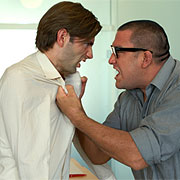
Hell Raisers on Your Job


Introduction

As the economic situation continues to decline, many workers are forced to live with difficult people. Of course, everyone knows it’s easy to manage ‘nice people.’ How do managers deal with difficult people? In fact, this reality happens in every organization. Calvin Miller, author of the Empowered Leader, explains that difficult people are those who stand between you and your objectives. Many managers seek to avoid these difficult people. Mill argues that there are generally congenitally belligerents in any key leadership role. Well, I call them “Hell-Raisers.” They love a good fight and rarely do they avoid one.  Yet, it is the organization that suffers when managers neglect to do their duty in dealing with troubled employees.

The Solution

Good managers understand how to communicate to a variety of individuals. Consequentially, a leader should try to be a peacemaker, if possible. From my personal experience, it’s hard being a peacemaker with Hell Raisers. Some people view an unwillingness to engage them in a fight as a character weakness. Likewise, Hell Raisers can be in every kind of organization. Some of the actions to consider: (a) define the problem, (b) list key participants, (c) talk to the difficult person and make him or her aware of the behavior, (d) seek to get to the root cause, and (e) obtain further actions if the behavior continues.

Dr. Bruce Winston, an author and professor, further maintains that an effective manager must be the person who builds and sustains harmony in the organization. Many people hate change. Some people are closed-minded. Yet, good managers understand the right communication tools to deal with difficult people.

 Conclusion

Unfortunately, difficult people will continue to present problems to organizations.  When corrosive situations come up, managers need to understand how to deal with these communication issues.  Dealing with these issues can make the workplace a war zone at times. No one plans to lead an organization with belligerents. Is it possible to effectively lead a merry band of congenitally belligerents? That’s a wicked thought.  Leaders need to take control of this situation or give the Hell Raisers the day off.

How can organizations assist employees who are faced with difficult co-workers?

© 2010 by Daryl D. Green


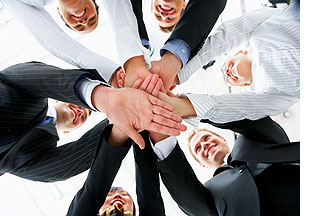
Maximizing Team Chemistry

To build a successful organization in the future, leaders will need to be deliberate in building great team chemistry.  Many organizations consist of both formal and informal groups. In building a high performance organization, individuals within a team must learn how to work together.  In this context, I use groups and teams interchangeable. In other words, employees and leaders need to respect each other and get along. According to leadership experts Michael Hackman and Johnson, the leader-member-exchange (LMX) Theory is another process that outlines the leader-follower development process for relationships.

Let’s explore this more closely. The basic concept is that leaders generally establish two different types of relationships with followers: “in-group” and “out-group.” The in-group is granted more responsibility and influence in decisions. This may remind you of high school. Were you part of the in-group at your school?  Did it hurt to be part of the out-group?  Leaders need wise individuals as personal advisors; however, a leader must be careful about possible organizational ramifications. Why should a leader care? The LMX Theory can create bad feelings in an organization. This could damage team chemistry and make an organization less effective. Organizational cohesiveness is critical for success.

Let’s apply this concept to a mystical journey to King Arthur’s Court and meet the Knights of the Round Table. King Arthur, the son of Uther, was made famous by withdrawing a sword (Excalibur) from a stone and made King of England. He was then given the Round Table as a dowry. Knights, such as Lancelot, were men of courage, valor, and noblity. They were to protect damsels, fight for kings, and undertake dangerous quests like the search for the Holy Grail. The Knight Order’s dominant ideas were the love of God, men, and noble deeds. The LMX Theory was in play.

Let’s dig deeper by exploring a dyadic relationship—marriage. The LMX Theory describes the role-making process for leader-followers. Gary Yukl, the author of Leadership in Organizations, maintains that a high-exchange relationship contains high mutual influence. Marriage involves shared experiences and common goals. What happens when things change?  Follow my example. Body Boy achieves his fitness goal. Mr. Boy is transformed from a shapeless couch potato to a well-formed man. Everyone loves his transformation, except his wife. She is an inactive person. She witnesses ladies swarm around Mr. Body. She screams, “Body Boy!” 

Sadly, misunderstandings can damage the chemistry in an organization. Have you seen it happen in your organization?  Formal groups are more costly in this regard than voluntary groups because they are the creation of management, rather than arising by natural design. Good organizational chemistry keeps the informal efforts aligned with the formal ones.

Clearly, good chemistry is vital in achieving any level of organizational excellence. Leaders need to build relationships with followers in a constructive manner. Therefore, organizations can accomplish this task through training and building caring corporate culture. The results will help produce good team chemistry for today’s organizations and successful organizations in the future.

How does one create good chemistry in nontraditional structures such as matrix organizations or virtual organizations?  Is it possible to infuse good chemistry into a badly run organization? If so, how?

 © 2010 by Daryl D. Green

What’s Going On, Brother?

What’s going on? The world is filled with tension. People are cynical about their institutions.  Our nation is engulfed in disruptive change. We cannot stand it! We trust no one, too.  According to a Gallup survey (January 2010), people have a negative image of the federal government and big businesses.  In fact, distrust abounds toward most organized institutions including corporations, organized labor, politic parties, and the media.  Many people wonder what has happened to our country.

In 1971, Marvin Gaye released his thirteenth album What’s Going On.  The album heavily captured the nation’s social consciousness such as the Vietnam War and the Civil Rights Movement.  

Gaye sings, “Father, father, everybody thinks we’re wrong
Oh, but who are they to judge us
Simply because our hair is long
Oh, you know we’ve got to find a way
To bring some understanding here today
Oh….What’s going on?”

As Americans continue to fight for their jobs and their way of life, I also ask our nation, “What’s Going On?”  The economic downturn continues to worsen for today’s workers.  Therefore, individuals need to consider their own career strategies. Unfortunately, we are witnessing the last era of the full-time workforce.  According to a USA Today analysis, part-time work is at a record high while overtime is at an all-time low. An average of just 33 hours was recorded for the average worker in May 2009; it was fewer hours than any time since the Bureau of Labor Statistics begun to track it in 1964.  In fact, over 9 million people want to work full-time but can only find part-time employment.

According to the Federal Reserve Bank of Cleveland, the ranks of involuntary part-timers have increased by 4.9 million since 2008. Some managers reduce workers hours in a noble effort to avoid layoffs while other managers use it for corporate gain by reducing the number of workers with benefits. However, those economic indicators that reviewed underemployment may not have provided the whole picture. For example, underemployed workers and those individuals who have lost jobs or have given up the job search are statistics that are worth watching to determine the health of employment in the nation.

Consequently, few Americans are optimistic about their careers. With the continuing layoffs by American businesses, many employees and government officials are looking for social responsibility. Company after company has downsized its workforce as a way of continuing profits; these same companies expect the remaining employees to be productive and be happy “you’re still employed.” Some managers do not care about the personal welfare of their employees.

As more employees desire a more purposeful life, this management attitude provides a continual conflict in an organization trying to be profitable. Clearly, employees will not give 110% if they feel that management is using them. Employees will keep critical information to themselves, give management the minimum performance in order to keep their jobs, and provide no sense of loyalty to the organization that is not reciprocal.  Therefore, effective leaders need to understand this uncertainty among workers and develop strategies to motivate them.

How do employees prepare themselves for a future of uncertainty in the marketplace?  What can managers do to promote a high level of performance while suffering from the aftermath of  massive downsizing and outsourcing?

 © 2010 by Daryl D. Green