Model the Way

World hurdler, Jackie Coward (University of Central Florida, West alumni)

Track does not lie. Watching our children compete with the Knoxville Track Club, I learned this important lesson. An athlete needs to have substance, and coaches need to be proficient in their strategies.  All the smoke and mirrors in the world will not change an individual’s time or measurement.

Likewise, leaders emerge and falter by the examples they set before the team. Jim Kouzes and Barry Posner, authors of The Leadership Challenge, evaluated over hundreds of high performance organizations to determine how they were successful. One of the ingredients was managers ‘model the way.’ In fact, leaders set the right example. I saw this example symbolized in two athletes at West High School.

The West High School Track Team has built a solid name for itself, with All-American hurdler Jackie Coward at the helm.  While many people around the area figured West would faded into the wilderness with the graduation of Coward, West got better by creating a talented and deep squad.  Coach Mike Crocket and Coach Greg Allen led a group of young and gifted athletes who were inspired to compete for a state champion. Over the last decade, the girls track team has been pretty amazing: 2006 AAA State Champion, 2007 AAA State Runner-up, 2008 Champion, 2009 AAA State Runner-up and 2010 AAA State Champion. Yet, I attribute their success this year to the two team captains, Aurielle Sherrod and Patavia Lowery.

Aurielle Sherrod, Prepxtra Track & Field Female Athlete of the Year

Going into her senior year, Aurielle was one of the top sprinters in the state. In the early track season, she got a hamstring injury: “I knew it was really bad.” It would hamper her all season. In fact, it was questionable how she would perform at state with little practice. The critics were wrong. Aurielle won the 100 and finished seconded in the 200 meters. She also led the Lady Rebels to wins in the 4 x 100 relay and a second place finish in the 4 x 200 relay. She refused to let her setback prevent her from success. She was voted the Prepxtra Female Track Athlete of the Year. With a 3.9 GPA in high school, Aurielle heads to University of Alabama – Birmingham on an academic scholarship.

Patavia Lowery, Knoxville Sports Hall of Fame’s Female Athlete of the Year

Patavia could be the mascot for overachievers.  Since 7 years old, she competed with the Knoxville Track Club and has been characterized by her hard work ethics.  Entering high school, her goal was to make it to state. Unfortunately, things didn’t happen as quickly. It would take her junior year to make it there. Loaded with a host of unproven talent, West High was looking for something special. At state, Patavia won the 800 meters, anchored a bronze finish in the 4 x 800, and helped provide West with another dominated performance and its 3rd State Championship. At the annual Knoxville Sports Hall of Fame Banquet on August 5th, she was selected as one of the Knoxville Sports Hall of Fame’s Athlete of the Year.  Patavia will be joining South Carolina State University on a full track scholarship and will bring her Tennessee work ethic to this program. Clearly, these ladies set the example for excellent at West. The team responded.

Sadly, many managers are unable to inspire today’s workforce toward greater performance. Manager guru Peter Drucker argued for several decades that managers must understand their employees as well as their customers. Few executives listened. Drucker concluded, “Business tends to drift from leadership to mediocrity. And the mediocre is three-quarters down the road to being marginal.” Yet, emerging leaders need to know how to rekindle such emotions in the workplace. Setting an example is one of these keys.

 How do leaders foster the proper examples in organizations?

 © 2010 by Daryl D. Green

The Heart of Motivating Workers


Last week, my class startled me with questions that required my introspection. “Dr. Green, what motivates you to do the things that you do?” Of course, it wasn’t out of order since we were discussing how managers can motivate followers. It made me ponder for a moment.  What does any high performing person want from a career?

Each person has their own motivation. Joan Liebler and Charles McConnell, authors of Management Principles for Health Professionals, argue that managers must motivate workers in order to get work done efficiently and effectively. The authors further insist it is critical for ‘adaptation to organizational demands.’ It is clearly most organizations cannot handle disruptive change.

Yet, the issue is…most managers don’t know how to accomplish motivating workers. In the book Contemporary Management, Gareth Jones and Jennifer George make the case that understanding motivation is important for managers because it ‘explains why people behave the way they do in organizations.’

I argue that individuals are motivated from within. At the heart of the matter, workers must see the need for an action in order to wholeheartedly accept it in organizations. Yes, yes, people love a handsome salary. However, is it enough to create extraordinary and sustainable performance over the long-term?  I think not! 

According to the Conference Board research group, only 45% of Americans are satisfied with their work. This situation fosters an environment of emotionally drained folks. With spirituality on the forefront, most high performers are motivated by more than extrinsic rewards.

Knowledge workers want more. In fact, this new attitude may result in more people taking control of their careers and becoming entrepreneurs in the future. Mari Alboher, author of One Person, Multiple Careers, maintains it is possible to work one’s daily routine while engaged in his or her dream job. She calls this process slashing. Slashing involves pursuing multiple vocations instead of just one.

Individuals, like Leonardo da Vinci excelled in a variety of areas without sacrificing anything.  Alboher notes, “Pursuing multiple vocations is by no means new…What’s new is that huge swaths of the population are being swept up in ‘The Slash Effect’ – creating personalized careers that can only be described with the use of slashes.”

Pop culture promotes this hunger in the workplace. In the past, workers were content to have a good job. But today—what individual is motivated by an uninspiring boss and a boring job? Postmodernism speaks to this culture shift. While modernists place man at the center of reality through utilizing science, postmodernists, who place no one at the center of reality, has no core explanation of life. Some experts characterize by several attributes: (a) there is the denial of absolute truth, (b) all facts are not hard facts, (c) meanings are through the interpreter rather than the text, (d) climate of cynicism/pessimism, and (e) advocacy of understanding through a local community setting. Therefore, it is clear that postmodernism provides an opportunity for value conflicts in traditional organizations.

Unfortunately, many managers do not want to understand how to inspire their workforce unless it is a simple solution. Therefore, some workers who are unhappy with their situation try to conceal their discontent and provide mediocre performance.

What can managers do to inspire postmodern workers to greater performance? 

© 2010 by Daryl D. Green

Doing Me Right, Boomer

In Spike Lee’s 1989 acclaimed movie “Do the Right Thing,” he places the characters at the center of making difficult decisions. It’s a classic drama—and a perfect way to continue our generational discussions!

During the hottest day of the summer, life forever changes at Sal’s pizzeria in Brooklyn. Two customers demand that Sal change his “Wall of Fame.” The confrontation heats up to racial slurs and physical threats. Violence erupts! Da Mayor, a street bum, encourages the mob to make good decisions.

However, Mookie (Spike Lee) opts to follow his emotions; it changed the dynamics of the situation. The 1980’s movie classic highlights the racial tension between two ethic groups. In the movie, Da Mayor provides Mookie with some advice: “Doctor, always do the right things.”  Given another chance, Mookie might have changed his actions. Unfortunately, too many managers won’t.

Are today’s managers willing to make the best decision so that future managers are primed for success, not defeat? It’s an interesting thought when you consider the possible generational volcano that may erupt at any time.

Several years ago, I read Daniel Kadlec’s column about the Baby Boomer transformation from being a “Me Generation” to a “We Generation.” Although I applauded Kadlec’s insight, I was hesitant to make this great leap of faith in the Baby Boomers yet. Let me say that this belief should not be conceived as ‘hating.’ I am Gen X as you might not know. I have used environmental scanning to witness the significant demographic shifts in our nation. Are Baby Boomers now ready to relinquish their stronghold of leadership?

We can’t be certain due to that fact that the storyline is incomplete. Let’s wait until the economy settles. With the rocky rollercoaster ride of the stock market, Baby Boomers don’t enjoy life as much because of the decrease in their disposable income. Some individuals have the extra burden of caring for parents and children. These realities of life keep Baby Boomers working well beyond their desires for retirement.

In the past, Baby Boomers have been early trend setters. A study from the Center for Retirement Research at Boston College explains that the average retirement age in the U.S. is 63. Unfortunately, this retirement study reveals that many individuals will need to work longer so that they will have adequate retirement reserves.

Andy Hines, the director of Customer Projects at Social Technologies, predicts that Baby Boomers will refine the meaning of retirement and notes, “U.S. Baby Boomers are choosing post-work lifestyles that don’t resemble the stereotype of the quaint, restful senior citizen.” As you know, Baby Boomers are the top leaders of most organizations and will find it difficult to separate themselves from their positions of power and influence. Will they be willing to make the right decisions for their successors or themselves? 

Other observers believe that Baby Boomers will leave graciously and pass the baton to the next generation of leaders. I have my own doubts about the outcome.

If Baby Boomers extend their stay in organizations and maintain their leadership positions, what do you predict the response of leaders in waiting? How can organizations address this issue without inflaming Baby Boomer leadership and not losing future leaders who refuse to wait?

© 2010 by Daryl D. Green

Countering the Age of Narcissism

I try to pay attention to the game as the assistant coach. However, I am bombarded by begging from players on the bench: “Brother Green, can I get back into the game?” I try to ignore by pointing: “Ask the coach.” Every weekend was like déjà vu for me. A bunch of 8th graders were trying to tell us they were just as good as high school athletes.

These 8th graders were undersized and no match for more experienced ‘ballers.’ The basketball league was designed for high school students. I felt they should be graceful to be allowed to play with our high schoolers. Instead, it was a steady stream of complaints and ingratitude from some 8th graders. I wondered how I got stuck with Gen Next.

Today’s organizations face unprecedented competition from all fronts. Many institutions desperately need to infuse their organizations with fresh leadership and new ideas.  Yet, there is a hesitation for this transformation. Many baby boomers argue that the current generation is not ready.  These young workers are called many names such as Generation Y (Gen Y), Echo Boomers, or Millennials (born 1977 to 2002). Most experts predict the generation will be a major factor in society. There are more than 70 million of them.

However, they have been described in the workplace as lazy and self-absorbed with their own worth. Laura Clark, columnist, argues, “Today’s young workers, it appears, believe they deserve jobs with big salaries, status and plenty of leisure time – without having to put in the hours.” According to the Association of Graduate Recruiters study, there is a new breed of graduate ‘divas’ who expect everything to fall into their laps. These people believe they are a hot commodity in the job market. Yet, their managers describe them as ‘unrealistic,’ ‘self-centered,’ and ‘greedy.’

For the first time in American history, organizations have four different generations in their workforce. Sadly, it’s not without problems. Companies don’t understand this young generation. They desire to share in organizational decisions on day one of employment and be promoted instantaneously. With managers who had to ‘pay their dues.’ The Gen Y mentality is a hard pill to swallow.

Dr. Jean Twenge and Dr. Keith Campbell track this trend of self-absorption in their book, The Narcissism Epidemic: Living in the Age of Entitlement.  They explain, “Narcissism- a very positive and inflated view of the self is everywhere….Understanding the narcissism is important because its long-term consequences are destructive to society.”  In the 1960s, individuals led causes for the greater good. During the 1970s, there was a focus on self-admiration. By the 1980s, society had totally gone to ‘looking out for oneself.” 

Unfortunately, some managers distort the work value of this emerging generation by stereotyping them as selfish. Baby boomer managers complain about the difficulty of managing Gen Y employees. But, didn’t these baby boomers raise them to be narcissistic anyway? Therefore, it isn’t fair to label them totally as expecting entitlement.  

Twenge and Campbell note, “Parenting became more indulgent, celebrity worship grew, and reality TV became a showcase of narcissistic people.” One must wonder what Gen Y will pass along to their own children.

As more baby boomers retire, a new generation of leaders will replace them. These new leaders will cross age, gender, race, and geography. I certainly hope that Gen Y can overcome the negativism surrounding them and be prepared to accept future leadership roles.  I pray it’s not too late.

 Is the Age of Narcissism solely a characteristic of Gen Yers?  How can organizations infuse the right kind of team-oriented values, given cross generational conflicts?

 © 2010 by Daryl D. Green

The Confession of a Decision maker

I listen to chatter over the airwaves. Talkshow host Armstrong William leads a merry discussion on South Carolina’s Governor Mark Sanford.  Armstrong cannot contain himself: “How does Governor Sanford get rid of his Love Jones?” It was a question that was not easily answered. Listeners from South Carolina appeared irritated with this line of questioning.

Many felt the governor had abandoned his wife, children, and the people of South Carolina. On June 24th, Governor Sanford arranged a press conference where he confessed a year-long affair with an Argentine woman. He was missing for more than six days from his office.

At his press conference, political pundits argued Governor Sanford was attempting to save his job, not his family life. He was married and had four sons. Instead of a low-profile strategy, Governor Sanford actively engaged the media, describing his mistress as his “soul mate.”  Clearly, he had lost his mind! His wife Jenny stated, “I believe enduring love is primarily a commitment and an act of will, and for a marriage to be successful, that commitment must be reciprocal.”

Unfortunately, Sanford’s decision ruined his political career, strategic alliances, and the trust of the people of South Carolina. Yet, his personal loss was perhaps greater. He lost his marriage and the trust of his children. Therefore, some decision making carries long-term consequences for individuals and organizations.

Have you ever wondered why some people continue to make bad decisions? You see million-dollar celebrities doing it. You can see this action in government officials and business leaders. There are no discriminators. From the very rich to the poorest of the poor, we see people caught in a vicious cycle of bad decision making. Sadly, we can see it much closer than that. We witness relatives making bad decisions. Despite wise counsel, some people continue to make poor decisions.

The Decision Process

Decision making can make or break an organization. Joan Liebler and Charles McConnell, authors of Management Principles for Health Professionals, maintain that decision making is an essential element of management activities at all organizational levels. Gareth Jones and Jennifer George, authors of Contemporary Management, further argue that managers must respond to opportunities and threats. In fact, decision making is a process where individuals analyze and make determinations regarding a problem that is keeping with the organization’s goals and objectives.

Unfortunately, some people feel the decision making process is a solo operation. Some managers can be caught in this trap and disregard the expertise of their workers. Through series after series of bad decisions, the manager may continue on a merry ride of worsening consequences. Two things generally can stop this dead-end trap. The organization stops him or the organization tanks.

In going through a series of bad decisions, a wise person should gain insight. Unfortunately, some individuals who are in charge will learn nothing, thereby earning the label of a foolish manager. Every person, regardless of their background or social standing, can benefit from good decision-making techniques.

The Path Forward

Making the right decision is a difficult process. Like Governor Sanford, many managers don’t take enough time to evaluate short-term decisions for long-term consequences. No one will usually applaud your many good decisions; however, you will probably catch heat over the bad ones.

Les Brown, author of How to Become the Person You Always Wanted to Be-No Matter What the Obstacle, explains, “Your values are not set by government or church leaders. Your values give you consistency in the way you approach life…By holding to your beliefs, you can always stay on track toward your dreams.” Therefore, making good decisions goes to the heart of being an effective manager.

How do managers overcome the barriers of making bad decisions during uncertainty? Is it possible for a manager to involve their workers in critical decisions without giving up any authority?

  © 2010 by Daryl D. Green

Sarah Palin’s Journey to Knoxville: Leading by Listening

 Many managers do not appreciate the art of good listening. In fact, some people view listening to followers a weakness. However, not listening to wise counsel can be fatal to leaders. Former Alaska Governor and the 2008 Republican vice president candidate Sarah Palin happens to be the latest causality on this subject.

On April 21st, she found herself in U.S. District Court in Knoxville. Some managers have poor listening skills while others are just arrogant about listening to anybody. If organizations want to be successful, their managers need to understand the importance of good listening skills. Craig Hackman and Michael Johnson, authors of Leadership: A Communication Perspective, explain that the leader-follower connection has a direct impact on organizational effectiveness. This article examines the importance of leaders listening to their followers.

Many managers fail to see the unintended consequences of not listening to followers. Former Alaska Director of Boards and Commissioners Frank Bailey warned Palin about using a non-government email: “I was speaking to (Palin husband) Todd (Palin) and said, ‘You have got to get off Yahoo! It’s not secure.’” Sarah Palin failed to heed this warning from her staff. David Kernell, a University of Tennessee student at the time, gained accessed to Palin’s private email, thereby making her vulnerable. In court, it was later discovered that Palin used the Yahoo account to discuss state business.

Yet, Palin’s failure to listen is a common situation to some managers. James Kouzes and Barry Posner, authors of The Leadership Challenge, explain that the leader’s job is to keep followers focused on the vision. If managers do not listen to workers, workers will lose trust in them. Like Sarah Palin learned, leaders must be willing to listening to their workers. Leadership is about a journey. Effective leader understand that it’s important to get wise counsel. Listening to workers is just one critical component. Therefore, leaders need to act on this matter before it’s too late.

 © 2010 by Daryl D. Green

Lead with Your Passion

Anyone who knows me knows that I am a passionate person. If you are human, you probably have something that you are passionate about too. Yet, many managers lack the passion at work to inspire their workforce.

 How do you inspire your unmotivated staff? Have you tried cash? Rewards? Bribery? If what you are doing is not working, you need to try something different. Have you explored leading your organization with passion? In a nutshell, you will be playing the role of the passionate leader. This person has an internal drive because “he loves what he does.”  Are you internally inspired?

Let me make a distinction between a great leader and great manager. I’ve seen passionate managers; however, they weren’t great leaders.These managers were zealots for getting the tasks completed and checking the boxes. Their influence was directly related to their position in the organization, not their personal influence. Richard Joyner, author of Leadership Management, notes the qualities that make a good leader would make poor managers in general. What is the critical reason for this distinction? A manager must be detailed-oriented to achieve success while a good leader must be concept-oriented (seeing the big picture). There are a few exceptions, however.  Joyner explains that large organizations are usually bureaucratic and make it difficult for great leaders to rise to the top. In my organization, it is difficult to implement innovative processes due to a bureaucratic structure. Managers are rewarded for handling tasks, not inspiring people.

Some leaders are forced to start new organizations (for example, Steve Jobs of Apple).  In fact, some leaders disrupt the status quo with their passion. For example, Jesus Christ was not part of “the establishment” but his zeal transformed the world. Therefore, countless leaders (especially change agents) can be energized with their passion. Indeed, it is a critical component for any leader who wants to transform their organizations.  If you want a more charged organization, it starts at the top, leader!

 What is the reason for the lack of passion in many leaders in contemporary organizations?

 © 2010 by Daryl D. Green

Purposeful Driven Leadership


Leading people is a difficult task. Can I get a virtual ‘Amen?’ In the textbook Contemporary Management, Gareth Jones and Jennifer George argue that problems are inevitable for leaders: “Managers in all kinds of organizations, large and small, often face situations entailing conflict.” If a leader understands that he’s call for the purpose of leading others, I feel he or she is better able to address any issues that might arise. In my last post, I discussed workers finding their calling. Yet, at the heart of this personal discussion, comes the issue of an individual’s purpose in life. Inherently, this matter is too overtly personal and spiritual that most organizations annoy the discussion. Sadly, these organizations miss a very huge trend taking place across the globe. It is a search for a more spiritual existence.

Sometimes, an individual’s purpose may go beyond individual’s education and work experiences. During my doctoral studies at Regent University, I came across Dr. Chris Cunningham. He was married to one of classmates. Dr. Chris Cunningham, with more than 24 years in the media business, sees his purpose divinely.  He launched FireWorks International, a non-profit Christian media production company. Using his own money, he and his wife Dahlia began to implement their vision. This purpose led them to create the Redemptive Film Festival (www.redemptivefilms.com). As the new author of Worship 101, Dr. Cunningham is a symbol of how your purpose can drive an individual. Clearly, your purpose may not take this religious form. However, most people are driven to something special more purposeful than routine living. Is it enough to just exist? I say ‘no.’ 

Yet, emerging leaders need to take responsibility to make the best of their lives. There is something special about having a reason for existence. You got a purpose to keep going even if…you hate your job!  One of the most insightful books on this subject is Viktor Frankl’s Man’s Search for Meaning, published in 1946.  During his years as a prisoner in a Nazi death camp, Dr. Frankl developed a revolutionary approach to psychotherapy called logotheraphy. 

 At the core of logotheraphy is the belief that man’s primary motivational force is his search for meaning. Dr. Frankl, an author and psychiatrist, had first-hand experience on suffering. His wife, father, mother, and brother all died in camps or were sent to the gas ovens.  Only Frankl and his sister survived.  How could Frankl go on when everything seemed to turn against him—loss of family and possessions, loss of dignity, mental and physical torture, and the constant threat of death? 

Great leaders are fueled by a sense of purpose. As we continue to suffer economy uncertainty, emerging leaders need to realize they are called to leadership for a purpose. Some bosses who perform only for the money may quit their job due to the stress to find securing employment. Yet, workers need leaders with courage. These beliefs start when people are children and continued to develop, as they become adults.  Brian Tracy, goal-setting expert, says, “Whenever you have a high self-concept, you perform well.” Followers want leaders who have a direction.  Organizations want to retain and develop leaders who can inspire the workforce despite incredible obstacles. Therefore, living a purpose-driven life is a key ingredient for the 21st century leader.

How can an individual’s purpose anchor him or her during chaos?

 © 2010 by Daryl D. Green

A Special Calling as a Vocation


Introduction

What would it be like if you worked in a job you truly enjoyed? If you feel under-utilized in your organization, you are not alone.  On a routine basis, many employees force themselves to work without a clear purpose. Numerous people work to maintain their daily bread without ever doing what they love. Sadly, many managers are unable to inspire today’s workforce toward greater performance. Yet, emerging leaders need to know how to rekindle such emotions in the workplace. Through this blog, we will discuss how one’s calling can transform an individual’s life and perhaps improve organizational performance.

The Career Calling

Becoming more productive in life is a function of working in a career that is aligned with one’s abilities and skills. Many organizations fail to understand this simple principle. As a consequence, they have people in jobs that do not fit their abilities. Yes, the organization knows the individual’s education and career experience. However, managers are unable to understand the worker’s ability without input from that worker. There is a distinct difference between an occupation and a vocation. An occupation relates to the principal activity in an individual’s life that earns money for living.

Some people, due to their own financial situation, are forced to work in jobs they hate.  Others must occupy jobs where they are overqualified; this speaks to the issue of underemployment in our nation. Yet, many folks are slaves to their jobs simply because of the income. This situation can lead to stress, depression, and unhappiness. In fact, some people take desperate measures. According to one study, more than 30,000 Americans take their lives annually (more than three suicides for every two murders). 

A vocation is a natural alignment with one’s ability. Vocation relates to a career which a person is particularly suited or qualified to perform.  Some individuals credit this special alignment to a divine provocation. In the medieval Christian period, it was believed that God called certain people and their work was a “calling.”  This calling was usually reserved for the clergy and priest.  In the secular sense, individuals who can fully use all of their talents in a way that liberates them can make great contributions in society.

However, it does invoke a different mental journey. Marsha Sinetar, author of Do What You Love, The Money Will Follow, argues that individuals rarely take the time for introspection: “Most of us think about our jobs or our careers as a means to fulfill responsibilities to families and creditors, to gain more material comforts, and to achieve status and recognition. But we pay a high price for this kind of thinking.”  I have seen this mental awakening all around me.  I have seen my co-workers in various occupations pursue other careers. Cavanaugh Mims was one of these co-workers. He was on the fast-track to a senior position at the Department of Energy. He was a great communicator and influencer.

Yet, Cavanaugh had an entrepreneurial spirit within him. One day, he simply packed his bags at his office to chase his vision. At the time, most people thought he was insane.  His consulting business started as a gleam in Cavanaugh’s eye without any financial security blanket. Today, Visionary Solutions, LLC is a multi-million dollar business. Thus, some people are able to tap into their own calling. In fact, I am coming to this revelation about my own career aspirations.  

Therefore, it is important that individuals take the time to learn what they enjoy and what they are good at. This reality will lead them to their special calling.  In fact, one has a calling when he or she realizes what can be done with his or her God-given abilities.  Once this career revelation is realized, an individual can then take the journey toward greater happiness and job performance.

 Conclusion

As society pushes people to acquire more things in order to be happy, we become unhappy with life. It is important that individuals take a personal assessment of their own career objectives in conjunction with their own calling. High performance organizations know they must factor the human capital variable in their corporate strategies. Therefore, organizations that understand how to tap into an employee’s calling will have a competitive advantage because they will maximize the talents of their workforce. In the future, there will be a global war for talent. Businesses that understand this fact will continue to have sustainable growth. The ones that miss it will be at a competitive disadvantage.

 How can organizations tap into innate calling to increase performance of their employees?  While working in jobs that underutilize their abilities, how do employees develop and enhance their abilities?

© 2010 by Daryl D. Green

The Clash of Women Power in Contemporary Society


Introduction

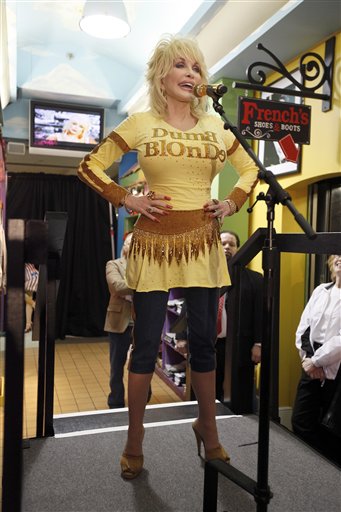
America has continued to learn how to deal with strong women during the great demographic shift in history. Media darlings such as Dolly Parton and Coach Pat Summitt highlight the power of women in their profession. According to Fortune Magazine, 15 Fortune 500 companies are run by women. Leading the charge are Secretary of State Hilliary Clinton and House Speaker Nancy Pelosi on the government front. In fact, there is a long list of successful women in all types of institutions (Oprah Winfrey, Sarah Palin, Faith Hill, etc.).

Yet, the road to success for women isn’t easy. Many women’s dreams of a successful career have come to reality. Strangely enough, some women have been trying to have it all. This marks the clash. There are women who focus on the primary care of their families while delaying their personal dreams. Others dedicate their lives to their careers while compromising the stability of their families. In the middle, there are millions of mothers who attempt to do it all out of necessity and attempt to chase the great American Dream. I am focusing this discussion on the issues facing professional women in contemporary society. In fact, I conducted my own mini-action research project. I interviewed several professional women in the Knoxville area. However, their real names are not disclosed, to protect them. I am sure you can relate to potential drama since these ladies work in small industries.

The Problem

According to the 2005 Census Report, there are 82.5 million mothers in the United States, and there are 10 million single mothers living with children under 18 years old. Working moms make up 55 percent of mothers with infants. Feminists celebrate the liberation of working women while traditionalists postulate the merits of home-bound mothers for institutional stability. In fact, some people blame the moral decay of the country on mothers abandoning their families for  professional careers. Many women try to maintain a healthy balance of work and family life, but this balancing act leaves some of them “burnt out.” Therefore, there is a growing problem for women in particular and society in general in understanding consequences of women’s power in the near future.

 The Trend

Women stand at the fore front of disruptive change in the political, social, economic, and technological sectors of most counties. Dr. James Canton’s The Extreme Future notes “Women will comprise a high percentage of new workers and leaders, forever changing the politics of boardrooms and markets.” According to a US Census report, nearly one-third of all married women in the US make more than their husbands. More than 25% of working wives earned more their husbands in 2007 (up from 20% in 1983). Furthermore, women are earning college degrees at a faster pace than men. Between 2000 and 2001, women earned 57% of all undergraduate degrees.

Woman power is also being flexed in the corporate world. In 1983, women held 34% of all US executive and managerial positions. However, women held more than 50% of these positions in 2003. Futurist John Cashmen predicts women will forever change the landscape of all institutions: “The number of women in the primary breadwinner role will likely grow in coming decades, driven by social change and the fact that women’s educational achievement is outpacing men’s in many parts of the world.” Therefore, executives must consider how the changing roles of women in organizations will impact their corporate strategies.

The Career Strategy

Progressive women need to develop critical career strategies in a holistic fashion. Balancing work and family is difficult. In general, some men are already taking this transition personally. Some men are opting for the domestic life while their wives become the principal breadwinners. Therefore, society watches gender role reversals and wonder how it will end…relational success or failure?

For working women, any results are often problematic anyway. Yenissee Alonso and Vickie Brint, authors of the article Women in the Workplace, argue that women still deal with institutional barriers that keep them from being successful. For example, women in general are making less than their counterparts doing the same job with the same experience.

Alonso and Brint note, “Since nearly half of the workforce is comprised of women, it stands to reason that woman should be enjoying the same success as their male counterparts in terms of advancement opportunities and earning capacity.” Princeton researchers in a 2003 study concluded that college-educated women who hold higher expectations for their potential mate may lower their chances for getting married. In fact, some men may be uncomfortable with having a woman who has more education and makes more than them, postulate some theorists.

Sue Means is a professional engineer in a highly competitive consulting industry. She sees challenges for professional women. She notes that men are treated differently. Means explains, “Some of my colleagues talk about how pretty I am. They comment on my clothes and make suggestions regarding what I should wear. That would not happen to a man.”

Liza Fuller is a government program manager with a decade of experience in handling difficult environmental issues. She exists in a mostly male dominated industry. Fuller notes, “Women are still expected to work harder than men to prove themselves and avoid criticism. Attractive women still get grief about being promoted for reasons other than their own merit and it’s not fair.”

Furthermore, Canton suggests that the most educated, skilled, and experienced employees will be in high demand. Therefore, professional women need better strategies. Means recommends prioritizing what’s important: “I let go what’s not important. Most women get overwhelmed with trying to manage all of the household and family responsibilities while working at the same time. You need to be realistic about what you can do. It’s a balancing act.” Some women feel that they can have it all without any drop off. Fuller disagrees: “There is always a sacrifice because you spend more time away from your family.” Although there will be an ever increasing number of opportunities for women in the workplace, women must analyze every career move in a holistic fashion if they want to keep that delicate balance.

Conclusion

The future is bright for working women as never before. In fact, women will drive most institutions toward major changes in the near term. However, this article demonstrated that the road to success for most professional women isn’t easy. They must deal with sexism to a certain degree. However, the demands of their professional life have not kept up with the heavy demands of a family and personal life. Therefore, women must develop career strategies in a holistic manner that maximizes their efforts. In turn, society must learn how to embrace women’s power in the future if America hopes to continue to compete.

 Is it impossible for women in leadership to balance their professional and personal lives? If so, how? Can contemporary organizations change to fit the ever changing gender role reversals in society?

 © 2010 by Daryl D. Green