Guest Blogger: The Leadership Theory Lack

Airport bookstores are crowded with books on leadership, and each one seems to promote a “leadership lack.” They’ll each begin with phrases like “The most pressing issue in organizations is that leaders lack integrity…or empathy…or strategy…or even humor. These books continue by laying out the author’s simple framework for developing the perfect leader. On and on the dialogue goes to the point where readers become be confused because the 21 Unassailable Edicts of Leadership are different than the Seven Routines of Really Efficient Leaders.  It would be a poor move to add to this confusion. With this in mind, we will admit that we do not believe our “leadership lack” to be the most pressing issue in organizations, just the easiest to fix.

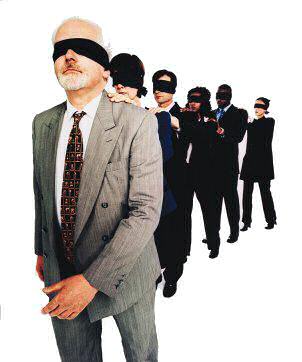
Leaders lack an understanding of leadership theory.

These airport leadership books provide decent advice that is easily digestible. And because it is easily digestible, leaders continue to gorge themselves on it until there is very little room left for real, solid theory. Most see theory as complex and hard to digest. When leaders think about leadership or organizational theory, they think back to the 400+ page textbook they had to buy in business school. “Seems like quite an undertaking,” leaders think. So they cheerfully hand their money to the cashier and board the plane with the latest, pocket-sized “leadership” book.

Leaders lack an understanding of leadership theory because it isn’t presented in pocket-sized form.

But leadership theory isn’t some kind of rocket surgery. Attaining a true understanding of theory isn’t difficult, if it’s presented right. We’ll survey the major leadership theories. Our intent is to present them in the same easily digestible, pocket-sized form as the airport bestsellers.

Why Theory?

During WWII, Allied bomber losses were high, so high that the British Air Ministry undertook a rigorous analysis in hopes of finding a solution. Their engineers set out to eyeball every bomber they could, gathering data on each bullet hole. After analyzing the results, engineers decided to reinforce the areas that had the highest concentrations of holes with armor plating.

It didn’t work.

Perplexed, the engineers assumed that the extra plating had made the planes too heavy, and that the difficulty in handling the planes was offsetting the protection of the armor plating.

Enter Abraham Wald.

Wald, a mathematician, suggested that they simply put extra armor plating where the bullet holes weren’t. The idea was simple: if the planes are returning with bullet holes, obviously those areas can be struck without causing the planes to crash. The planes that weren’t returning, Wald theorized, are the ones that are getting hit in different areas. The engineers’ error was so significant, statisticians decided to name it: survivorship bias (the tendency to include only successes in statistical analysis). Any time you only examine just the successes, you will skew the results.

If we return to the airport bookstore in our minds, we see the shelves littered with survivorship bias. We love reading about successes. That’s why books by celebrity CEOs and leadership gurus are among the best sellers of any list. We’d much rather read about the brilliant company leader who started working out of his garage and ended up dominating the industry. However, when this is all we consume about leadership, we succumb to survivorship bias. While a celebrity CEO may reveal the secrets he used to climb to the top, how are we to know they work in every situation?

This is where theory comes in.

Leadership and organizational theories are constructed and tested by examining not just the successes but also the failures. Good and bad leaders, successful and failing change efforts, all get included in the analysis and the resulting theories spare us from our survivorship bias. If we want to grow into outstanding leaders, we must know how and when to utilize the knowledge provided by the existing body of leadership research.

Good leaders focus on where the bullet holes are; great leaders consider where they aren’t.

Please provide comments on this timely topic.

ABOUT THE GUEST BLOGGER

David Burkus is the editor of LeaderLab, a community of resources dedicated to promoting the practice of leadership theory. He is a consultant, a speaker and an adjunct professor of business at several universities. He can be reached at david@davidburkus.com.

Leadership Attraction

Many individuals are reluctant to admit that a person’s appearance may influence how others perceive them as a leader. Let’s take a trip back to the future.

Spanning nearly two years, the 2008 presidential campaign was historical on several fronts. It was the longest presidential campaign and the most expensive in history. It was the first time that two US senators would run against each other and New York Senator Hilary Rodham Clinton was the first serious woman presidential candidate and Senator Barak Obama was the first African American nominated by a major party for president.

However, the Republican Party had a share of history also. The Republican ticket consisted of Arizona Senator John McCain, who sought to become the oldest person elected president to a first term in America, and Alaska Governor Sarah Palin, who was to become the first woman vice president candidate for the Republican Party. On November 4, 2008, Obama became the first African American to become president.  Did Trait Theory play a part in his strategy?

Leadership characteristics are important factors in the presidency that many pragmatists dismiss. Trait Theory suggests that certain individuals possess special innate qualities that make them the preferred leader. Qualities, such as height, intelligence, extroversion, and other noble traits are components of Trait Theory (See Table 7.1 in Impending Danger). Focusing on the 2008 elections, some would argue that both McCain and Obama possessed leadership qualities and support Trait Theory. However, the question must be posed ‘Which candidate best benefited from the outward perception of what a leader should look like?”

First, physical characteristics are what most individuals see first. In this presidential election, some of the physical traits included height, age, and race. Some people have identified strong physical characteristics as a perquisite for leadership selection. This application can easily be seen in athletics and activities that require great physical ability. Obama hovered over McCain in terms of physical stature. Obama was thought to be 6 feet 1 inch while McCain was 5 feet 9 inches. Obama, being tall and sturdy, would overshadow a much shorter and frail McCain. In many people’s minds, the election was much more about optics than content in some cases.

For example, the presidential debates also demonstrated showmanship. Political organizers worried how their candidates would be viewed by the voters. Therefore, the style of the debate was always a strategic consideration for the McCain camp. This reality was a major concern to McCain’s campaign because of the public perception. Obama was noticeably taller. Two of the three presidential debates in the fall were seated debates, perhaps to neutralize Obama’s height advantage.

Race was the mysterious factor in the election. There was no consensus on the role of race with some experts concluding race would have a significant impact (the Bradley effect) while others predicted that Obama’s race would aid his candidacy given the guilt, sympathy, and compensatory factors for the legacy of racism.

 According to a CNN Exit Poll (16,000 participants) of the presidential election, twice as many of those polled said age was an important factor in their vote as those who indicated race. Specifically, 78% went for Obama to 21% for McCain among voters who thought age was important. However, individuals who said race was an important factor voted 55% to 44% in favor of Obama. However, Obama also was the winner for people who said race was not important.

Second, intrinsic character attributes were also a significant factor. Most people admitted that Obama had star power. He was able to bring record number of crowds to his rallies. Former Secretary of State and Chairman of the Joint Chiefs of Staff Colin Powell supported Obama which broke ranks from his Republican Party: “He has both style and substance. I think he is a transformational figure.”

Yet, both candidates attempted to frame their opponent in a character framework. Feeding on the perceived eloquence of Obama, McCain’s strategy was to paint Obama as a celebrity and elitist. Additionally, McCain tried to use Obama’s articulate speech and his charisma with his followers as void of any substance. Obama had his own method for framing McCain. Obama attempted to portray McCain as the third-term of President Bush.

Last, political strategists sought out ways to best showcase their candidate while highlighting any character flaws in the opposition. The results showed that voter perception counts. Obama was viewed as the agent of change while McCain was viewed as part of the current establishment. Given the fact that Obama won every major demographic in the election, Trait Theory may have played a role in the outcome of the election.

Does having good looks really matter in our PC culture? If so, why?  Is there any value in applying Trait Theory to 21st Century organizations?

© 2011 by Daryl D. Green

The Power of Influence

Introduction

In the 1990’s movie “Goodfellas,” we witness how individuals can rapidly move up the power chain through influence. In fact, it is an all-time classic gangster movie. Goodfellas grossed over $46.8 million domestically and received many national awards and reviews.

Here’s the synopsis. Henry Hill (Ray Liotte) grew up with a vision of a Mafia lifestyle. It was a dream that would garnish him wealth, power, and influence. Henry aggressively worked toward this ambition. He would become successful. Once a small time gangster, Henry became a major player; he participated in a major robbery with Jimmy Conway (Robert De Nero) and Tommy De Vito (Joe Pesci). His two partners managed to kill off everyone else involved in the robbery and slowly advance the hierarchy of the Mob. Henry had finally gotten the power and influence he craved along with other intended consequences.

Today, many managers tend to operate like gorillas in power.  People in organizations tend to follow the person in power, not necessarily the best thinkers. This is called the Alpha Principle.  Harry Beckwith, marketing author, states that most organizations operate like apes. He notes, “The alphas dictate what the group does and thinks. 

But are alphas better at decision making?  Not necessarily. Alphas are just better at getting and keeping power.”  Poorly skilled managers cause a lot of unnecessary stress to families because they don’t understand how to treat people.  Employees then bring it home to their families, thereby creating more problems. In this discussion, we will examine how individual workers can gain more influence in their organizations.

Levels of Power

There are a variety of ways influences can obtain influence in contemporary organizations.  In fact, leadership is a combination of power and influence.  Leader can be defined as the ability to influence, guide, and direct others.  Leaders get people to do things they wouldn’t normally do alone.  Power is a key component of leadership.  Power is the ability of a person in an organization to influence others to accomplish a desired outcome.  In most organizations power often evolves into the domination of others. 

Given this dynamic of organizations, managers need to understand their organizations. James Gibson, John Ivancevich, James Donelly, Jr., and Robert Konopaske, author of Organizations, argue that individuals need to understand how organizations operate.  In many organizations, there is a power struggle.  Power relates to the ability to get others to do what one wants them to do.  Given this framework, five interpersonal bases of power can be summarized as legitimate power, reward, coercive, referent, and expert power. 

In legitimate power, a person’s ability to influence others is given by being in a position of power. In fact, the person’s influence is authorized by his title in the organization.  There is little an individual can do if they do not possess this legitimate in changing the way things are done.  Coercive and reward power are based on the same premise; it is a person’s ability to reward or punish the behavior of others.

In fact, these sources of power are often used to support the use of legitimate power. Therefore, if you are not in a position to apply coercive or reward power, gaining influence in a contemporary organization may prove to be too difficult.  The above items are considered organizational power.

When individuals do not have title in an organization, they should be strategic in gaining more influence in the organization. The two major factors are referent and expert power. Referent power is based on a person’s charisma due to the personality or style of behavior.

Gibson, Ivancevich, Donelly, and Konopaske maintain that the strength of a person’s charisma is an indication of a person’s referent power. This power can be effective in leading others to make better decisions. People will at least listen to you because they instinctively trust you as a leader. Unfortunately, not everyone has that type of a magnetic personality.

Expert power is the power to influence others based on special expertise.  Even when an individual may have low rank in an organization, expert power makes the individual invaluable. Expert power can relate to administrative, technical, or other personal attributes. It goes to the Law of Scarcity.  Therefore, the most difficult a person is to replace, the greater the individual’s power in the organization. Individuals can gain this power in several ways.

First, a person can learn about the organization’s needs or deficiencies and seek to fill this knowledge gap.  For example, a small consulting firm may lacks the skills to promote itself. An employee with this ability could provide this additional service to this organization. Thus, the employee gains power. Second, employees can take additional training and obtain special certifications which can assist the organization in achieving its mission.

Third, individuals can become an authority in an area and become a hot commodity.  In fact, a person who can train, teach, lecture, and write on a particular subject can gain influence in his or her organization as well as outside of the organization. Finally, gaining expert power may not propel you into the next manager level. However, it will give you great influence in your organization as well as the community. Therefore, your influence becomes mobile and makes you more competitive in the marketplace.


Conclusion

As businesses fight to stay alive in the changing marketplace, there is an increasing need for effective leaders. Gaining influence becomes a premium for emerging leaders. Dale Carnegie, author of How to Win Friends Influence and Influence People, argued the importance of influencing others:

“You can make more friends in two months by becoming interested in other people than you can in two years by trying to get other people interested in you.”

The article demonstrated that there are a variety of power types in most organizations.  Unfortunately, some manager’s fear their losing power and are unwilling to share decision-making. Yet, entrusting good employees to make good decisions is a catalysis for creating high performance teams. Learning how to influence others is critical. Individuals do not have to be the boss in order to possess power in the organization.

However, not everyone has leadership persona. Referent power is derived from personal characteristics that employees admire.  But—empowerment increases employee morale.  Some people don’t understand the merits of satisfied employees on the bottom line.  Sadly, many people cannot distinguish a manager from a leader. Yet, leadership is all about gaining influence, regardless of the organizational level.

How can individuals gain influence with social media and other new technologies? Are there any ways to garnish more influence?

 © 2011 by Daryl D. Green

Globalization Upon Us

American children sing “We are the world,” but the world does not listen. Children in Iran burn American flags. Children in Iraq throw stones at American soldiers. Children in China write hateful essays about the “evil” American ways. American politicians attempt to spin how third world countries embrace Western ways while the terrorist alert is heightened to acknowledge another international threat. Increased globalization has elevated the risk at the domestic and international levels for US government military and civilian personnel.

According to the Forrester Research, approximately 3.3 million U.S. jobs and $136 billion in wages could be moved overseas to countries like India and China by 2015. Therefore, many organizations will need to change their strategies in order to meet the international challenges ahead.

Let’s look into the future. Many developing countries will continue to grow strongly over the next decade. In fact, these countries steadily shift to consumer-led growth instead of export-led growth.  The dollar spirals downward and foreign currency goes upward.  China and India have added millions to their labor force creating products as well as outsourcing their services abroad at a fraction of what American workers can provide. 

These upstart countries are positioning themselves to become the next Super Power.  For example, China passed Japan as the world’s second-largest economy. According to the World Bank estimates, China could surpass the US by 2020. China’s gross domestic product (GDP) spreads across 1.3 billion people ($3,600 per person) while the US GDP covers a smaller population ($42,000 per person). Yet, China will continue to fuel the world’s economy due to its thirst for raw materials and products in order to meet its own demand.

Globalization continues to transform our organizations.  Today, many American businesses have a global focus.  The S&P 500 companies now generate 46% of their profits outside the US. In fact, some of the largest companies are higher.  For example, Coca-Cola has become a very successful brand abroad, with operations in 206 countries.  Over 80% of the company’s revenue comes from abroad.  Coca-Cola CEO Muhtar Kent explains, “We are a global company that happens to be headquartered in Atlanta. 

Do the math!  American businesses are headed offshore for increased profitability.  Companies gain from this foreign exodus the benefits of accessing more lucrative markets, new technologies, easy credit, and quality, cheap labor. When American businesses cut jobs, it has impacted the standard of living for today’s families.

Columnist Fareed Zakaria highlights the dilemma: “Capital and technology are mobile; labor isn’t….And this is a country with one of the highest wages in the world, because it is one of the richest countries in the world. That makes it difficult for the American middle-class worker to benefit from technology and global growth in the same way that countries do.” 

Economist pundits and political opportunists paint globalization as the best thing since sliced bread yet hide the realities of global competition from the general public. The forecasted outlook for the full-time worker is bleak. Clearly, technology and outsourcing are making the contingent (temporary) and other forms of flexible labor (independent contractors, on-call workers, temporary help agency, part-time, and contract workers) a reality for future employment opportunities.

As a matter of fact, Charles Handy theorized that unemployed or spare workers would create their own new work in the future. Business executives express little moral remorse as they keep American workers at bay.  Therefore, a different type of U.S. business model will need to be developed for global competition in the near future.

How do US organizations compete globally with the realities of outsourcing and create an American labor force that is clearly energized and motivated in the process?  What will happen to the quality of life for the middle class as global averages impact American wages?

 © 2011 by Daryl D. Green


Impending Danger


The start of a new year brings new hopes and aspirations. Sadly, it could signal another year of the same mindset.  With a new U.S. Congress in place, many taxpayers see the same old partisan politics. Yet, the serious conditions of our nations require shared vision and cooperation.  Our nation reached a notorious milestone with the government debt at all-time high of $14 trillion. 

If a visitor from outer space came to America, the alien would probably discern that most citizens believe that the US government system is ineffective, the employees incompetent, and the system broken. Clearly, our federal government possesses significant structural weaknesses and problems. However, the federal government workforce is highly competent and talented. Yet, my experience demonstrates that the dearth of good leadership is the biggest problem in the federal government.

I should know much about this situation. I have worked in the federal government over 20 years.  In fact, I have conducted extensive research on organizational effectiveness in the public sector.  Dr. Gary Roberts (Interim Dean of the School of Government) and I have spent several years on the issues facing the government sector. Some of this research was captured in our new book, Impending Danger.  The book analyzes the current problems in the federal system and explains why a new paradigm, in leadership and structure, is necessary.

With growing discontent with government officials and the intrusion of big government into personal affairs, Americans are demanding something different. Therefore, government leaders must recognize that many Americans are unsatisfied with the status quo. This outright anger and outrage speaks to individuals not getting their voices heard by political leaders. This revelation may signal a significant flaw in elected and appointed federal leadership.

What market drivers will change how the federal government operates and how do you infuse a different type of leadership beyond partisan politics?

© 2011 by Daryl D. Green


Indispensability for Professionals


Introduction

In the 1939 movie classic The Wizard of Oz, a cyclone sweeps Dorothy Gale and her little dog “Toto” to the magical land of Oz. Dorothy wonders through the land, meeting some strange characters.  There is the Scarecrow who desires a brain; the Tin Man who wants a heart; and the Cowardly Lion who hopes for courage. As Dorothy vows to help solve each of their individual problems, she gains power and influence that speaks to the concept of indispensability.

The future is filled with uncertainty. More and more jobs go abroad. Companies continue to shrink in size in hopes of being more competitive.  Business executives understand the power of technology and outsourcing to gain a business edge.

 However, many workers must rely on the good will of their employers to stay gainfully employed.  Sadly, many workers do not fully understand the merits of indispensability in their lives. Bloomberg Businessweek magazine editor Josh Tyrangiel called indispensability the new word of 2011. Tyrangiel notes, “How do we make people smarter and save them time?”

For my clients and students, I have emphasized the importance of building customer value in everything that they do. In fact, it is an attribute to one’s branding strategy to be unforgettable to others. However, many workers operate in the dark shadows of their organizations. Renowned preacher Richard S. Brown, Jr. proclaims to his audience, “Everyone wants to be outstanding but no one wants to stand out.” 

Yet, it is the “standing out” that catches everyone’s attention.  I’ve written several books on this new 21st-century theme, including Breaking Organizational Ties, Publishing for Professionals, and Job Strategies for the 21st Century. If you do the same things that you’ve always been doing, then you shouldn’t be surprised if you get the same results.

Gaining influence is therefore critical in achieving any substantial level of success in life. When an individual has a clear platform as an expert, people tend to listen.  In fact, a person can often gain more influence at work and in the community with a clear personal strategy. This article provides individuals with a proven method for becoming indispensable in their organizations in order to build sustainability in their professions.

The Current Market

With economic pressures, organizations look to streamline and drop processes and people that do not add value to their bottom-line. Some people sit back and hope that business will create more jobs. With a weak economic growth rate of 3%, these jobs will not rapidly appear anytime soon for the 15 million people still unemployed. This reality speaks to the record number (1.3 million) of “discouraged” workers as of last November. Discouraged workers are individuals not currently looking for work because they believe no jobs are available to them.

Coping Solutions

Indispensability means adding value to your customers and organization. In the classic sense, indispensability means being absolutely essential or necessary. Yet, it goes to the heart of being relevant. Kivi Miller, author of The Nonprofit Marketing Guide, argues it’s important to listener to your customers: “Every day presents an opportunity to learn more about the people you are trying to help and the people who are trying to help you.” Therefore, getting to know your target audience is critical.Are you indispensible to your organization or community? If not, why not? Being indispensable speaks the pressing needs of organizations to compete in a global environment.

The following are a few strategies for gaining indispensability in your organization: (a) Devote time to solving important problems for your customer; (b) Showcase your expertise on a variety of levels (blogs, media expert, etc.); (c) Be a great source of information by writing and speaking; (d) Champion a significant cause in a nonprofit organization such as United Way; (e) Become the linchpin that connects people with problems to people with solutions; and (f) Extend your network globally with social media platforms such as Linkedin.com. Emerging leaders and individuals on the fast track understand the benefit of being indispensable to advance their careers and gain a competitive advantage.

Conclusion

Everyone wants to feel needed. Yet, the concept of indispensability goes to the heart of gaining more influence in life. Legendary speaker Dale Carnegie understood the influential attributes of indispensability: “You can make more friends in two months by becoming interested in other people than you can in two years by trying to get other people interested in you.” Therefore, one must be willing to understand the needs of others if he or she hopes to gain this type of influence that will sustain his or her career in the future.  

With millions of people searching for full-time employment, it pays to distinguish yourself from others by building skills that speak to the concept of indispensability.  Individuals need to retool their thinking about indispensability before it is too late.

If the concept of indispensability is the solution for America’s professionals in the future, can today’s unemployed workers capitalize on this attribute?  If yes, how?  

© 2011 by Daryl D. Green

Overcoming Past Failures

Another holiday season has come. After the presents have been given and the year comes to a close, many people will reminisce about the past year. Sadly, some people’s lives will be filled with many defeats, broken relationships, and unfulfilled dreams. These may setbacks may be relatively minor in nature (Pastor Richard S. Brown of Knoxville notes, “For many people, the holidays season bring great pressure and stress…We stress that we can’t get everyone something for Christmas?”) or they may be much more serious. Every year I run across individuals who have lost hope.

Unemployment continues to rise while self-confidence of individuals continues to falter. In my book Breaking Organizational Ties, I provided strategies for individuals caught in jobs they despise and showed them how to possess a more fulfilled life. The holiday season can leave many individual depressed and bitter. This article examines how individuals can overcome past failures this year and retool their minds during the holiday season.

The economic crisis deflates the concept of perseverance. According to the U.S. Labor Department employers added only 39,000 jobs in November, which is a sharp decline from the 172,000 created in October. With a weak economy, the unemployment rate has soared to 9.8%. The current trend of above-9% unemployment rate has surpassed the previous record. Over 15 million people are unemployed. A further 17% are under-employed. And there were a record 1.3 million “discouraged” workers in November. Discouraged workers are individuals not currently looking for work because they believe no jobs are available to them.

Given these statistics, good cheer may be harder to come by this year, making those “holiday blues” even more of a potential problem. According to a Mayo Clinic study, optimistic individuals report a higher level of physical and mental functioning than pessimists. Your perception colors how you view life. Can healing begin with the right kind of attitude?

Depression can develop for anybody. Christian Maslach and Michael Leiter, authors of The Truth about Burn-out, note that stress can burn out individuals and impact their mental state. In fact, many people are succeeding in the corporate environment while failing miserably at their personal relationships. If you are human, you will experience some disappointments. It doesn’t take a genius to understand how someone can get depressed. Some call it a “Pity Party.”

 You become engulfed in your own self-pity—you figure you got it bad. Can anyone hurt as much as you? During the holidays, some people are left alone to face the realities of life. This period can bring much unhappiness. Some people, however, manage to snap out of depression while others get too consumed in it and take harsher actions such as suicide. Don’t let yourself down. Take action.

The following are a few strategies for beating the blues: (a) Put things in perspective. Everyone has experienced some setbacks in life. God is not singling you out; (b) Maintain a good attitude; (c) Establish a strong support network. A positive environment will help you get through; (d) Talk to a good listener. Get it off your chest; and (e) Find a purpose for your life. Ex-Dallas Cowboys player Larry Robinson explains, “The awesomeness of who we are, has nothing to do with where we work or what we do.” With this in mind, many people will need to implement a different strategy for next year.

Highly successful people know how to retool their minds despite life’s many set-backs. Last year, many people over-promised and underachieved on their goals during the economic crisis. Certainly, depression set in for some of the 15 million unemployed Americans, causing some women to grow weary and some men to grow angry. For millions of individuals, a pity party was a regular affair.

Historically speaking, self-pity is nothing new. Even the prophet Jeremiah complained to God about the unfairness of his situation. God spoke to his concern: “Jeremiah, if you get tired in a race against people, how can you possibly run against horses? If you fall in open fields, what will happen in the forest along the Jordan River?” Likewise, individuals must be persistent during the current economic crisis and a good outlook goes a long way. Your attitude will greatly impact how you retool your life so that you can be successful in the future. 

 © 2010 by Daryl D. Green

Knowledge Worker Revolution


If I had a magical organizational wand, I would turn old toady CEOs into beautiful princes and princesses who champion the causes of their workers. Unfortunately, there’s not enough magic from Oz to convince most executives that today’s workers are more than mechanical parts to their profit machine. During this discussion, we will explore the concept of knowledge workers in organizations.

Some employees feel they are often undervalued and unappreciated by their managers. For example, my friend, Stan, is a very intelligent person in spite of not attending college. He accepted a new job as warehouse operator. Because of downsizing, he became the only person in that department. Stan created his own cataloging system without a computer. That was impressive.

When Stan was up for a raise, he asked for more money. His supervisor explained that it couldn’t be done. My friend countered that he had optimized their warehouse systems, and the operations depended on his knowledge. His supervisor knew it was true because when Stan wasn’t there, no one could find anything.

Stan got what he wanted. He had become a knowledge commodity. This represents the revolution of knowledge workers on the traditional organizational structure. Therefore, if today’s leaders don’t adequately manage the knowledge workforce, they will be at a competitive disadvantage.

Knowledge workers are a critical commodity. Gareth Morgan, author of Imagination, argues that contemporary use of organizational charts and diagrams are major tools for restructuring. However, this creates a false sense that a new organizational chart can solve all of the organization’s problems. Modern-day bosses feel that “top down” management is best. Clearly, they are mistaken.

Georg Krogh, Kazuo Ichijo, and Ikujiro Nonaka, authors of Enabling Knowledge Creation, maintain that knowledge management (KM) is not one person’s job; everyone in organizations can play a vital role in transferring  information. As a rule, an organization’s knowledge and capacity building depends primarily on its human and social capital. In most contemporary organizations, technology can be a critical tool in supporting the knowledge work.

Yet, knowledge workers create and capture information for the management of knowledge. In fact, KM is performed by individuals who belong to communities of interest where knowledge is shared and accumulated. Therefore, effective management of today’s operations depends on talented and gifted knowledge workers.

How do today’s organizations better engage knowledge workers due an era of sweeping layoffs and outsourcing? 

© 2010 by Daryl D. Green

Management Shift

With current changes in workforce demographics, operational managers need to build the right organizational culture to stimulate employee growth and performance. For decades, human resources experts have been proclaiming the massive exodus of retiring workers. This situation creates a huge human resource problem for most businesses.  

 Therefore, organizations need leaders who are attune to cultural changes in society that impact their processes as well as their employees. In this discussion, we will focus on the inherent leadership characteristics that managers need to posses in the new millennium.  Many managers do not follow culture shifts that impact their organizations. You can simply look at the Baby Boomers. Some individuals proudly note that the massive Baby Boomer departure, predicted by many experts, did not happen. Many managers have grown confident that their most experienced workers will not be leaving for a very long time.

 Of course, they hedge their bets that the economy will not rebound any time soon.  Yet, one thing is for certain. Baby Boomers will leave one way or another; every generation eventually must exit the workforce environment because man’s existence is finite.  Therefore, the Baby Boomer generation will be replaced.  Researcher Kerry Harding describes this new generation as the “Emergent Workforce,” which crosses age groups, gender, race, and geography. This generation is very concerned about their professional growth. With the advent of reengineering and outsourcing of jobs, many organizations have made it difficult for employees to consider their career development in any one organization.


In a hypercompetitive environment, some managers view their workers simply as a disposable workforce due to employees’ lack of organizational loyalty. However, in reality, what we are seeing are a new set of employee value systems taking place. In one workforce study, Emergent employees (88%) believed that loyalty is not related to employment length, while Traditional employees (94%) felt that loyalty was about the willingness to stay with an employer for the long term.

Therefore, managers must be able and willing to infuse organizational values into their workers. This process starts at the very beginning when prospective workers are in the initial hiring process. Usually, the selection of a new employee is both time consuming and labor intensive. Companies conduct a series of interviews to determine if a potential employee is the right fit.

Yet, managers must listen to what their employees are saying. Alan Murray, author of The Wallstreet Journal Essential Guide to Management, insist the bosses must think differently:  Managers will not be able to assume they know the answer-because more often than not, they won’t.” Murray argue, for the fully engagement of workers as well as other stakeholders.

In the 21st century, managers must consider adjusting to the changing culture. This process will help foster better management-labor relationships and stimulate employee personal growth. This starts in the hiring process, in the employee orientation process, and then in continual employee development. Organizations must be zealous in their approach of clearly stating their values and employees must clearly see that fact in the lives of their organizational leaders. If organizations continue to ignore these value issues, they may find themselves cleaning up their own business mess.

Furthermore, today’s employees want more than the status quo. In fact, individuals want help in discovering their career path and meaningful life. Labor intense workers are being replaced with knowledge workers and learning becomes part of an organization’s competitive advantage.

Gary Yukl, author of Leadership in Organizations, explains that the immediate supervisor has considerable influence over a person’s leadership development; however, many bosses fail to do the right things to facilitate growth in their employees. Therefore, today’s managers make shift their thinking if they want to increase workers’ performance.  

What are effective ways organizations get their managers to embrace the culture shift necessary to manage a 21st workforce?

  © 2010 by Daryl D. Green

21st Century Job Strategies


Approximately, 15 million people are unemployed.  Simply put, landing a job today is an extreme uphill challenge, considering the large number of graduating students combined with the rising number of the unemployed. Currently, college graduates find themselves competing with other individuals who are more seasoned and experienced for basic entry level positions in their career field. Therefore, emerging  leaders need a different type of strategy during economic turbulence.

With the fierce competition for limited jobs, many students wonder if they will be able to land a good job in the marketplace.  I understand and see it when talking to my own students. Hope is not lost.  William Bailey and I spent several months researching strategies for current and future college graduates. The results were outlined in our new book, Job Strategies for the 21st Century.  We have found a huge disconnect between what organizations are desiring in potential employees and what today’s graduates are providing.

Economic troubles in our nation and abroad continue to create an unstable and unpredictable job market. Parents across this country tell their children “get a good education and you will get a good job.” However, in this economic rollercoaster, this is not always true. US manufacturing jobs continue to evaporate as global outsourcing becomes the norm for businesses that seek to increase their profits.

According to some business estimates, employers are expected to cut 2.7 million jobs in 2009 (2 million were cut in 2008). These glooming trends make it difficult for even college students to be optimistic. However, having a good plan can increase the odds for most students in landing a good job. Opportunities will present themselves in some form in the future. Therefore, college students need to be proactive about landing a job. 

Below are strategies for college students entering the job market in an economic down-turn: 

  1. Branding
  2. Communications
  3. Critical Thinking
  4. Current & well-versed
  5. Flexibility
  6. Global Citizen
  7. Job Homework
  8. Leadership
  9. Love & Passion
  10. Networking
  11. Opportunity
  12. Seasoned Worker
  13. Uniqueness

 Although many people are feeling very pessimistic about future career opportunities, hope is not lost if people are prepared for the future. Bestselling Sci-Fi author H.G. Wells explained, “’We were making the future,’ he said, and hardly any of us troubled to think what future we were making. And here it is’.”  By taking control of the career strategy, college graduates can make a positive step in navigating these difficult economic times and landing their future jobs.

 © 2010 by Daryl D. Green