
Proof Under Pressure: HBCU Educators Share Career Readiness Lessons at National Workforce Readiness Conference
A former HBCU business dean and two Langston University educators presented a practical approach to making career readiness visible through student work, competency assessments and real-world opportunity.
How does a college know its graduates are truly ready for work, and not simply more experienced? That question framed “Proof Under Pressure: Measuring Career Readiness at an HBCU,” presented November 10 at the 2026 Workforce Readiness Conference.
Dr. Daryl D. Green, former dean of the Langston University School of Business, presented alongside Dr. Heidi O’Donnell and Professor Malayna Hasmanis. Together, they shared a redesigned internship course, competency data behind it, and the story of a graduation inside a state prison that illustrates what access to education can mean.
Conference Session at a Glance
• What: “Proof Under Pressure: Measuring Career Readiness at an HBCU”
• When: Tuesday, November 10, 2026, 10:45–11:30 a.m. Central
• Where: 2026 Workforce Readiness Conference, a national virtual event from The Teaching Professor (Magna Publications)
• Audience: Faculty, career services professionals, internship coordinators, academic leaders and workforce partners
Why Career Readiness Needs Proof
The November 10th session followed the November 3 midterm elections and National First-Generation College Celebration Day on November 8. FirstGen Forward estimates that first-generation students make up 54% of U.S. undergraduates, approximately 8.2 million students. For many families, the pressing question is whether college prepares graduates for meaningful work.
“Elections change who holds office. They don’t decide whether a first-generation student walks into her first job ready to lead,” Green said. “That work belongs to educators, employers, and communities, no matter who won. Our students don’t need another promise. They need proof.”
Inside the Redesigned Internship Course
Every business student at Langston University, Oklahoma’s only public HBCU, must complete an internship to graduate. That requirement made the internship course, BA 4993, the natural place to test whether students were growing. Green and O’Donnell rebuilt it from a largely self-guided handbook into a structured experience that now includes:
• A pre- and post-assessment based on the eight NACE career readiness competencies
• Coaching sessions and professional portfolios, including an “All-Star” LinkedIn profile
• Mock interviews and résumé and cover-letter development
• AI literacy assignments that compare AI-assisted writing with students’ own work
• A professional business certification and an AI certification
• Internship supervisor evaluations at three points in the semester
“I have been in academia for over 20 years. Many institutions are well-intentioned but do not focus enough on the end product,” Green said. “We have to prepare students who are battle-tested and ready for a world of disruption. That is why I introduced innovation into the Langston University School of Business curriculum.”
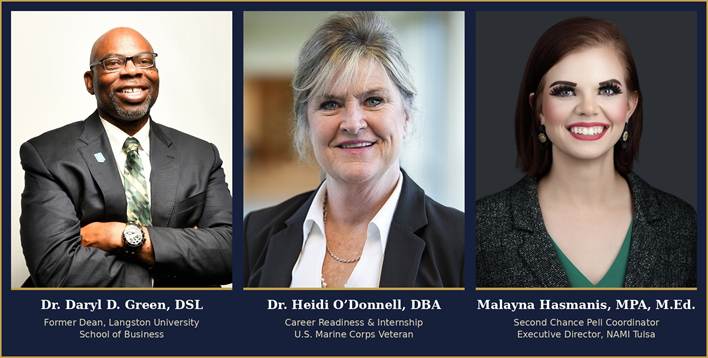
Presenters (left to right): Dr. Daryl D. Green, DSL; Dr. Heidi O’Donnell, DBA; and Professor Malayna Hasmanis, MPA, M.Ed.
What the Spring 2026 NACE Data Show
The National Association of Colleges and Employers (NACE) defines eight competencies employers value: career and self-development, communication, critical thinking, equity and inclusion, leadership, professionalism, teamwork and technology. In spring 2026, students’ matched self-assessments rose in all eight. Technology climbed from 3.19 to 3.65 on a four-point scale, leadership from 3.20 to 3.64, and professionalism reached 3.79, the highest score recorded.
The presenters are careful about what those numbers mean. They reflect how students rate their own growth, not independently verified hiring or employment outcomes. “An internship can teach students things that are difficult to fully understand in a classroom,” O’Donnell said. “They learn how to build skills and competencies, communicate with people and cultures they don’t already know, manage responsibilities, ask questions, and respond when a situation doesn’t go as expected.”
Seven Graduates at Dick Conner Correctional Center
In August 2026, seven students earned business degrees through Langston University at Oklahoma’s Dick Conner Correctional Center, where Hasmanis served as lead faculty.
“Seeing seven students earn their business degrees at Dick Conner Correctional Center reinforced my belief that education has the power to transform lives and systems,” Hasmanis said. “It challenges barriers, expands opportunity, restores possibility, and reminds us that potential is never defined by circumstance.”
As Langston’s Second Chance Pell Program Coordinator, Hasmanis addressed how competency-based career preparation could be adapted for justice-impacted learners. That application remains in development and has not yet been evaluated.
A Turnaround Made Teachable
The course redesign took place within a broader turnaround Green led at the School of Business. For a general audience, Green reports 54% enrollment growth during the turnaround period. In 2025, seniors scored in the top 1% nationally on the Peregrine Business Exam; one-year retention rose from 40% to 56%; and business graduates nearly doubled, from 19 to 36. These are institutional context, not outcomes attributed to a single course.
Five Practices Any Campus Can Adopt
1. Define the career competencies the program intends to develop.
2. Assess students before and after the learning experience.
3. Build work samples students can show employers.
4. Ask internship supervisors for actionable feedback.
5. Refine at least one practice each semester.
“First-generation students carry their families’ hopes into every classroom,” Green said. “When we can show them, and show employers, what they are able to do, we honor that hope.”
Meet the Presenters
Dr. Daryl D. Green, DSL, is a scholar-practitioner, institutional transformation expert, workforce disruption researcher, and author of more than 50 books. He served as dean of the Langston University School of Business from January 2024 to June 2026, leading an 18-month turnaround. Previously, he spent 27 years with the U.S. Department of Energy as a senior engineering manager overseeing more than $100 million in projects. He is the creator of The Nehemiah Blueprint in the Age of AI and publishes the Nehemiah Leadership Brief.
Dr. Heidi O’Donnell, DBA, is a professor and U.S. Marine Corps veteran who teaches the Career Readiness and Internship for Business course at Langston University. She has led education and workforce development programs for universities, federal agencies, and national research institutions, supporting undergraduate, graduate, and postdoctoral participants nationwide.
Professor Malayna Hasmanis, MPA, M.Ed., a doctoral candidate, is Second Chance Pell Program Coordinator and Adjunct Instructor at Langston University and lead faculty at Dick Conner Correctional Center. She is also Executive Director of NAMI Tulsa and assistant producer of Langston Vibes on KBOB 89.9 FM.
Media Interviews
Dr. Green and the other presenters are available for interviews on career readiness, HBCU innovation, workforce disruption, and higher education for incarcerated learners. This announcement is issued independently by AGSM Consulting LLC and is not an official Langston University news release.
Media Contact: Dr. Daryl D. Green | AGSM Consulting LLC | 865-719-7239 | advice@darylgreen.org | http://www.darylgreen.org
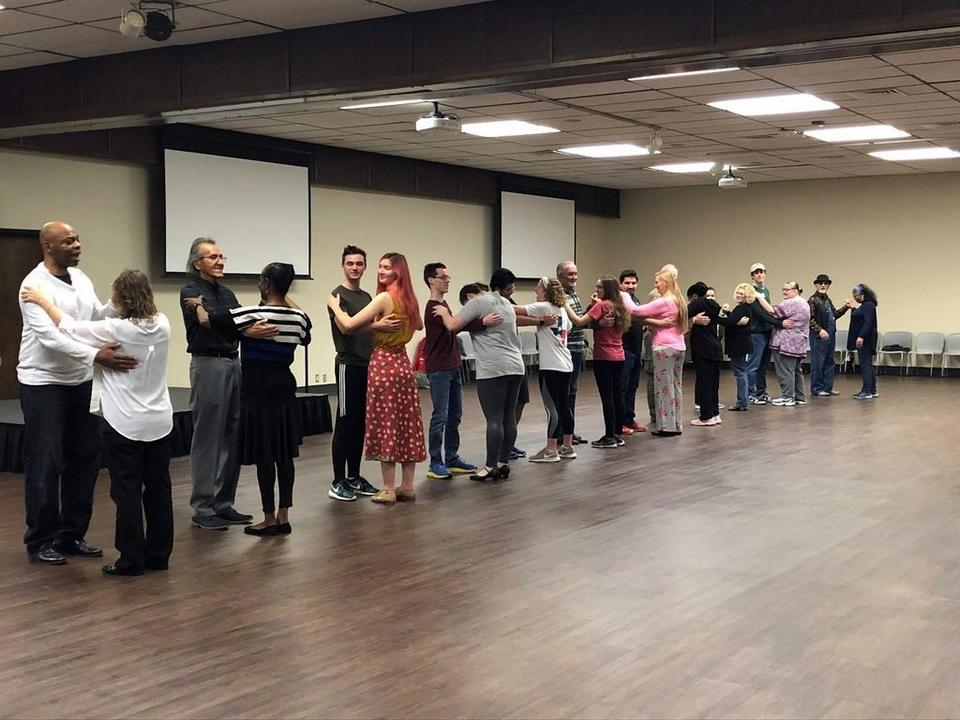


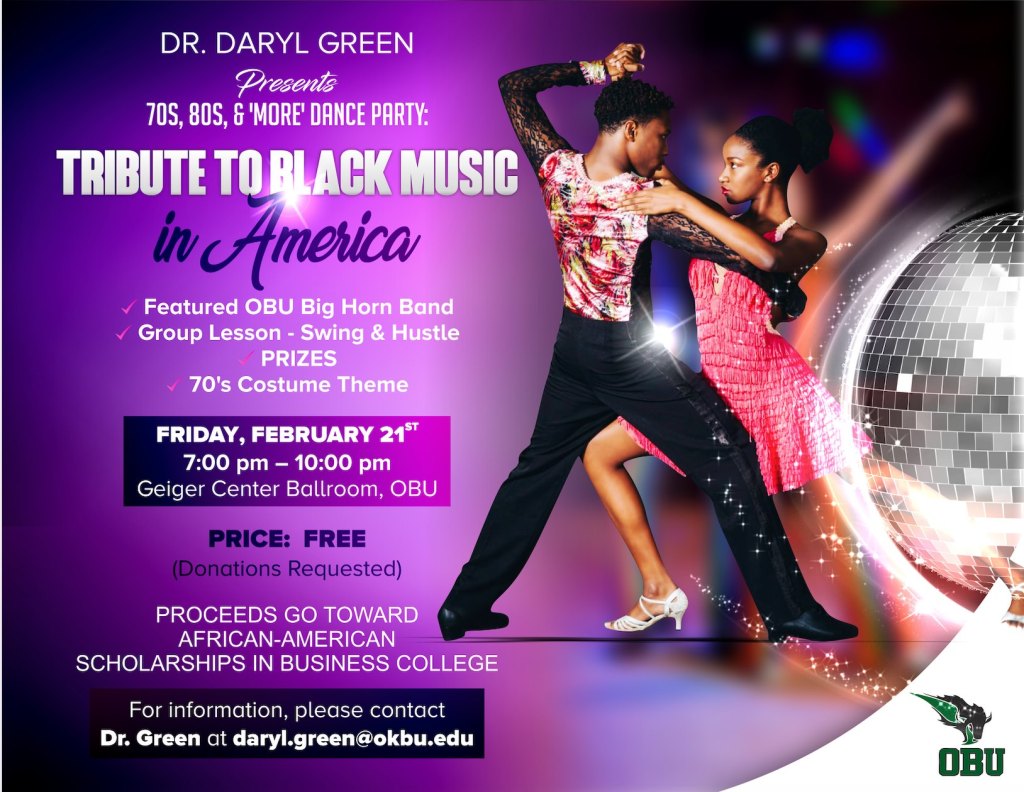
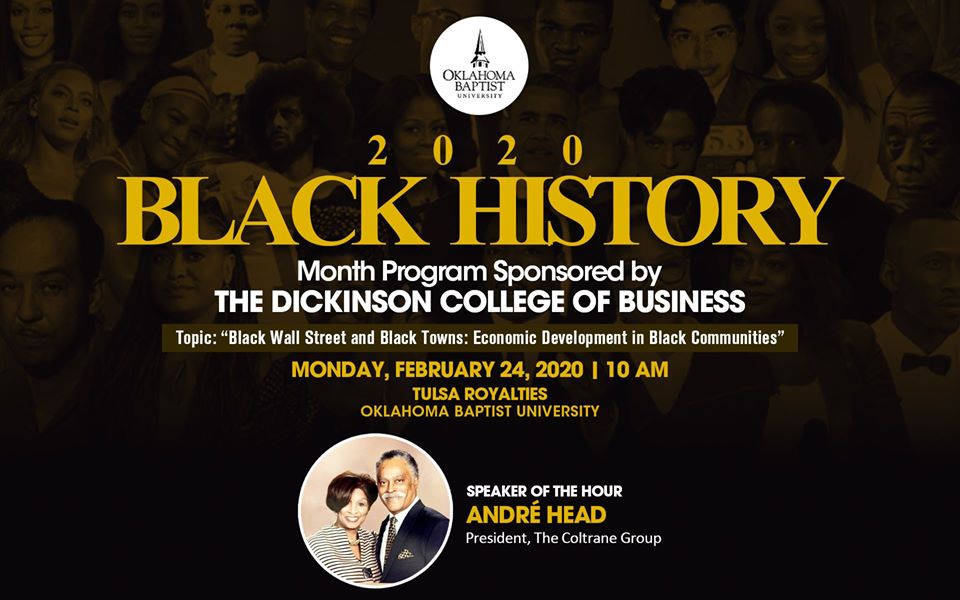
 Join us to enjoy the 2020 Black History Month Program sponsored by the Dickinson College of Business. This dynamic event will take place on Monday, February 24, 2020 at 10am at Oklahoma Baptist University

