Mapping Out the Right Job Process for 2013 College Grad

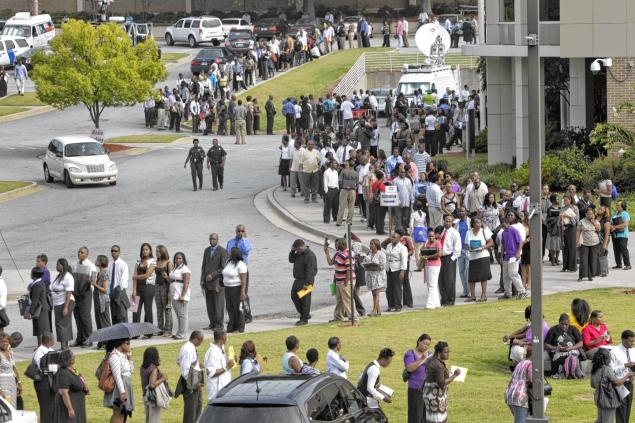
Unemployment-lines-youth-

Picking the right job candidate is not easy.  I was given the task of recommending college students for summer employment for my organization.  I promptly pulled together a team of both seasoned professionals and recent college grads to make the job selection.  We reviewed more than 100 resumes and interviewed several candidates.  We had to make these selections quickly.

To my surprise, I was flabbergasted at the lack of employment preparation for by some people.  For example, some students did not have the correct phone number listed on their resumes. We did not have time to waste tracking down candidates.

In one situation, we had called a prospect to interview him but missed him on our call to set up an interview.  He called us back with a list of times he was available to be interviewed.  In other words, he expected us to work our interview schedule around his.  Needless to say, we did not call him back.

In other cases, we contacted prospects and asked them two basic questions: (a) why did they want the job and (b) what separated them in terms of skills and abilities for the job.  In some cases, the students could not answer those questions.  I am sure in hind sight; they would have understood that those types of questions would be asked.

We were fortunate to land two quality candidates.  The team continued to be concerned about the lack of understanding by these college students about the job interview process.  Because of this, we developed a job strategies checklist to provide universities and college students for our campus visits or university interactions.

Sadly, these miscues in understanding the financial climate and the hiring process of employers could jeopardize their future.  In this blog, we will examine the current economic crisis and how students and parents can better position themselves for more employment opportunities.

The current economic forecast looks bleak in the near term for college grads and those preparing to graduate in 2013.  The U.S. Labor Department estimates that the unemployment rate for recent college grads between ages 21 to 24 has averaged over 8%.

According to the Economic Policy Institute, recent grads will probably need to settle for low-level positions.[1]  In fact, about 52% of employed college grads under age 25 were not working jobs that require a college degree according to a Northeastern University economist.[2]

College grads and current students must find alternative strategies to overcome employment obstacles. Rising tuition costs, a stagnate economy, and lack of career advancement continue to haunt ambitious young professionals.

Seasoned professionals are too cautious to retire early due to the uncertainty in their own future with the rising health care costs as they age.  In fact, getting a college education appears to be a big liability and financial load for students.

As the clock struck midnight several days ago, interest rates on federally subsidized Stafford student loans jumped from 3.4% to 6.8% until Congress can change it.[3] Some estimates conclude that the average college student will see an additional $2,600 cost for his or her loan.

According to the Project on Student Debt, two-thirds of 2011 college graduates had an average debt of more than $26,000.  Consequently, millions of college grads will see themselves carrying massive college debt loads with dim hopes of finding jobs in their majors.

Columnist Hadley Malcolm summed up this situation best, “Like countless Millennials across the country, they find themselves tethered to that debt load, stuck between the desire to become fully independent adults and not being able to afford the financial and cultural milestones traditionally associated with young adults.”

Employment opportunities have changed because the hiring processes have changed, yet most individuals do not realize this fact.  A process is defined as any part of an organization that inputs and transforms them into outputs in hopes of greater value to the organization than the original inputs.[4]

Robert Jacobs, Richard Chase, and Nicholas Aquilano, authors of Operations & Supply Management, note, “Understanding how processes work is essential to ensuring the competitiveness of a company.”

Yet, understanding the hiring process would be an asset to college grads who are competing with their college peers and seasoned professionals.  For most college grads, this reality makes it vital to find a good, well-paying job.  Yet, most people are in the dark about the job strategies necessary.

Peter Cappelli, author of Why Good People Can’t Get Jobs, explains that employers have shifted their expectations on prospective employees: “With an abundance of workers to choose from, employers are demanding more of job candidates than ever before…To get a job, you have to have that job already.  It’s a catch-22 situation for workers – and it’s hurting companies and the economy.”  Regardless of where you stand on today’s college students, it is clear that some intervention is necessary if they are to be successful in this troubled market.


With the increases in college debt and decreases in significant job opportunities, both college grads and college students must understand today’s hiring process. Additionally, with the rising cost of a college education, parents cannot afford to idly sit by and watch their child wander aimlessly through college.  Individuals can help themselves by becoming knowledgeable in all aspects of the employment process.  The road will not be easy, but planning will create the right environment for success in the future.

Please discuss employment processes that have changed since you graduated. Provide valuable employment strategies to recent college grads and current college students. 

© 2013 by Daryl D. Green



[1] “Class of 2013 faces grim job prospects” by Annalyn Kurtz

[2] “Class of 2013 faces grim job prospects” by Annalyn Kurtz

[3] “The cost of student debt loan” by Hadley Malcolm

[4] Operations & Supply Management by Robert Jacobs, Richard Chase, and Nicholas Aquilano.


Will Father’s Day Be Different for Black America: Saving Our Sons from Destruction?

saving-our-sons-graphic-cover-2013

When I wrote my book, A Call to Destiny: How to Create Effective Ways to Assist Black Boys in America, my co-author and I were able to analyze what was happening to young black boys in America.  We found some troubling trends. Without any intervention, young black boys, regardless of their social class, will not survive in the 21st century. 

With Father’s Day approaching the nation, the adequacy of fathers will eventually be dissected by media pundits and culture experts.  There are 26.4 million fathers in a traditional family environment. Yet, one of the biggest tragedies and failures of our society is the neglect of millions of black males in America that are failing in life.  One of the key problems is the abandonment of black fathers to take care of their parenting responsibilities. Over 70% of black children live with a single mother. 

The storyline for black boys is frightening. From the low social condition of black boys, it is easy to understand that every major institution has failed them and allowed to them to become the prey of urban culture. Young black males lead every negative statistic you can imagine. They have the worst test scores, the highest drop-out rates, and highest unemployment statistics. While they may fail in school, they become more successful in America’s prison system.

Reggie Jenkins, founder/director of UUNIK Academy of Tennessee, notes, “We are in a state of emergency.” While individuals may find black males missing in honors classes in most high schools, you can be assured that they will make up most of the special education students. For most involved black parents, the problems with their sons happen regardless of socioeconomic standing.

Parents must deal with the calls for medication, special education placement, or holding their child back. Many boys lack any meaningful male involvement.Therefore, an emergency call must go out to fathers! Act now or we will all regret it!  Ryan Bomb was born to a biological mother who was the victim of rape; he was adopted as an infant into a family of 13 children. 

The adoption was a positive force. In order to combat the fatherlessness, he created the Radiance Foundation.  He notes, “We’re calling out men for shirking their responsibilities.  This is not a blame game on women.  This is all of our responsibilities.”

Last month, President Barack Obama spoke at the Commencement Address at Morehouse College and attempted to speak the issues of personal responsibility for young men. President Obama cautioned them about the common issues that some men make: “We know that too many young men in our community continue to make bad choices…Growing up, I made quite a few myself. Sometimes I wrote off my own failings as just another example of the world trying to keep a black man down. I had a tendency sometimes to make excuses for me not doing the right thing. But one of the things that all of you have learned over the last four years, is there’s no longer any room for excuses.”

https://www.youtube.com/watch?v=lH7L6DJHRXo

America is in trouble as it witnesses millions of fathers missing from today’s homes. The black community is no exception.  Unfortunately, there are unintended consequences when men don’t take ownership or personal responsibility for being a father. 

Despite all of the government and social support available, today’s children still need a strong male role model in their homes.If we allow black boys to become an endangered species, we will be laying the foundation for all American children to eventually suffer the same fate. We must hold on to the hope that things will get better for them.

However, if good people decide to do nothing in the face of this impending danger, it will be a fatal mistake. If so-please forgive us, young brothers, for not saving you. Rest in Peace (RIP) or live.

Please share your opinion about this subject. 

© 2013 by Daryl D. Green

Dealing With Superficial People

superficial-1

Who wants to work with shallow people?  Most people want to interact with individuals who have a solid core of values. In fact, can you imagine being in an intimate relationship with a superficial individual. It’s not a good thought. 

You like that person, but the superficial nature of that person is a barrier to any genuine relationship. This situation is a case where actions speak louder than words.  You see them saying the right words and attempting to do the right things. 

However, sooner or later, their superficial disposition comes out, and you can’t believe they are that way.  If you were honest with yourself, you knew that person was pretty hollow in the beginning, but you didn’t want to accept it.  

First, there are no physical characteristics that can identify a superficial person. In many organizations, teamwork is the way to accomplish my tasks.  Richard Daft, author of Management, notes the connectedness of teams:  “When people become part of a team, their success depends on the team’s success; therefore, they must depend on how well other people perform, not just on their own individual initiative and actions.”[1] 

Consequently, the best leaders want the right folks on their teams.  Clearly, shallow people come in all shapes and sizes. They have varying backgrounds. They live in every community. However, these people all have a common characteristic: They are externally-driven. This article explores the dynamics of building relationships and the nature of superficial people. 

When an individual understands the nature of genuine relationships, they will be able to foster better relationships with family, friends, co-workers, and loved ones. 

Second, an individual’s character still counts in fostering meaningful relationships in spite of power or material wealth. Leaders set the tone in most organizations. 

Gareth Jones and Jennifer George, authors of Contemporary Management, agree with this premise: “Managers determine and shape organizational culture through the kinds of values and norms they promote in an organization.”[2]  Therefore, superficial leaders often surround themselves with superficial followers which are problematic at best.

Superficial people care little about the value of other people, so they focus on themselves, always thinking, “What is in it for me?”  Because shallow individuals are constantly trying to make the world conform to them, they focus little on building good personal content. 

England’s best-known preacher Charles Spurgeon once noted, “A good character is the best tombstone. Those who loved you and were helped by you will remember you when forget-me-nots have withered. Carve your name on hearts, not on marble.” 

Shallow people are often distracted with other things besides good character. Some chase money. Others chase power or fame. Unfortunately, these things lack much substance.  Like eating frosting on a cake, these people never get a nutritious meal to promote a healthy spirit. Yes, the frosting provides a short-term boost in life, but it is not lasting.  Therefore, superficial people spend little time on good content. 

In the frantic pace of modern living, many people are in the pursuit of the wrong possessions.  The media bombards us with the notion that “We deserve it all.”  When this philosophy is believed, it creates a generation of inwardly focused people. We become a “Me” generation.

Because this person feels he is entitled to be happy, he focuses on what can make him happy now.  Obviously, it is far easier to pursue things (money, power, right clique, etc.) in terms of happiness because they are tangible to the eyes.  However, this short path is not a road to fortune, but perhaps a highway to destruction.  

If you are in relationships with superficial person, you can be assured that your intimacy will lack any significant depth. Your relationship may feel like the real thing, but over time the truth usually will reveal itself.  How does an individual then seek to surround themselves with people of good content?  In addressing this question, here are some things to consider in any relationship:

Finally, building true relationships is dependent on the right idiosyncrasies.  An individual’s character is more important than what he or she brings in terms of assets. Sadly, some people do not have this deepness of character.

They exist on the shallow end of the spectrum; they rarely make serious relationships. Why is this factor the case? These people are more concerned with what’s on the outside of an individual than what is on the inside. Clearly, this is a mistake.  Real individuals want quality, meaningful relationships and are unwilling to settle for less. 

Discuss your experience with superficial people.

 © 2013 by Daryl D. Green                                    


[1]Management by Richard Daft

[2] Contemporary Management by Gareth Jones and Jennifer George


Ethical Leadership in 2013


 handcuffs-scandals-2013

If you can’t trust people with your mother, we are in trouble!  My 74-year-old mother was in the market to buy another car.  She finally bought it at a used car dealership (mom n pop).  They convinced her that this used car (PT Cruiser) was great!

In a few days, the car had problems. She took it back to the used dealership; the owner told my mother she had purchased bad gas. Eventually, my mother took it to an independent car repair shop. The computer was dead! To date, the used car dealership has not returned any of my mother’s calls. 

Situations like this undermine the public trust in human beings.  We have become cynical of our leaders, public or private.  With the number of high profile scandals with government officials and business executives, many people would describe ‘ethical leadership’ as an oxymoron.   Can you have ethics and leadership side by side?  

Denis Collins, author of Business Ethics, further explains, “Subordinates are constantly evaluating the ethics of a manager’s decisions and behaviors. Actions speak louder than words.”  Therefore, any meaningful ethic program must start with senior management behavior.

Trust is the foundation of any meaningful corporate structure.  Gareth Jones and Jennifer George, management experts maintain that when leaders are ineffective chances are good that workers will not perform to their capabilities. 

Mark Johnston and Greg Marshall, authors of Relationship Selling, further suggest senior management style (do their actions match their words), the established culture of the organization and external forces can create a climate where unethical or even illegal behavior is tolerated. Therefore, senior managers should lead the way by example. 

Furthermore, organizations must evaluate their current corporate culture. There are both written and unwritten rules and behaviors that come into play. For example, Enron senior management demonstrated a lack of moral and ethical judgment that played a critical role in its decision-making (i.e. breaking laws).                                     


Enron in the boom days of the late 90’s

In addition to analyzing an individual’s personal behavior, individuals need to analyze the organization’s leadership and culture climate to see the big picture.  Therefore, ethical leadership becomes an essential ingredient for making a highly effective organization.    

State your professional experience with ethical leadership or lack of.


 © 2013 by Daryl D. Green


Bubble Watching

I knew something bad would eventually happen.  As a young boy in Shreveport, we would regularly ignite fireworks without adult supervision. Often these fireworks were loaded as if we were going to war. Being boys with unlimited courage (or foolishness), we would deviate from the prescribed manufacturer’s guidelines (there were none). 

Typically, we would get the most potent firecracker a/k/a Black Cats.  We would light the firecracker and release it at the last minute.  Of course, someone would attempt to be most courageous and wait even longer.  Yes, you may guess it.  Someone would eventually get hurt. However, we dared not to let an adult know.  

Likewise, our financial situation is in a crisis across the globe.  Yet, most business institutions continue to act in an unwise behavior which eventually will get them into trouble, a/k/a a bubble burst.   

A bubble can be defined as “whenever an asset’s perceived or psychological value exceeds its real economic value.”  It’s not rocket science in understanding bubbles. For example, people purchased overpriced homes that they could not continue to pay for.  The housing market’s bubble burst.  Millions of dollars came tumbling down with this bubble.  Therefore, bubbles can be toxic.    

Some bubbles are easier to see than others.  For example, Europe may be looking at a very rocky financial future.  In its book Beyond Austerity: A Path to Economic Growth and Renewal in Europe, the McKinsey Global Institute outlines the trouble that Europe faces: “The challenges Europe faces are serious-more so for some economies than others.”  

Europe’s political will is unable to change its social model.[1]  In 2009, EU-15’s productivity rates were 15% lower than the United States. In fact, Europeans work, on average, 5 weeks less than workers in the U.S. (U.S. workers are among the best in the world in productivity).  

Their seasoned citizens (ages 55-64 –years old) do not actively participate in work activities compared with the senior population in America. Many of their social services are provided by the government which puts a heavier burden on resources. Europeans are reluctant to change their current social model that is driving them into an economic ditch.  Consequently, a bubble will eventually burst. 

However, America cannot believe it’s immune to a bubble crisis like Europe.  John Wiedemer, Robert Wiedemer, and Cindy Spitzer, authors of America’s Bubble Economy, correctly predicted the 2008 economic crisis several years before it happened. 


Additionally, they predicted that America is headed for an even worse economic crisis, regardless of the political parties in charge.  They understand the power of understanding bubble trends:  “…the bursting of America’s bubble economy will create a temporary Bubblequake of shockwaves here and around the world, depressing stock and real estate values, driving up interest and inflation, and throwing the U.S. and other economies into temporary global recessions.”[2]  The following elements are what the authors saw as bubble busters for the American economy before the 2008 bubble burst:

  • Huge international trade deficits that just keep getting bigger.
  • An astronomical $8 trillion federal government debt, heavily financed by foreign capital.
  • Ever-expanding consumer debt with no equal rise in consumer income.
  • The lowest savings rates in America’s history.
  • A national housing market that has climbed 80% in the last several years while income rose only 2%.
  • An economy that is now heavily dependent on historically low interest rates and low inflation rates that require massive foreign capital to maintain.

 Clearly, those predictions were made for 2008.  However, has anything changed since then as it relates to these elements?  Consequently, those organizations that watch bubbling trends, analyze them, and act accordingly have the greatest opportunities for sustainable success. 

Discuss a potential bubble in your industry and how an organization or individual can leverage this problem into an opportunity? 

© 2012 by Daryl D. Green


[1] Beyond Austerity: A Path to Economic Growth and Renewal in Europe by the McKinsey Global Institute

[2] America’s Bubble Economy by John Wiedemer, Robert Wiedemer, and Cindy Spitzer

Following the Path of Globalization

Why should I care what happens across the globe?  I have a mortgage to pay, a family to feed, and a job I hate. Who cares about globalization?  We should all be concerned about globalization.  It impacts us…and we do not even recognize it. 

Global disruptions plague most financial institutions.   For example, Europe offered a bailout package of up to (euro) 100 billion ($125 billion U.S.) to help secure the country’s banks. 

Spain became the fourth and largest European country to request financial help. Seventeen countries from the eurozone sent a statement explaining that this funding would go directly to a Spanish fund set up to recapitalize its banks.  

Nevertheless, the economic crisis in Europe worries financial experts in America because trading and commerce interlock countries together.   Therefore, America will not be able to escape any global financial crisis. 

As I teach international business, I often hear students state that they do not have any international experience. Yet, they do not understand that social media platforms like Facebook and Youtube make them global. 

In fact, Facebook continues to dominate the virtual landscape with 500-million-users. It is transforming how the world communicates.  If Facebook was a country, it would be the world’s third largest country. Therefore, Facebook represents a serious way individual citizens can be a part of this global community. 

More importantly, individuals need to understand that globalization is reshaping society and how we live as people.  Charles Hill, author of International Business, suggests that most people cannot avoid the impacts of globalization:  “As the world shifts toward a truly integrated global economy, more firms, large and small, are becoming international businesses.” 


Thomas Friedman, author of The World is Flat, further outlined the interconnectivity of economies with his concept of flattening. Friedman states that Globalization 1.0 and 2.0 were driven primarily by European and American influences. However, Globalization 3.0 was being driven by more inclusive and diverse forces. 

Friedman explains, “…the dynamic force in Globalization 3.0 – the force that gives it its unique character – is the newfound power for individuals to collaborate and compete globally.” 

Therefore, individuals do not need to wait on their countries or businesses to ‘go global.’ Individuals can build their own personal brands globally with social media platforms like Facebook.

How can academic institutions in America best serve students in understanding the ramifications of globalization?  Feel free to use your personal experiences as examples.

 © 2012 by Daryl D. Green

Guest Blogger – The Retirement of the Baby Boomers….real or fantasy?

My initial thoughts on the pending dilemma of retiring Baby Boomers within my industry were that of alarm.  The knowledge and skill set that would be lost is an  issue that most US institutions face daily.  My background is in the engineering field where I have always worked with the Utility, Industrial, and Government markets.

 Therefore, when I work for a company that averages 36% of their workforce being Baby Boomers, I find myself cringing.  Anyone who works in a diverse age group of people (or to be politically correct, we’ll call it a “multigenerational” workforce) know that these work environments can breed misunderstanding and conflict and may compromise growth.

And as I begun thinking this dilemma through, a few points cropped in this crazy blonde brain of mine….that’s right, I do have real moments of clarity at times!

  1. With the financial and economic crisis these past few years, many soon-to-be retirees are choosing to stay employed.
  2. The trend of salaries for Baby Boomers is significantly higher than that of entry level employees.  Therefore, my company is noticing a decrease in project awards due to the fact we are out pricing ourselves with our competitors.
  3. With the Baby Boomers continuing to work longer, we are not bringing in younger employees to mentor out of college.  The employee pool is becoming stagnant. 

So what is the answer?  Is the issue of retiring Baby Boomers really a crisis or is it just an adjustment period for employers to incorporate new blood?  Dave Bernard of U.S. News stated that retirement can be a time to explore creative new avenues, and put the skills you have cultivated throughout your career to work in new ways (June, 2012). 

He is dead on when I notice that many retirees are returning back into the engineering field as “consultants” or they are reducing their hours to continue their insurance coverage and reducing their pace a little.

However, the demands on today’s knowledge workers are more mental than physical. Many baby boomers, who have already begun to reach age 65, are far from physically exhausted and often have much more to give (Bernard, 2012).  

Whatever happens, the baby boom retirement crisis is bound to have its unexpected turns. As they age, they’ll surely continue to change the economy, though the effects are hard to predict (Gelinas, 2011).   Employers today must strategize on how to best incorporate the knowledge skills from these employees through Mentoring programs or Internships. 

Ultimately, we must stay competitive in the marketplace to keep the jobs here at home.  

References:

Bernard, D. (2012, June).  Baby Boomers Search for Second Careers.  U.S. News.  (http://money.usnews.com/money/blogs/On-Retirement/2012/06/01/baby-boomers-search-for-second-careers).  

Gelinas, N. (2011, November).  As baby boomers retire, the times will be a-changin.’   The Los Angeles Times.  (http://articles.latimes.com/2011/nov/06/opinion/la-oe-gelinas-baby-boomers-retire-20111106).

Please share your comments with this industry leader.

ABOUT THE BLOGGER


Brandi Reilly currently works for Mesa Associates, Inc., a multidiscipline engineering design firm based out of Knoxville, TN.   Her experience spans 16 years in engineering, project management, and consulting services.  She graduated from Clemson University with a Bachelor’s degree in Environmental Engineering and recently completed her MBA at Lincoln Memorial University in 2011.  She has completed her Project Management Professional (PMP) accreditation and is currently pursuing her Professional Engineering (PE) license.  

(c) 2012 by Dr. Daryl D. Green

Father’s Day: A Character Test


I had two take a second glance at the news headline on Yahoo.com.  Desmond Hatchett, a 33 year old man from Knoxville (TN), was requesting relieve from the court for his child support. According to news sources, Hatchett had 30 children by 11 different women. 

However, Hatchett struggled with his financial commitments with his children due to his low paying minimum wage job. The court required him to turn over 50% of his wages because child support payments were based primarily on the children ages and their needs.  Sadly, some mothers were only receiving $1.49 a month for their children.  Consequently, Hatchett could not meet his financial responsibilities as a father.  However, not meeting their mental or spiritual needs may have more lingering effects on his children. 

With Father’s Day upon us, the adequacy of fathers will eventually be dissected by media pundits and culture experts.  America is in trouble as it witnesses millions of fathers missing from today’s homes. Unfortunately, there are unintended consequences to this national epidemic. 

Despite all of the government and social support available, today’s children still need a strong male role model in their homes.  For a few people, today’s fathers do not make the grade. In fact, the question must be considered: Can anyone concretely define the contributions of a father in a home? 

Clearly, today’s women are more independent. In fact, many families lack a male figure in the household anyway.  Fathers are often the forgotten fixture in the life of the average child. I am constantly reminded of the shortcomings of men in all walks of my life.  

Yes, some people claim both the traditional structures of families and roles of family members are too outdated. Clearly, the demographic shift in America suggests something is different.

According to the 2006 Census Report, there are over 60 million fathers in the United States.  Sadly, everything is not a pleasant story. There are 4.6 million fathers who pay child support, representing 84 percent of child support providers.

Fathers are a staple in our community. Fathers are like a creek in your backyard. You don’t miss it until it runs dry. Likewise, the absence of a caring father makes a difference in a child.   Furthermore, the trends for missing fathers have varied.

With the increase of out-of-wedlock births and the high degree of divorces, children living away from their biological father have become common place. The National Survey of America’s Families estimated in 1997 that one in three children under 18 years lives apart from one of their parents. 

National attention needs to be placed on developing better fathers and retrieving any lost ones…if possible.  Many good fathers are forced to fill in during those situations when fathers are absent from their children’s lives.  Obviously, there are numerous examples of abusive and absent fathers in today’s home. 

If today’s leaders buy into the notion that fathers are irrelevant, we dampen our children’s sense of optimism about the significance of good fathers in influencing positive behavior in our children. Consequently, effective fathers should be celebrated as a link to a successful future for our country.  

Please share your opinion on this topic. 

© 2012 by Daryl D. Green

Stopping the Global Crisis

Last week, I received news that I was going global.  It was exciting news. Aren’t we interconnected anyway?  My primary publisher, Createspace, announced that my books would now be available directly through Amazon’s European websites, including Amazon.co.uk, Amazon.de, Amazon.fr, Amazon.es, and Amazon.it.

As the world’s largest online retailer, Amazon.com is the parent company of Createspace Publisher.  Globalization has connected our lives together.  If organizations are going to be successful in the future, they need to be strategic. Finding talent and solutions will be vital, regardless of the continent.  

Globalization prevents us from hiding out in our countries. With the issues of austerity in Europe and threats in Iran, organizations are struggling to stay ahead of all the significant changes.  Global turbulence continues to haunt financial institutions.

Most economic experts believe that Europe is in recession. According to Britain’s Office for National Statistics, the first quarter of this year Britain’s economy shrank .2%, after having contracted .3% in the fourth quarter of 2011. Europe struggles to maintain financial stability while country after country falters.  Greece, Spain, Portugal, and Italy lead the list of financially crippled countries in Europe.  

Around the world, countries continue to suffer from unprecedented changes. The year 2011 was a vintage time for massive protests, from the awakening of the Arab world to the defeat of evil tyrants. Japan suffered its biggest nuclear catastrophe. 

Egypt is now crippled by economic turmoil, inadequate health care, and continued unrest in the country.  In fact, the country is headed toward another milestone as Egyptians decide who will be their president and architect for leading them into the future.  

Voters may elect to move toward an established Islamic nation; this fact is driven by religious clerics and other influential parties who desire a more religious country. 

Shady Ghoneim, an Egyptian importer, worries about the country’s political fate internationally: “Foreign investors won’t come back unless they can trust a moderate president.”  Troubles in one country can have a negative impact to other nations due to these financial linkages. 

The United States and other members of the Group of Eight (G-8) industrial nations (Germany, France, Canada, United States, Britain, Italy, Russia, and Japan) are attempting to assist Europe’s financial crisis. 

President Barack Obama discussed the ramification during an upcoming meeting: “All of us are absolutely committed to making sure that the growth and stability and fiscal consolidation are part of the overall package.” However, many citizens from these European countries resist any financial solutions (i.e. austerity measures) that will take away their quality of life.

At the same time of dealing with the global financial crisis, each country seeks to increase exports of goods and spearheading job creation in their own countries. Therefore, foreign government officials are in a risky situation by supporting any international agreed solutions which are very unpopular with their own citizens. 

Since globalization has linked each country economically, Americans cannot escape either.  Regardless of the continent, people are looking for answers. Thus, countries must promote mutual financial interest internationally while keeping a pulse of their own self interest.   Therefore, countries with an isolationistic mindset will have a difficult time navigating in the future. 

Please share your opinion on this topic. 

 © 2012 by Daryl D. Green                                    


Leaders Value Moms on Mother’s Day

Here’s the reality.  Every great leader came from a woman.  Therefore, no one should  dismiss the influence of mothers on today’s leaders. With the media bombarding women with unrealistic expectations for mothers, it is any wonder that today’s mothers feel under huge pressures to be perfect.

Stay-at-home mothers feel guilt for not providing financially as it takes two people to make ends meet. Working mothers feel the guilt of attempting to balance a career and a family at the same time. 

Any person worth salt would recognize that mothers are often the glue that holds families together.  People don’t like other people talking poorly about their mother, even if she has many flaws.  In fact, no matter how unfit or imperfect your mother may be, she was still your mother.

Your mother might have been a bad cook. She might have been a drug abuser. She might have been a terrible person. However, her imperfections are not open to public scrutiny. This article examines a 21st century motherhood model in contemporary society.  

Good mothers are difficult to model. According to the US Census in 2008, there are over 82 million mothers in America. Many mothers go about their business with little regard for their impact on society. As a matter of fact, the value of a good mother is often forgotten, except for the customary card on Mother’s Day. Not all mothers are built the same when it comes to character.  

Some women are openly unfit or unprepared to be mothers. The notion of an unfit mother is a legal definition which may vary from state to state. However, an unfit mother may be defined as a mother who fails to take care of the   basic needs related to the physical, mental, and spiritual state of a child. 

For example, Susan Smith, who was from South Carolina, became the poster child for a bad mother. She had appeared on national television proclaiming that her two children had been kidnapped. In reality, Smith had driven her car into a lake, drowning her children. She had done this act in pursuit of her own adulterous relationship.

Smith was later convicted in 1995 and sentenced to life in prison for murdering her two sons, Michael Daniel Smith, 3, and 14-month-old Alexander Tyler Smith. Many individuals would point to her as an abusive or neglecting mother. Furthermore, there are so many famous women who are esteemed as the modern day feminist model, but these women often do not represent the ideal mother figure. 

Good mothers distinguish themselves with an unselfish behavior. They are the ones who go the extra mile so that everyone’s mental or physical condition is properly cared for.

In fact, true mothers put their families’ needs ahead of their own. Of course, this selfless image runs counter to the “ME” only culture. King Lemuel must have realized this fact when he outlined his motherhood model in Proverbs 31. 

The mother described in this passage is a loving wife, kindhearted mother, a champion of the oppressed, a business woman, a godly figure, and insightful advisor. The author notes about this woman, “Her children arise and call her blessed; her husband also, and he praises her.’” Therefore, character does count if an individual wants to use the right model for good motherhood. 

Today, many people take a good mother model for granted. Some people complain about their mothers and how they do not fit today’s media model of an ideal mother figure. These unrealistic expectations cause some women to despair because they do not fit this unrealistic expectation. 

When there is a mother of unique character in society, she should be celebrated and cherished. In the daily grind of living, many folks lose sight of the positive influence of the right kind of mother. A good mother creates a legacy for future generations. Let’s hope that the positive model will never be forgotten.

Please share your opinion on this topic. 

© 2012 by Daryl D. Green