
Author: nuleadership

  • Transformational Properties of Operations Management

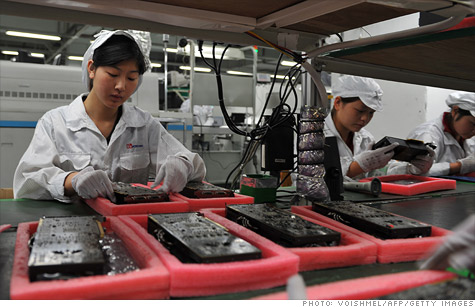
    Manufacturing-factory-China

    Last week, I ran into an old friend at the Oak Ridge Post Office. He was a retired professional who I had played noon basketball with in my early years in Oak Ridge. He mentioned that most of the guys had retired from their jobs.

    However, he also mentioned that one of the most seasoned professionals had been laid off from this prestigious firm after working for this organization more than 20 years. It was noted that the work had dried up. In fact, most of the local businesses are seeing the budget tightening in the government sector which is critical to the survival of most businesses in the area. Sadly, the financial crisis is not over.

    Globalization will continue to drive down prices and force businesses to make hard decisions which impact the basic quality of living. Companies will look to operations management to gain greater efficiency and effectiveness in their systems.

    The underpinning thread is how they understand value creation and what it means to customers. In this context, value can be defined as the perceived experience and worth gained from a product or service.[1] Creating value is not easy. Creating value across an international base is almost impossibility for most companies. Therefore, understanding operations management and supply management is a necessity.

    Global markets continue to shift the direction of today’s businesses. Companies must be astute to the ever changing value perspectives of customers. According to KPMG 2013 Global Manufacture Outlook, companies should be optimistic. This international report surveyed 335 senior executives in five industries: Aerospace and Defense, Automotive, Conglomerates, Engineering and Industrial Products, and Metals.[2]

    KPMG notes, “Global manufacturers’ ability to optimize performance and cost in their entire supply chain will be key to helping them become more competitive and resilient…Global manufacturers are building closer relationships with their customers, who in turn expect more due to advances in manufacturing technology.” These organizations are seeking a competitive advantage in several ways:

    1. Increasing transaction activity to take advantage of growth opportunities in global markets, while reassessing operations and product portfolios to control costs.
    2. Viewing their ‘channel partners’ as more of a network and building closer working relationships with their suppliers and other partners to maximize responsiveness to changes in the market. More effective and efficient collaboration enables them to optimize inventory, logistics, and other operational costs.
    3. Improving visibility in supply chain optimization provides a major opportunity for many companies to boost performance, agility, and resilience.
    4. Increasingly placing the supply chain at the center of their strategies to innovate, as they begin to look at suppliers not just as a source of production and logistics but also of ideas.
    5. Investing in breakthrough and incremental innovation to stay competitive. Nearly a third of respondents whose firms are stepping up R&D say their company will invest in breakthrough innovation.

    Individuals as well as organization must understand the transformation properties of operations management.  Transformation processes relate to utilizing resources to convert inputs to desired outputs.

    For example, automobile manufacturers convert primary inputs (i.e. sheet metal, plastics, engine parts) into a desired output (i.e. high quality cars). Yet, products are not the only thing that has a transformation process. Services also follow this paradigm. In the hospital industry, primary inputs (i.e. patients) create a desired output too (i.e. healthy patients).

    Robert Jacobs, Richard Chase, and Nicholas Aquilano, authors of Operations & Supply Management, argue the merits of well-constructed organizational systems, especially during global competition: “Transformation processes are used in all types of businesses…Operations and supply management is about learning how to design these transformation processes.” Companies that understand what customers want and the intrinsic value desired by them will need to effectively retool their transformation processes in a cost effective manner.


    According to the Economic Policy Institute, there are roughly 5.1 fewer American manufacturing jobs than at the start of 2001.[3] In fact, organizations argue that American worker’s wages have tumbled due to China’s cheap labor (i.e. primary input in the transformation process).

    Global competition demands that organizations focus on the ‘small stuff’ as well as the big picture and embrace the attractive properties of operations managements.

    Discuss the concept of operations management for today’s organizations.

    © 2013 by Daryl D. Green


    [1]Relationship Selling by Johnston & Marshall

    [2] KPMG 2013 Global Manufacture Outlook

    [3] “Report: America lost 2.7 million jobs to China in 10 years” by Danielle Kurzleben

  • Will Father’s Day Be Different for Black America: Saving Our Sons from Destruction?

    saving-our-sons-graphic-cover-2013

    When I wrote my book, A Call to Destiny: How to Create Effective Ways to Assist Black Boys in America, my co-author and I were able to analyze what was happening to young black boys in America.  We found some troubling trends. Without any intervention, young black boys, regardless of their social class, will not survive in the 21st century. 

    With Father’s Day approaching the nation, the adequacy of fathers will eventually be dissected by media pundits and culture experts.  There are 26.4 million fathers in a traditional family environment. Yet, one of the biggest tragedies and failures of our society is the neglect of millions of black males in America that are failing in life.  One of the key problems is the abandonment of black fathers to take care of their parenting responsibilities. Over 70% of black children live with a single mother. 

    The storyline for black boys is frightening. From the low social condition of black boys, it is easy to understand that every major institution has failed them and allowed to them to become the prey of urban culture. Young black males lead every negative statistic you can imagine. They have the worst test scores, the highest drop-out rates, and highest unemployment statistics. While they may fail in school, they become more successful in America’s prison system.

    Reggie Jenkins, founder/director of UUNIK Academy of Tennessee, notes, “We are in a state of emergency.” While individuals may find black males missing in honors classes in most high schools, you can be assured that they will make up most of the special education students. For most involved black parents, the problems with their sons happen regardless of socioeconomic standing.

    Parents must deal with the calls for medication, special education placement, or holding their child back. Many boys lack any meaningful male involvement.Therefore, an emergency call must go out to fathers! Act now or we will all regret it!  Ryan Bomb was born to a biological mother who was the victim of rape; he was adopted as an infant into a family of 13 children. 

    The adoption was a positive force. In order to combat the fatherlessness, he created the Radiance Foundation.  He notes, “We’re calling out men for shirking their responsibilities.  This is not a blame game on women.  This is all of our responsibilities.”

    Last month, President Barack Obama spoke at the Commencement Address at Morehouse College and attempted to speak the issues of personal responsibility for young men. President Obama cautioned them about the common issues that some men make: “We know that too many young men in our community continue to make bad choices…Growing up, I made quite a few myself. Sometimes I wrote off my own failings as just another example of the world trying to keep a black man down. I had a tendency sometimes to make excuses for me not doing the right thing. But one of the things that all of you have learned over the last four years, is there’s no longer any room for excuses.”

    https://www.youtube.com/watch?v=lH7L6DJHRXo

    America is in trouble as it witnesses millions of fathers missing from today’s homes. The black community is no exception.  Unfortunately, there are unintended consequences when men don’t take ownership or personal responsibility for being a father. 

    Despite all of the government and social support available, today’s children still need a strong male role model in their homes.If we allow black boys to become an endangered species, we will be laying the foundation for all American children to eventually suffer the same fate. We must hold on to the hope that things will get better for them.

    However, if good people decide to do nothing in the face of this impending danger, it will be a fatal mistake. If so-please forgive us, young brothers, for not saving you. Rest in Peace (RIP) or live.

    Please share your opinion about this subject. 

    © 2013 by Daryl D. Green

  • Dealing With Superficial People

    superficial-1

    Who wants to work with shallow people?  Most people want to interact with individuals who have a solid core of values. In fact, can you imagine being in an intimate relationship with a superficial individual. It’s not a good thought. 

    You like that person, but the superficial nature of that person is a barrier to any genuine relationship. This situation is a case where actions speak louder than words.  You see them saying the right words and attempting to do the right things. 

    However, sooner or later, their superficial disposition comes out, and you can’t believe they are that way.  If you were honest with yourself, you knew that person was pretty hollow in the beginning, but you didn’t want to accept it.  

    First, there are no physical characteristics that can identify a superficial person. In many organizations, teamwork is the way to accomplish my tasks.  Richard Daft, author of Management, notes the connectedness of teams:  “When people become part of a team, their success depends on the team’s success; therefore, they must depend on how well other people perform, not just on their own individual initiative and actions.”[1] 

    Consequently, the best leaders want the right folks on their teams.  Clearly, shallow people come in all shapes and sizes. They have varying backgrounds. They live in every community. However, these people all have a common characteristic: They are externally-driven. This article explores the dynamics of building relationships and the nature of superficial people. 

    When an individual understands the nature of genuine relationships, they will be able to foster better relationships with family, friends, co-workers, and loved ones. 

    Second, an individual’s character still counts in fostering meaningful relationships in spite of power or material wealth. Leaders set the tone in most organizations. 

    Gareth Jones and Jennifer George, authors of Contemporary Management, agree with this premise: “Managers determine and shape organizational culture through the kinds of values and norms they promote in an organization.”[2]  Therefore, superficial leaders often surround themselves with superficial followers which are problematic at best.

    Superficial people care little about the value of other people, so they focus on themselves, always thinking, “What is in it for me?”  Because shallow individuals are constantly trying to make the world conform to them, they focus little on building good personal content. 

    England’s best-known preacher Charles Spurgeon once noted, “A good character is the best tombstone. Those who loved you and were helped by you will remember you when forget-me-nots have withered. Carve your name on hearts, not on marble.” 

    Shallow people are often distracted with other things besides good character. Some chase money. Others chase power or fame. Unfortunately, these things lack much substance.  Like eating frosting on a cake, these people never get a nutritious meal to promote a healthy spirit. Yes, the frosting provides a short-term boost in life, but it is not lasting.  Therefore, superficial people spend little time on good content. 

    In the frantic pace of modern living, many people are in the pursuit of the wrong possessions.  The media bombards us with the notion that “We deserve it all.”  When this philosophy is believed, it creates a generation of inwardly focused people. We become a “Me” generation.

    Because this person feels he is entitled to be happy, he focuses on what can make him happy now.  Obviously, it is far easier to pursue things (money, power, right clique, etc.) in terms of happiness because they are tangible to the eyes.  However, this short path is not a road to fortune, but perhaps a highway to destruction.  

    If you are in relationships with superficial person, you can be assured that your intimacy will lack any significant depth. Your relationship may feel like the real thing, but over time the truth usually will reveal itself.  How does an individual then seek to surround themselves with people of good content?  In addressing this question, here are some things to consider in any relationship:

    Finally, building true relationships is dependent on the right idiosyncrasies.  An individual’s character is more important than what he or she brings in terms of assets. Sadly, some people do not have this deepness of character.

    They exist on the shallow end of the spectrum; they rarely make serious relationships. Why is this factor the case? These people are more concerned with what’s on the outside of an individual than what is on the inside. Clearly, this is a mistake.  Real individuals want quality, meaningful relationships and are unwilling to settle for less. 

    Discuss your experience with superficial people.

     © 2013 by Daryl D. Green                                    


    [1]Management by Richard Daft

    [2] Contemporary Management by Gareth Jones and Jennifer George


  • Interview with Dr. Richard Daft, Professor at Vanderbilt University

    Internationally renowned expert, Dr. Richard Daft has been an industry leader in organizational management. He has published 12 books, dozens of articles, and presented at more than 45 universities around the world. Being a former Associate Dean at Owen, Dr. Daft has also developed and managed the Center for Change Leadership, participated in more than $500,000 in research grants, and is a Fellow of the Academy of Management. Dr. Daft is currently professor at the Owen Graduate School of Management, Vanderbilt University. He is the author of the textbook (10 edition), Management. He shares his insight on several management topics this week:

    Discuss how you got involved studying management and becoming professor at Vanderbilt University.
    During my last semester of college, I met a young professor in the business school. As I learned about his work, I was intrigued, but felt that becoming a professor was too far out of reach. A couple of years later while working in Marshalltown, Iowa, I was in the library and came across a textbook on organizational behavior. I was so interested in the subject matter that I realized in that moment that I would try to be become a professor in organization studies. I came to Vanderbilt 24 years ago when a position opened up and I was ready to make a move from a large state university to a smaller private university. I applied for the position and got it.

    What do you feel are the major challenges for American businesses faced with the realities of globalization?
    For me, the issue comes down to qualities of both leadership and management. Globalization makes every industry more competitive. Thus businesses have to be super efficient, which is a function of management control and accountability. Businesses also have to be forward-looking and innovative, which is about employee creativity and engagement that are awakened by leadership.

    What key leadership traits will be important as the world faces an uncertainty future?
    I would say a certain amount of courage, vision and/or purpose, persistence, great soft skills, and knowing oneself. By knowing oneself, I mean knowing your own strengths and weaknesses, and choosing situations that take advantage of your strengths and accommodating weaknesses through others’ strengths. By great soft skills, I mean that people who genuinely care about and get along with others seem to thrive in any environment.

    There are 20 million unemployed in our country. What are the positive things for these people to look forward to in 2014 and beyond?
    It is hard for me to be positive about the huge number of unemployed people in our country. The trend I am most aware of is the growth of technology that is replacing the need for workers. More businesses are creating or buying technology to do work more efficiently and for less cost than hiring employees to do the work. Hence businesses are thriving while unemployment is decreasing very slowly. I also feel a personal frustration with the legislative and executive branches of our government which seem more loyal to their respective ideologies than to solving the unemployment problem. I would like to see the government focus on designing an economic system that ranks full employment as a top priority.

    Any other comments:
    I appreciate the opportunity to respond to your questions. I hope the Management text is working well for your students.

    Best regards,

    Dick Daft
    Professor
    Vanderbilt MBA Program 

    Please share your comments on this topic.

    Richard-Daft

    ABOUT THIS EXPERT

    Byline

    Professor Daft is among the most highly cited academics in the fields of economics and business. Richard Daft is studying high performance mental models – which include cognitive models of high performing managers – and examining high performance management systems. He has been involved in management development and consulting for companies and organizations such as the American Banking Association, Bell Canada, Bristol-Myers Squibb, J.C. Bradford & Company, Ford Motor Company, Pratt & Whitney, USAA, First American National Bank, the Tennessee Valley Authority, Central Parking Systems, Performance Food Group, the National Science Foundation, Northern Telecom, State Farm Insurance, the United States Air Force, the United States Army, and Vanderbilt Medical Center.

    Education:
    B.S., University of Nebraska, 1967
    M.B.A., University of Chicago, 1971
    Ph.D., University of Chicago, 1974

  • The Human Factor

    man-fingers-crossed

    Businesses that don’t under the value of their human capital resources are in error.  In spite of the power of technology and automation, it takes people power to make business operations work.  Failing to understand this reality will leave an organization vulnerable to their competition. This week we will cover human factor buy-in, the last element in socio-technical systems.  

    Organizations must shift their paradigm to viewing workers as more than mechanical parts for their organizational objectives. Gareth Jones and Jennifer George, authors of Contemporary Management, maintain that managers have a responsibility to effectively oversee their human resources which includes the people involved in the creation and distribution of goods and services. [1] Given this reality, the ability of managers to leverage their talent is crucial.  

    Talent management is the process through which employers anticipate and meet the needs for human capital.[2]  Peter Cappelli, author of Talent Management, explains how mismanaging employees in organizations is problematic for an organization’s sustainable success:  “The failures in talent management includes mismatches between  supply and demand on the one hand, having too many employees, leading to layoffs and restructuring, and on the other hand, having too little talent, leading to talent shortage. [3] 

    In the United States, talent management miscues fall into the following categories:  (a) Do Nothing Mode – makes no attempt to anticipate human resource needs and develops no plans for addressing them and (b) Reactive Mode – relies on outside hiring to meet human capital needs, but this approach has begun to fail now that the surplus of management talent has eroded. 

     https://www.youtube.com/watch?v=jTMs3hp-LFU

    Trust is the cornerstone of any meaningful relationships in organizations.  Yet, many employees do not trust their organizations due to the lack of employment security in most companies.  According to a USA Today poll, nearly half of those interviewed said that corporations can be trusted only a little, or not at all, when it involves looking out for the best interest of employees.[4] 

    Michael Hackman and Craig Johnson, authors of Leadership: A Communication Perspectives, argue that a leader’s credibility is directly related to the quality of his relationship with followers.[5] Marios Katsioloudes, a researcher specializing in Socio-technical analysis, explains that as profitability of mechanization increases, the importance of technology is implied while there is a devaluation of the workers. U.S. businesses cannot point to the lack of employee performance on a global front for mismanagement errors.[6]

    Japan, a long-time benchmark for American companies, is being defeated by American employees; today, the average U.S. worker puts in 36 more hours per year than Japanese workers (1,825 vs. 1,789). 

    Over the last two decades, balancing work and home life have been difficult since Americans have added 200 hours to their annual work schedule.[7] Employees want to be valued. 

    Jeffrey Pfeffer, author of The Human Equation, acknowledges that organization success is directly related to implementation, and this capacity comes from the workers, how they are treated, their skills, and their efforts as it relates to the organization.[8] 

    Leaders should see followers as more than mechanical parts for their organizational objectives. Managers assume that giving employees new technology is enough to keep them happy. Likewise, leaders should view followers as a vital component of the socio-technical system. 

    Discuss the concept of human factor buy-in for today’s organizations.

     © 2013 by Daryl D. Green                                    



    [1] Contemporary Management by Gareth Jones and Jennifer George

    [2] Talent Management by Peter Cappelli

    [3] Talent Management by Peter Cappelli

    [4] “Leading others while supporting organizational values” by Daryl D. Green

    [5] Leadership: A Communication Perspectives by Michael Hackman and Craig Johnson

    [6] “Leading others while supporting organizational values” by Daryl D. Green

    [7] “Leading others while supporting organizational values” by Daryl D. Green

    [8] The Human Equation by Jeffrey Pfeffer


  • Technology Relevancy

    Components of Technology

    We can’t survive without technology.  Are we too dependent on it?  When the computer network is down in our office, it’s a pretty wasted day because we are paperless.  Yet, you won’t find many modern organizations that can operate when their technology malfunctions. 

    This week we will focus on technology relevancy as part of the three practical applications (i.e. value modeling, technology relevancy, and human factor buy-in) in socio-technical systems.  

    Organizations must understand that technology needs to be relevant as it relates to benefiting the whole socio-technical system.  Technology relates to the combination of skills and equipment that managers use in the design, production, and distribution of goods and services.[1]   

    Gareth Jones and Jennifer George, authors of Contemporary Management, argue the significance of technology forces on organizations:  “Technological forces can have profound implications for managers and organizations. Technological change can make established products obsolete….”  The graveyard of many businesses is littered with numerous failed opportunities of senior executives to understand market shifts and technology opportunities.   

    As an engineer myself, we are taught to use theory in order to build, design, and operate technical systems, whether mechanical, digital, or otherwise. Sometimes this creates a technical superiority over the other components of this socio-technical system. 

    Organizations should obtain input from employees to ensure that the organization has not only the best technology for its operations but the right technology.[2]  This sharing of information can only come with mutual trust of leaders and followers.  Gary Yukl, author of Leadership in Organizations, notes, “Empowerment is more feasible when there is a high level of mutual trust…Leaders can affect the psychological employment of followers in many ways, and participative leadership and delegation are only two of the relevant behaviors .”[3] 

    There have been numerous cases where organizations have purchased new technology to solve a problem or to become more efficient when a simple conversation with impacted employees would have produced better results at a lower cost. Therefore, organizations should invest their time in identifying the relevant technologies for their socio-technical system in a participatory manner.    

    Discuss the concept of technology relevancy for today’s organizations. 

    © 2013 by Daryl D. Green                                    


    [1] Jones, G.  & George, J. (2009). Contemporary Management

    [2] “Leading others while supporting organizational values” by Daryl D. Green

    [3]Leadership in Organizations by Gary Yukl


  • Value Modeling

    justice-symbol

    Last week, we started the discussion about socio-technical systems and its impact on today’s organizations.   In the next few weeks, we will address three practical applications (i.e. value modeling, technology relevancy, and human factor buy-in).  Understanding value modeling is a critical attribute that managers need to acquire in times of uncertainty and high risks.  Effective leadership becomes the hallmark of high performing organizations. 

    Organizations must model its values to both first-line supervisors and managers in a socio-technical system.  However, it won’t happen without good leadership.  Leadership is defined as the ability to influence others toward a shared objective or goal. 

    Dr. Richard Daft explains that today’s employers are looking for authentic leaders who understand them, act consistent with high ethical standards, and empowers others with their openness and candor.  Dr. Daft argues, “To be authentic means being real, staying true to one’s values and beliefs, and acting based on one’s true self rather than emulating what others do.”

     https://www.youtube.com/watch?v=A2SKTP43oRQ

    Yet, some organizations expect employees to understand its culture, its values, and its principles by attending new employee orientation or by reading a company brochure. This is simply not the case. Vince Adams, who has over 20 years as an environmental manager, understands delicacy of balancing a socio-technical system.

    Adams has extensive experiences with both government and private organizations that are finding themselves neglecting to outline and demonstrate its value systems to employees.[1] Adams states, “Companies must build values into their employees so that employees know what the expectations are for that organization.”

    James Kouzes and Barry Posner, authors of The Leadership Challenge, have researched several thousand businesses and government executives and they outline setting the example as a critical attribute of an effective leadership.[2] Kouzes and Posner argue, “Once people are clear about the leader’s values, about their own values, and about shared values, they know what’s expected of them and can better handle the conflicting demands of work and personal affairs.”  Therefore, employees expect leaders in organizations to model these values in their organizations, and this is also true for socio-technical systems. 

    Discuss the concept of value modeling for today’s leaders. 

    © 2013 by Daryl D. Green                                    


    [1]“Leading others while supporting organizational values” by Daryl D. Green

    [2] The Leadership Challenge by James Kouzes and Barry Posner


  • Mapping Out Socio-Technical Systems

    human-vs-robot-09

    Another problem is presented. A worker gets injured on a subcontractor’s project. We gather around the table to dish out the blame. Everyone wants to point fingers. The project manager blames inadequate funding while the safety engineer cites an ineffective preplanning process. Nothing gets resolved. The issue moves up the line for a senior management decision. There’s a meeting to discuss the matter.  

    Someone leads out and says, “What can be done to prevent this problem?” Numerous technical recommendations are offered. Standing up, I state, “Why don’t we ask the workers about this problem? Let’s get them involved so that they can help find the solution.”

    The room gets quiet. Finally, one senior manager suggests that we should take money away from the subcontractor, buy new technology, and fire the worker’s supervisor. Everyone agrees. After dealing with this same problem every month, I was hoping for a different answer. I was disappointed again.[1] 

    Why do we see managers make the same mistakes over and over and never want the day-to-day workers involved in the process? Executives are then shocked when their employees don’t buy-in on their latest management initiative. One of the reasons organizations do not reach peak performance is because managers do not create socio-technical systems to support organizational values.

    With fierce global competition and a need for a market advantage, I found it surprising that managers move toward the quick fixes like downsizing for short term gain without analyzing the organization over the long-term. I am not suggesting that this approach is easy; however, I am declaring that over the long haul, an organization will become a stronger institution in the process. [2]  

    The concept of socio-technical systems is very important in a highly competitive environment. Socio-technical systems relate to the reciprocal interrelationship between humans and machines. In fact, the idea explores how both the technical and the social conditions of work interact with efficiency and the human condition.[3]

    This interaction satisfies each, but does not compromise the other.  Since the industrial age, researchers have recognized that both technical and social factors impact organizational performance.

     https://www.youtube.com/watch?v=GOePJH7LYZ4

    Daniel Wren, author of The Evolution of Management Thought, concludes that analyzing a social system gives management an avenue to measure conflict between the “logic of efficiency” demanded  by the formal organization and  the “logic by sentiments” by the informal organization.[4]

    In profit hunting, many businesses lose focus of the importance of socio-technical systems. Given precepts, the questions for most managers becomes how to use this scholarly perspective in the practitioner’s avenue where time is money and money is time.  In the following weeks, we will address three practical applications (i.e. value modeling, technology relevancy, and human factor buy-in) so that socio-technical systems within organizations can support its organizational values. 

    Discuss the concept of socio-technical systems in today’s organizations.


    © 2013 by Daryl D. Green                                                       


    [1] “Leading others while supporting organizational values” by Daryl D. Green

    [2] “Leading others while supporting organizational values” by Daryl D. Green

    [3] “Philosophy of socio-technical systems” by Gunter Ropohl

    [4] The Evolution of Management Thought by Daniel Wren


  • Guest Blogger – To Walk the Global Walk, Talk the Global Talk

    blind-leading-blind 

    The Walk  

    The ‘walk’ refers to global development process that precedes communication. Leaders know how to attract followers.  It is the hope that they are able to lead effectively, especially leading those within their own organization, in their home countries.  But what happens when the boundaries expand abroad?  Does the level or type of leadership change?  Indeed it does. 

    A key leadership attribute of the twenty-first century leader will be the ability to see the world and the workplaces with a global mindset[1]. There is a principle of relativity in culture; experience is something people project on the outside world as they gain it in a culturally determined form[2]. 

    Leaders of organizations must learn to be global leaders when making the efforts to expand beyond the home country.  Research needs to be done; they should educate themselves about the area of interest and their cultural practices.  Having that knowledge can give a global leader the winning edge when developing staff in other areas of the world. 

    With the lack of knowledge, come challenges.  Sometimes global leadership is not successful due to the minimal research and information acquired prior to organizational expansion.  It is wise for global leaders to be mindful of these potential barriers.

    Acquiring personal literacy can give the global leader aggressive insight on key cultural behaviors[3]. The global leader should understand the culture to the point where he/she can almost walk in the shoes of a person who lives in the country abroad.  The global leader should: 

    1)    Immerse oneself in the target culture

    2)    Train future leaders as global citizens, and

    3)    Involve everybody in the organization’s global strategy at the right time[4]. 

    The Talk  

    Culture is communication and communication is culture[5].  There are several modes of communication from which a global leader can choose and determine is most effective.  If the global leader is very familiar with the cultural practices of the partner country it may be easier for them to decide what works and what does not. 

    For the global leader who is experiencing global outreach to a specific country for the first time, further research and opportunities to understand the culture may be required; additionally, learning through trial and error may become the platform from which the global leaders will acquire which communication strategies are most effective. 

    The most important thing is to ensure that the message spoken is equivalent to the message received.  As mentioned previously, people of other countries can misconstrue the language of Westerners.  Global leaders must be aware of how receptive others are to active (direct) or passive (indirect) speech. 

    Sometimes the direct speech Westerners often have is taken as rude and disrespectful in, for example, Asian cultures.  Global leaders must talk the same talk of the people in the country in which they plan to expand; otherwise, organizational failure is imminent. 

    All of this to say, global leaders should learn effective ways to communicate with remote agencies in countries that are different from that of the home country.  When leaders are presented with organizational goals that are used to build or expand the organization, it becomes a greater challenge when achieve those goals may require remote modes of communication. 

    Whether written, spoken or non-verbal, types and modes of communication are influenced by the culture in which we communicate. Global leaders must recognize the appropriate global walk or processes needed to maintain effective global leadership.  Also, they must utilize different ways to communicate to ensure that their businesses and organizational processes are running smoothly.  In order for leaders to walk the global walk, they have to also talk the global talk! 

    What are some other ways organizations can be successful as they cross global boundaries?

    ABOUT THE GUEST BLOGGER

    JaniceArmstrong_headshot_WEB 

     Dr. Janice A. Armstrong is a leadership consultant, lifestyle coach, and owner of LiHK Consulting, LLC, based in the Washington, D.C. area. She received her Doctorate in Strategic Leadership, with a focus in Leadership Coaching, from Regent University.  Her background in counseling psychology and leadership development fostered her love for leadership and lifestyle coaching. 

    Dr. Armstrong provides a wealth of personal and professional development information that has been built over 18 years of training, professional, and organizational development experience. She has shared her knowledge and experiences in her book, “From the Street to the Executive Suite: Remixing Street Smarts and Life Lessons into Leadership Success.”


    © 2013 LiHK Consulting, LLC. All rights reserved.


    [1] Marquardt, M.J. & Berger, N.O. (2000). Global Leaders for the 21st century. Albany, NY: State University of New York Press, p. 19

    [2] Hall, E.T. (1959), p. 187

    [3] Rosen, R., Digh, P, Singer, M., Phillips, C. () Global Literacies: Lessons on Business Leadership and National Cultures. New York: Simon & Schuster, p. 61.

    [4] Zweifel, T.D. (2003). Culture Clash: Managing the Global High-Performance Team. New York: SelectBooks, p. 72-73.

    [5] Hall, E.T. (1959). The Silent Language. New York: Random House, p. 186

  • Capping Mediocre Performance

    Yelling-boss

    Today’s organizations carry a desire to promote the concepts of high performance teams.  Yet, few managers are willing to put in the work to make this happen. According to Merriam-Webster Online, mediocre is defined as ‘of moderate or low quality, value, ability, or performance.’ The concept of mediocre is synonymous with being average or ordinary.  What individual worth his salt wants to be called mediocre? 

    Employers know how to deal with troublemakers in the organization or poor performers.  However, how does an organization get rid of a person who is average?  Who is willing only to do enough to keep his or her job?  Perhaps, mediocre performance is generated by the lack of trust among workers.  In 2010, a Right Management study of over 4,000 employees in the U.S. showed a problem with employee trust in in their organization.

    Over 57% occasionally trusted their managers to make the right decisions.  In fact, three quarters of all employees surveys had a low trust factor toward their managers.  Why should they trust their supervisors?

    Today’s American workers are one of the most effective workforces across the global when the gauge is high productivity.  These workers are often greeted with deflating wages and threats of outsourcing of their jobs or company layoffs. Lee Ozley, management advisor, has been watching mediocre performance over the years as a consultant for businesses.  He has been amazed at how senior managers allow mediocre performance to continue in their organizations: “When I then get to know some of the ‘mediocre’ performers, it is not too difficult to determine what they believe to be the perception of the boss regarding their performance.”

    Why don’t bosses care enough about their colleagues to ‘tell it like it is?’ Even organizations with fairly sophisticated performance appraisal systems seem to have the same problem – people simply don’t know where they stand. How can an employee be expected to continuously improve if their boss won’t level with them?” Therefore, setting expectations and having a method to ensure compliance is critical.

    Richard Daft, author of Management, argues the importance of management involvement in creating higher performance: “All managers have to pay attention to costs, but severe cost cutting to improve efficiency can sometimes hurt organizational effectiveness. The ultimate responsibility of managers is to achieve high performance….” 

    However, some organizations fail to understand that people are not like other resources. People can think and make different choices. Companies attempted to put their evaluations of their performance on autopilot with little regard of the individual employees. 

    Yet, Gareth Jones and Jennifer George, authors of Contemporary Management, argue that any performance appraisal should include meaningful feedback to employees:  “For the appraisal and feedback component of a human resource management system to encourage and motivate high performance, managers must provide their subordinates with feedback.”  However, employees are not fool with concerns by managers.  Organizations need to build an engaging corporate culture that stimulates outstanding achievement instead of cynical employees who have mediocre performance. 

    Discuss the concept of mediocre employee performance in organizations.

     © 2013 by Daryl D. Green