Making a Special Connection with Followers


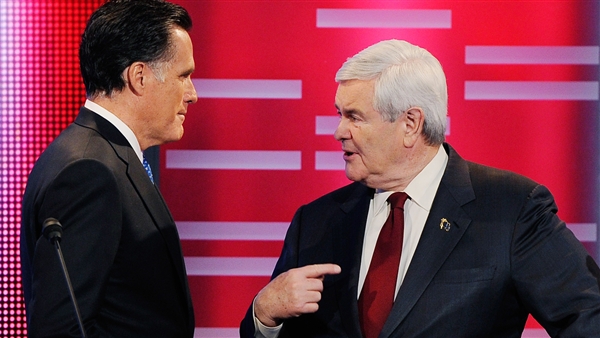
Immediately after the first 2012 Republican Presidential Debate in Florida, Former Governor Mitt Rommey released his 2010 tax statement. However, Rommey’s wealth did surprise most people.  Some individuals probably harbored class envy of him. Yet, I was also amazed at the other presidential candidates’ great fortunes in comparison to most Americans. Let’s go deeper. 

 How can leaders build a connection with their followers who are well below them economically?  For example, GOP presidential contender Mitt Romney isn’t just in the top 1% of America’s highest income earners; he is at least at the top .0006% based on his 2010 tax returns.  According to AP reporter Connie Cass, adding up the wealth of the last eight presidents from Richard Nixon to Barack Obama wouldn’t  equal Rommey’s wealth.  It’s also about perspective.  Among the ultra-wealthy in the world, Rommey is not among the rich elite.  Yet, this discussion is very interesting since the U.S. President is seen as a representative of all citizens.

Here’s a look at some of the 2012 Republican Presidential Candidates’ worth: Mitt Rommey’s worth $85-264 million, Jon Huntsman’s $16-72 million; Newt Gingrich’s $7-31 million; Ron Paul’s $2.4 – 5.4 million, Rick Santorum’s $1-3 million, and Rick Perry’s $1-2.5 million.  Even President Barack Obama, a member of the Democratic Party, is not far behind with a net worth of $2.8-11.8 million.  One of the greatest assets of effective leaders is making a connection with followers. 

Great wealth may be problematic to many people who want to show they understand the common man.  However, this isn’t always the case.  For example, some former U.S. Presidents with great wealth made a connection with followers such as Theodore Roosevelt and John F. Kennedy.  Leaders want to have good followers championing their cause.  Presidential candidates are no exceptions.  Rommey, like most wealth people, may have some connection problems.   Many people undermine the importance of followership. They shouldn’t.

Followership is underrated. Yet, effective leaders can’t afford to not have stellar followership.  Followership can be defined as ‘the ability to effectively follow the directives and support the efforts of a leader to maximize a structured organization.’  Kent Bjugstad, Comcast Spotlight, Elizabeth Thach, Karen Thompson, and Alan Morris, followership experts, outlined the problems associated with followership: “The assumption that good followership is simply doing what one is told, and that effective task accomplishment is the result of good leadership, doesn’t amplify the merits of the follower role.”  Therefore, leaders cannot afford to underestimate this concept.

Connecting with followers is vital.  Rommey, like other leaders, must bridge this gap.  According to the U.S. Census Bureau, the typical household worth is approximately $120,300.  That means Rommey is 1,000 times richer than most American citizens. Fred Fiedler, a leadership researcher, noted that a leader’s personality can determine how he or she will be an effective leader.

Gareth Jones and Jennifer George, authors of Contemporary Management, further noted the critical needs for effective leader-follower relationships: “Situations are more favorable for leading when leader-member relations are good.”   Therefore, connecting with followers is an important goal for most leaders.

Discuss how leaders effectively connect with their followers.

© 2012 by Daryl D. Green                                    


Leading in a Volatile Society


The question of effective leadership continues to plaque modern society.  This month, the captain of a cruise ship that capsized off the coast of Italy has received public scrutiny.  The cruise ship, Costa Concordia, had more than 4,200 people aboard when it hit a reef off the Tuscan island of Giglio.

Panic filled the ship; cruise workers appeared unprepared for the emergency. Yet, the biggest casualty was leadership.  Captain Francesco Schettino is accused of manslaughter, causing a shipwreck, and abandoning his vessel during its ground. 

Tapes were released of a conversation between the cruise captain and a coast guard officer who demanded the captain return to the ship: “What are you doing? Are you abandoning the rescue…Get back on board now (expletive) sake!”  What has been abandoned globally is the lack of effective leadership in a volatile society.

Today’s workers exist in a volatile world. According to the Forrester Research, approximately 3.3 million jobs and $136 billion in wages could be moved overseas to countries like India or China by 2015. In fact, many developing countries are projected to continue to grow strongly over the next decade.

Furthermore, these countries steadily shift to consumer-led growth instead of export-led growth.  The dollar spiral downward and foreign currency goes upward.  China and India have added millions to their labor force creating products as well as outsourcing their services abroad at a fraction of what American workers can provide. 

These upstart countries are positioning themselves to become the next Super Power.  The middle class hold their breath as the threat of more job cuts become a reality, thereby further eroding their quality of life. Yet, business executives express little moral remorse as they keep American workers at bay.   

There needs to be a different type of leadership in a volatile world. Today’s hypercompetitive environment needs high performance organizations to sustain market success. Yet, many organizations operate from the same business structure from the Industrial Revolution.

In this setting, managers oversee workers to control their performance due to the fact that managers believe workers are inferior and have no passion to work. Yet, most workers are willing to work if they are placed in a position to be successful and there are shared rewards.

Yet, I have heard too many complaints about bad bosses and uncaring organizations. There are too many managers and organizations that do not value the importance of their employees.

These same managers are great at distributing tasks but are unsuccessful at motivating their own workers.  Therefore, future leaders will need to be able to navigate global markets while inspiring their workers.

What characteristics are needed for today’s leaders in a volatile environment?

 © 2012 by Daryl D. Green

Meet the Agrarians

Everywhere you turn life has become complicated.  With a cell phone in my pocket, people can reach me in remote places or traced me down with a GPS device. Ironically, that cell phone that helps me is also said to be possibly killing me at the same time. Yet, life was much simpler.

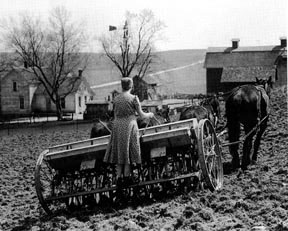
Before the Industrial Revolution, life was centered on land and labor. On this land, God gave man his divine “agrarian calling.”  Humanity was technology poor yet spiritually rich in the Agrarian Era. In the same framework, one can analyze the moral compass of society through the ages.

Agrarians had a love for community and order; a deep respect for the environment; and a genuine peace with their Creator. Family was first! Agrarians were independent decision-makers.  However, Agrarians went away from the land with every economic advancement.

From the steam engine to the Internet to nanotechnology, humanity has transitioned from the physical labor of the land to mental brain power away from the land.  Andres Edwards, author of The Sustainability Revolution, echoes the advancement of this period: “These inventions contributed to increase production and economic growth in the textile, iron, rail and steamship industries that have left an indelible mark on our current society.”

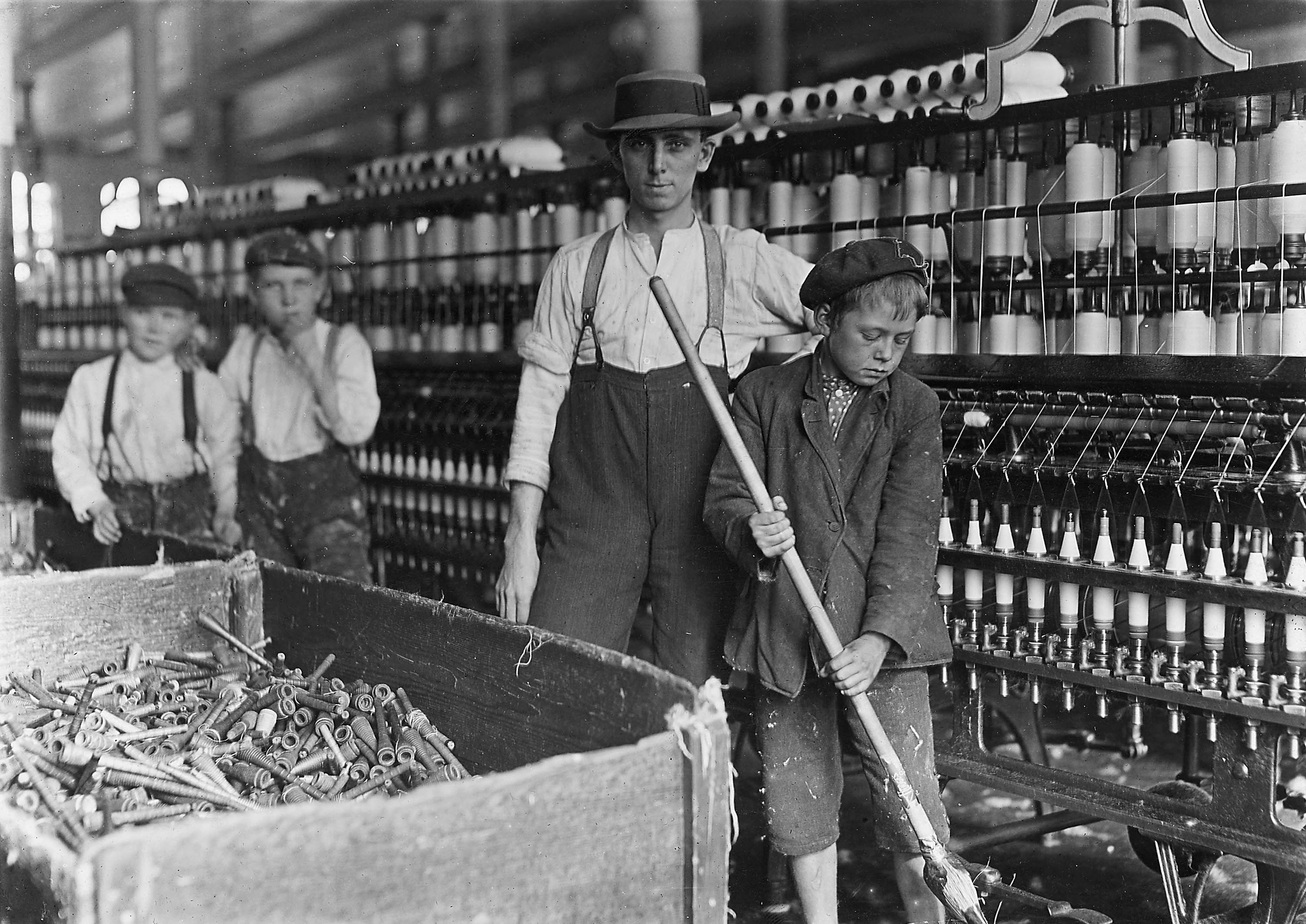
Yet, the effects were not all positive.  Farmers went from freedom in the land to industrial slaves. During this transition, managers controlled the factory workers. These forced interactions created conflict because farmers and industrial society had different value systems.

Each successive wave of technology brought with it giant leaps in productivity while expanding the moral decay of mankind.  In fact, the Industrial Era ushered in a period of materialism, competitiveness, self-sufficiency, and the supremacy of man. With each technological advance, social consequences also swept across the world like a tidal wave.

Are the principles of the Agrarians lost? If not, why?

© 2012 by Daryl D. Green


2012 and the Brink of Destruction: Answering the Sustainability Question for America

 While on vacation on the Gulf of Mexico, I decided to take an early morning swim alone. I marveled at the white sand and the tranquility of my surroundings. However, I did not see the danger.  Several days earlier I had walked out to a sand bar several yards away from the shore.  That day I found myself being adventurous by going further out.  I swam to the side of the sand bar and found myself in danger.  Luckily, an experienced swimmer saved me that day. Likewise, America is in danger…but some don’t know it.

Global trends make sustainability a difficult objective for most organizations. The year 2011 was a vintage time for massive protesters, from the awakening of the Arab world to the defeat of evil tyrants. Europe struggled to maintain financial stability while country after country faltered.  Japan suffered its biggest nuclear catastrophe. 

Even a Super Power like America has not been exempted from this financial crisis. The United States economy struggles along with its 15 trillion dollar national debt and a 9% unemployment rate choking the country.  With political gridlock happening on a regular basis, members of Congress, President Obama, media outlets, and frustrated constituents worry about the plight about the country.  Standard & Poor’s downgrading of America’s AAA rating for the first time in history was a quick wake up call to everyone. 

 Last year, big financial institutions such as Bank of America and JP Morgan Chase & Company announced that approximately 75,000 employees would be laid off.  Political groups, like the Tea Party Movement, attempted to challenge the political establishment with a return to fiscal responsibility of America’s debt.  Occupy Wall Street protesters attacked corporate greed and corruption as the catalysis for income inequity and employment opportunities.

Sustainability is important but often difficult to define. The U.S. Environmental Protection Agency defines the term as “everything that we need for our survival and well-being depends, either directly or indirectly, on our natural environment.”  One simple definition is the ability to use resources continuously without any long-term depletion.  There aren’t many things that are possible to be sustained without proper planning.

Discuss the ramifications of any negative consequences. 

© 2012 by Daryl D. Green