Market Turbulence

For many people, the bad economic picture will not change soon enough. According to a USA Today/Gallup Poll, almost three-fourths of those surveyed don’t like what’s going on in the country. David Walker, the former chief of the Government Accountable Office, predicts a poorer America if the economic ship doesn’t change direction: “We’ve kicked the can down the road as far as we can. We are at the abyss.”

Market turbulence has overtaken our ability to realize the American Dream. This turbulence relates to the chaos that now plaques our financial institutions, wrecking havoc on our normalcy. With a weak job growth, many U.S. jobs will continue to be outsourced globally or automated through technology.

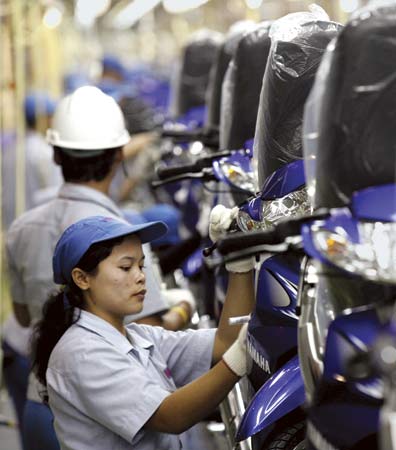
In fact, the government estimates that an additional 1.2 manufacturing jobs will disappear by 2018. In this economic downturn, many people are just happy to have a job. Yet, the hectic work environment creates severe consequences to today’s workers as well.  In our discussion, we will focus on market turbulence and how to leverage against it.

Market turbulence is transforming businesses across the globe.  International markets have been shaken.  It’s like riding first class on a cruise ship during a terrible hurricane. You have plenty of the creature comforts.

Yet, it doesn’t change your situation. You are in for a rough ride. Today, American businesses, like other nations, are on this rough ride. The hurricane is market turbulence. Stanley Gryskiewicz, author of Positive Turbulence, stresses the dangers of this rocky ride: “Turbulence is energic, forceful, catalytic, and unpredictable.” 

Many organizations do not understand what to do or how to survive it.  Stan Davis, author of Future Perfect, declares, “The external environment-technology, economy, society and so on—is changing so fast that businesses scurry to keep up. Organizations, however, simply cannot run that fast. So our organizations don’t change as fast as do the businesses that they are managing.”

Charles Handy, author of The Age of Unreason, argues “Discontinuous changes require discontinuous thinking. If the new way of doing things is going to be different from the old, not just an improvement on it, then we shall need to look at everything in a new way.”  Many managers brag about their extensive experience. 

Many managers brag about their extensive experience. However, in a market plagued by uncertainty, this experience works against traditionalists. Today change is rapid and unpredicted.  Loaded with their vast experience, managers can lead organizations into business despair. Given the large degree of uncertainty and unknowns, some organizations continue on the same path…to nowhere!

Innovative managers can leverage market turbulence to their advantage. Everywhere we look we see this disruptive change breaking down traditional thinking.  What worked yesterday, will fail today. The best companies know how to adapt to turbulence. While others downsize and contract their market efforts, great companies infuse their organizations with creativity and expand their operations, competing on their strengths. 

Management strategist Stanley Gryskiewicz argues that turbulence associated with change can be a positive force for innovation.  He recommendations four elements in taking advantage of turbulence, which are (a) difference (breaking out from the status quo, (b) multiple perspectives (inviting divergent viewpoints and nontraditional interpretations, (c) intensity (keeping the speed, volume, and force at an optimal level for change, and (d) receptivity (providing mechanisms for individuals to be able to thrive in turbulence.

Gary Hamel, author of Leading the Revolution, suggests “In the new industrial order, the battle lines don’t run between regions and countries…In a nonlinear world, only nonlinear ideas will create wealth.” Creative expert Michael Michalko argues that creativity:  is the answer for surviving market turbulence: “It is not a result of some easily learned magic trick or secret but a consequence of your intention to be creative and your determination to learn and use creativity.”  Yet, succeeding during market turbulence is no accident. In fact, organizations must be deliberate in creating sustainable performance during market turbulence.

How do organizations effectively implement nonlinear thinking to be successful during market turbulence?

 © 2010 by Daryl D. Green

Management Shift

With current changes in workforce demographics, operational managers need to build the right organizational culture to stimulate employee growth and performance. For decades, human resources experts have been proclaiming the massive exodus of retiring workers. This situation creates a huge human resource problem for most businesses.  

 Therefore, organizations need leaders who are attune to cultural changes in society that impact their processes as well as their employees. In this discussion, we will focus on the inherent leadership characteristics that managers need to posses in the new millennium.  Many managers do not follow culture shifts that impact their organizations. You can simply look at the Baby Boomers. Some individuals proudly note that the massive Baby Boomer departure, predicted by many experts, did not happen. Many managers have grown confident that their most experienced workers will not be leaving for a very long time.

 Of course, they hedge their bets that the economy will not rebound any time soon.  Yet, one thing is for certain. Baby Boomers will leave one way or another; every generation eventually must exit the workforce environment because man’s existence is finite.  Therefore, the Baby Boomer generation will be replaced.  Researcher Kerry Harding describes this new generation as the “Emergent Workforce,” which crosses age groups, gender, race, and geography. This generation is very concerned about their professional growth. With the advent of reengineering and outsourcing of jobs, many organizations have made it difficult for employees to consider their career development in any one organization.


In a hypercompetitive environment, some managers view their workers simply as a disposable workforce due to employees’ lack of organizational loyalty. However, in reality, what we are seeing are a new set of employee value systems taking place. In one workforce study, Emergent employees (88%) believed that loyalty is not related to employment length, while Traditional employees (94%) felt that loyalty was about the willingness to stay with an employer for the long term.

Therefore, managers must be able and willing to infuse organizational values into their workers. This process starts at the very beginning when prospective workers are in the initial hiring process. Usually, the selection of a new employee is both time consuming and labor intensive. Companies conduct a series of interviews to determine if a potential employee is the right fit.

Yet, managers must listen to what their employees are saying. Alan Murray, author of The Wallstreet Journal Essential Guide to Management, insist the bosses must think differently:  Managers will not be able to assume they know the answer-because more often than not, they won’t.” Murray argue, for the fully engagement of workers as well as other stakeholders.

In the 21st century, managers must consider adjusting to the changing culture. This process will help foster better management-labor relationships and stimulate employee personal growth. This starts in the hiring process, in the employee orientation process, and then in continual employee development. Organizations must be zealous in their approach of clearly stating their values and employees must clearly see that fact in the lives of their organizational leaders. If organizations continue to ignore these value issues, they may find themselves cleaning up their own business mess.

Furthermore, today’s employees want more than the status quo. In fact, individuals want help in discovering their career path and meaningful life. Labor intense workers are being replaced with knowledge workers and learning becomes part of an organization’s competitive advantage.

Gary Yukl, author of Leadership in Organizations, explains that the immediate supervisor has considerable influence over a person’s leadership development; however, many bosses fail to do the right things to facilitate growth in their employees. Therefore, today’s managers make shift their thinking if they want to increase workers’ performance.  

What are effective ways organizations get their managers to embrace the culture shift necessary to manage a 21st workforce?

  © 2010 by Daryl D. Green

Human Factor Buy-in


Steve Proud gets his biggest promotion as the latest senior executive to run this troubled business. With lots of talent and experience, the organization struggles to meet performance goals. Being on the fast-track, Steve quickly makes significant changes to impress the corporate board. He fires the old managers and surrounds himself with the better talent. His team rolls out a comprehensive strategic plan.

The corporate board starts seeing positive results.  However, things change within two years. Many employees view Steve as a ‘paper manager.’ Despite his ‘talk about empowering workers,’ his actions demonstrate he cares little about any worker’s opinions. Steve cannot understand why his strategy failed.                                                                                                                                                                                                                                                                                                                                                                                                                                                                                                                                                                                                                                                                                                                                                                                                                                                                                                                                                                                                                                   

Most organizations move swiftly ahead reacting to market forces without truly empowering workers to make organizational decisions. Managers preach that employees are a critical asset to an organization’s bottom-line. However, few managers ever show it. Given that percept, we will discuss the final component of effective socio-technical systems. It is the human factor buy-in. Organizations must shift their paradigm to viewing workers as more than mechanical parts for their organizational objectives.

According to a USA Today poll, nearly half of those interviewed said that corporations can be trusted only a little, or not at all, when it involves looking out for the best interest of employees. Michael Hackman and Craig Johnson, authors of Leadership: A Communication Perspective, argue that a leader’s credibility is directly related to the quality of his relationship with followers.

Marios Katsioloudes, a researcher specializing in socio-technical analysis, explains that as profitability of mechanization increases, the importance of technology is implied while there is a devaluation of the workers. Clearly, U.S. businesses cannot point to the lack of employee performance for mismanagement errors.

Japan, a long-time benchmark for American companies, is being defeated by American employees. Today, the average U.S. worker puts in 36 more hours than Japanese workers (1,825 vs. 1,789). Over the last two decades, balancing work and home life have been difficult since Americans have added 200 hours to their annual work schedule.

Employees want to be valued. Felix Harris, a financial director with over 8 years in the banking industry, acknowledges the importance of people in a socio-technical system. He states, “When employees are appreciated, they work harder.  A machine is only as good as its operator.”  Jeffrey Pfeffer, author of The Human Equation, acknowledges that organizational success is directly related to implementation, and this capacity comes from the workers, how they are treated, their skills, and their efforts as it relates to the organization.

Managers should see followers as more than mechanical parts for their organizational objectives. Managers assume that giving employees new technology is enough to keep them happy. Likewise, leaders should view followers as vital components of the socio-technical system.

Today’s managers in technical organizations must understand the delicacy of balancing a socio-technical system. The recent mirage of culture changes such as outsourcing, scandals, and unethical dealings by both governmental and business senior managers have made American employees skeptical about the seriousness of organizations implementing corporate values into their workplace.

Furthermore, today’s executives are falling short in promoting the desired values to support socio-technical systems due to understanding the value of employee buy-in.

In fact, this insight would be valuable to any manager, trying to integrate the man – human interface mechanism. Understanding the uniqueness of the socio-technical system may increase leadership effectiveness and better management strategies for your organization.

How can organizations best gain employee buy-in when they possess less than a stellar track record of worker empowerment?  

 © 2010 by Daryl D. Green

Technology Relevancy

“The Cylons were created by man. They rebelled. They evolved. They look and feel human. Some are programmed to think they are human. There are many copies. And they have a plan.”
– Season 1 Opening Prologue

Battlestar Galatica, regardless of the series (1978 or 2003), provides a good platform for this technology discussion.  In this scenario, the creation (Cylons) turns on the creator (mankind). The Cylons were created to make life easier for humanity.  However, Cylons evolved into thinking beings  and rebelled against their intended use. Clearly, the inventors had created something without understanding unintended consequences in the socio-technical system. 

We now approach the 2nd critical element for effective socio-technical systems, which is technology relevancy.  Organizations rush to accelerate their products quicker to their customers. Under this umbrella, industrial designers seek to optimize three elements: (a) tools – involves the material infrastructures, (b) training – relates to human capital matters, and (c) time- considers setting realistic expectations in the operations.  Yet, organizations shouldn’t  ignore the significance of any soci-technical system integrations. In their article “The Relevancy of Concurrent Engineering in Industrial Technology Programs,” Dr. Radha Balamuralikrishna, Dr. Ragu Athinarayanan, and Dr. Xueshu Song analyze how organizations attempt to maximize operational efficiencies: “It is safe to assume that a hurried implementation of concurrent engineering without careful planning and investment of time has a high probability of backfiring.”

Organizations must understand that technology needs to be relevant as it relates to benefiting the whole socio-technical system. As an engineer, we are taught how to use theory in order to build, design, and operate technical systems, whether mechanical, digital, or otherwise. Sometimes this creates a technical superiority over the other components of this socio-technical system. Vince Adams, a technical manager, agrees, “Engineers are more concerned about the technical aspects of a system. This is what we are taught. Engineers do not want to deal with the social aspects.”

Organizations should gain input from employees to ensure that the organization has not only the best technology for its operations but the right technology.  This sharing of information can only come with mutual trust between leaders and follows.  

Gary Yukl, author of Leadership in Organizations, notes, “Empowerment is more feasible when there is a high level of mutual trust…Leaders can affect the psychological employment of followers in many ways, and participative leadership and delegation are only two of the relevant behaviors [4].” There have been numerous cases which show that organizations have purchased new technology to solve a problem or to become more efficient when a simple conversation with impacted employees would have produced better results at a lower cost. Therefore, organization should invest their time in identifying relevant technologies for their socio-technical system in a participatory manner.    

How do organizations ensure they are placing technologies in their operations that do not conflict or disrupt their processes?  When technologies are forced to be used due to external forces (i.e.  competitors, suppliers, etc.), what is the best process for introducing these changes to the workers?

 © 2010 by Daryl D. Green