Change Disrupts Us


Last week, I sat down and watched one of my all time classic flicks, Signs.  This 2002 sci-fi thriller revolved around aliens invading Earth. Producer Frank Marshall explained, “It’s really about human emotions set in motion by a supernatural event.” For me, it was the perfect symbol of how people deal with unexpected change.

In Bucks County, Pennsylvania, the plot begins. Local priest Reverend Graham Hess (Mel Gibson) grieves over the horrific death of his wife. After the death, Hess denounces his faith and vocation. He lives with his two children and his brother Merrill, a former minor league baseball player.  Hess finds a crop circle in his corn fields.

In fact, the crop circles appear all over the world. As the story progresses, the family realizes the crop circles are part of other signs that extraterrestrials are here on Earth.  The plot continues to introduce change at a rapid and unpredictable pace. As you would expect, Hess and his family are overwhelmed with so many changes. Today, organizations are no less perplexed by today’s changes in the market. Change is imminent but how we deal with the shift is an uncertainty. Renowned management guru Dr. Tom Peters argues, “Nothing is predictable…The fact is that no firm can take anything in its market for granted.”  All the money in the world cannot stop the forces of change.

Oil giant BP attempts to correct a major accident that government officials are calling the largest oil spill in history involving over 19,000 barrels of crude oil. The political ramifications are large as President Obama tries not to let this incident become his Katrina. Yet, rapid change can make even Superpowers look foolish. Corporations are no exception. BP executives are probably worried about their reputation (which is really about the $$$$$). Will the company become another Exxon?

Furthermore, change exists in a fluid state from easy to impossible to solve for managers. It happens in a series of irregular waves. In fact, change is a wild variable that can totally disrupt the order of things in organizations. There are two major types of change for our discussion, incremental and discontinuous. Incremental change occurs in small increments over time where organizations can prepare for it. You can forecast the future with some confidence.


 Discontinuous change is unpredictable and sudden. It threatens traditional power structure because it drastically alters the way things are currently done or have been done for years. This discontinuous change can be described as turbulence like on an ocean. It becomes unsettling. Donald Sull, author of The Upside of Turbulence, notes “Turbulence, for many, equals risk, and risk equals bad news.” Joan Liebler and Charles McConnell, authors of Management Principles for Health Professionals, further warned about the issues of change: “Change is inevitable, but change can also be chaotic and painful.”

When markets shift take place, many managers rely on their corporate experience to navigate the uncertainty.  Yet, their vast knowledge becomes a liability during discontinuous change due to the lack of any clear patterns in the market. Therefore, disruptive change interferes with conventional thinking of organizations?

How can contemporary organizations deal with disruptive change in ways that they can seize opportunities and stay ahead of their competitors? 

© 2010 by Daryl D. Green

 

Does the Doctor Really ‘Feel’ Me

Glancing at the clock on the wall, I ponder why they make me show up early for my appointment. I could be at work doing my job. Instead, I am forced to wait. My appointment is now a half hour late. If this was college, I would have already left the class.

I would have left the professor a kind note (anonymously…of course) that he was late–we, students, needed to get to another class. Unfortunately, I am forced to grit my teeth and bear the circumstance since I’m caught in a healthcare monopoly. I wonder if my doctor really understands how to be customer-focused like the rest of the world. Why doesn’t he grasp the realities of the future?

Many people feel that Armageddon has descended on America with the passing of the US healthcare reform bill.  Health problems continue to climax. According to the Henry J. Kaiser Family Foundation, U.S. health care expenditures surpassed $2.3 trillion in 2008 which was over eight times the cost ($253 billion) in 2003. In fact, health care cost grew faster than inflation and the growth in nation income.

Government bureaucrats, insurance lobbyists, patient advocates, media pundits, and health experts fight battles of how to get the health care issues solved for the future.  In fact, President Obama has gambled his presidential legacy on healthcare reform.

The winds of disruptive change have wrecked havoc to the current medical industry as traditionalist fight to keep the status quo. Joan Liebler and Charles McConnell, authors of Management Principles for Health Professionals argue that the current trends are demanding changes in patient care and administrative support.

The market and cultural drivers are all around us. Government officials impose stricter laws. Insurance companies force hospitals and medical organizations to control and reduce costs. Sadly, physicians and medical experts face ethical dilemmas of who to serve first, corporate mandates or their patients.

Yet, smarter patients are demanding more from health professionals in ways that place the customer first. Unfortunately, many organizations struggle with how to address the health professional’s moral mandate to the patient during these periods of constant and forced change.

What is the difference between a health professional implementing a patient-oriented strategy versus a customer-oriented strategy? Is it possible to have both? If so, how.

© 2010 by Daryl D. Green

Sarah Palin’s Journey to Knoxville: Leading by Listening

 Many managers do not appreciate the art of good listening. In fact, some people view listening to followers a weakness. However, not listening to wise counsel can be fatal to leaders. Former Alaska Governor and the 2008 Republican vice president candidate Sarah Palin happens to be the latest causality on this subject.

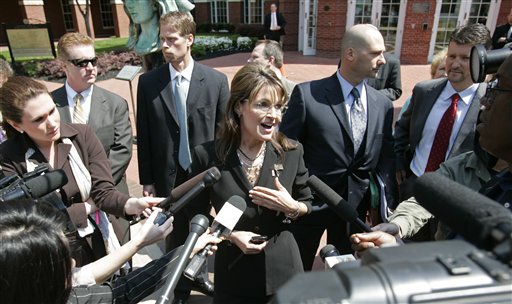
On April 21st, she found herself in U.S. District Court in Knoxville. Some managers have poor listening skills while others are just arrogant about listening to anybody. If organizations want to be successful, their managers need to understand the importance of good listening skills. Craig Hackman and Michael Johnson, authors of Leadership: A Communication Perspective, explain that the leader-follower connection has a direct impact on organizational effectiveness. This article examines the importance of leaders listening to their followers.

Many managers fail to see the unintended consequences of not listening to followers. Former Alaska Director of Boards and Commissioners Frank Bailey warned Palin about using a non-government email: “I was speaking to (Palin husband) Todd (Palin) and said, ‘You have got to get off Yahoo! It’s not secure.’” Sarah Palin failed to heed this warning from her staff. David Kernell, a University of Tennessee student at the time, gained accessed to Palin’s private email, thereby making her vulnerable. In court, it was later discovered that Palin used the Yahoo account to discuss state business.

Yet, Palin’s failure to listen is a common situation to some managers. James Kouzes and Barry Posner, authors of The Leadership Challenge, explain that the leader’s job is to keep followers focused on the vision. If managers do not listen to workers, workers will lose trust in them. Like Sarah Palin learned, leaders must be willing to listening to their workers. Leadership is about a journey. Effective leader understand that it’s important to get wise counsel. Listening to workers is just one critical component. Therefore, leaders need to act on this matter before it’s too late.

 © 2010 by Daryl D. Green